Showing posts with label Gender. Show all posts

Sunday, March 1, 2020

Civics Education : Zero Discrimination Day : some information


Zero Discrimination Day 2020
Today March 1 is Zero Discrimination Day, a chance to celebrate diversity and to reject discrimination.
The United Nations has kicked off the 2020 global edition of Zero Discrimination Day as part of the Organization's wider effort to spur solidarity towards ending discrimination.


Zero Discrimination Day

Theme 2020:
"Zero discrimination against women and girls.” 
On Zero Discrimination Day, 1 March, we celebrate the right of everyone to live a full and productive life, and live it with dignity. 
Zero Discrimination Day highlights how people can become informed about and promote inclusion, compassion, peace and, above all, a movement for change. 
Zero Discrimination Day is helping to create a global movement of solidarity to end all forms of discrimination


credits: Festivaltime.in
On 1st March Zero Discrimination Day, will celebrate the right to live life. UNAIDS is challenging the discrimination faced by girls and women in all their diversity in order to raise awareness to promote equality and mobilize action and empowerment for women and girls.
Geneva International center of Justice
Millions of women and girls in every region of the world, for instance, experience violence and abuse on a daily basis and struggle to access adequate health care and education.
The United Nations (UN) has celebrated 1st Zero Discrimination Day on 1st March 2014, UNAIDS has launched Zero Discrimination on World Aids Day in Dec 2013.
On Zero Discrimination Day this year, UNAIDS is challenging the discrimination faced by women and girls in all their diversity and raising awareness and mobilizing action to promote equality and empowerment for women and girls.

credits: Time Bulletin
Although some countries have made laudable progress towards greater gender equality, discrimination against women and girls still exists everywhere. Intersecting with other forms of discrimination based, for example, on income, race, ethnicity, disability, sexual orientation or gender identity. These rights violations disproportionately harm women and girls. 
Ultimately, gender inequality affects everyone’s health and well-being. In many countries, laws that discriminate against women and girls remain in force, while laws that uphold women’s basic rights and protect them against harm and unequal treatment are far from the norm.
Education:

Zero Discrimination Day is a pedagogical activity teachers must include into school curriculum.
We know  that discrimination exists at school between students. How often teachers are called to help some students who are suffering some stigma and discrimination from their schoolmates.

And on these days there is violence against girls by boys as boy friends. Or at home between mother and father. 

Teachers must discuss clearly these subjects at the classroom. Violence against girls and women is a huge problem in our society.

Not only today but everyday, in our lessons, at school, teachers and students have the chance to celebrate diversity and reject discrimination.

It's time to develop some important values in everyday lessons as comprehension, compassion, tolerance, solidarity, encouragement, friendship.


Teachers will prepare some activities to include Zero Discrimination Day into their lessons next week.

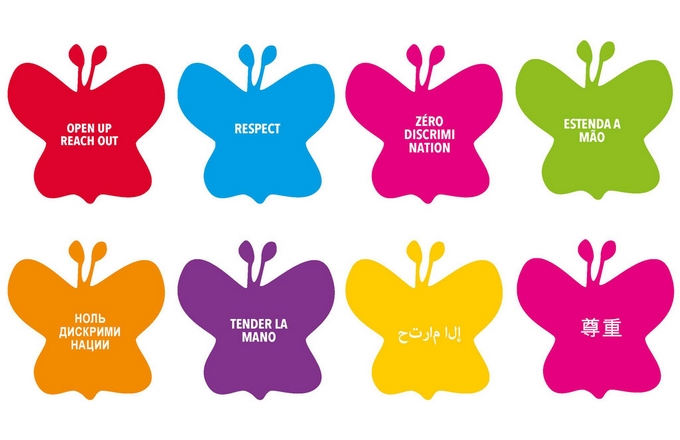
Being inspired by the butterfly, the symbol for zero discrimination, students can debating the role of women and girls in the XXI century.

Of course teachers will adapt resources and activities to the level they are teaching and age of students.


G-Souto

01.03.2020

Copyright © 2020G-Souto'sBlog, gsouto-digitalteacher.blogspot.com®

Creative Commons License
Civics Education : Zero Discrimination Day : some information bG-Souto is licensed under a Creative Commons Attribution-NonCommercial-NoDerivatives 4.0 Intern.ational License

Thursday, January 16, 2014

Schools : Dian Fossey, a great woman in the mist ! Resources


Dian Fossey
credits: Robert M. Campbell


Wow! Another great woman breaking gender barrier? Remember Amelia Earhart or Jane Goodall?

Dian Fossey was an American primatologist and conservationist known for undertaking an extensive study of mountain gorilla groups from 1966 until her murder in 1985.

Yes, great women who broke gender barrier following their dreams on dangerous careers. Women who deserve our respect!

Google is celebrating the 82nd birthday of the American zoologist Dian Fossey. The doodle features a group of gorillas, with one touching Dian Fossey’s hair while she takes notes.

  • Google Doodle:


Google doodle Dian Fossey's 82nd birthday

Here I am writing about a new Google Doodle! A pedagogical digital resource that we can't miss to include into our school lessons

Teachers can include it, just to surprise students with something different as a motivation to know more about a special woman they saw on Google homepage - you know students are the Google Gen - but don't have a clue. Or may be yes, they have. Who knows? We always have the smartest kids in our classroom, right?
So Google is celebrating the 82nd birthday of the American zoologist Dian Fossey. The doodle features a group of gorillas, with one touching Dian Fossey’s hair while she takes notes.
Another great woman breaking gender barrier! Yes, great women that broke gender barrier following their dreams on dangerous careers.


Gorillas in the Mist
Michael Apted, 1988
Teachers, do you know the film Gorillas in the Mist. The Story of Dian Fossey (1988) starring Sigourney Weaver as the naturalist Dian Fossey

A biopic of Dian Fossey, the scientist who came to Africa to study the vanishing mountain gorillas, and later fought to protect them.


It tells the true-life story of her work in Rwanda Mountain Gorillas. The movie was nominated for five Academy Awards


Gorillas in the Mist
Dian Fossey, 1983

Based on the book Gorillas in the Mist (1983) by Dian Fossey and the Hayes article. The book covers Fossey's scientific career in great detail. The extraordinary efforts of the primatologist Dian Fossey to ensure the future of the rain forest and its remaining mountain where gorillas are captured in her own words and in candid photographs of this fascinating endangered species. As only she could.


  • Some biographic information:

Dian Fossey an American zoologist studied gorillas living in the mountain forests of Rwanda, Africa, in great depth over a period of almost 20 years.

Her extensive research greatly enriched the scientific community’s understanding of mountain gorillas.

Among the most legendary scientists of our time, Dian Fossey went to Africa at the urging of famed anthropologist Louis Leakey and began her groundbreaking studies of gorilla behavior. She faced and overcame many obstacles and ultimately gave her life to gorilla protection. She was murdered in 1985 in Rwanda. Her body was found in her cabin on the morning of Dec. 27, 1985.


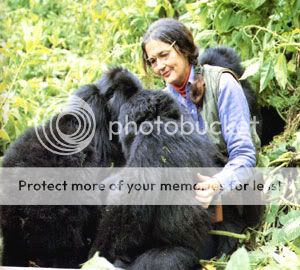
Dian Fossey
credits: Europe1.fr


According to the Dian Fossey Gorilla Fund International, dedicated to the conservation and protection of gorillas, Dian Fossey's early interest in animals and her childhood dream of becoming a veterinarian. 

After studying the subject at San Jose State College, she changed her major to occupational therapy. 

However, her love for animals never faltered, and she was at the same time becoming increasingly interested in Africa.


National Geographic magazine, 1970


Revealed in 1970 by National Geographic cover, which shows Fossey touching the hand of a wild gorilla, she obtained her Ph D. in Zoology from the University of Cambridge in 1974, aged 42. 

By 1966, she had won funding from the National Geographic Society and the Wilkie Brothers’ Foundation to begin a research project in the Congo.  She had to move the study to Rwanda due the political situation.

Fossey is considered as a reference in the defense of animal rights, and was one of the first Americans to settle in Africa, adapting to the lifestyle and local traditions.

In 1967, she founded the Karisoke Research Center in Rwanda's Parc National Des Volcans.


Sigourney Weaver | Dian Fossey
credits: Reuters
via Europe1.fr

Fossey died in 1985 when she was killed in her cabin in Karisoke. Theories about Dian Fossey’s murder are varied but have never been fully resolved.

The Digit Fund, which she created to finance her anti-poaching patrols (1978), was renamed the Dian Fossey Gorilla Fund International following her death. 

Thirty years later, Dian Fossey was laid to rest in the graveyard behind her cabin at Karisoke, among her gorilla friends and next to her beloved Digit.

Just three years after her death, her life story was made into the 1988 film Gorillas in the Mist starring Sigourney Weaver.


Education:

“When you realize the value of all life, you dwell less on what is past and concentrate on the preservation of the future.” 


Dian Fossey, Gorillas in the Mist

As my usual readers, teachers and parents, know, I plead for Environmental education in every school curriculum

My goal? Helping students to appreciate and understand the science of ecology, and subsequently gain the capacity to apply it to their lives becoming a new generation of environmentalists.

And here they are! The new generations fighting for climate change

Linking school success with individual student growth controls for factors outside the classroom that may affect an individual student’s ability to learn. I write about it since the beginning of this blog.


Dian Fossey

However, Dian Fossey is more than an ecologist. She was woman researcher (there are not many in the field) who gave her life to save gorillas.

She can be a good reference for girls at school. Later, in college, young women can become scientists and researchers in the fields of Ecology and Zoology and other fields in science.

This effort will translate into a citizenry that is more motivated, competent and confident to protect and improve the quality of the environment and wild animals.


Dian Fossey
credits: The Dian Fossey Gorilla Fund International
via National Geopgrahic/ Archive

My post celebrates Dian Fossey. I expect to help improve the understanding and appreciation of science, ecology and zoology in education.

As teachers, we can create a customized program that focuses on activities and research to enhance students enthusiasm and understanding for ecology and zoology.

The centerpiece is motivating students for the resources studies: documents, maps, newspaper articles, oral histories or photographs, videos, films, from which students are asked to gather, examine, analyze information, discuss and synthesize insights. 


Other resources: 

  • Video Dian Fossey& Bob Campbell (photographer)


Useful links:


Making Friends with Mountain Gorillas| National Geographic: In remote African highlands, a daring American woman studies some of man's closest nonhuman relatives in their aged-old environment.

https://www.nationalgeographic.com/magazine/1970/01/mountain-gorillas-study-dian-fossey-virunga/

Multimedia | Videos
https://gorillafund.org/video-vault/


A very early concept sketch
credits: doodler Mike Button

"One of the most amazing humans ever to have lived: Dian Fossey. I was incredibly honored to create a Google Doodle for her."

Mike Button

Fossey criticized touristic programs, often paid by international conservation organizations, because those programs interfere with both research and tranquility wild animals. 

I can't agree more! The last newon a safari at the Kruger National Park, South Africa, where an elephant was killed.

G-Souto
16.01.2014

update: 23.09.2022
Copyright © 2014G-Souto'sBlog, gsouto-digitalteacher.blogspot.com®
Licença Creative Commons
Schools : Dian Fossey, a great woman in the mist bG-Souto is licensed under a Creative Commons Attribution-NonCommercial-NoDerivatives 4.0 International License.

Friday, March 8, 2013

International Women’s Day 2013 at school


"To empower women and ensure equality, we must challenge every form of violence every time it occurs."

Irina Bokova, UNESCO Director General on International Women’s Day 2013

"Violence against women is one of the most deadly and widespread violations of women's rights across the world. Globally up to 7 out of 10 women experience some form of physical or sexual violence during their lifetime. Violence against women takes many forms - physical, sexual, economic, psychological - but all of these represent a violation of human dignity and human rights and have lasting consequences both for women themselves and for their communities."

This year’s theme for International Women’s Day, celebrated annually on 8 March, is: “A promise is a promise: Time for action to end violence against women” 


From China to Costa Rica, from Mali to Malaysia, acclaimed singers and musicians, women and men, have come together to spread a message of unity and solidarity: We are "One Woman".

Launching on International Women's Day, 8 March 2013, the song is a rallying cry that inspires listeners to join the drive for women's rights and gender equality.


"One Woman" was written for UN Women, the global champion for women and girls worldwide, to celebrate its mission and work to improve women's lives around the world.

This year, International Women's Day focuses on ending violence against women — a gross human rights violation that affects up to 7 in 10 women and a top priority for UN Women. 


As commemorations are underway in all corners of the globe, "One Woman" reminds us that together, we can overcome violence and discrimination: "We Shall Shine!" 

Education:

Education is a key to elimination of violence against women through the challenging of dominant gender norms and stereotypes among young people leading to more gender equal relations within which violence is minimized. 

Education reforms and programmes can thus play a major role in prevention of violence in various ways: through increasing school safety, promoting gender equal attitudes and practices amongst staff and students, and empowering women and girls to enable them to enjoy their full human rights."


Some Activities:
  • Prevention of gender-based violence in schools;
  • Reducing violence against girls by challenging traditional gender norms through education;

  • Invite students to create a Charter (girls and boys);
  • Ask for young male students volunteers to train them as "school ambassadors” against violence in the play-ground of school;
  • Life skills education to transform the lives of adolescent girls by the use of Sports at school.

Level: All levels (teachers must adapte the activities to students' profile)

Curricula: Cross-curricula.


Other Resources:
  • A Song:
"One Women" is an interesting resource to explore in the classroom as a cross-curricular project:

- Languages: Native and Foreign Languages

- Arts: Music

Students will be invited to hear the song (mobile devices, smartphones, tablets, laptops);

- Learn the lyrics: it will be a good resource to pronunciation and vocabulary exercices;

- Write new lyrics (girls and boys) and adapte to the original music;

- Compose a new melody and include original lyrics of the song;

- Compose and write an entire new song.

Level: Primary; Elementary; Secondary Education.


Mind the Gap (online) | UNESCO
  • A Game:
"Mind the Gap": Gender & Education is an online game.

UNESCO’s Mind The Gap is an interactive game that compares literacy rates by gender around the world, along with years of schooling. It’s well-done, very interesting for learning about the world's different cultures.

Mind the Gap is available in English, French and Spanish.


A good and captivating resource. Share the link wiith your students. They can use their mobile devices in the classroom.

Level: Elementation Education.
  • An interactive Map
"How have women's political rights changed around the globe to get to this International Women's Day?"

This interactive map by Lustlab's Lizzie Malcolm (Amsterdam) shows the long history of the fight for suffrage and political representation around the globe. 

Students must click and drag on the year slider to see the changing face of women's political representation over the years.

  • Portraits: Tribal Heroines
The resistance of many tribal women is growing. Survival International’s photographic gallery celebrates "International Women’s Day" with fantastic photos.

Let your students discover the beautiful portraits of tribal women that profile some of the courageous and inspiring women who are fighting for their lands to be returned to them and for their fundamental human rights.

Level: Secondary Education
  • A film:


This year, International Women's Day is being celebrated in a big way online. Today's Google Doodle is a montage of chubby female cartoon faces of all ethnicities smooshed together and IWD's Facebook page has at least 5,454 people talking about it Right Now.

- Ask your students (girls and boys) to write creative messages about IWD and publish on Facebook Timeline of the school account (teachers and students);

- Invite students to write in 140 characters inspirational quotes about mothers, grandmothers, sisters, girl friends, women teachers interacting with other classes on Twitter account (teachers and students). 


"We must educate to shape new norms and behaviours. We must support women in becoming leaders in all fields of human endeavour" 

Irina Bokova, UNESCO Director- General

G-Souto

08.03.2013
Copyright © 2013G-Souto'sBlog, gsouto-digitalteacher.blogspot.com®

Licença Creative Commons

International Women's Day 2013 at school bG-Souto is licensed under a Creative Commons Attribution-NonCommercial-ShareAlike 3.0 Unported License.


References:

International Women's Day 2013 | UN
http://www.unwomen.org/how-we-work/csw/iwd2013/

International Women's Day | UNESCO
http://www.unesco.org/new/en/unesco/events/prizes-and-celebrations/celebrations/international-days/international-womens-day-2013/

One Woman | UN
http://song.unwomen.org/

UNESCO Education
http://www.uis.unesco.org/Education/Pages/default.aspx