Sunday, January 25, 2015

Education: Asteroid to Fly By Earth Safely on 26 January


 Image credit: NASA/JPL-Caltech

Tomorrow, January 26. 2015, an asteroid, designated 2004 BL86, will safely pass about three times the distance of Earth to the moon. 

"Sky charts for asteroid 2004 BL86, safely passing Earth Jan 26, 16:19 UTC/11:19am EST. Not naked-eye visible."


Some information:

From its reflected brightness, astronomers estimate that the asteroid is about a third of a mile (0.5 kilometers) in size. The flyby of 2004 BL86 will be the closest by any known space rock this large until asteroid 1999 AN10 flies past Earth in 2027.
At the time of its closest approach on January 26, the asteroid will be approximately 745,000 miles (1.2 million kilometers) from Earth.


image: credit: NASA/JPL-Caltech
This graphic depicts the passage of asteroid 2004 BL86, which will come no closer than about three times the distance from Earth to the moon on Jan. 26, 2015. Due to its orbit around the sun, the asteroid is currently only visible by astronomers with large telescopes who are located in the southern hemisphere. But by Jan. 26, the space rock's changing position will make it visible to those in the northern hemisphere. See video
"Monday, January 26 will be the closest asteroid 2004 BL86 will get to Earth for at least the next 200 years," (...) "And while it poses no threat to Earth for the foreseeable future, it's a relatively close approach by a relatively large asteroid, so it provides us a unique opportunity to observe and learn more."
Don Yeomans
Don Yeomans is retiring as manager of NASA's Near Earth Object Program Office at the Jet Propulsion Laboratory in Pasadena, California, after 16 years in the position. 
One way NASA scientists plan to learn more about 2004 BL86 is to observe it with microwaves .
NASA's Deep Space Network antenna at Goldstone, California, and the Arecibo Observatory in Puerto Rico will attempt to acquire science data and radar-generated images of the asteroid during the days surrounding its closest approach to Earth.
"When we get our radar data back the day after the flyby, we will have the first detailed images," said radar astronomer Lance Benner of JPL, the principal investigator for the Goldstone radar observations of the asteroid. "At present, we know almost nothing about the asteroid, so there are bound to be surprises."
Asteroid 2004 BL86 was initially discovered on Jan. 30, 2004 by a telescope of the Lincoln Near-Earth Asteroid Research (LINEAR) survey in White Sands, New Mexico.

Image credit: NASA/JPL-Caltech. 
JPL orbit solution #43, with star chart graphics produced using C2A.
How to watch?
The asteroid is expected to be observable to amateur astronomers with small telescopes and strong binoculars.
There's a reason to be enthusiastic?
"Asteroids are something special. Not only did asteroids provide Earth with the building blocks of life and much of its water, but in the future, they will become valuable resources for mineral ores and other vital natural resources. They will also become the fueling stops for humanity as we continue to explore our solar system. There is something about asteroids that makes me want to look up."
"I may grab my favorite binoculars and give it a shot myself," said Yeomans. 
Education:
Most of us are excited about Asteroid  2004 BL86. Teachers and students will be talking about it at Sceinces curriculum tomorrow morning at school.

2014 was a great year to Astronomy! Lunar eclipse (April 2014) ; Pluie d'Ă©toiles (May 2014) , Summer supermoons (August 2014) ; Orionid shower (October, 2014). And now, Asteroid  2004 BL86

Science lessons tomorrow will be enhanced with the discussion of this incredible event.

Do you want a better science lesson ? After a good explanation and discussion in the classroom, let your students follow the @asteroidWatch updates.

Students  can write some good tweets about this awesome event?

Follow the activities of your students on Twitter to promote a good lesson.

Important links to teachers & students:
More information about asteroids and near-Earth objects :
To get updates on passing space rocks, follow @asteroidWatch
http://twitter.com/asteroidwatch

Hoping you will have an exciting lesson ! You and your students! 

G-Souto

26.01.2015

Copyright © 2015G-Souto'sBlog, gsouto-digitalteacher.blogspot.com®

Licença Creative Commons

Education : Asteroid to Fly by Earth Safety on 26 January bG-Souto is licensed under a Creative Commons Attribution-NonCommercial-NoDerivatives 4.0 International License.

Wednesday, January 21, 2015

Schools : Teaching the Holocaust : digital resources


credits: Christopher Furlong
credits: Getty Images
via Baltimore Sun


"UNESCO was established in the wake of the Holocaust on the conviction that lasting peace must draw on the mutual understanding of peoples and cultures, nurtured through education and knowledge sharing, in ways that highlight the best of humanity in ourselves. The Holocaust has shown us the worst of ourselves, and remembrance of the victims must accompany us in our quest for a world where such horrors will never reoccur."

Irina Bokova, Director-General Unesco


Every year around 27 January, since 2005, UNESCO pays tribute to the memory of the victims of the Holocaust. This date marks the anniversary of the liberation of the Nazi German Concentration and Extermination Camp of Auschwitz-Birkenau by the Soviet troops in 1945.  

In 2015, the theme chosen by the United Nations for this International Day is “Liberty, Life and the legacy of the Holocaust Survivors."


credits : Unesco

Inspired by the theme “Liberty, Life and the Legacy of the Holocaust Survivors”, the 2015 observance of the International Day of Commemoration in Memory of the Victims of the Holocaust coincides with the two events: 
  • The 70th anniversary of the Second World War’s end;
  • The founding of the United Nations. 
The Organization’s establishment seven decades ago in 1945 reflects how deeply it was shaped by the experience of the Holocaust.  
A testament of our respect to those who survived and a tribute to the memory of the victims, this International Day is also is a call for action in our days.


education

Education:

Education has a vital role to play in fostering a culture of prevention, undermining prejudice, promoting peaceful co-existence and human rights, and cultivating respect for all peoples. 
UNESCO recognizes that teaching about the history of the Holocaust is fundamental to establishing respect for human rights, basic freedoms and the values of tolerance and mutual respect.
UN Member States are encouraged to develop educational programmes that transmit the memory of the Holocaust to future generations so as to prevent genocide from occurring again. 


credits: UNESCO
UNESCO promotes these learning materials and provides a platform for institutions, teachers, students and interested parties to access resources on Education for Holocaust Remembrance.
We can download here "The International Status of Education about the Holocaust : A Global Mapping of Textbooks and Curricula" published in 2015.


© AFF Basel, CH / AFS Amsterdam, NL
Diaries of Anne Frank

Resources:
Digital
  • App
The Diary of a Young Girl, otherwise known as the Diary of Anne Frank, is headed to your smart phone for the first time in its original language.

A publisher in Amsterdam released in November 2014, the first smartphone application containing Anne Frank’s diary in its original language.

The app features interactive timelines, photo and video content and an audio book version.

The app further contains the audio book of The Diary of a Young Girl read by Carice van Houten, the Dutch actress who portrays The Red Woman in the hit HBO series Game of Thrones.

The app also features two interactive timelines with photographs  from World War II and the secret annex where the Franks hid. It also has video interviews with Miep Gies, who helped the Franks in hiding. 


iPad screenshot | Anne Frank app

The app is not the first Anne Frank app. But this app is the first to publish the diary in its original language. 

An English-language one was released in 2013. I wrote about it on my post Teaching the Holocaust (2013). 


Anne's app

In English and also in Dutch and German languages, Anne's Amesterdam appAnne’s Amsterdam is a mobile App from the Anne Frank HouseWith this App, students can explore the city and discover what happened during World War II. The city’s history during the war is depicted in an innovative and interactive manner.


Anne Frank left footprints all over Amsterdam. The Anne Frank House has developed an app that links the past with the present and offers locals a whole new perspective on their own city.


Anne's Amsterdam app is free. Students can explore the city and discover what happened during World War II. With Anne's Amsterdam they can personal stories, film footage and unique photographs from the past at the same location today. The city's history during the war is depicted in an innovative and interactive manner.

Devices:
  • iOS
  • Android
  • WP7
For further information, visit Anne Frank House link

  • Computer Game:
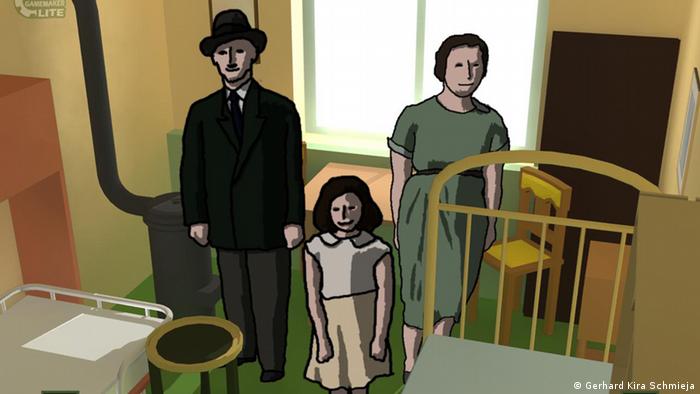
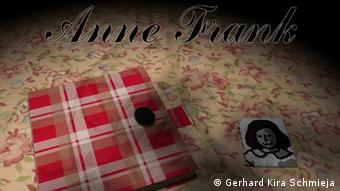
The life of Anne Frank as  computer game is a new game by Kira Resari, a German designer. Kira Resari built a prototype of the game as his bachelor's thesis while he was studying game design at the Macromedia College in Munich.


Anne Frank, computer game

It takes place over the course of one day, Oct. 20, 1942, with the player able to interact with Frank's sister and parents as well as the van Pels family, the people with whom the Franks were hiding.

Anne sits in the kitchen studying while her mother prepares lunch for the residents of the hideout, located in a rear house in Amsterdam. She asks Anne to get a bag of potatoes from the attic. But Anne has second thoughts. She feels weak and tired. 
  • Should she really go upstairs and get the bag? 
  • What if she stumbles and makes noise? 
  • Would the neighbors hear the noise and report them? 
  • If she refuses to go, will her mother be angry? 
  • They are already fighting enough as it is.
These are the decisions the player must make in "Anne Frank," the computer game created by Kira Resari. 


Kira Resari |Anne Frank computer game
The game plunges the player into the world of Frank and her family, memorialized in the famous diary kept by the Jewish girl during the Holocaust.

  • The principle of the game is simple: 
Students/users can move freely within the rear house of the building complex on Prinsengracht 263. 

The game is constricted to one day in the life of the Jewish girl - October 20, 1942. The Franks haven't lived in the hideout for very long. 

In the role of Anne, the student/user meets her sister Margot, parents Otto and Edith, and members of the van Pels family, who also hide there. The students can decide whether Anne Frank is studying, doing her homework, or writing in her diary.


Anne Frank, computer game | Kira Resari
Resari refers to his Anne Frank project as an "interactive experience," rather than a game. He wants to recreate the atmosphere in the rear house hideout so that the students/users can best relate to the way Anne Frank must have felt. 

In this way the game doesn't offer any opulent 3D graphics or booming sound effects. The overall visual appearance could bd described as simple and rather dismal, punctuated by quiet, melancholic piano music.

Note: Anne Frank computer game was a  prototype, and Resari was not planning to market it commercially (2013). We don't know if he changed his first idea. We think it would be an interesting educational digital resource to introduce into the school curriculum.
  • The hiding place in 3D (online):
The Anne Frank House museum offers a three-dimensional online environment, in which visitors/students can explore the front of the house and the secret annex as it was then, as well as listen to audio commentaries and stories explaining historic facts.

Other Resources:

Mémorial de la SHOAH | Musée, centre de documentation : Resources in French and Engilish languages. The resources cover different learning levels.


Le grenier de Sarah | Sarah's Attic
The website  Sarah's Attic for Primary education in several languages:
  • English
  • French
  • Spanish
  • German
  • Polish
You can search for other resources on my blog posts Teaching the Holocaust and The Book Thief and The Holocaust. Of course the blog for my students have interesting posts about Anne Frank.


The Holocaust's children


Some thoughts:

Learning about the universal history facts in the past or present can engage students in a critical reflection about the values of human rights to prevent such atrocities in the present and future. Talking about the heritage of humanity, the roots of genocides, and the necessity to nurture peace and human rights is one of the most important values that school curricula can teach.

I'm sure you will have interesting lessons and will develop wonderful projects with your students. Students love History and Literature. 

You don't have to finish in a week. Give some time of your lessons to really help your students to understand the values of a young girl who died tragically but never lost her faith in a better world. 

Teachers have always the faith in a better world. This is why we teach. For a better word, not only for learning competences but for humanitarian skills. The excert below from Anne Frank' Diary is so real in our days!


"I live in a crazy time."

Anne Frank, The Diary of a Young Girl

G-Souto

21.01.2015


Copyright © 2015G-Souto'sBlog, gsouto-digitalteacher.blogspot.com®

Creative Commons License

Schools : Teaching the Holocaust : digital resources bG-Souto is licensed under a Creative Commons Attribution-NonCommercial-NoDerivatives 4.0 International License.


Friday, January 16, 2015

Education : TELL Awards, submit your project !


"Most people on the planet would agree that educating young people is part of the greater good, something well worth supporting by society."
Our objective is to change the world, to better learning opportunities for young people. We are doing this because we aim for the future, for a better, more modern, education.
No doubt that Technology Enhanced Learning (TEL) has created enormous changes in schools, universities and in vocational learning. However, these innovations have tended to be unsustainable. Too often, initiatives need a high degree of effort to be sustained, and are consequently endangered when funding stops. 
However few educational institutions have taken these technologies up in a systematic way in order to include them in their learning strategy. In spite of a huge amount of technologies available for learning purposes, teachers and students are NOT taking them up and the real breakthrough of new teaching and learning methods with new technologies has not happened.
The European TELL US competition sponsored by the European Commission’s DG Connect is open for ALL participants from large companies, SMEs, innovators, formal education actors and students.

Objective:

To change the world, to better learning opportunities for young people. TELL Awards is doing this because it aim for the future, for a better, more modern, education.


The competition will be subdivided into the “formal educational environment” which is centred on the three following main market segments:
  • Schools
  • Vocational Education and Training
  • Higher Education (High Schools and Universities)
The competition is organized in two stages with correspondent services levels:

1. Regional competitions online: 16 winners will be selected for the Grand Final. Each one of them will receive a prize including internationalisation support (one showcase event), soft landing services in one of the cluster ecosystems, and advice on EU projects, among others.

2. The Grand Final at Futur en Seine which will take place on 15th June 2015 in Paris, in Paris, where the four winners will be selected by an international, high-level jury and the public.


The 4 Regions:

Visit here

Jury:

The European Jury composed from a selection of the stakeholders from EU countries will be judge both the Regional contests and the Grand Final.
Each regional and final competition will also have an exhibition element and will enable the general public to assess the entrants and vote for a special ‘people’s choice’ awards.
Criterias :
The contest criteria will be drawn from the following foundations i.e. what we are looking for are solutions that: 
  1. Meets the expected learning objectives
  2. Appearance
  3. Creativity
  4. Ease of use for the learner
  5. Interactivity
  6. Ease of updating and adding content
  7. Holds the learner's interest
  8. Potential impact of the course based upon category and potential audience.


Prizes

Prizes for each of the winners include 2,500 euros in cash, a 500 euros Amazon account to cover technological needs, Startup Profiling on EDUKWEST Europe along with social media promotion, HP equipment, and many other prizes.

Application:

Participants must enter their application online. 

Deadline : 

The submission deadline for the TELL US Awards ends on 31 January 2015.


The 4 finalists will be awarded cash prizes by an international, high-level jury and the public. 

They will receive a cheque, IT hadware, coaching for internationalization (meeting potential clients, investors, etc) and a strong international visibility. We are pleased to count among our sponsors today HP, Telefonica, Capita, Go-Xapi, etc.


Participants :


Please complete the application in in full online: This application will form the basis for selection of candidates to progress to the second stage of the Awards Competition. 

Further information: 

For any further information please contact Camille Vidaud


Education:

How many teachers gave up for interesting and pioneers projects because they haven't the money and support to develop or to continue their creative ideas on Education.

I am one of them. In 2002, I created the first e-learning project at Secondary education to enhance Langages curriculum with ICT but unfortunately after two years with an incredible effort, the project could not be developed because I hadn't no money to support it and to continue my creative ideas on Education. The project was very appreciated by innovators, teachers and educational networks in Europe, United States, Afirca.

Today the project is a prototype and take part of the Micro Innovators network at VISIR.

However, in 2004, I submitted Kidzlearn Lugares & Aprendizagens at Global Junior Challenge, Rome and my project was a finalist project among 647 projects from all over the world. 

See? Now there are TELL AwardsThis is your opportunity to share your project to enhance learning by using technology.

We are on the 21th century and there are a lot of teachers who feel not confortable using technology in the classroom. Don't ! Ask for help from trainers or teachers that use technology in the classroom for years to enhance learning and motivate students to school curriculum.

"TELL Awards' objective is to change the world, to better learning opportunities for young people. We are doing this because we aim for the future, for a better, more modern, education."


G-Souto

16.01.2015


Copyright © 2015G-Souto'sBlog, gsouto-digitalteacher.blogspot.com®

Creative Commons License

Education : TELL Awards, submit your project ! bG-Souto is licensed under a Creative Commons Attribution-NonCommercial-NoDerivatives 4.0 International License.