Showing posts with label Narrative text. Show all posts

Monday, January 27, 2020

Schools : Auschwitz-Birkenau 75 years after : new resources


Camp of Auschwitz-Birkenau
credits: Getty

27 January 2020 marks the 75th anniversary of the liberation of the Nazi German concentration and extermination Camp of Auschwitz-Birkenau by Soviet troops on 27 January 1945. In 2005, the date was officially proclaimed International Day of Commemoration in Memory of the Victims of the Holocaust by the United Nations General Assembly. 


International Holocaust Remembrance Day
credits: UNESCO


"Seventy-five  years  ago,  the  100th  and  322nd  divisions  of  the  Soviet  Army’s “1st Ukrainian  Front”  reached  the  Nazi  concentration  and  extermination  camp  of  Auschwitz-Birkenau,  whose  very  name  symbolizes  the  barbarism  of  the  killing  centres and concentration camps (...)

Audrey Azoulay, Director-General of UNESCO, message

The Holocaust profoundly affected countries in which Nazi crimes were perpetrated, but also had universal implications and consequences in many other parts of the world.


Exhibition: Seeing Auschwitz
credits: Katia Pizzi
@KatiaPORT

Education:

Educational approaches to the History of Auschwitz, ways to sustain the interest of new generations and raise awareness of its relevance in addressing contemporary issues is an important issue to teach in schools curricula.

Education has a vital role to play in fostering a culture of prevention, undermining prejudice, promoting peaceful co-existence and human rights, and cultivating respect for all peoples


UNESCO recognizes that teaching about the History of the Holocaust is fundamental to establishing respect for human rights, basic freedoms and the values of tolerance and mutual respect.


credits: UNESCO

  • Exhibitions:

Two exhibitions linked to the site of Auschwitz-Birkenau, the history of the Holocaust, and related research are displayed at UNESCO Headquarters offered visitors new perspectives on approaching the history of the Holocaust: 


Exhibition: Crimes Uncovered: The First Generation of Holocaust Researchers

  • The first exhibition "Crimes Uncovered: The First Generation of Holocaust Researchers", developed by the Wiener Holocaust Library, the House of the Wannsee Conference and Touro College Berlin focuses on the beginnings of Holocaust research starting with the first courageous individuals who documented the Nazi crimes at the time of the Second World War. 
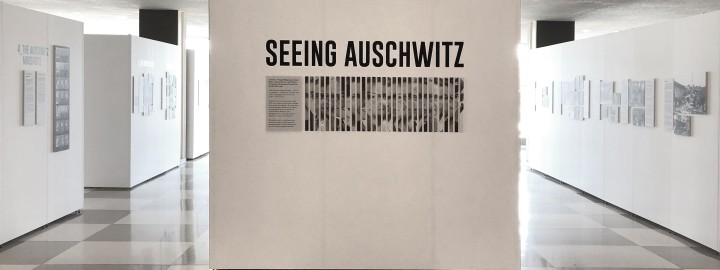


Exhibition: Seeing Auschwitz

  • The second "Seeing Auschwitz", conceived by Musealia and the Auschwitz-Birkenau Memorial specifically for UNESCO and United Nations Headquarters, invites visitors to take a closer look at photographs of Auschwitz-Birkenau and those who perished there. 
  • Both exhibitions remain on show at UNESCO Headquarters until 5 February 2020.

School visits:

If you teach in Paris or near by, don't miss a school visit with your students. Do you want a better lesson? Authentic documents, photos, videos, and other staff.
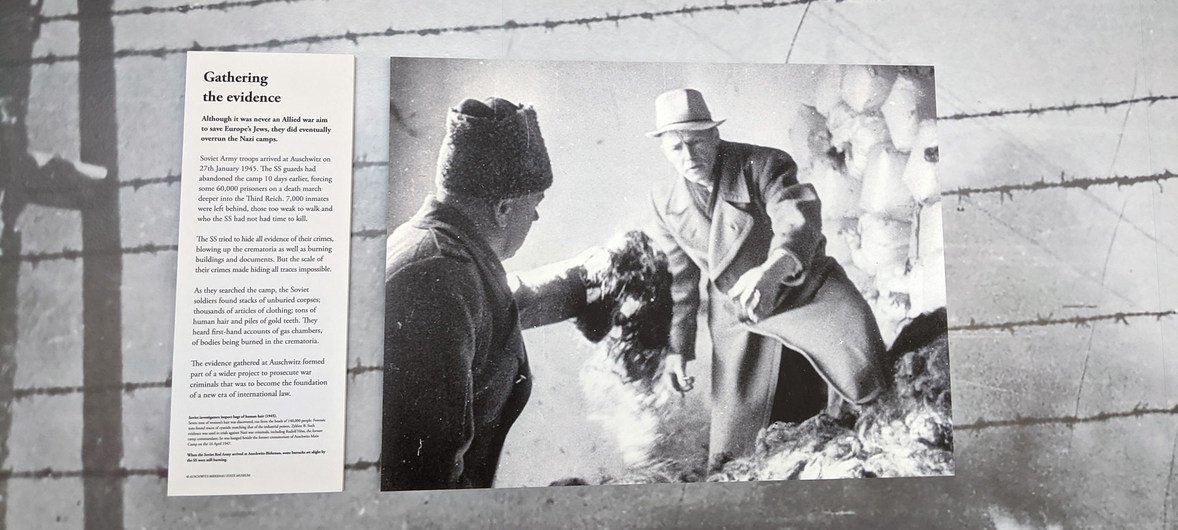


credits: UN


Resources:


Almost one million men, women and children were killed there because they were Jewish mostly as soon as they arrived. In total, Nazis murdered 1,100,000 people at Auschwitz-Birkenau.


  • Video:


I wrote several posts on this blog. Teachers and students will find:


Books: Diary: 


Reading the diary of a person muddling through that history is jarringly different, more like the confusing experience of actually living it. In real time, people are slow to recognize events taking place around them, because they have other priorities; because these events happen invisibly; because changes are incremental and people keep on recalibrating. 


The shock of Renia’s diary is watching a teenage girl with the standard preoccupations—friends, family, schoolwork, boyfriend—come to an inescapable awareness of the violence that is engulfing her.


A replica of Anne Frank's Diary is displayed 
at the Indianapolis Children's Museum in Indianapolis
Michael Conroy/APvia nprEd

You know Anne Frank's Diary of course. A Diary is an interesting part of the Narrative text. Students love to read a diary written by young people.


The Diary of Anne Frank is at once exceedingly special and totally normal. Her circumstances, her writing skill, and her insight make the diary extraordinary. 

How do a diary helps us teach about this special narrative text ? Let's know a new diary written for another young girl. Renia Spiegal!


Renia's Diary
A Holocaust Diary
Renia Spiegal


The long-hidden diary of a young Polish woman's life during the Holocaust, translated for the first time into English.

Hidden for 70 years, a new invaluable contribution to Holocaust literaturethe Renia's Diary was rediscovered inside a desk in New York (2018).

The shock of Renia’s Diary is watching a teenage girl with the standard preoccupations - friends, family, schoolwork, boyfriend - come to an inescapable awareness of the violence that is engulfing her.


Renia's Diary
A Holocaust Diary
Renia Spiegal


Renia Spiegel was born in 1924 to an upper-middle class Jewish family living in southeastern Poland, near what was at that time the border with Romania. At the start of 1939 Renia began a diary. 


“I just want a friend. I want somebody to talk to about my everyday worries and joys. Somebody who would feel what I feel, who would believe me, who would never reveal my secrets. A human being can never be such a friend and that’s why I have decided to look for a confidant in the form of a diary.” 


Renia Spiegal [1924-1942]


And so begins an extraordinary document of an adolescent girl’s hopes and dreams. By the fall of 1939, Renia and her younger sister Elizabeth (née Ariana) were staying with their grandparents in Przemysl, a city in the south, just as the German and Soviet armies invaded Poland. Cut off from their mother, who was in Warsaw, Renia and her family were plunged into war. Read some notes here


Some thoughts:


Diarists are among the most honest writers you'll ever know!  Very few lies exist in a diary that carries the expectation of being private forever. 


Also, a diary is written in a way that is characteristic of an era.  One can learn about speech patterns, syntax, and changes in language from reading a diary.


Teachers will develop some good projects and activities with your students. They love History  and Literature.


You don't have to do it in a week. Give some time to your lessons to really help your students to understand the values of human rights and never accept horrendus historic facts to be repeated. 


"Understanding our history connects us to the essential human values of truth, respect, justice and compassion."

António Guterres, UN Secretary-General 


G-Souto

27.01.2020
Copyright © 2020G-Souto'sBlog, gsouto-digitalteacher.blogspot.com®

Creative Commons License
Schools :  Auschwitz-Birkenau 75 years after : new resources by G-Souto is licensed under a Creative Commons Attribution-NonCommercial-NoDerivatives 4.0 International License.


Saturday, December 7, 2019

Schools : E.T. Holiday Reunion : a commercial ? Why not !


A Holiday Reunion
XFinity, 2019

Christmas Season approaches. So well, this Thanksgiving, E.T. did more than  a 'phone home', he came home - at least for a little while...

The iconic extraterrestrial from Steven Spielberg's 1982 hit movie E.T. appeared in a new nostalgic Xfinity commercial shown last Thursday. And at over four minutes long, it's a lot like a super-short sequel to the Oscar-winning movie.


A Holiday Reunion
XFinity, 2019

The short film brings E.T. back to Earth, where he shows up at the home of his old pal Elliott, played by a now-grown Henry Thomas, 37 years after the two met in the film. 

"A lot has changed since you were here," Elliott says, and that's an understatement.


After 37 years, E.T. comes back to visit his friend, Elliott, for the holidays. During his stay, E.T. learns that Elliott now has a family of his own and that technology has completely changed on Earth since his last visit.


E.T. the Extra-Terrestrial
Steven Spielberg, 1982

E.T. was the most popular movie of the 1980s. Me and my kids went to the movies. And everyone cried at the end with this touching story between Elliot and the lovely allien E.T. (called E.T., condensing Elliott’s own name).

It humorously and movingly portrayed grade-school kid Elliott (Henry Thomas), feeling lonely during his parents’ separation, as he develops a friendship with an alien from outer space.


A Holiday Reunion
XFinity, 2019

E.T. meets Elliott's family and learns about Earth's new technology (XFinity commercial), including a freaky virtual-reality dinosaur game. 

Using a device of his own, E.T. shows his Elliot an image of his own far-off family. 

And there are plenty of nods to the original film, including E.T. maintaining his love for Reese's Pieces, the flying bike scene, and Elliott's son wearing pajamas that look like those his dad wore in E.T


A Holiday Reunion
XFinity, 2019

The ending, while a bit sad, is a sweet completion of the holidays are for reuniting with family theme that runs through the ad.

"The audience is going to get everything they want out of a sequel without the messy bits that could destroy the beauty of the original and the special place it has in people's minds and hearts," (...) "It's really a win-win."

Henry Thomas

Fans seem to think so, too. In 16 hours, the YouTube version of the ad had been watched more than 1.8 million times.


A Holiday Reunion
XFinity, 2019

The extra-terrestrial is a squat, brown-skinned, wide-eyed creature with whom white-American suburban-boy Elliott experiences telepathic empathy: psychological projection made real.


E.T. the Extra-Terrestrial
Steven Spielberg, 1082

E.T. was instantly beloved. Coming after the cornball antics of Star Wars, "it raised the stakes of what popular cinema could express and tapped the universal need to be understood." 
Spielberg film made the process of identification that accompanies a child’s personal growth and maturation seem almost magical.
However, there are some critics. No matter the commercial, will be a lovely resource to bring back the real E.T. film to our days children at school.


Education:
Although some criticism, the commercial brought back some of the magical of the real movie E.T. by Steve Spielberg.
Why not to include it into your school curriculum as a motivation to explore the Narrative with E.T. by Steven Spielberg. 
It will be a lovely resource to bring back the real E.T. to our days children at school and watch how Steven Spielberg’s iconic movie came back to life for Xfinity’s holiday short story after 37 years.
Teens love technology, right?! It will be interesting to complete the narrative in E.T. with the make-of Family Reunion.


Remember, everything is possible when we want to have the attention of our students into the school curriculum! The important is how you will introduce new staff into your lessons and how to explore it in a pedagogical way. 

G-Souto

07.12.2019
Copyright © 2019G-Souto'sBlog, gsouto-digitalteacher.blogspot.com®

Creative Commons License
Schools : E.T. Holiday Reunion : a commercial ? Why not ? bG-Souto is licensed under a Creative Commons Attribution-NonCommercial-NoDerivatives 4.0 International License. 


Wednesday, February 17, 2016

Schools :The Present, a short animation about teens disabilities !


The Present
short animation
by Jacob Frey


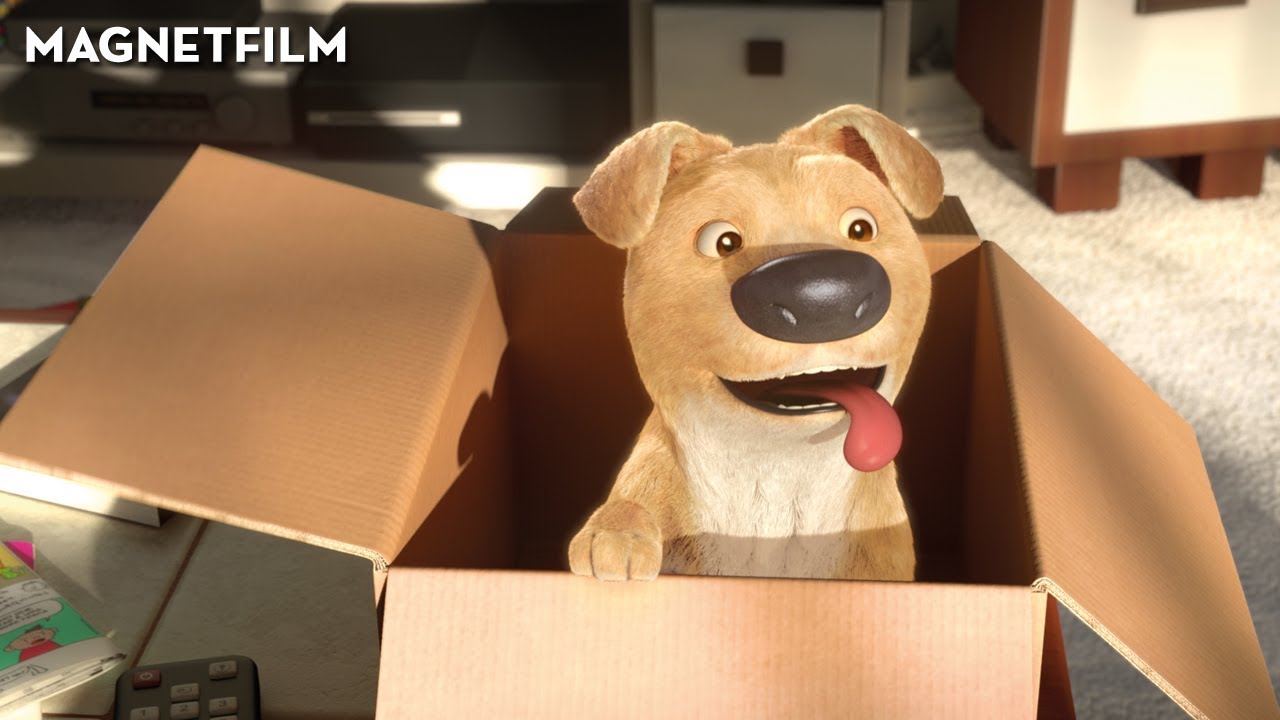
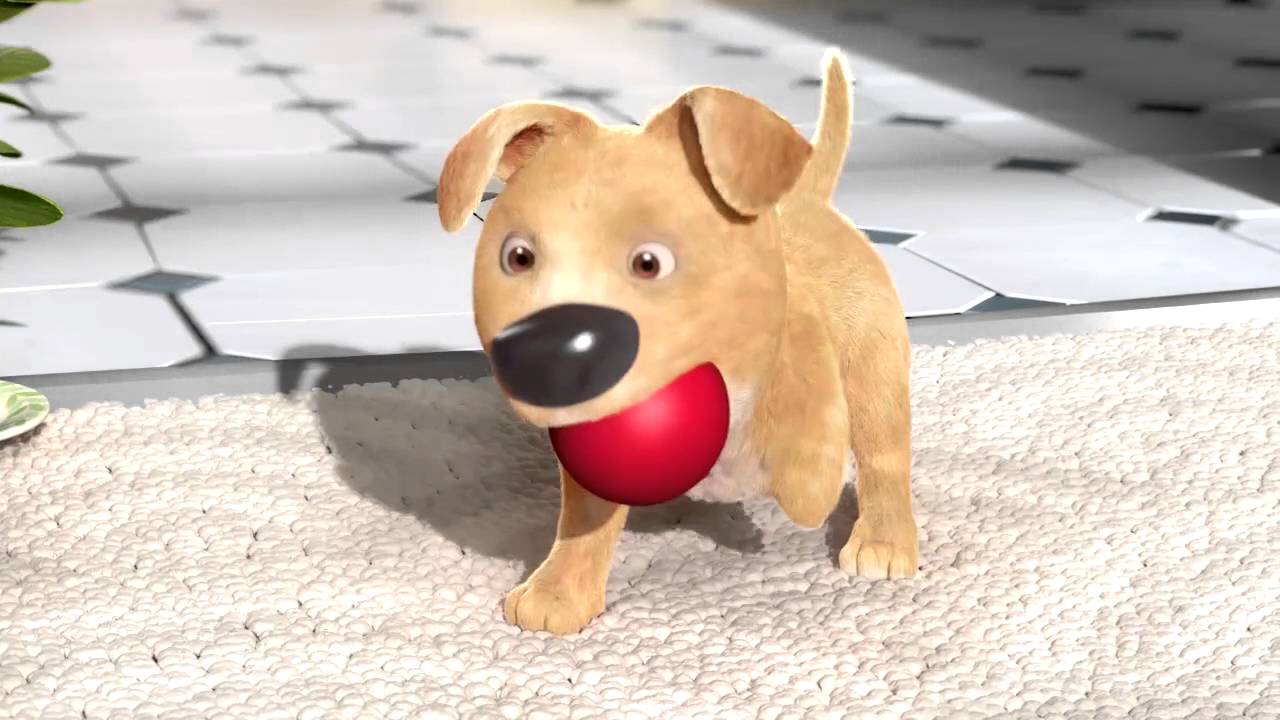
The Present is a touching short animation, created by Jacob Frey, about a young boy with some disability and his new dog. 

The short appropriately titled The Present, was a thesis project from filmmaker Jacob Frey, who wrote, directed and animated the entire short.  He developed it with several others as a thesis project at the Filmakademie Baden-Wuerttemberg in Ludwigsburg, Germany. 


The Present
short animation
by Jacob Frey, 2014
"This project is my thesis from Filmakademie Baden-Württemberg, got entirely animated by myself  and took a little over a year to finish it from scratch to final comp. It was built and animated within Maya, we used Pixar Renderman for the rendering and used Yeti Fur for the fur pipeline."
Jacob Frey
It's been screened at over 180 film festivals around the world and has raked in more than 50 awards. Frey deserves it. The short animation is so touching!

The Present
short animation
by Jacob Frey


When I first started watching it, I was pretty angry with the kid who gets this new present. The boy, who appears entranced in his video game, at first, treats his present poorly due to a missing leg. Then, I found out why... 

Synopsis:

The short animation tells the story of a boy who rather spends his time indoors playing video games instead of discovering what's waiting in front of his door. One day, his mum decides to do a little surprise to her son. And it will be harder to concentrate on his video game...


Perfection
comic strip

Frey’s short animation is based on the comic strip titled “Perfection” by the artist Fabio Coala, a comic also emotional. Originally published in 2012, this comic strip has been transformed into an award winning animated short film, also titled The Present, by Jacob Frey.


The Present
short animation
by Jacob Frey
  • Some information:

Did you know that animated shorts used to be shown in theaters before feature - length films? 
Indeed, it's true. Sometimes it happens when I go to the movies.  This is a great way to showcase new talents and warm up the audience before diving into a bigger story. 
Disney is keeping this tradition alive today with lovely little films like Paperman, premiered before Wreck-It Ralph in 2012.
My usual readers know I love animated films and I include some into school curriculum. So, I often share with you on my blog, some shorts. Paperman is one of them. It's a lovely digital resource to inspire a Valentine's Day lesson. It had a huge success! Don't miss the publication.


The Present
short animation
by Jacob Frey


Education:

The Present is a well done short animation with an huge problem: Disabilities. Teens and disability. And why not animals and disability?

Teens disability is a very delicate problem that we have to face in our classes. Especially, we must help classmates to understand and be kind. 

When we see that a student has some kind of disability, we can't let his classmates stigmatize him. We must act.


The Present
short animation
by Jacob Frey


So this short is a touching pedagogical resource to include the theme 'Disabilities' into your curriculum. Every child should be able to succeed in every area taught in schools, no matter the disability.
  • How to do it?

I recommend displaying the short in the classroom before reading the comic that it was based on. However, no matter what order you decide to include these resources into the curriculum, you must be sure that your students will be touched by this powerful story of friendship and love between a special boy and a very special puppy. 


The Present
short animation
by Jacob Frey
This pup only has three legs. He’s missing one of his front legs, but that doesn’t slow him down. It brings the boy out of his shell and helps him realize that we can be happy the way we are, even if we aren’t 'perfect'.
The Presentthe dog continues to respond positively, while the boy name Tigaalso demonstrates resilience, yet this is a quality often explored through the human traits of the dog protagonist.


  • Let's explore the short :

  • Theme: Teenagers and disability.
  • Languages: English and other languages.
  • Level: Primary education; Secondary education (different grades); Vocational Arts (Multimedia).
  • Time: Two/three lessons. It will depend of the activities you will prepare to complete this pedagogical resource.
  • Age: All ages. Pay attention to the activities you will prepare depending of the age  and level you are teaching. 
Activities
Displaying  the short animation, predicting the reasons of the bad attitudes from the boy to the little puppy, pay attention to the first reactions from your students, estimating the end of the short. The puppy's role is important as well.


The Present
short animation
by Jacob Frey
  • Display the short in two parts. The first one until the dog doesn't give up to play with the boy.
  • Ask your students to summarise the story that animation tells. And then ask to predict the rest of the short.
  • Tell your students they are going to watch the continuation of the short. As they are watching, they should compare the end that they imagined with the real end of the short.
  • Students will discus the short in the classroom and then they will be invited to watch the emotional comic trip by Fabio Coala.
  • Both texts ( comic trip and animation) demonstrate a shifting emotional response for the main characters: from anger to acceptance in The Presentwith Tiga’s exuberant positivity tempered by an understanding that trust is based on mutual respect.
  • Hold a plenary discussion based on the two educational resources: the short animation and the comic trip.

Linguistics:

Practizing vocabulary and grammar : character; adjectives:  
  • Adjectives to describe character of the boy and behaviour of the dog.
  • Get feedback from the whole class on the boy’s character and behaviour. 


The Present
short animation
by Jacob Frey


Some thoughts:

Animated films can be include into school curricula to teach different skills. Please read my publications Exploring Animated Movies in Education and on Éducation : on parle films d'animation en français?

  • Animated films are amazing! What a wonderful resource to get motivate students and keep them focused!

  • Animations, short or not, can offer teachers and students a nice inspirational push to have an amazing lesson! 


The Present/ Jacob Fry/ YouTube
short animation
by Jacob Frey


The Present is a captivating digital 
resource:

  •  to teach literacy, grammar, morals, civics, animation, other;
  • to talk about equity, tolerance, friendship. Students with some disability must be seen for their classmates as equal.
  • to reinforcing valuesskills, reading, writing, composingor introducing the skill of inference.


The Present
short animation
by Jacob Frey


  • Equity, morals, civics:


Displaying The Present at your in-person lesson is very important to include teen disabilities into the curriculum. 

We have some students with disability in our classes. Sometimes they feel stigmatized, they have some difficulty to accept their disability. And classmates also have some limitations to see these students as a equal. 

This is the role of the teacher. And this short film helps in a touching way.

This short animation makes everyone realize that even if we are missing a leg, we can be perfect and happy, just like this cute little puppy. A lesson for many out there. 

Ask your students to adopt a pet with disability. Pets are so grateful and devoted!


The Present
short animation
by Jacob Frey


  • Languages : Narrative, grammar, vocabulary:


The Present, a kind and emotional narrative without words let us know so many things. It tells us what happened. Why it happens. It tells us a story. In this case, an emotional narrative that will touch students and teachers.

Students love to hear stories, watch, write or draw stories. This one is particularly special. 

The positive attitude - joy - of the little dog, even when the boy keeps it away helps the boy to see himself as a 'normal' teen.

Exploring animations will help the students to develop great values, and create better storytelling.


"We come to love not by finding a perfect person, but by learning to see imperfect person perfectly."


G-Souto

16.02.2016
Copyright © 2016G-Souto'sBlog, gsouto-digitalteacher.blogspot.com®

Creative Commons License
Schools : The Present, a short animation anout teens disabilities bG-Souto is licensed under a Creative Commons Attribution-NonCommercial-NoDerivatives 4.0 International License