Showing posts with label The Holocaust. Show all posts

Monday, January 27, 2025

History in School : The 80th Anniversary of the Liberation of the Auschwitz Birkenau !


credits: © Olivier Mériel/Mémorial de la Shoah


"At a time when survivors and direct witnesses of the Holocaust are growing fewer, it is vital to further invest in education to pass on memory to younger generations.  as well as to combat contemporary forms of antisemitism. Since it’s creation, UNESCO has been resolutely committed to carrying out this mission. Over the past ten years, we have led such actions in 85 countries."

Audrey Azoulay, UNESCO Director-General


Every year around 27 January, UNESCO pays tribute to the memory of the victims of the Holocaust and reaffirms its unwavering commitment to counter antisemitism, racism, and other forms of intolerance that may lead to group-targeted violence. The date marks the anniversary of the liberation of the Auschwitz Birkenau German Nazi Concentration and Extermination Camp by Soviet troops on 27 January 1945. It was officially proclaimed, in November 2005


credits: Memorial & Museum Auschwitz-Birkenau


27 January 2025 will mark the 80ᵉ anniversary of the liberation of the Auschwitz-Birkenau Nazi concentration and extermination camp. On the occasion of the International Day dedicated to the memory of the victims of the Holocaust, more than 250 students from middle schools in Paris and the Paris region joined together at UNESCO for a significant and meaningful event. 


Education


Almost one million men, women and children were killed there because they were Jewish mostly as soon as they arrived. In total, Nazis murdered 1,100,000 people at Auschwitz-Birkenau.


As genocide and atrocity crimes keep occurring across several regions, and as we are witnessing a global rise of antisemitism and hate speech, this has never been so relevant. 

Marking the 80th Anniversary of the liberation of Auschwitz-Birkenau German Nazi Concentration and Extermination Camp, UNESCO is launching a guide for teachers and a set of lesson activities to support countering Holocaust denial and distortion through education.


UNESCO also published three new sets of guidelines for teachers and journalists to combat Holocaust denial and disinformation, while supporting the creation of a new center for research and education on extremism in the former house of the Auschwitz commander.


Lesson activities for Secondary Education
credits: UNESCO


The Guide for teachers and the Lesson activities for secondary education delve into the specifics of how Holocaust denial and anti-Semitic discourse appear online and in the classroom, while also offering survivor testimonies and lessons plans to help teachers develop their pupils' knowledge and critical thinking skills in the face of disinformation about the Holocaust.


Useful links for teachers and students : 

The Wiener Holocaust Library

 Memorial & Museum Auschwitz-Birkenau

Beyond the Abyss – 80th anniversary of the liberation of Auschwitz-Birkenau

Survivors and World Leaders Gather to Commemorate 80th Anniversary of Auschwitz Liberation


"Memory work is about rediscovering for yourself the history of people who may have lived near you. It’s about reconstructing their journeys so that their stories are never forgotten."

Florence Gastaud

G-Souto

27.01.2025

Copyright © 2025G-Souto'sBlog, gsouto-digitalteacher.blogspot.com®


History in School: The 80th Anniversary of the Liberation of the Auschwitz Birkenau ! by G-Souto is licensed under a Creative Commons Attribution-NonCommercial-NoDerivatives 4.0 International License

Monday, January 27, 2020

Schools : Auschwitz-Birkenau 75 years after : new resources


Camp of Auschwitz-Birkenau
credits: Getty

27 January 2020 marks the 75th anniversary of the liberation of the Nazi German concentration and extermination Camp of Auschwitz-Birkenau by Soviet troops on 27 January 1945. In 2005, the date was officially proclaimed International Day of Commemoration in Memory of the Victims of the Holocaust by the United Nations General Assembly. 


International Holocaust Remembrance Day
credits: UNESCO


"Seventy-five  years  ago,  the  100th  and  322nd  divisions  of  the  Soviet  Army’s “1st Ukrainian  Front”  reached  the  Nazi  concentration  and  extermination  camp  of  Auschwitz-Birkenau,  whose  very  name  symbolizes  the  barbarism  of  the  killing  centres and concentration camps (...)

Audrey Azoulay, Director-General of UNESCO, message

The Holocaust profoundly affected countries in which Nazi crimes were perpetrated, but also had universal implications and consequences in many other parts of the world.


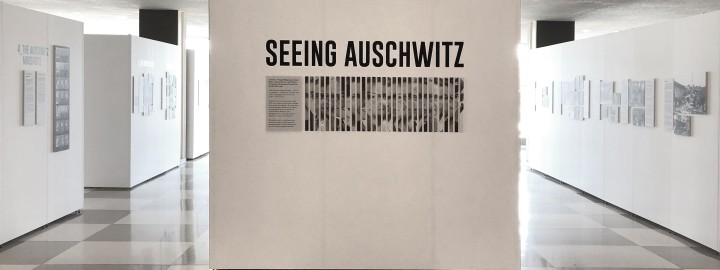
Exhibition: Seeing Auschwitz
credits: Katia Pizzi
@KatiaPORT

Education:

Educational approaches to the History of Auschwitz, ways to sustain the interest of new generations and raise awareness of its relevance in addressing contemporary issues is an important issue to teach in schools curricula.

Education has a vital role to play in fostering a culture of prevention, undermining prejudice, promoting peaceful co-existence and human rights, and cultivating respect for all peoples


UNESCO recognizes that teaching about the History of the Holocaust is fundamental to establishing respect for human rights, basic freedoms and the values of tolerance and mutual respect.


credits: UNESCO

  • Exhibitions:

Two exhibitions linked to the site of Auschwitz-Birkenau, the history of the Holocaust, and related research are displayed at UNESCO Headquarters offered visitors new perspectives on approaching the history of the Holocaust: 


Exhibition: Crimes Uncovered: The First Generation of Holocaust Researchers

  • The first exhibition "Crimes Uncovered: The First Generation of Holocaust Researchers", developed by the Wiener Holocaust Library, the House of the Wannsee Conference and Touro College Berlin focuses on the beginnings of Holocaust research starting with the first courageous individuals who documented the Nazi crimes at the time of the Second World War. 


Exhibition: Seeing Auschwitz

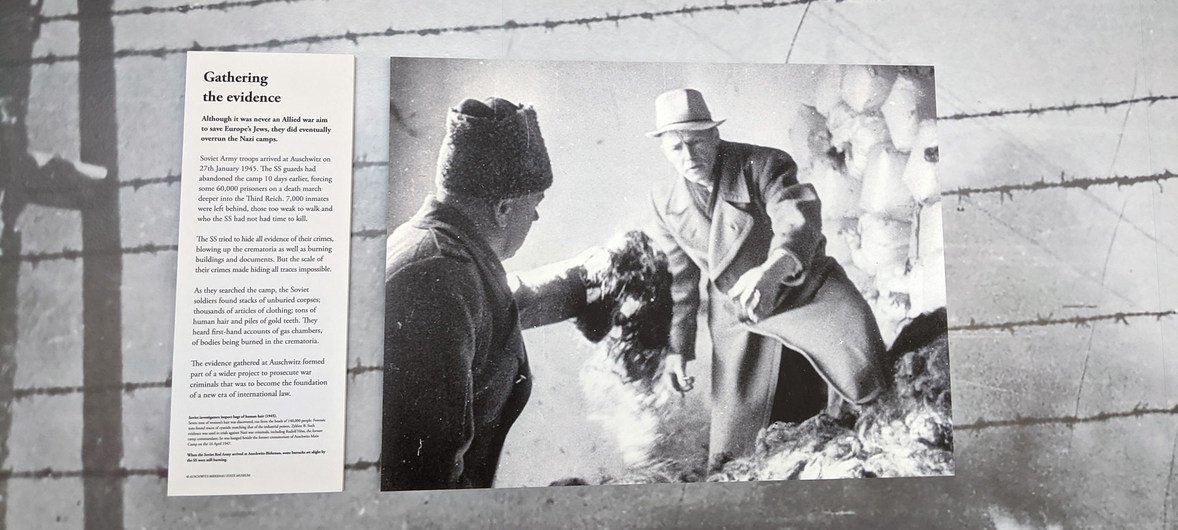
  • The second "Seeing Auschwitz", conceived by Musealia and the Auschwitz-Birkenau Memorial specifically for UNESCO and United Nations Headquarters, invites visitors to take a closer look at photographs of Auschwitz-Birkenau and those who perished there. 
  • Both exhibitions remain on show at UNESCO Headquarters until 5 February 2020.

School visits:

If you teach in Paris or near by, don't miss a school visit with your students. Do you want a better lesson? Authentic documents, photos, videos, and other staff.


credits: UN


Resources:


Almost one million men, women and children were killed there because they were Jewish mostly as soon as they arrived. In total, Nazis murdered 1,100,000 people at Auschwitz-Birkenau.


  • Video:


I wrote several posts on this blog. Teachers and students will find:


Books: Diary: 


Reading the diary of a person muddling through that history is jarringly different, more like the confusing experience of actually living it. In real time, people are slow to recognize events taking place around them, because they have other priorities; because these events happen invisibly; because changes are incremental and people keep on recalibrating. 


The shock of Renia’s diary is watching a teenage girl with the standard preoccupations—friends, family, schoolwork, boyfriend—come to an inescapable awareness of the violence that is engulfing her.


A replica of Anne Frank's Diary is displayed 
at the Indianapolis Children's Museum in Indianapolis
Michael Conroy/APvia nprEd

You know Anne Frank's Diary of course. A Diary is an interesting part of the Narrative text. Students love to read a diary written by young people.


The Diary of Anne Frank is at once exceedingly special and totally normal. Her circumstances, her writing skill, and her insight make the diary extraordinary. 

How do a diary helps us teach about this special narrative text ? Let's know a new diary written for another young girl. Renia Spiegal!


Renia's Diary
A Holocaust Diary
Renia Spiegal


The long-hidden diary of a young Polish woman's life during the Holocaust, translated for the first time into English.

Hidden for 70 years, a new invaluable contribution to Holocaust literaturethe Renia's Diary was rediscovered inside a desk in New York (2018).

The shock of Renia’s Diary is watching a teenage girl with the standard preoccupations - friends, family, schoolwork, boyfriend - come to an inescapable awareness of the violence that is engulfing her.


Renia's Diary
A Holocaust Diary
Renia Spiegal


Renia Spiegel was born in 1924 to an upper-middle class Jewish family living in southeastern Poland, near what was at that time the border with Romania. At the start of 1939 Renia began a diary. 


“I just want a friend. I want somebody to talk to about my everyday worries and joys. Somebody who would feel what I feel, who would believe me, who would never reveal my secrets. A human being can never be such a friend and that’s why I have decided to look for a confidant in the form of a diary.” 


Renia Spiegal [1924-1942]


And so begins an extraordinary document of an adolescent girl’s hopes and dreams. By the fall of 1939, Renia and her younger sister Elizabeth (née Ariana) were staying with their grandparents in Przemysl, a city in the south, just as the German and Soviet armies invaded Poland. Cut off from their mother, who was in Warsaw, Renia and her family were plunged into war. Read some notes here


Some thoughts:


Diarists are among the most honest writers you'll ever know!  Very few lies exist in a diary that carries the expectation of being private forever. 


Also, a diary is written in a way that is characteristic of an era.  One can learn about speech patterns, syntax, and changes in language from reading a diary.


Teachers will develop some good projects and activities with your students. They love History  and Literature.


You don't have to do it in a week. Give some time to your lessons to really help your students to understand the values of human rights and never accept horrendus historic facts to be repeated. 


"Understanding our history connects us to the essential human values of truth, respect, justice and compassion."

António Guterres, UN Secretary-General 


G-Souto

27.01.2020
Copyright © 2020G-Souto'sBlog, gsouto-digitalteacher.blogspot.com®

Creative Commons License
Schools :  Auschwitz-Birkenau 75 years after : new resources by G-Souto is licensed under a Creative Commons Attribution-NonCommercial-NoDerivatives 4.0 International License.


Thursday, February 7, 2013

January rundown of the most-read posts


Connect with Respect!


February 5 was "Safer Internet Day" ! I couldn't write a post about it. A lot of work! But I did it on my students blogs here (French foreign language) and here (Portuguese mother language).

However, you can't miss the post Trust: a film about safety on internet and it 's always useful read Make your Safe Internet Day

You know that you and your students have almost a month to work in the classroom about the theme and include activities and projects at the Competition for children and young people about their online achievements. 

There will be three categories of entry: 
  • under 9
  • 10-14
  • over 15 
Entries will be accepted online from 5 February - 15 March 2013 inclusive.

Please use your creativity and imagination! 


And now let's talk about the most-read topics in January. As you already know, I write in English, French, and Portuguese on this blog:

No doubt! Voltaire's Candide: app for iPad in Education was the most read:


screenshot Candide app


"Why do bad things happen to good people? Well, why not? The handsome young Candide, having been taught that this is the best of all possible worlds, quickly learns that is far from true. (...)  we must surely conclude that we can still profit by the example of lucidity, the acumen, the intellectual honesty, and the moral courage of Voltaire's Candide."

The Bibliothèque Nationale de France and Orange, with the participation of the Voltaire Foundation, have launched a digital edition of Voltaire's Candide. 


This free iPad app is now available for download from iTunes. Watch the video below (French laguage):


Education:

Educators and students have now the chance to rediscover one of the major literary classics and always read in Humanities curricula, Voltaire’s Candide, a new iPad App. 


The app innovatively redefines the scope of a literature masterpiece and help us rediscover this important French classical book, in new and engaging learning ways as you could watched on the video. 


The enhanced e-book includes the original Voltaire manuscript preserved at the Bibliothèque Nationale de France and further exclusive content.


Teaching the HolocaustEvery year around 27 January, since 2005, UNESCO pays tribute to the memory of the victims of the Holocaust. This date marks the anniversary of the liberation of the Nazi German Concentration and Extermination Camp of Auschwitz-Birkenau by the Soviet troops in 1945.  

In 2013, the theme chosen by the United Nations for this International Day is “The Courage to Care: Rescue during the Holocaust”. 

Each person who becomes aware of this history will no doubt reflect upon his or her own capacity to turn compassion for others into decisive and heroic action in their time of need.


photo: Children portraits
Education:

"Freedom, goodness, giving, courage, happiness, humanity, usefulness…"

Anne Frank

Learning about this universal history can engage students in a critical reflection about the shared heritage of humanity, the roots of genocide, and the necessity to nurture peace and human rights to prevent such atrocities in the future.  

Literature and Languages curriculum is a perfect curriculum. We can talk, read, write, and learn about every subject.

Reading and writing are two important skills that students must handle easily and digital literacy as well.

Diaries are an interesting part of the Narrative text. Students love to read diaries written from other young people.


To coincide with "Holocaust Memorial Day", Penguin Books launched an app of The Diary of a Young Girl by Anne Frank available on iTunes
The app has a wealth of embedded content: video footage of Frank's only living relative Buddy Elias, audio extracts of the diary read by Helena Bonham Carter and translated facsimile pages from the original diary. There are also "Story Trails" with titles such as "Fear" and "Life in Hiding".


Parlons de genre... au féminin à l'écoleIl est assez intéressant d'assister aux promotions simultanées d'Hunger Games et de Rebelle : 

Les deux héroïnes sont des jeunes filles au caractère fort, qui s'opposent à la conduite qui leur est dictée, et elles sont championnes de tir à l'arc, outil qui sert à leur rébellion.

La première épate le jury des Jeux de la Faim avec ses flèches (on n'en dira pas plus) tandis que la seconde se sert de son talent pour désobéir à sa mère. 


Éducation:

Une nouvelle dimension féminine au moment où 'genre et parité' est à l'ordre du jour un peu partout?

Des heroïnes fortes, idépendantes et qui réussissent à se battre contres les barrières sexistes? Dans les livres et dans les films.

Bien que dans les écoles l'infrastructure soit parfaite pour que les filles et les garçons développent et démontrent leur talent, et puissent progresser, il y a souvent des petits qui pro quo quand les filles choisissent des études ou des métiers qu'on lie plutôt aux garçons: les sciences, les technologies, éducation physique.

Alors, je crois que Brave | Rebelle et Hunger Games | Jeux de la Faim peuvent bien  être des outils pédagogiques iintéressants à introduire dans des différentes disciplines pour parler de "genre et parité" à l'école.


Iban Barrenetxea |  Espanha
Digital 2011


“The powerful, not to say unique, contribution to children's enjoyment and comprehension of language - and to their emotional development - from deep engagement with story telling and regular exposure to excellent literature is recognised throughout early years and primary education.”

The Rose Report 2009
Um Chá para Alice é uma exposição que está patente na Fundação Calouste Gulbenkian e que pode tornar-se uma magnífica aula aberta no museu sobre o texto narrativo.

Celebra o clássico de Lewis Carroll através de algumas sugestivas ilustrações contemporâneas sobre Alice

"This exhibition revealed the new golden age of Alice illustration – with original illustrations from contemporary editions, as well as some unpublished versions."

Esta exposição Tea with Alice foi inaugurada em Junho 2012 no Story Museum, em Oxford, a cidade que viu nascer Alice's Adventures in Wonderland há quase 150 anos (1865).


Vladimir Clavijo |  Rússia
Fotografia 2010

Educação:

"A lesson at a Museum as a part of the curriculum will find your students enjoying the numerous interactive exhibits, the daily hands-on activities and the monthly special events."

G-Souto

Aulas abertas em Museus são uma estratégia científco-cultural que nenhum educador pode desperdiçar.

Museus são espaços perfeitos para uma aprendizagem completa dos alunos enquanto futuros cidadãos.


I really hope that you will enjoy every pedagogical proposal written in January or will discover some new pedagogical ideas to introduce in your lessons.

Of course you must not give up of motivate your students to get involved at Safer Internet Day 2013 Competion. You know how important it is to instil in our young students the ability to keep safe on the use of social media.

Thank you so much to all the colleagues from around the world that kindly read my blog every day but are shy ;-) to become followers.


Think of all the beauty in yourself and in everything around you and be happy.

Anne Frank (7 March 1944)

G-Souto

07.02.2013
Copyright © 2013G-Souto'sBlog, gsouto-digitalteacher.blogspot.com®

Licença Creative Commons
January rundown of the most-read posts bG-Souto is licensed under a Creative Commons Attribution-NonCommercial-ShareAlike 3.0 Unported License.