Showing posts with label Partial Lunar Eclipse. Show all posts

Wednesday, August 26, 2026

Schools ! A partial Lunar Eclipse ? Starwatchers look at the sky !


credits : Getty Images


After the total solar eclipse  last 12 August and the Perseid meteor shower, 13 August 2026 here we are again looking at the sky !


The early hours of Friday 28 August will reward very early risers in the UK, Europe and Africa with a fine lunar eclipse. Though not quite a total eclipse, it will transform the moon into a dramatic sight as dawn approaches.


This eclipse is a member of Saros 138. The eclipses in a given saros series are separated by 18 years, 11 days, 8 hours. The previous eclipse in this saros series occurred on August 16, 2008, and the next takes place on September 7, 2044.


On August 28, 2026, the evening of the 27th in some time zones), the Moon passes into the shadow of Earth, creating a deep partial eclipse. 


🌒Which countries will watch ?


At the moment of greatest eclipse, 4:13 a.m. Universal Time, 96.3% of the Moon's disk is within Earth's umbra, the central part of the shadow where the Sun is completely blocked by Earth. This part of the eclipse is visible in the Americas (except Alaska and northwestern Canada), western Europe and western Africa.


credits: NASA


⌚Hour :


The penumbra is the part of Earth's shadow where the Sun is only partially covered by Earth. The effect of the penumbra on the Moon's appearance is subtle. But after the partial phase begins, at 2:34 UTC (10:34 p.m. Eastern on the night of the 27th), the umbra's dramatic effect is easily visible as it takes an increasingly large bite out of the disk of the full Moon. 


Less than an hour later, the part of the Moon still in sunlight will be small enough for observers' eyes to adapt to darkness and perceive the coppery color of the part of the Moon within the umbra. The visualizations here mimic this dark adaptation by increasing the apparent photographic exposure around the time of greatest eclipse.


"Obscuration is more intuitive — it's always between 0 and 1 — and it more closely matches the visual experience. You can say without qualification that "96.3% of the Moon's disk" will be within the umbra."

NASA


credits: NASA


💬Where to watch ?


"A world map showing where the eclipse is visible at different phases. Contours mark the boundary around the part of Earth where each phase is visible. The start of the partial phase, for example, is visible everywhere within the orange contour. The map is centered on 63°8'W, the sublunar point at greatest eclipse (the longitude where the Moon is highest in the sky). The eclipse can't be seen in the gray areas outside the contours."

NASA


As the eclipse unfolds, the moon will be sinking, so find an observation site with an uninterrupted view towards the western horizon, and enjoy the view as the eclipse slips from view while the dawn gathers behind you in the east.


Unlike a solar eclipse, a lunar eclipse is completely safe to watch with the naked eye. Binoculars will even reveal subtle shades of colour across the moon’s surface.


Observers across much of the Americas will be able to enjoy the eclipse from beginning to end from late night on Thursday 27 August, while those in New Zealand will catch little more than its closing moments much later on Friday.


credits: Dreamtime photos


Education:

Summer vacation is drawing to a close. Some kids are already staring down homework and alarm clocks, but others are still enjoying summer camp and late bedtimes.


In European countries most part of schools are closed, as well in North America, Australia, and most countries in the world. I could not be informed about African countries.


However, teachers are in touch with students via Instagram or X/Twitter school accounts, or even on learning blogs or educational websites (schools or personal).


So, teachers can invite their students to join astronomers on NASA Television or skywatchers at national observatories of Astronomy, observing the lunar eclipse tomorrow nigh the 27 August and 28 August too.


Skygazers in America will be able to catch the rare celestial show as Earth's shadow falls across the Moon.


Oh, my ! Ask students to make some photos or videos with their smartphones to explore in Science classroom next September.


Teachers and students can debate their experiences on school time.


Don't forget ! Invite your students to get great images of a partial unar eclipse. They can share them on NASA's Lunar Eclipse Flickr group.


Till there have a nice time on these last days of holidays.


See you soon!


G-Souto

26.08.2026
Copyright © 2026G-Souto'sBlog, gsouto-digitalteacher.blogspot.com®

Creative Commons License
Schools : A partial Lunar Eclipse ? Starwatchers llok at the sky ! by G-Souto is licensed under a Creative Commons Attribution-NonCommercial-NoDerivatives 4.0 International License

References : NASA/ The Guardian Starwatch


Tuesday, August 6, 2019

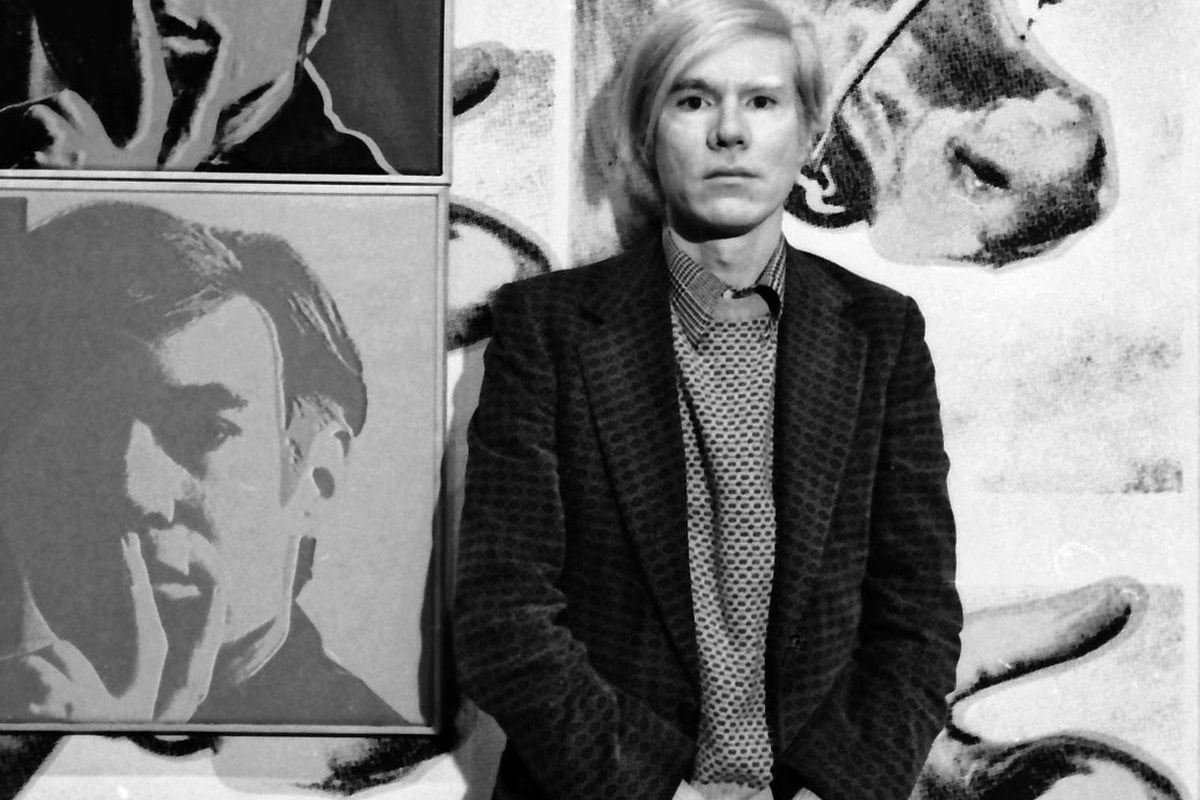
Schools : July in Review & Pop Art : Andy Warhol !


Andy Warhol
credits: © Jack Mitchell
https://hypebeast.com/

Andy Warhol, born Andrew Warhola, on this day 6 Agust 1928 in a two-room apartment at 73 Orr Street in a working-class neighborhood in Pittsburgh, Pennsylvania. 

He had a very particular personal style. He had a shock of white hair and was usually seen wearing a lot of black, leather jackets and glasses or sunglasses.

Andy Warhol is one of the most famous artists, ever. From his soup to his hair, he is an art legend.
Trained in commercial illustration and advertising, Warhol was intrigued by consumer culture and the power of pop-culture icons.


Andy Warhol
Black Bean 1968 
Tate
© 2019 The Andy Warhol Foundation for the Visual Arts, Inc. / Artists Right Society (ARS), New York and DACS, London

Warhol was part of the Pop Art movement. He was famous for exploring popular culture in his work, using brands like Coca Cola and Campbell's Soup (which was one of his favorite things to eat). He died on 22 February 1987.


Andy Warhol, Self-Portrait, 1986
The Andy Warhol Museum, Pittsburgh; Founding Collection, Contribution The Andy Warhol Foundation for the Visual Arts, Inc.
© The Andy Warhol Foundation for the Visual Arts, Inc.
1998.1.814


Nine months before his death, Warhol created a series of iconic monumental self-portraits featuring his gaunt face, fixed gaze, and a spiky wig, some of the canvases measuring nine feet square.


credits: Brownie Harris/Corbis/Getty Images

Warhol in 1983 at his studio, the Factory, with paintings from his Endangered Species series.


  • Pop Art:

What exactly is Pop Art? Find out in this short film...


Warhol liked to use bright colours and silk screening techniques to mass-produce artworks based on photographs of celebrities, like this famous image of Marilyn Monroe among other.


Untitled from Marilyn Monroe
Andy Warhol, 1967

He didn't just do prints though, he made films, digital artwork, paintings and sculptures.
Warhol's studio was called The Factory, which was a reference to the mass-produced nature of his artworks. 


The Factory
Andy Warhol
credits: Stephen Shore
via The Guardian, 2016

He saw art as a product, the same as the clothes you wear and the food you eat. 
He loved Los Angeles, beauty and plastic, things that were modern and changed quickly. 
If he was alive now, what do you think would inspire him?


Quadrant Mickey Mouse

Andy Warhol, 1981
via Christies.com


To learn about Andy Warhol & Pop Art:

  • Tate Kids offer teachers some good information and activities here. Explore some activities Pop Art here
  • The Museum The Warhol. The Warhol offers engaging, interactive installations and activities that appeal to children and adults alike. 
And now, it's time to the review of the most popular posts of July.


Here are the most popular posts of the last month:


Science education : Don't miss the Black Moon : resources 

Summer holidays... just a quiet weekend ! 

Science : Partial Lunar Eclipse tonight ! 


Wherever you are, I hope you are enjoying your holidays. Soon the new school year for some of you.

Have a great time wherever you are! Here, it's Summer... rainy day!


G-Souto

06.08.2019
Copyright © 2019G-Souto'sBlog, gsouto-digitalteacher.blogspot.com®

Tuesday, July 16, 2019

Schools : Science : Partial Lunar Eclipse tonight !


Speyer, Germany
credits: EPA/ Ronald Witteck

Most of us will get a chance tonight to see a partial lunar eclipse. Though not if you live in North America, Greenland or northern Russia. In Portugal, it's visible.


Lunar eclipse Elvas, Portugal, 16 July 2019
credits: Nuno Veiga/ Lusa

A partial lunar eclipse is visible from much of the world tonight. Only North America, Greenland and northern Russia will miss out. 

From Asia and Australia, the eclipse will take place in the early hours of 17 July. From the rest of the world it will happen on the preceding evening. 

Lunar eclipses take place when Earth crosses between the sun and the moon, and casts its shadow across the lunar surface. 


Partial Lunar Eclipse, Berlin, Germany
credits: EPA/Felipe Trueba


The outer portion of Earth’s shadow, known as the penumbra, touches the moon at 19:45 BST on 16 July. 

At this time, the moon will still be below the horizon from the UK. When it rises at 21:06 BST, the darkest, most noticeable portion of Earth’s shadow will have just begun to pass across it. Mid-eclipse occurs at 22:32 BST, when a dark circular “bite” will have covered the moon’s northern hemisphere entirely. 

By midnight BST, 1:20 AM in Portugal, the penumbra will be about to leave the moon, and the penumbral phase finishes about an hour and a quarter later.

Wow! How exciting in some few days NASA marks the 50th anniversary of the Apollo 11 Moon landing!


Partial Lunar eclipse

Education:

Students can be invited to join astronomers and skywatchers at national observatories of Astronomy, observing the partial lunar eclipse. 

Invite them to take some photos or make little videos with their smartphones 
or tablets and publish the best on Twitter hashtag #LunarEclipse.

In science lesson, tomorrow, 17 July, vote the best photo of each class you teach! 

An open debate on the subject with students will be interesting for all.


G-Souto

16.07.2019
Copyright © 2019G-Souto'sBlog, gsouto-digitalteacher.blogspot.com®

Creative Commons License
Schools : Science : Partial Lunar Eclipse tonight by G-Souto is licensed under a Creative Commons Attribution-NonCommercial-NoDerivatives 4.0 International License