Showing posts with label lunar eclipse. Show all posts

Saturday, July 28, 2018

Summer holidays... just a weekend !


Good afternoon from the center of Portugal! Perfect summer day admiring the nature around me in the country. Enjoying every bit.

Wherever you are I hope that you're having a great time too.


Parque das Artes/ Curia, Portugal
credits:  ©GSouto


Despite my best efforts to slow down time, only today I could go out for a summer break! Only two days...

Summer break is obviously one of the best things humankind has ever come up with, I am excited! It's my 'first' break of this summer. 

I will be going to the pool in the morning, revisiting the beautiful park in the afternoon, taking a coffee on the terrace, walking.

At night, I'm going to an outdoor concert. There, lucky me, I will 
observe the lunar eclipse. Wow! Witnessing once-in-a-lifetime meeting in the sky: the longest 'blood moon' eclipse of the 21st century, flanked by a big, brilliant Mars as it heads toward its closest approach to Earth since 2003.

I'll be back to posting the normal Roundup in the next week.

G-Souto

28.07.2018

Copyright © 2018G-Souto'sBlog, gsouto-digitalteacher.blogspot.com®

Creative Commons License

Summer holidays... just a weekend ! by G-Souto is licensed under a Creative Commons Attribution-NonCommercial-NoDerivatives 4.0 International License.


Monday, August 7, 2017

Sciences education : Sturgeon Full Moon ! : resources


Sturgeon full moon
August 7,  2017

Why are eclipses rare? The moon's orbit tilts. Sometimes the moon's shadow is too high above the Earth. Sometimes it is too low. Other times, it is just right. 


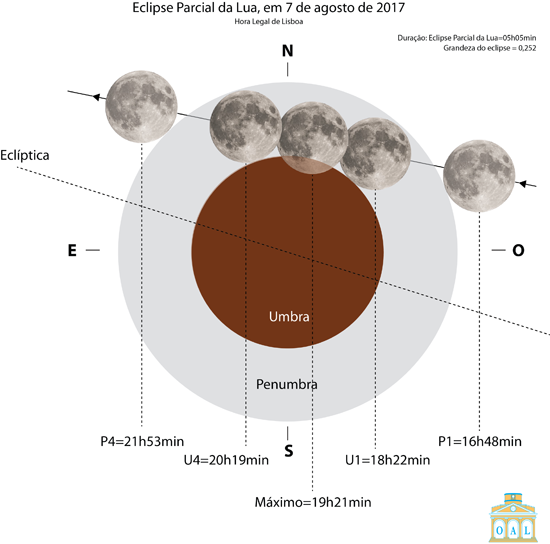
Much of the Eastern Hemisphere will watched a partial eclipse of the moon Monday, August 7. It's a prelude to the grand spectacle that awaits us two weeks later, August 21, 2017


credits: OAL
The lunar eclipse will be visible from parts of Europe, (Portugal yes!Africa, Asia and Australia, and peaks 2:20 p.m. EDT (1820 GMT). 
Even if you're not in the path of the partial lunar eclipse, Monday will bring a summer full moon to the night sky. 


Sturgeon full moon
credits: The Old Farmer's Almanac
Traditions:
Traditionally, some Native American fishing tribes were aware that sturgeon - a large fish that inhabited the Great Lakes as well as Lake Champlain - were most readily caught around the time of the August full moon, hence it became known as the Full Sturgeon Moon


Full moon over the ripe wheat fields
A few tribes knew it as the Full Red Moon because, as the moon rises, it appears reddish through any sultry haze. 

It was also called the Green Corn Moon or the Grain Moon.

Why are eclipses rare? 


The moon's orbit tilts. Sometimes the moon's shadow is too high above the Earth. Sometimes it is too low. Other times, it is just right.
This upcoming full moon will also be the last one before the upcoming Great American Eclipse on Aug. 21 — and will itself experience a partial eclipse.
All this is a fine example of how an "eclipse season" works. An eclipse season is when the sun (from our perspective here on Earth) is close enough to one of the moon's nodes to allow for an eclipse to occur. 
During the season, which lasts a little more than a month, whenever there is a full moon a lunar eclipse will occur and whenever there is a new moon a solar eclipse will occur.

Resources:


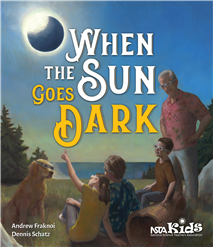
When the Sun Goes Dark
Andrew Fraknoi and Dennis Schatz
credits: The National Teachers Association
http://www.nsta.org/
This illustrated book is a fun way to get young astronomers. In the children's book When the Sun Goes Dark (NSTA Kids, 2017), 12-year-old Diana and her little brother, Sammy, meet up with their colorfully attired grandparents. 

When Diana asks them why they are dressed as tourists and why they are touting large cameras, they tell their story of a recent trip to view a solar eclipse. 

Using household items like a Hula-Hoop, the grandparents teach the kids about the science of eclipses.


Sequential images of the moon show the change inflicted by a penumbral eclipse
credits: Stanislaus Ronny Terence, 2013

Don't foget! For Western Europe, the moon will either rise today evening with the last vestige of the umbra still visible on the moon's western limb (eastern Spain, most of France, central and southern Sweden), or it will have just moved off the moon's disk completely (western Spain, Portugal, the United Kingdom and Norway). 

All of these locations will see the last smudge of the penumbral shadow leave the moon around 19:45 UTC. 

Education:

So I think teachers willl invite, via social networks,their students to join some skywatchers at national observatories of Astronomy, or to go out with family observing the Sturgeon full moon of tonight

Of course they could make some photos or videos with their smartphones, tablets to explore in Sciences curriculum after summer break.

G-Souto

07.08.2017
Copyright © 2017G-Souto'sBlog, gsouto-digitalteacher.blogspot.com®

Creative Commons License
Sciences education : Sturgeon Full Moon ! : resources bG-Souto is licensed under a Creative Commons Attribution-NonCommercial-NoDerivatives 4.0 International License.


References: Space.com/ The Older Farmer's Almanac


Saturday, May 3, 2014

April rundown of the most popular posts & 1st May !


May 1st | Fête du Muguet

"Au mois de mai, fais ce qu’il te plait."
In May do what your heart fancies.
 Provencal proverb
So today I feel like sharing a little bit of French culture with you. The 1st of May is a public holiday in France for the Fête du Travail and the day you will find people offering Le Muguet (Lily of the Valley) to their friends, neighbors and acquaintances, a tradition that began during the Renaissance, in 1561, when Charles IX offered them to his subjects as a symbol of porte-bonheur or good luck.

On April we enjoyed Spring holidays and celebrated Easter in most countries in the world. Students and teachers left school for a week or two. Some students and teachers went on educational field trips. 

But this Easter something went wrong to a great number of South Korean students and their teachers on field trip to Jeju Island.


"Teacher, please rest in peace"
South Korean vigil

My tribute goes to the South Korean teenagers and teachers who died at sea. They left school two weeks ago on a field trip with hundreds of classmates. Unfortunately only few came back. About 70 survivors from the sunken South Korean ferry visited a memorial at the Danwon High School in Asnan. For these students, school will never be the same.

"It feels so empty now," said student Kim Song Kyum, 17. "It's not an environment where you can study now."

Tt's a tragedy. So sad. I have no words, I was devastated, absolutely devastated, still am. I have no words.

To the students, teachers, parents and families of Danwon High School in Asnan my deepest thoughts. 


Here are April's most popular posts:

Ler nas Aulas de Português : Vasco Graça Moura 

International Girls in ICT Day 2014 

Education: Earth Day 2014 : resources & activities 

Education : Stay Up All Night & Watch the Lunar Eclipse 

Literature: Charlotte Bronte & Google Doodle 

International Dance Day in School Education 

Arts Education: Street Photography Contest 

Spring Holidays : have fun 

Education : World Book And Copyright Day 2014 

International Jazz Day & Humanities 

Education : April Fools Day 


Tomorrow is Mother's Day in Portugal. Mother's Day is celebrated on various days in many countries, yet most commonly in Spring, April or May.

Celebrations of mothers and motherhood occur throughout the world; many of these can be traced back to ancient festivals, such as the Greek cult to Cybele, the Roman festival of Hilaria or the Christian Mothering Sunday celebration.

In Portugal Mother's Day is celebrated every first Sunday in May. 

I would like to pay tribute to all the South Korean mothers who lost their children with the poem "To my mother" by Edgar Allan Poe:

Because I feel that, in the Heavens above,
The angels, whispering to one another,
Can find, among their burning terms of love,
None so devotional as that of "Mother,"
Therefore by that dear name I long have called you-
You who are more than mother unto me,
And fill my heart of hearts, where Death installed you
In setting my Virginia's spirit free.
My mother- my own mother, who died early,
Was but the mother of myself; but you
Are mother to the one I loved so dearly,
And thus are dearer than the mother I knew
By that infinity with which my wife
Was dearer to my soul than its soul-life.

Edgar Allan Poe, To my mother

Hope you could catch some interesting ideas to your own lessons. My usual readers know I write in English, French, and Portuguese. On April, I wrote in English and Portuguese.

Wherever you are this weekend, I hope that Spring weather is treating you well !

"Don’t worry about things. Don’t push. Just do your work and you’ll survive. The important thing is to have a ball, to be joyful, to be loving and to be explosive. Out of hat comes everything and you grow."

Ray Bradbury

G-Souto

03.05.2014
Copyright © 2014G-Souto'sBlog, gsouto-digitalteacher.blogspot.com®

Creative Commons License
April rundown of the most popular posts & 1st May ! bG-Souto is licensed under a Creative Commons Attribution-NonCommercial-NoDerivatives 4.0 International License.

Monday, April 14, 2014

Education: Stay Up All Night & Watch the Lunar Eclipse!


Photograph: CHSZ Preservation Society/AFP/Getty Images

You heard the story about a cherry tree bloom grown from a cherry pit that spent time on board the International Space Station (ISS), at the Ganjoji temple in Gifu city, central Japan. 
The flowers bloomed years earlier than expected, with more petals than on a normal tree. Amazing ! 

Ok ! Let's follow another exciting theme.

Spring is here and ready to capture the world's attention with a total lunar eclipse tonight, April 15.
The eclipse will begin early on the morning at approximately 2 a.m. EDT. If you have questions our are just curious about the eclipse, this will be your chance! The eclipse will coincide with nighttime in North America. How lucky !

The total eclipse of the moon will be visible from eastern Asia, Australia, Oceania, North America, South America, Antarctica, West Africa, far from Western Europe, Pacific Ocean and Atlantic Ocean.

Tonight, on April 15th, 2014 there will be a total lunar eclipse visible from North America. Noah Petro, LRO Deputy Project Scientist, discusses this unique event and what effect it will have on the Lunar Reconnaissance Orbiter (LRO). 

A total lunar eclipse is expected at this time, a phenomenon that occurs when the Earth, moon and sun are in perfect alignment, blanketing the moon in the Earth's shadow.
Although lunar eclipses happen multiple times in a year during a full moon, this eclipse will be a particularly unusual viewing opportunity for North America. 

Since the Earth's Western Hemisphere will be facing the moon during the eclipse, the continent will be in prime position to view it from start to finish. In addition, the eclipse will coincide with nighttime in North America. The entire continent won't be able to witness a full lunar eclipse in its entirety again until 2019.

In Portugal, we were lucky on June 2011, the lunar eclipse 2011. Tonight, the Observatório Português de Astronomia says the eclipse will be visible only partially in briefly until sunrise. 

The most favorable region to observe the eclipse is at Azores, on the western part of the territory. To have complete information, visit the official website.


Geometry of the Sun, Earth and Moon During an Eclipse of the moon.
Credits : Fred Espenak

Education:
This time, schools are closed in the most part of European countries,as well in North America, Australia, and most countries in the world. I could not be informed about Asian countries, except Japan. It's Easter holiday also known as Spring holiday.

However, teachers are in touch with students via Facebook or Twitter school accounts, or even on blogs or educational websites (schools or personal).

So they can invite their students to join astronomers on NASA Television or skywatchers at national observatories of Astronomy, observing the lunar eclipse tonight.

Skywatchers in the Americas will be able to catch the rare celestial show as Earth's shadow falls across the Moon.

Oh, my ! Ask students to make some photos or little videos with their smartphones to explore in Science classroom.

After Spring holiday, on the 21-22 April, teachers and students can debate their experiences.

Don't forget ! Invite your students to get great images of a lunar eclipse. They can share them on NASA's Lunar Eclipse Flickr group.

The eclipse begins about 2 a.m. EDT and will last about three hours. The eclipse's peak, when the moon will enter Earth's full shadow, or umbra, will occur at 3:45 a.m. The moment of greatest eclipse will occur at 08:45 BST.

Some resources:
  • Understanding Lunar Eclipse. Watch the video below:
  • NASA astronomer Mitzi Adams and astrophysicist Alphonse Sterling will also answer questions in a live web chat, beginning on April 15 at 1 a.m. EDT and continuing through the end of the eclipse (approximately 5 a.m. EDT).  The chat module will go live on this page at approximately 12:45 a.m. EDT. How exciting !
Hope you will enjoy to be a skywatcher to admire the beauty of this scientific event.

Three further eclipses will occur during 2014: an annular solar eclipse on 29 April, a total lunar eclipse on 8 October and a partial solar eclipse on 23 October.
For those who are lucky, stay 'Up all Night' to watch the Lunar Eclipse !
G-Souto
14.04.2014
Copyright © 2014G-Souto'sBlog, gsouto-digitalteacher.blogspot.com®
Creative Commons License
Education: Stay Up All Night & Watch the Lunar Eclipse bG-Souto is licensed under a Creative Commons Attribution-NonCommercial-NoDerivatives 4.0 International License.

Videos Credits : NASA Goddard