Showing posts with label COVID-19. Show all posts

Friday, December 10, 2021

Schools : Human Rights Day : All Humans Equal ! Resources & activities !


"(...) human rights must be the bedrock for all progress moving forward."
Audrey Azoulay, UNESCO Director-General

Human Rights Day is observed every year on 10 December. It commemorates the day on which, in 1948, the United Nations General Assembly adopted the Universal Declaration of Human Rights. 
In times of crisis such as the current Covid-19 pandemic, striving to ensure that all human enjoy equal rights, such as equal access to healthcare, education and public space is ever more important.

Theme 2021: Equality 


This year’s Human Rights Day theme relates to 'Equality' and Article 1 of the UDHR – “All human beings are born free and equal in dignity and rights.”


This must start as early as possible, on the benches of schools. UNESCO is leading human rights education, to ensure all girls and boys know their rights and those of others. This is the spirit for global citizenship education, to strengthen respect for cultural diversity on the basis of solidarity and shared rights. 


This is why UNESCO is launching today its 
Global Education Monitoring Report on Youth and a campaign encouraging youth to hold governments accountable for ensuring everyone’s right to education.


The principles of equality and non-discrimination are at the heart of human rights. Equality is aligned with the 2030 Agenda and with the UN approach set out in the document Shared Framework on Leaving No One Behind: Equality and Non-Discrimination at the Heart of Sustainable Development

Equality, inclusion and non-discrimination, in other words - a human rights-based approach to development  - is the best way to reduce inequalities and resume our path towards realising the 2030 Agenda.


  • Rebuild better, fairer, greener 

Equal opportunities for youth

Successive financial and health crises have had long-lasting and multidimensional impacts on millions of young people. Unless their rights are protected, including through decent jobs and social protection, the “COVID generation” runs the risk of falling prey to the detrimental effects of mounting inequality and poverty.

Reversing vaccine inequality and injustice

Vaccine injustice through unfair vaccine distribution and hoarding contravenes international legal and human rights norms and the spirit of global solidarity. The call for a common agenda and a new social contract between Governments and their people is the need of the hour so as to rebuild trust and to ensure a life of dignity for all.

Advancing the right to healthy environment and climate justice

Environmental degradation, including climate change, pollution and nature loss, disproportionately impacts persons, groups and peoples in vulnerable situation


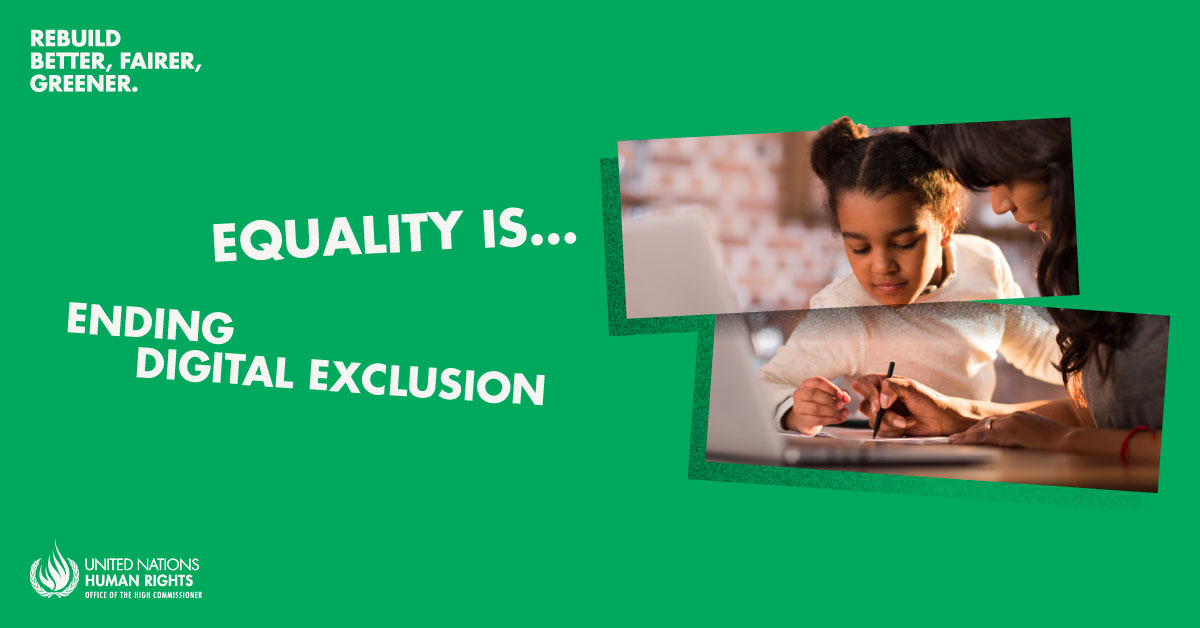
Equality is... ending digital exclusion


Building resilience through equality inclusion and human rights

Equality and non-discrimination are key to prevention: all human rights for all ensure everyone has access to the preventive benefits of human rights but, when certain people or groups are excluded or face discrimination, the inequality will drive the cycle of conflict and crisis.


Education

I write often about Human Rights in education. Quality education based on a human rights approach means that rights are implemented throughout the whole education system and in all learning environments.

Teachers can hold activities and events at school. We must stimulate the interest  of our students every day by the acts we share in the classroom.

Fighting the injustice of inequality, promoting solidarity, non-discrimination, respect and similar values.

Let us draw inspiration from some good actions to strengthen respect for human rights to children and young people. 


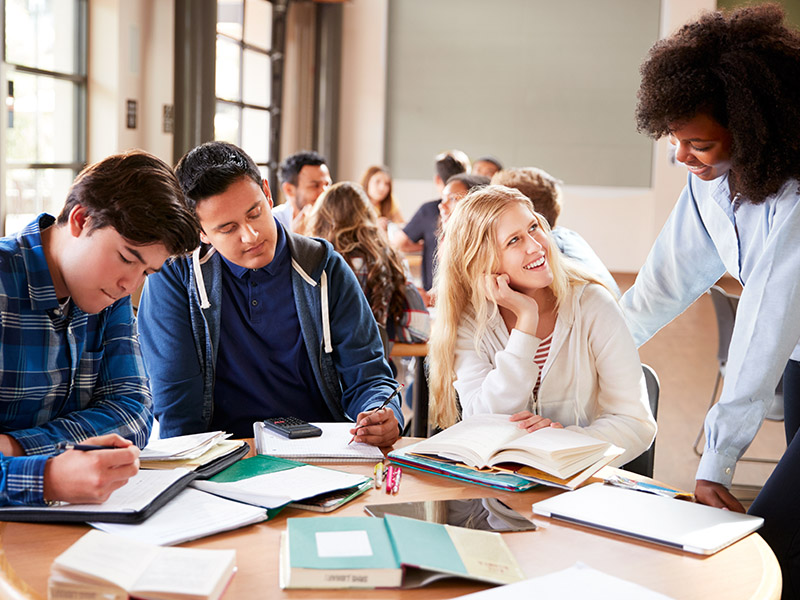
credits: Adobe stock


Activities: Education transform lives

  • Organize lecture series, film or steaming series, book discussions, news, workshops, debates among students, parents, on human rights;
  • Take part in human campaigns of the day at school;
  • Get out school with your students and help other young people and old people within  your community;
  • Wear a t-shirt on Human Rights Day. Make a t-shirt made just stating that is Human Rights Day (cross-curricular);
  • Ask your students (Secondary education) to write out a specific article from the United Nations Declaration;
  • Invite them to promote human rights on Twitter (school account)


Resources:
  • Nobel Peace Prize 
We can't forget this year, Abdulrazak GurnahNobel Prize in Literature 2021 "for his uncompromising and compassionate penetration of the effects of colonialism and the fate of the refugee in the gulf between cultures and continents."
  • UNESCO
Teachers will find a variety of educational resources  on Unesco website
  • UN
Human Rights Day here
  • EU
Also on the EU and Human Rights website your students can be informed on EU actviities and reports : Secondary education ; Vocational and Higher Education.


G-Souto
10.12.2021
Copyright © 2021G-Souto'sBlog, gsouto-digitalteacher.blogspot.com®
Creative Commons License
Schools . Human Rights Day : All Human Equal ! Resources & activities bG-Souto is licensed under a Creative Commons Attribution-NonCommercial-NoDerivatives 4.0 International License.

Thursday, November 4, 2021

International Day Against Violence & Bullying at School including Cyberbullying : Resources


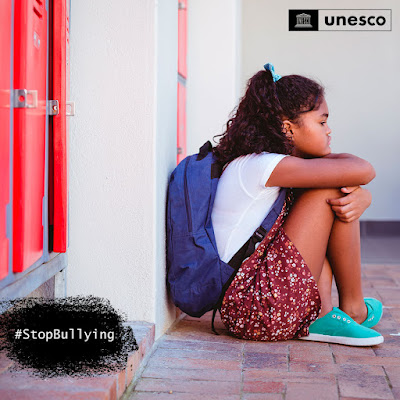
credits: UNESCO

School violence and bullying including cyberbullying is widespread and affects a significant number of children and adolescents.

Bullying, including cyberbullying, can have serious impacts on children’s mental health & well-being.

5 November 2020 marked the first-ever celebration of the new International Day against Violence and Bullying at School including Cyberbullying, under the theme “Together against Bullying in school”.


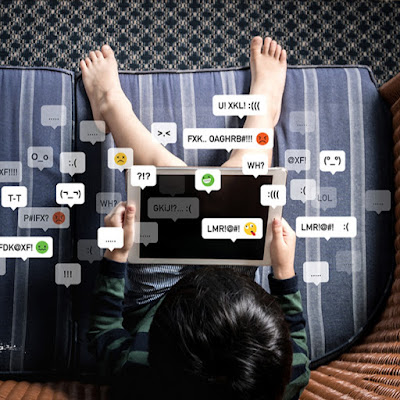
credits: UNESCO

UNESCO Member States declared the first Thursday Novemberthe International Day against Violence and Bullying at School Including Cyberbullying, recognizing that school-related violence in all its forms is an infringement of children and adolescents’ rights to education and to health and well-being. 

Every year, the 1st Thursday of November. This year we will mark the International Day on Thursday 4 November 2021.


credits: UNESCO


"Although this violence is not limited to school premises, the education system has an important role to play in teaching students how to navigate safely in the digital sphere. 

Formal education should provide children and young people with certain knowledge and skills: how to behave with civility online, to develop coping mechanisms, to identify and report  online  violence  and,  most  importantly,  to  protect  themselves  and  others  from  different forms of cyberbullying, whether perpetrated by peers or adults."


Audrey Azoulay, UNESCO Director General


Bullying at school is a serious issue, affecting one in three students worldwide. This animation follows the stories of three young victims of bullying across the world, revealing the negative consequences of bullying on educational outcomes, health and well-being.


Theme 2021.

This year, the International Day on Thursday 4 November 2021 will be under the theme:


Tackling cyberbullying and other forms of online violence involving children and young people”. 


As countries are responding to COVID-19 at varying stages, the lives and education of children and young people across the world have increasingly moved online. For example, compared to the prior year, children’s screen time had doubled in the USA by May 2020, and while online access presents opportunities for connection and learning, it is also increasingly putting children and young people at the risk of online violence.


Did cyberbullying increase during COVID-19? Sadly...Yes. Almost 50% of surveyed children in 11 European countries who were cyberbullied before lockdown said it had only increased during 2020. Here's what you need know:


Although global data is limited, evidence shows that cyberbullying has been on the rise in various regions during the pandemic. In Europe, 44% of children(link is external) who were cyberbullied prior to COVID-19 reported that it had increased during lockdown. Data from several countries also reveals that children, in particular girls at the age of 11 to 13 years, are increasingly at risk of being targeted by criminal sex predators. In the USA, 98% of online predators have never met their targets in real life.


"The lockdown affecting most European countries in spring 2020 saw the sudden shift of most children's activities into the digital world. Since then, children's schooling, leisure time, social contacts, home life have mostly been conducted at home via digital media. Embracing new tools and services and spending several hours per day online changed dramatically daily schedules. The online world offers opportunities and new possibilities, substituting face-to-face interactions. However, it opens the door to well-known online risks (inappropriate content, overuse, cyberbullying, cyberhate, disinformation, misuse of personal data, cyber-risks, etc.)"


in "How children (10-18) experienced online risks during the Covid-19 lockdown - Spring 2020", JRC Publications Repository


Behinf the numbers. Ending school violence and bullying
Education 2030
crédits: UN/ UNESCO


Disorders & consequences.


The consequences of violence and bullying at school including cyberbullying are far-reaching. This includes children and youth finding it difficult to concentrate in class, missing classes, avoiding school activities, playing truant or dropping out of school altogether. This has an adverse impact on academic achievement and future education and employment prospects. An atmosphere of anxiety, fear and insecurity is incompatible with learning and unsafe learning environments can undermine the quality of education for all learners.


"Too many people think bullying at school including cyberbullying is an inevitable rite of passage to adulthood and that is relatively harmless and one can do little to stop it. Instead, there is strong evidence that violence and bullying at school including cyberbullying can be prevented, and effectively addressed if it happens."


UNESCO


What's the main reason for cyberbullying? According to a survey conducted in 13 states in USA, 61% of children said they were cyberbullied because of their appearance. We must stand up for each other & #StopBullying.

Is the Internet a safe place for children? Hit like for 'yes', angry for 'no', love for 'not sure'. Interventions on how to navigate safely online can start with very young children since they are online from an early age. 

Bullying prevention, however, should be tailored to specific age groups because of the differences in bullying and cyberbullying behaviors.

All states have laws requiring schools to respond to bullying. as cyberbullying has become more prevalent with the use of technology, many states now include cyberbullying, or mention cyberbullying offenses, under these laws. schools may take action either as required by law, or with local or school policies that allow them to discipline or take other action. some states also have provisions to address bullying if it affects school performance.


"This Day calls on global awareness of the problem of online violence and cyberbullying, its consequences and the need to put an end to it. It calls on the attention of students, parents, members of the educational community, education authorities and a range of sectors and partners, including the tech industry, to encourage everyone to take a part in preventing online violence for the safety and wellbeing of children and youth."


Some thoughts:

  • Parents:

Have you ever said to your children or to a younger sibling "Don't talk to strangers"? 

Countless children are not aware of the risks they are taking when exchanging with someone online. A frightening figure even shows that 60% of children and young people in the US have actually considered meeting up with someone they have spoken to online.


  • Teachers:

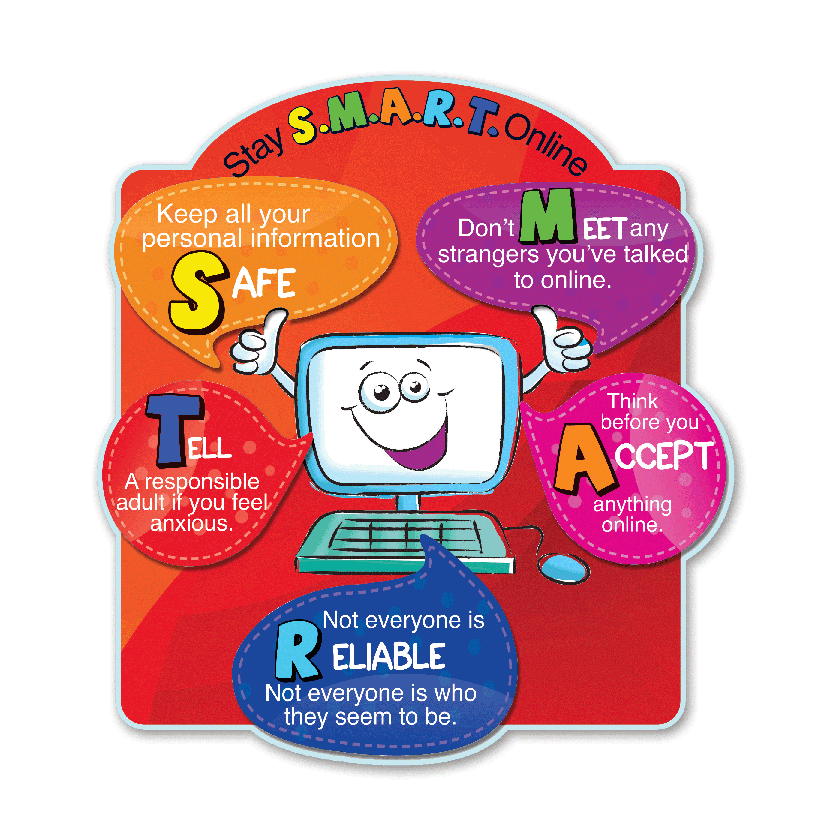
Since the first lessons including technology and later social media, I thought my students to stay safe online.

Teachers and parents know how important is e-safety for kids and teens.

We have an entire 'wired' generation. Children and young people are all day connected on their cellphones or tablets. At school, at home, in a bus or just walking, even between friends. 


credits: unknown


During Covid-19 the lives and education of children and young people across the world have increasingly moved online. Spring 2020 saw the sudden shift of most children's schools activities into the digital world.

Children's schooling, leisure time, social contacts, home life have mostly been conducted at home via digital media. Embracing new tools and services and spending several hours per day online changed dramatically daily schedules.


-


  • My thoughts:

Since the first lessons including technology and later social media, I thought my students kids and teens to stay alert about their privacy online.

Through teaching students and training educators, I’ve learned a lot about how to effectively create and implement digital instruction and self-paced learning.

The first step you should teach is to customize the privacy settings of your students to control who sees what information about them. They must learn to configure their settings so that they have approval over who is viewing their posts or chatting and limit what comes up in search results, so only specific groups can see their photos, posts, likes or conversations.


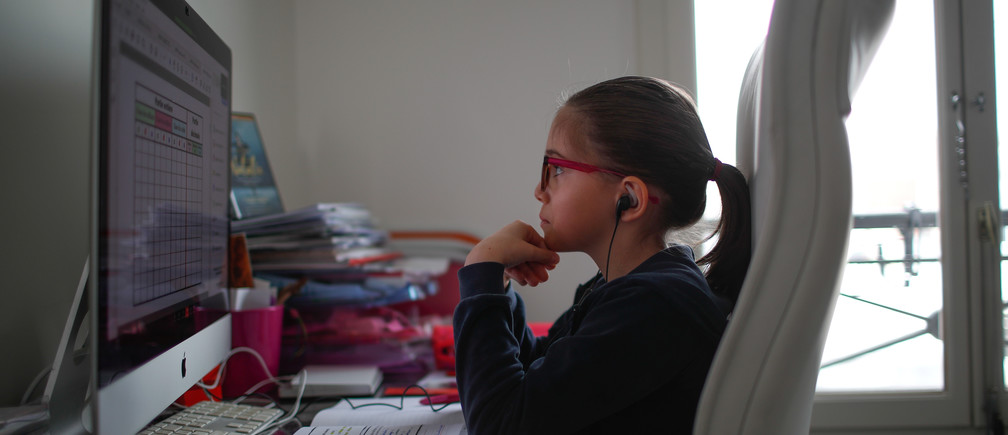
credits: REUTERS/Gonzalo Fuentes


We will teach our students about online dangers if they are not prepared So we will help them to develop the skills to keep safe when they are online.

Don't forget to talk about the new dangerous games on some social media as TikTok or Instagram. Parents must be aware as 'parents' at home.

We also need to understand that the internet is not simply a place.  Somewhere your kids go to hang out. And if they were doing that physically, you would want to know where they were going and who they were going with.  Even they love to be alone in their own room listening some music or chatting or texting with friends. Be active near your kids and teens. 
Parents need to start asking the same kind of questions, when their teenagers are online, ignoring the one word 'nowhere' or 'no-one answers'.
Because just as when they head out the door, every time they go onto an online space, there are potential risks.  And while you can't be there with them, you should at least attempt to satisfy yourself you know what they are doing in their own room. 
Don't forget! Parents have new tools to follow their kids online. Use them!


Safe signs

Some important messages for kids, parents and teachers:

Parents, wake up! If your teenager spends hours glued to his phone or buried in his room on a laptop, this movie Disconnect shows you just how at risk he or she really is.

Kids and young adolescents do need to be reminded that not everyone they meet in school or online is who they say they are. As parents, you might wonder whether what they are doing is safe or not.

Parents need to understand that it's important to stay in close touch with their kids' online use. Dialogue is very important, but it is not enough. 

G-Souto

04.11.2021
Copyright © 2021G-Souto'sBlog, gsouto-digitalteacher.blog


International Day Against Violence & Bullying at School including Cyberbullying : Resources by GinaSouto is licensed under a Creative Commons Attribution-NonCommercial-NoDerivatives 4.0 International License.


References: 

UNESCO / my personal posts about e-safety kids, bullying and cyberbullying ( English and French languages) on this blog.


Friday, December 4, 2020

November in Review & Intl Day of Persons with Disabilities


"As the world recovers from the pandemic, we must ensure that the aspirations and rights of persons with disabilities are included and accounted for in a -inclusive, accessible and sustainable post COVID-19 world." 

Antonio Guterres, UN Secretary General 

The 3 December was the International Day of Disabled PersonsThe annual observance of the International Day of Disabled Persons was proclaimed in 1992. 

It aims to promote the rights and well-being of persons with disabilities in all spheres of society and development, and to increase awareness of the situation of persons with disabilities in every aspect of political, social, economic and cultural life.

  • Five things we need to know:

Ahead of the International Day of Persons with Disabilities, celebrated every year on 3rd December, here are five things you need to know about living with a disability during COVID-19:

Here are five things you need to know about living with a disability during COVID-19:


  • Persons with disabilities: Did you know?


Of the one billion population of persons with disabilities, 80% live in developing countries.

An estimated 46% of older people aged 60 years and over are people with disabilities.


credits: Getty Images

One in every five women is likely to experience disability in her life, while one in every ten children is a child with a disability.

Persons with disabilities in the world are among the hardest hit by COVID-19.


credits: Brian Mitchell / Getty Images

Education:

Disability inclusion is an essential condition to upholding human rights, in education and of course in school curricula. 

Of the 100 million or so children around the world with a disability, 80% of them are in developing countries. In these countries, 40% of children with disabilities don't go to primary school and 55% are not in secondary education.

Beyond those stark facts are millions of other children with disabilities who are in classrooms but are left feeling excluded, intimidated and unvalued by the failings of school systems.

"For most people, technology makes things easier. For people with disabilities, technology makes things possible,"

Vibhu Sharma


via The Hindu

The tools for identifying learning difficulties such as dyslexia, dysgraphia, and dyscalculia. These manifest as problems with listening, speaking, reading, writing, reasoning, or mathematical abilities.

"A lot of young people feel dumb or stupid. Dyslexia can affect different aspects of their life besides reading, from being able to tell from left and right, or reading a map,” 

Shae Wissell, Dear Dislexy Foundation

Prominent young Australians who have dyslexia are Jessica Watson, who sailed around the world solo when she was just 16, and Alex Edmondson, an Olympic medal-winning cyclist.


Dyslexia

My goal is to demonstrate to teachers, parents that  inclusion is possible for kids and citizens with disabilities and to highlight actionable opportunities in the different curricula in school. Sport, music, art are offering excellent opportunities for inclusion. I wrote many posts about persons with disability on this blog.

There is a special one. The most read all over the years: Schools :The Present, a short animation on teens disabilities !

As a teacher, I had a lot of students with different disabilities and always in inclusive classes along my career.

Of course, we must prepare a common core standards-based curriculum and resources list that helps us weave ability awareness-themed activities and inclusion education into our classroom throughout the year.
Of course, I prepared my students to respect the rhythm of their peers with disabilities. They could understand their disabilities and helped their 'different' classmates in their learning.
On the other hand students with disabilities learned to work in group and they did enormous progress in their own learning.

We need to strengthen our collective efforts for universal access to essential services, including immediate health and social protectioneducation, digital infrastructure, accessible information, employment and other socio-cultural opportunities in order to ensure that persons why disabilities are not left behind in times of crisis and beyond.

And now let's write about the posts of November. About 70% of us are affected by restrictions in Portugal. 


Here are the most popular posts of the last month:

There are measures to deal with coronavirus outbreaks are in place across Europe. Many involve the reintroduction of restrictions that had been eased after initial lockdowns.

Here in Portugal, schools are working but there are two special measures for two long week-ends, the 1st December, Independence Restoration Day and next Thursday a Catholic holiday. We are under a third national lockdown until at least 17 December. And there is a curfew from movement between country's municipalities is prohibited. 

Be safe! Take care!

G-Souto

04.12.2020
Copyright © 2020G-Souto'sBlog, gsouto-digitalteacher.blogspot.com®


November in Review & Intl Day of Persons with Disabilities bG-Souto is licensed under a Creative Commons Attribution-NonCommercial-NoDerivatives 4.0 International License.