Saturday, October 19, 2013

Visiokids : Aprender Ciências em 3D TV


Visokids | Visionarum

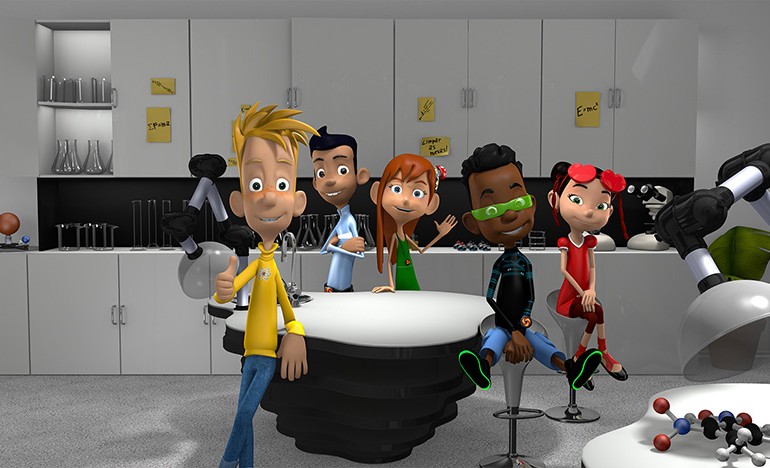
O Visionarium apresenta os Visiokids, uma série televisiva em animação 3D, constituída por um total de 65 episódios, de cerca de dois minutos de duração.

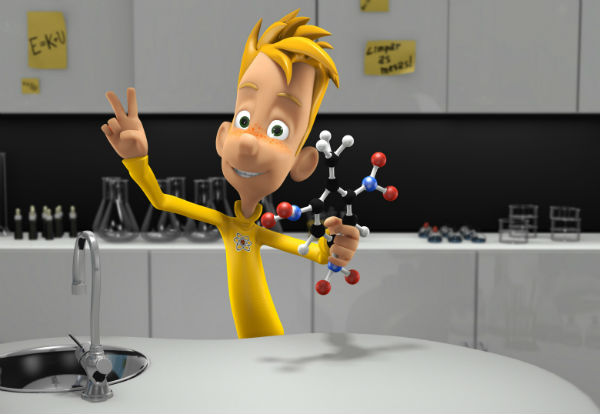
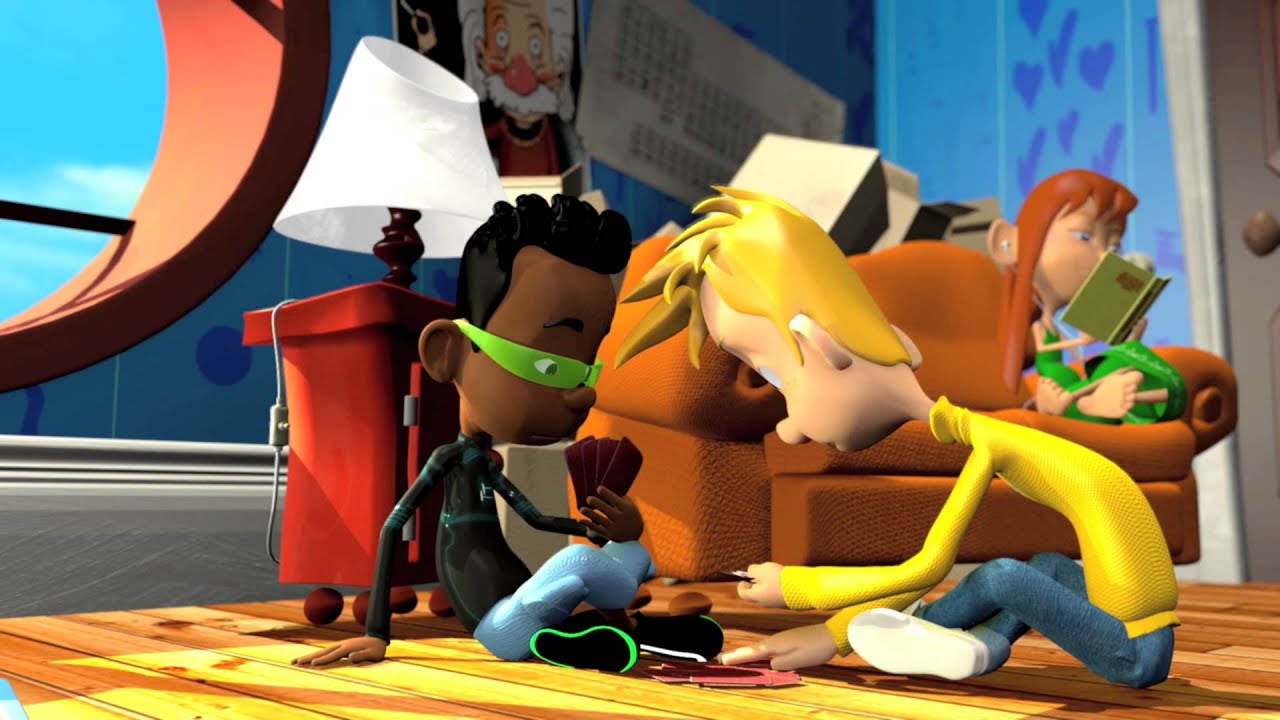
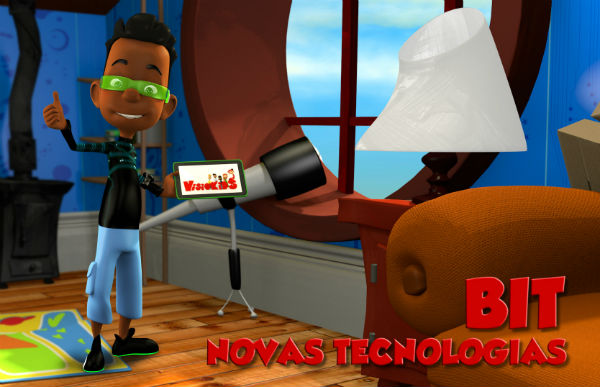
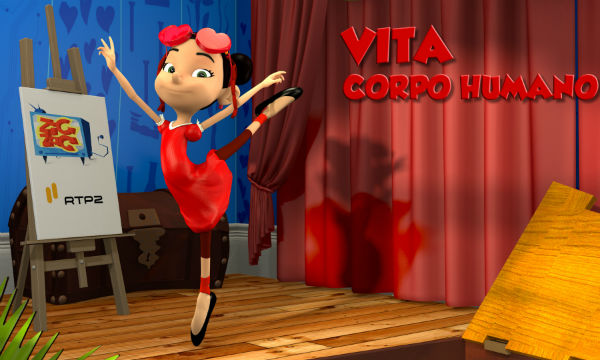
Cinco personagens – Atómico, Bit, Cósmico, Cassiopeia e Vita – que representam diferentes áreas da ciência, e que desde 23 Setembro são apresentadas diariamente na RTP2.

Verdade! Descobri esta série que partilho na publicação de hoje e que conjuga ciência e tecnologia. Encomendada à Insizium, uma empresa portuguesa, tem o apoio científico da Universidade do Porto.

Uma série animada em 3D a integrar com sucesso nos currículos escolares de Ciências. 

As ciências e as novas tecnologias têm um papel fundamental na educação e na sociedade.

Contribuem para uma vida melhor, para a compreensão de forma mais divertida no ensino e aprendizagem das Ciências.


Visiokids | 3D TV Series


Ora, como sabem, as Ciências nem sempre são atractivas para os alunos. O poder de concentração é menor nos mais jovens. É, por vezes, difícil tornar estes currículos atractivos, ou até divertidos. Sim, porque se pode aprender a brincar. Sabem que sou adepta do uso de jogos em sala de aula, logo que perfeitamente enquadrados nos objectivos das áreas que se pretendem trabalhar. Torna-se importante transmitir estes valores aos mais novos. 


Visiokids | 3D TV Series

Assim os Visiokids, uma série televisiva, pode e deve entrar nas aulas curriculares como um recurso educativo digital que vem apoiar o ensino da ciência e da tecnologia.

Aventuras e experiências, recheadas de muito humor e espontaneidade que vão apoiar as aulas curriculares de muito professores e encher de alegria os jovens alunos, ao mesmo tempo que aprendem.


Visiokids | 3D TV Series

Mais! Não é uma aprendizagem passiva, É uma aprendizagem activa, enriquecida com o saber fazer! 

Cada episódio aborda um tema e, à sexta-feira, é sugerido aos jovens a realização de uma experiência científica, que pode ser feita em casa.

Falemos então das personagens: Cinco amigos dominam as mais diferentes áreas científicas e tecnológicas. 

Os Visiokids são: 

  • Atómico : odisseia da matéria – energia, luz, química e novos materiais;
  • Bit : informática e robótica; 
  • Cassiopeia :  geografia, animais, plantas e  ambiente; 
  • Cósmico : astronomia e astrofísica; 
  • Vita : corpo humano, ADN, vida. 
Agora na televisão portuguesa, uma série pedagógica que apoia a aprendizagem da realidade aumentada.


Visiokids | 3D TV Series


Informações:

Canal: RTP2 (programa ZigZag)

Género: Série de Animação 3D

Nivel etário: 6-12 anos

Currículos: Ciências; Geografia; outro;

Nível estudos: Primário; 2º Ciclo, 3º Ciclo Ensino Básico


Algumas considerações:

Sabemos como as televisões têm um papel fundamental na educação, já que captam muita da atenção do público infantil e juvenil. Veja-se o caso da BBC Education e de séries que chegaram até nós com imensoi êxito e que podem ser integradas com muito sucesso no percurso escolar.

Aventuras e experiências, recheadas de muito humor e espontaneidade que vão apoiar as aulas curriculares de muito professores e encher de alegria os jovens alunos, ao mesmo tempo que aprendem 


Inúmeros ensinamentos, questões interessantes e curiosas que estas cinco peculiares personagens apresentar e entra da melhor maneira no mundo maravilhoso da Ciência.

A par da série televisiva, uma publicação em banda desenhada, para que os jovens alunos possam seguir na escola as experiências realizadas por estes pequenos cientistas.


Credits: Insizium

Education: Science & 3D

Visiokids is a 3D animation TV series (Portuguese language), made in Portugal by Insiziumfocused on science, (consultancy at University of Porto) consisting of a total of 65 episodes with a minute and a half long. 

It's directed specially to children and young students aged 6-12, being an exciting, informal and accessible educational digital resource to Science (curiosities and questions present in everyday family life). The University.


Visiokids | 3D TV Series

Some information:

Objective: Spread Science Knowledge;

Media: 3D Animation TV Series;

Characters:
  •  Atomic : energy, light, chemistry and new materials;

  • Bit : informatic, robotics;
  • Cosmic : geography, animals, plants and environment;
  • Cassiopeia : atronomy, astrophysics;
  • Vita : human body, DNA, ilfe.

They illustrate different areas of science. They form a group of friends very spontaneous and with a big sense of humor.

Every Friday, an experience is proposed to students.

If you teach Portuguese language (as a Foreign language) don't give up from this awesome 3D educational digital resource and introduce it at your class.

The students will love it!


G-Souto

19.10.2013
Copyright © 2013G-Souto'sBlog, gsouto-digitalteacher.blogspot.com®

Licença Creative Commons
Visiokids : Aprender Ciências em 3D TV by G-Souto is licensed under a Creative Commons Attribution-NonCommercial-ShareAlike 3.0 Unported License.

Referências | References:

Insizium | Visiokids


Thursday, October 17, 2013

Éducation: KidExpo 2013, excellente ressource


Et me voilà à nouveau à vous rappeler KidExpo 2013. C'est un grand événement familial et scolaire qui a lieu à Paris - Porte Versailles tous les ans au mois d'Octobre. 

À partir du 19 Octobre jusqu'au 23 Octobre 2013, rendez-vous à Porte Versailles - enseignants et parents/famille.


Pour sa 7ème édition, Kidexpo, l’évènement familial le plus attendu de l’année, propose des idées et des solutions pour les parents,et pourquoi pas pour les enseignants, des ateliers pour les enfants de 4 à 14 ans et des rencontres inoubliables.

Pour les petits visiteurs, une centaine d’ateliers gratuits et permanents sont proposés pour toutes les tranches d’âges. 


Ateliers | Galerie Photos

Au Programme, plein d’idées et de solutions pour les parents, enseignants et enfants/élèves autour de trois grands thèmes :

  • Education & Vie Pratique; 
  • Sport, Tourisme & Loisirs;
  • Jeux & Jouets.
Pour les enfants de 4 à 14 ans, une centaine d’animations gratuites et permanentes : du fun, du sport et des ateliers pédagogiques pour toutes les tranches d’âges. 

Éducation:

Comme en 2010 2011, et 2012je vous propose le salon KidexpoUn salon de référence aussi pour des enseignants qui veulent faire partager des activités mirabolantes à leurs élèves  par des visites ou bien à en retirer des idées à développer en classe plus tard.

Quelques rencontres exceptionnelles:
  • Digital Kids
  • Finale du CHIMA Tour LEGO
  • Le Café des Furby
  • Apprentis pilotes
  • Le chef Olivier Chaput
  • Des sports et des champions
Plus de 100 ateliers pour les enfants de 4 à 14 ans. Super coool pour tous!


KidExpo | Galeries Photos

Mon choix (Enseignants)

  • Le Numérique: Digital Kids (stand A11)
Puisque École au Numérque est une des priorités de l'année scolaire 2013-2014, allez découvrir en avant-première les nouveautés numériques Kids : tablettes, applications numériques, jeux vidéo, autres.

  • Civilisation Française: La Charente Maritime, invitée d'honneur (Stand C22)
Deuxième destination touristique préférée des Français, la Charente-Maritime est invitée d'honneur 2013.
Patrimoine culturel, stations labelisées Famille Plus et bien sûr Fort Boyard dont la maquette géante est à découvrir à Kidexpo en compagnie de Passe Muraille et du magicien !


Ecofolio

  • Formation Civique: Recyclage (Stand Ecofolio)

"A Kidexpo comme à la maison, on trie ses papiers ! "
Ecofolio et Kidexpo s’unissent pour sensibiliser les jeunes et leurs famille au tri et au recyclage des papiers. 

Une collecte sélective sera déployée sur l’ensemble du salon pour inciter tous les participants à trier leur papier sur Kidexpo mais aussi à la maison. 

La finalité ? Faire du geste de tri un automatisme et montrer que trier ses papiers est simple comme un jeu d’enfant : cahiers à spirales, enveloppes à fenêtre, magazines, annuaires…tous se recyclent!


Infos pratiques:

À voir ici

Espace Enseignants: 

Entrée gratuite pour les enseignants. 

L’accès des enseignants à Kidexpo est gratuit les samedi 19, dimanche 20, lundi 21, mardi 22 et mercredi 23 octobre 2013.
La pré-inscription est obligatoire. Il faut vous inscrire sur le site ici
Le badge est personnel, nominatif et valable pour l'enseignant uniquement. Un justificatif de votre activité (carte enseignant) vous sera demandé à l'entrée. Ne l'oubliez pas !


screenshot Kidexpo appli

Comme l'année dernière,  KIDEXPO vous propose son application (appli) smartphone ou iphone (gratuit)

Ou alors, à suivre sur Facebook ou Twitter hashtag @salonkidexpo.

Eh bien! Kidexpo2013, une suggestion pédagogique à ne pas manquer, à partir du 19 Octobre, si vous habitez dans la région parisienne. 


G-Souto

17.10.2013
Copyright © 2013G-Souto'sBlog, gsouto-digitalteacher.blogspot.com®

Licença Creative Commons
Éducation : KidExpo 2013, excellente ressource by G-Souto is licensed under a Creative Commons Attribution-NonCommercial-ShareAlike 3.0 Unported License.

Tuesday, October 15, 2013

Ada Lovelace Day in Education: Girls & STEM


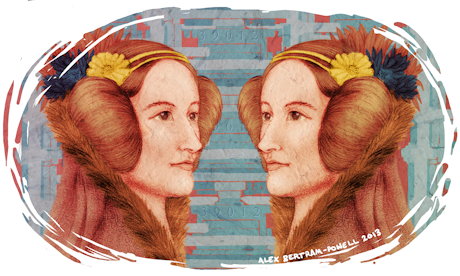
Ada Lovelace | Photo: Getty

Today, October 15 is Ada Lovelace Day. I already wrote about Ada Lovelace: Girls in Science, last year. Remember?

But I think it is very important to write about this pioneering scientist woman in STEM subjects.

"Whatever Ada’s role in the history of programming, she grasped the importance of Babbage’s inventions and understood that math was only part of it: she theorized, for instance, that the Analytical Engine might be used to write music. That was a pretty profound thing to realize in the 1840s, many decades before anyone successfully built a computer, let alone one that could compose a tune."

The annual Ada Lovelace day, which this year falls on 15 October, aims to raise the profile of women working in STEM subjects across the globe. 

Ada Lovelace Day celebrates  the achievements of women in science, technology, engineering and maths around the world
Three years ago, the world celebrated the pioneering scientist by introducing Ada Lovelace Day. 

The 24th of March last year was the first Ada Lovelace Day, when more than 1,200 people wrote about the women they admire who work with technology.
The day has become renowned for sharing inspirational stories about women in science that inspire people.

The annual celebration of inspiring women in science and technology is in its fourth year, and bigger than ever.

This year, the day was intertwined with a Wikipedia event to help spread the word about pioneering female scientists, from the 19th century right up until the present day.
Researchers, students and members of the public are gathering just across the street from the University of Oxford's science buildings to change scientific history. Rather than test tubes or computer models, however, they are armed with stacks of reference material, ready to square up to the online Goliath that is Wikipedia.


"The Royal Society’s Wikipedia edit-a-thanwhere volunteers (most of them women) will edit entries of important women scientists in history, who have either been overlooked or shrunk to a few thin lines, was set up to help promote women in science."

The event is open to anyone who wishes to help preserve women's science history. Female editors are particularly encouraged to attend.


Photograph: Greg Smolonski/Photovibe
Daria Cybulska, events organiser at Wikimedia UK, said at the time: "If a female scientist does not have an article on Wikipedia often it’s difficult to learn about her – hence she cannot serve as a role model for others.
"So, the idea is to spread the stories about them, and at the same time inspire more women to get involved, not only with Wikipedia, but in maths, science, technology and engineering."
She added: "I was aware that a lot is being done within the movement to increase female participation, but during the course of working on the event I have realised quite how much enthusiasm and collaboration there is to get women editing. Linking up with the Finding Ada movement has been very inspiring too, and we are now connected to many more women that want to support Wikipedia.
The main effort of the event is to run the editing session focused on creating articles about women in science, particularly Royal Society Fellows. 


Finding Ada


Finding Ada: what is that?
The Finding Ada website is encouraging women to add their views, stories and thoughts of other women in science – whether engineers, scientists, technologists or mathematicians — who have inspired you to become who you are today.
"The aim is to create new role models for girls and women in these male-dominated fields by raising the profile of other women in science, technology, engineering and maths," the site says.

Education:

Ada Lovelace is widely held to have been the first computer programmer, and Ada Lovelace Day aims to raise the profile of women in science, technology, engineering and maths (STEM) by encouraging people around the world to talk about the women whose work they admire

The discussion of new discoveries and a better understanding of the role of the girls and young women (Higher Education) dimension in many different STEM areas of study, and how these findings can lead to new ideas and new markets for girls and women in science knowledge are some of the aims of Ada Lovelace Day.

This begins early in school where girls must be encouraged to access to science and technology

The aim is to encourage creativity in the field of science and new technologies and highlight the importance of developing innovative skills at an early age.

"That brain of mine is something more than merely mortal; as time will show."

Ada Lovelace


G-Souto

15.10.2013
Copyright © 2013G-Souto'sBlog, gsouto-digitalteacher.blogspot.com®

Licença Creative Commons
Ada Lovelace Day in Education: Girls & STEM bG-Souto is licensed under a Creative Commons Attribution-NonCommercial-ShareAlike 3.0 Unported License.

Resources:

Finding Ada

Sunday, October 13, 2013

September round down of the most-read posts


Show your pride for the PINK and participate at events!

Sorry about the delay. As I mentioned, sometimes I'm traveling, or have important work to do, or must write about a specific day or event. Back my regularly scheduled program today! September roundown of the most-read posts.

Let me introduce an important subject: Seeing pink? October is Breast Cancer Awareness Month.
I will right a little post on Going Pink in School Education.

And now, let's doing! This is the round-own of teaching and learning School series of September. These are some posts sharing events or resources, tips, and tools for you. Ty something different or an idea that you adapt for your classroom.

I added six posts, on different subjects last month. Here my list of the 4 most-read of the month - presented in most reading order. This time, all the posts are written on English.

And I am glad to see that the most-read post of September is Education for Peace: International Day of PeaceIf you are my regular reader you know I am pledging for Civics as a serious subject that must be intrduced among the curriculum or disciplines in School Education.


Credits: UNESCO

"On this International Day of Peace, let us pledge to teach our children the value of tolerance and mutual respect.  Let us invest in the schools and teachers that will build a fair and inclusive world that embraces diversity.  Let us fight for peace and defend it with all our might."
UN Secretary-General Ban Ki-moon 
International Day of Peace is celebrated on 21 September every year. This year, 2013 idevoted to peace education.

Credits: UN

UNESCO campaigns for quality education for all going further than the basics of reading and writing. 

Education must encompass the teaching of human rights, living together and respect for others

Peace education is one of its key components. Every child in the world should know their rights, and learn their own history and that of other peoples, so as to be able to understand the equal dignity of cultures and draw lessons from the crimes and violence of the past.

The key to tolerant citizenship in a globalized world requires a widespread effort to train teachers and design suitable school curricula. 


MEDEA Awards 2013

The 6th edition of MEDEA Awards 2013 is now judging all the entries ob this edition. 

MEDEA Awards 2013 announced its call of entries some months ago. And the deadline to send send projects as participants was end on September 30, 2013.

As you know I am participating at MEDEA Awards since 2009. So I am glad to promote such an interesting project that encourages innovation and good practices in the use of media in Education.

The aim of the MEDEA Awards is "to encourage innovation and good practice in the use of media (audio, video, graphics and animation) in education." 


The awards also recognize and promote excellence in the production and pedagogical design of media-rich learning resources.

Innovation and good practices are possible better with the new technologies always giving us fantastic resources. 

The 'screen-generation' is used to be online all the time. So, innovative educators understood the meaning of changing academic practices and go to digital. Mobile devices really pushed up for pedagogical applications.


All finalists will be notified in the beginning of December and will be invited to take part in the awards ceremony taking place during the Media & Learning Conference 2013, December 12-13, Brussels, where the final winners will be announced.


"How can we bring attention of policy makers to the significant potential of games? This  issue will be addressed by the GREAT Lisbon Conference on Games & TEL."

Claudio Dondi

The Great Lx International Conference on Games and TEL took place in Lisbon, Portugal last 15-16 September 2013 at ISCTE-IUL.


Great LX | Auditorium

Interesting opportunity to participate, listen and share the last concepts about the current paradigms and evolution of Games in Education (GBL) Training (SG) and Technology Enchanced Learninig (TEL)


Great Lx Conference

For one long day, speakers, researchers, practitioners, producers, skate holders and participants shared  interesting ideas and experiences.

I joined key speakers and round tables at the Great Auditorium. I am an independent researcher on TEL and I was very curious to hear about the new ideas.

TEL, Games (GBL & SG), and MOOCs were on my best interests.

I was very interested on key note speaker Claudio Dondi analysis about the role of ICT in learning moving the change on E&T and bringing a great challenge for the shift on paradigm in Europe. 

I know Claudio Dondi from different international conferences. The last one, in Brussels, at the European Forum on Learning Futures and Innovationwhere I had a presentation at VISIR workshop on the 19th March, 2013 with Giordano Koch and Jan Pawlowski.

Claudio Dondi is one of best European researcher and expert and his thoughts are always very important.

Claudio Dondi made a splendid evaluation with remarkable key notes and items that I have the chance to hear. You can access to his communication here

It is very important to understand the new challenges until 2020. As the final rapporteur pointed:

  • We have to work harder on the issues above. 
  • MOOCs are not inclusive. 
  • Less focus on thecnology and more in people.


And my last post for today is Léon Foucault: a Doodle in Physics Curriculum. No, it was not about Nicolau Copernicus ! The interactive Google doodle of September 18th was about the celebration of the 194th anniversary of the French physicist on Foucault. Tje doodle is based on the Foucault pendulum - an innovative device Foucault created to demonstrate the effect of the earth’s rotation.


Credits: UCDavis

Education:

“His teachers described him as lazy, he did not submit work on time, so that his mother had to employ tutors to educate him at home."

As we know, sometimes, the best students in school are not the 'genius' ! Einstein, and a good number of great scientists, musicians or poets demonstrate that.

From time to time we discover 'little genius' among our students! They are not the brightest in the classroom, but we feel that they have something special ! And we do everything to help them to understand their natural skills so they could develop later and find their own way.

They are disconnected from the curriculum, distracted, sometimes with a difficult behaviour or too shy. And we encourage them as 'special' students who need a different kind of help in school.

Well, the Google doodle will be a good interactive digital resource to introduce in your curriculum, if you a are teaching Physics.

The doodle allows students to manipulate the swinging bob according to where on earth they happen to be.

Level: Secondary Education


Final thoughts:

Teachers, of course, always make the difference!
Today’s 21st Century world is totally different from the world of previous generations, and from the world in which I, and most of today’s teachers/educators, grew up.  

Why, then, can’t we learn to "break free" from the past and change or adapt old patterns/behaviors to match students' needs today, and enhance teaching and learning in today's world?

"Do not confine your students to your own learning for they were born in another time."

G-Souto

13.10.2013
Copyright © 2013G-Souto'sBlog, gsouto-digitalteacher.blogspot.com®

Licença Creative Commons
September round down of the most-read posts bG-Souto is licensed under a Creative Commons Attribution-NonCommercial-ShareAlike 3.0 Unported License.