Showing posts with label girls and women in STEM. Show all posts

Friday, May 16, 2014

Women in Science : Maria Gaetana Agnesi & Dorothy Hodgkin


Google Doodle Maria Gaetana Agnesi's 296th birtday


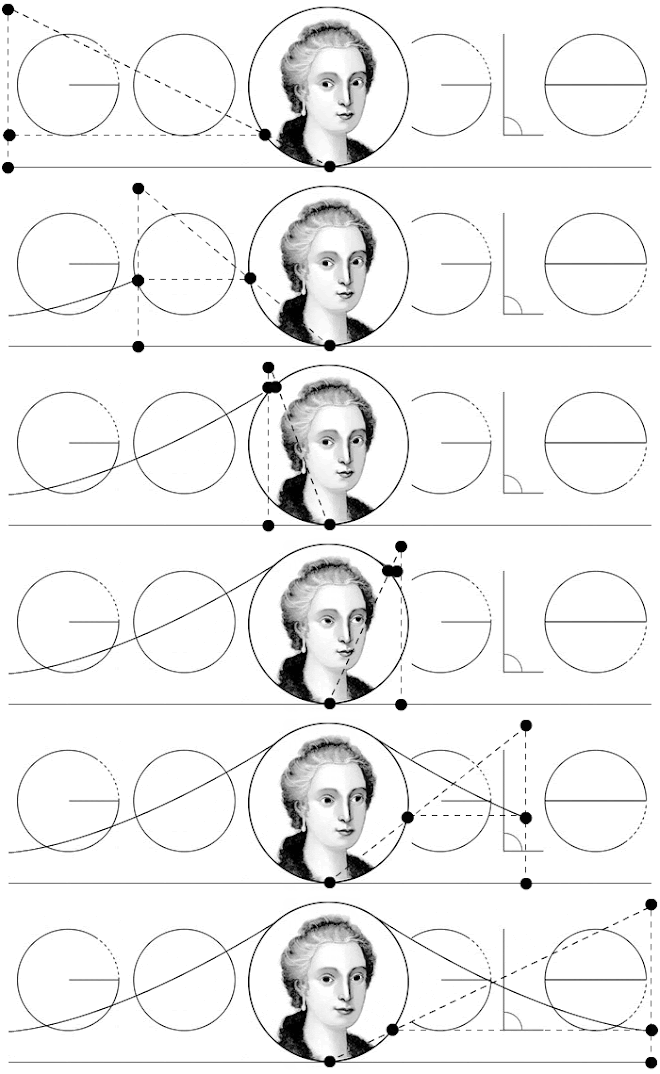
Four days afteDorothy Hodgkin, a British chemist, Google's doodle, celebrates the 296th birthday of the Italian mathematician and philosopher Maria Gaetana Agnesi. The Doodle showsthe Witch of Agnesi curve. 
The mathematical curve named after her is achieved by drawing a line from the source through the circle of radius.


Maria Gaetana Agnesi
credits: Alamy Stock Photo

Their real-life uses were only fully recognised in the late 20th and early 21st centuries, by physicists and mathematicians working with x-rays, optical lines, and electrical circuits.

Maria Gaetana Agnesi:

Gaetana Agnesi, born on 16 May 1718, to a wealthy and literate Milanese silk merchant, Agnesi was recognised as a child prodigy and became interested in mathematics and several modern languages, as well as Latin, Greek, Hebrew.

Propositiones philosophicae or “Propositions of Philosophy”, a series of essays on natural philosophy and history based on her discussions before such gatherings, was published in 1738.


Maria Gaetana Agnesi

At an early age she composed and delivered an hour-long speech in Latin to some of the most distinguished intellectuals of the time on the subject of women’s right to be educated. Wow ! That's interesting if we think she lived in the 18th century.


Some decades before Leopold Mozart dragged his young son Wolfgang Mozartto any prince or archbishop who had half a chance of offering a decent appointment, a Milanese girl with a genius intellect was made the center of an ongoing academic circus routine by her status-hunting father.


Maria Gaetana Agnesi
Library of Congress, Washington, D.C. (digital file no. 3b09774)

Agnesi is believed to be the first woman in the west to gain recognition as a mathematician, at a time when most Europeans did not see the value of education for women.

Maria Gaetana Agnesi, remembered today only for a curve, the Witch of Agnesi, which shows up in the margins of introductory calculus texts from time to time, and which she didn’t actually discover.


Maria Gaetana Agnesi

Agnesi best-known work, Instituzioni analitiche ad uso della gioventù italiana, or the Analytical Institutions for the Use of Italian Youth, explored algebra and analysis (two volumes). In it she discusses the algebraic curve, now known as the witch of Agnesi.

After her father’s death, she apparently lost all interest in scientific work and turned to religion and devoted the last four decades of her life to studying theology and to charitable work, taking charge of a home for the poor and infirm in 1771.


Maria Gaetana Agnesi stamp
Italia, 2018
For the remaining fifty years of her life, she gave comfort to the mentally ill and elderly from 1771, and hunted the streets for children to be brought to her catechism class. The woman who had been regarded as one of the greatest minds of Italy, consulted from every corner of Europe for her advice on matters mathematical and philosophical, died unremarked on 9 January 1799.


Dorothy Hodgkin:
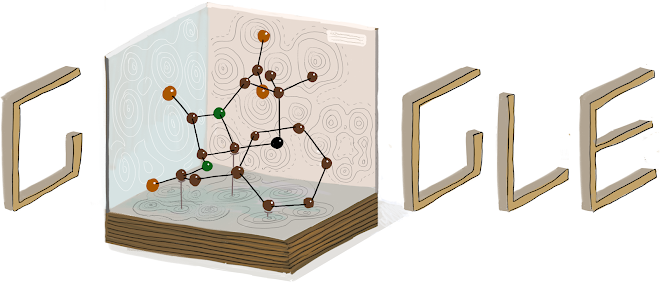


Google Doodle Dorothy Hogkin's 104th birthday
On Monday, 12th May, Google Doodle celebrated Dorothy Hodgkin's 104th birthday, the British chemist.


Dorothy Hodgkin
credits: : Harold Clements / Freelancer


Hodgkin was the third woman to be awarded the Nobel Prize in Chemistry (1964) which she won for her discovery of the structure of vitamin B12 in 1964.


Dorothy Hodgkin and her husband Thomas at the Nobel ball in 1964 
© The Hodgkin Family
She is the only British woman to have won the prize to date. Born in Cairo on May 12, 1910 to English parents, Hodgkin went on to study chemistry at the University of Oxford's Somerville College, before going on to earn her PhD at the University of Cambridge.


Dorothy Crowfoot Hodgkin honored  postage stamp 
The biochemist was best known as a pioneer in the advancement of the technique of X-ray crystallography, a method used to determine the three-dimensional structure of biomolecules.


Dorothy Hodgkin
Hodgkin's love of her work was clear, and she was quoted as saying: 

"I was captured for life by chemistry and by crystals".
She was also know for her contribution to the discovery of the structure of insulin and penicillin.
She returned to Oxford in 1934 and in 1936 was appointed Somerville's first fellow and tutor in chemistry – a post which she held until 1977.


Dorothy Hodgkin a life
by Georgina Ferry

She was the chair of the Pugwash Conference from 1976 to 1988, an organization inspired by a manifesto by Albert Einstein and Bertrand Russell that works to reduce harm and conflict caused by scientific discoveries (like nuclear weapons.)


Girls in science
credits: unknown

Education:

No doubt! Google loves women in science. Ada Lovelace, Rosalind Franklin, Marie Curie, Grace HoperDorothy Hodgkin and today Gaetana Agnesi. And of course, women in Humanities as Hannah Arendt, Catherine Mansfield, Simone de Beauvoir among others.

The discussion of a better understanding of the role of the girls and young women dimension in many different STEM areas of study, and how these findings can lead to new ideas and new markets for girls and women in science knowledge is on the news every day.

This must begin early in school where girls must be encouraged to access to science and technology


Girls in Science
via Cambridge Assessment

The aim is to encourage creativity in the field of science and new technologies and highlight the importance of developing innovative skills at an early age.

However I read on The Guardian, this week, an interesting article : Women in technology : no progress on inequality for 10 years says:

" A report by the research firm Gartner on chief information officers (CIOs) and the challenges they face in the industry has shown that the percentage of women taking the role has remained largely static at 14% since 2004, when the firm started gender analysis.
The situation in the EU is also worse than developing nations and the US, where the proportion of women in leadership roles is higher. Gartner’s data showed women occupied 11.2% of technology leadership roles in Europe, the Middle East and Africa compared with 18.1% in North America, 13.4% in Latin America and 11.5% in Asia."

Samuel Gibbs, Technology

Some thoughts:
All the initiatives trying to change this situation are welcome. And teachers have an important role on it by fighting inequality for girls in science.
You can begin to include Doodles of women in science into school curriculum to motivate girls. 

G-S 
16.05.2014
Copyright © 2014G-Souto'sBlog, gsouto-digitalteacher.blogspot.com®
Creative Commons License
Women in Science : Google doodles at school bG-Souto is licensed under a Creative Commons Attribution-NonCommercial-NoDerivatives 4.0 International License.

Tuesday, October 15, 2013

Ada Lovelace Day in Education: Girls & STEM


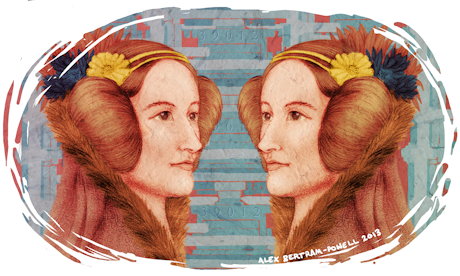
Ada Lovelace | Photo: Getty

Today, October 15 is Ada Lovelace Day. I already wrote about Ada Lovelace: Girls in Science, last year. Remember?

But I think it is very important to write about this pioneering scientist woman in STEM subjects.

"Whatever Ada’s role in the history of programming, she grasped the importance of Babbage’s inventions and understood that math was only part of it: she theorized, for instance, that the Analytical Engine might be used to write music. That was a pretty profound thing to realize in the 1840s, many decades before anyone successfully built a computer, let alone one that could compose a tune."

The annual Ada Lovelace day, which this year falls on 15 October, aims to raise the profile of women working in STEM subjects across the globe. 

Ada Lovelace Day celebrates  the achievements of women in science, technology, engineering and maths around the world
Three years ago, the world celebrated the pioneering scientist by introducing Ada Lovelace Day. 

The 24th of March last year was the first Ada Lovelace Day, when more than 1,200 people wrote about the women they admire who work with technology.
The day has become renowned for sharing inspirational stories about women in science that inspire people.

The annual celebration of inspiring women in science and technology is in its fourth year, and bigger than ever.

This year, the day was intertwined with a Wikipedia event to help spread the word about pioneering female scientists, from the 19th century right up until the present day.
Researchers, students and members of the public are gathering just across the street from the University of Oxford's science buildings to change scientific history. Rather than test tubes or computer models, however, they are armed with stacks of reference material, ready to square up to the online Goliath that is Wikipedia.


"The Royal Society’s Wikipedia edit-a-thanwhere volunteers (most of them women) will edit entries of important women scientists in history, who have either been overlooked or shrunk to a few thin lines, was set up to help promote women in science."

The event is open to anyone who wishes to help preserve women's science history. Female editors are particularly encouraged to attend.


Photograph: Greg Smolonski/Photovibe
Daria Cybulska, events organiser at Wikimedia UK, said at the time: "If a female scientist does not have an article on Wikipedia often it’s difficult to learn about her – hence she cannot serve as a role model for others.
"So, the idea is to spread the stories about them, and at the same time inspire more women to get involved, not only with Wikipedia, but in maths, science, technology and engineering."
She added: "I was aware that a lot is being done within the movement to increase female participation, but during the course of working on the event I have realised quite how much enthusiasm and collaboration there is to get women editing. Linking up with the Finding Ada movement has been very inspiring too, and we are now connected to many more women that want to support Wikipedia.
The main effort of the event is to run the editing session focused on creating articles about women in science, particularly Royal Society Fellows. 


Finding Ada


Finding Ada: what is that?
The Finding Ada website is encouraging women to add their views, stories and thoughts of other women in science – whether engineers, scientists, technologists or mathematicians — who have inspired you to become who you are today.
"The aim is to create new role models for girls and women in these male-dominated fields by raising the profile of other women in science, technology, engineering and maths," the site says.

Education:

Ada Lovelace is widely held to have been the first computer programmer, and Ada Lovelace Day aims to raise the profile of women in science, technology, engineering and maths (STEM) by encouraging people around the world to talk about the women whose work they admire

The discussion of new discoveries and a better understanding of the role of the girls and young women (Higher Education) dimension in many different STEM areas of study, and how these findings can lead to new ideas and new markets for girls and women in science knowledge are some of the aims of Ada Lovelace Day.

This begins early in school where girls must be encouraged to access to science and technology

The aim is to encourage creativity in the field of science and new technologies and highlight the importance of developing innovative skills at an early age.

"That brain of mine is something more than merely mortal; as time will show."

Ada Lovelace


G-Souto

15.10.2013
Copyright © 2013G-Souto'sBlog, gsouto-digitalteacher.blogspot.com®

Licença Creative Commons
Ada Lovelace Day in Education: Girls & STEM bG-Souto is licensed under a Creative Commons Attribution-NonCommercial-ShareAlike 3.0 Unported License.

Resources:

Finding Ada

Friday, December 14, 2012

Girls in Science at school : Ada Lovelace


Ada Lovelace's 197th birthday
https://www.google.com/doodles/


"None of us is as smart as all of us"*

Some days ago, December 10th, Google celebrated with a Doodle the 197th anniversary of Ada LovelaceCountess of Lovelace (1815–52). Ada Lovelace, better known as the computer pioneer who did her pioneering a century before the computer revolution got under way in earnest. 

Ada Lovelace on Google’s home page on December 10th was shown writing her 'program' with a quill with her notes curling into the Google logo alongside the computers that descended from the Difference Engine and Analytical Engine. 

The last machine shown is a modern laptop playing music, thereby fulfilling Ada’s Victorian vision, as computers around the world do every day.


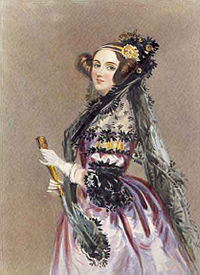
Ana de Lovelace
portrait: Margaret Sarah Carpenter


Some notes:

In 1835, Ada married William King, and when King inherited a noble title in 1838, she became the Countess of Lovelace. 


Ada, the true tech pioneer, is often credited with being the first computer programmer, but that’s perhaps an inaccurate dumbing down of her role in computing history. 
In fact, the daughter of the Romantic poet Lord Byron, an absentee father whom she didn’t know, become Charles Babbage's lifelong friend. 
Charles Babbage, Lucasian professor of mathematics at Cambridge, was known as the inventor of the Difference Engine, an elaborate calculating machine that operated by the method of finite differences. 
She was an admirer and collaborator of Charles Babbage, the genius who designed the Difference Engine and Analytical Engine, mechanical computers he wasn’t able to build. 
Ada called herself 'an Analyst (& Metaphysician)', and the combination was put to use in the Notes.


Ada Lovelace, 1840
credits: watercolor by Ada King

She understood the plans for the device as well as Babbage but was better at articulating its promise. She rightly saw it as what we would call a general-purpose computer. 
Her notes on the Analytical Engine include a table documenting an algorithm for calculating Bernoulli numbers, hence the “first programmer” label. Babbage himself praised the originality of Ada's work.

Lovelace Notes anticipate future developments, including computer-generated music.
"Whatever Ada’s role in the history of programming, she grasped the importance of Babbage’s inventions and understood that math was only part of it: she theorized, for instance, that the Analytical Engine might be used to write music. That was a pretty profound thing to realize in the 1840s, many decades before anyone successfully built a computer, let alone one that could compose a tune."


More than a hundred years after her death, in 1953, Ada Lovelace's notes on Babbage's Analytical Engine were republished after having been forgotten. The engine was finally recognized as a model for a computer, and Ada Lovelace's notes as a description of a computer and software.

In 1980, the U.S. Department of Defense settled on the name "Ada" for a new standardized computer language, named in honor of Ada Lovelace.


  • Education:

"In the early nineteenth century there were no 'professional' scientists (indeed, the word 'scientist' was only coined by William Whewell in 1836), but the participation of noble women in intellectual pursuits was not widely encouraged." 

And what about in the 21st century? 

Here we are! The reason why I began my post with Ada Lovelace doodle.

I am not a woman of Sciences. But as an educator of Humanities, I can recognize the great value of this English scientist. Ada Lovelace who has inspired countless women to achieve their goals in a time of achievements of women and young girls in science, technology, engineering and maths. 

Ada Lovelace is a wonderful example to our young students (girls) to motivate them to pursuit science studies. And I wrote about Ada Lovelace on  my blog of students BlogdosCaloiros to encourage my students to learn out of school using the internet as a resource.


Iit is not the first time I write about girls in Science. Oh! No! Since the beginning I am encouraging sciende studies. 

You do remember Cinderella per Cyberella or Maire Curie, Women in Sciences  and Technology in the Digital Age between others.

"Cyberella is a woman with a science or engineering degree, on her way to a decision making position in industry or in government and well-placed not only to benefit fully from the advantages of the Information Society, but also to take part in the design and production of technology. 

So, the gap of girls and young women in science and techonology in the 21st century is still a problem. 
That's why the European Commission recently launched a campaign to encourage more young women (secondary education, college, young researchers) to choose Science in their future careers. 
Several countries took part, the cornerstone of the campaign is a fresh and lively webpage, called Science: It’s a girl thing!
The competition offered people the chance to highlight the diverse career options that science offers to young women everywhere and to help raise young women’s interest in science at school and college. 
The winning videos have been shown at the European Gender Summit Networking Event 2012, November 29 at the Science14 in Brussels. You can watch the best videos here
And Stéphane Debove from France is the winner of Science it's your thing contest organized in November 2012 by the European Commission.
The creative video was successful in creating discussion and engagement, triggering an animated debate on how to promote science to young women, a crucial element in bringing the campaign to life.
Last week, the French newspaper Le Monde.fr also published an article Des vidéos pour inciter les filles à faire des sciences to engage, excite and educate girls for Science, Engineering and Technology! 

Watch the winner video below:


  • Some conclusions:
The European Gender Summit was dedicated to support and advance excellence and effectiveness of research and innovation at all levels, through the inclusion of gender. 

The discussion of new discoveries and a better understanding of the role of the gender dimension in many different areas of study, and how these findings can lead to new ideas and new markets for science knowledge were some of the aims. 
Constantly evolving education at all ages and levels in our ever-changing world is crucial.
"A generation of motivated interdisciplinary young women who are critical thinkers capable of connecting theory and practice with proven experience in conceiving and managing innovative projects will serve as the backbone for the society of knowledge by integrating and reviving basic and developmental research as well as education at all levels."
The graduate school mentors are to guide the process by providing the appropriate background and filling the gaps where needed through a dialogue with the students rather than through frontal courses.
Girls and women are more and more proving in different situations at school and in business that they are equal to men in the intelligence and capacity.

This begins early in school where girls must be encouraged to access to science and techonoly.

The aim is to encourage creativity in the field of science and new technologies and highlight the importance of developing innovative skills at an early age.

"I am among those who think that science has great beauty. A scientist is his laboratory is not only a technician: he is also a child placed before natural phenomena which impress him like a fairy tale."

Marie Curie


G-Souto

14.12.2012
copyright © 2012G-Souto'sBlog, gsouto-digitalteacher.blogspot.com

Licença Creative Commons
Girls in Science bG-Souto is licensed under a Creative Commons Attribution-NonCommercial-ShareAlike 3.0 Unported License.

References:

* AIV.org
http://www.aiv-paris.org/en/master-aiv/ (discontinued)