Showing posts with label Physics curriculum. Show all posts

Sunday, October 13, 2013

September round down of the most-read posts


Show your pride for the PINK and participate at events!

Sorry about the delay. As I mentioned, sometimes I'm traveling, or have important work to do, or must write about a specific day or event. Back my regularly scheduled program today! September roundown of the most-read posts.

Let me introduce an important subject: Seeing pink? October is Breast Cancer Awareness Month.
I will right a little post on Going Pink in School Education.

And now, let's doing! This is the round-own of teaching and learning School series of September. These are some posts sharing events or resources, tips, and tools for you. Ty something different or an idea that you adapt for your classroom.

I added six posts, on different subjects last month. Here my list of the 4 most-read of the month - presented in most reading order. This time, all the posts are written on English.

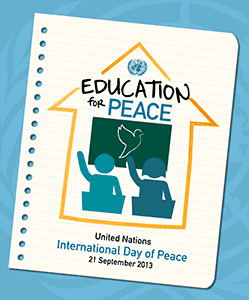
And I am glad to see that the most-read post of September is Education for Peace: International Day of PeaceIf you are my regular reader you know I am pledging for Civics as a serious subject that must be intrduced among the curriculum or disciplines in School Education.


Credits: UNESCO

"On this International Day of Peace, let us pledge to teach our children the value of tolerance and mutual respect.  Let us invest in the schools and teachers that will build a fair and inclusive world that embraces diversity.  Let us fight for peace and defend it with all our might."
UN Secretary-General Ban Ki-moon 
International Day of Peace is celebrated on 21 September every year. This year, 2013 idevoted to peace education.

Credits: UN

UNESCO campaigns for quality education for all going further than the basics of reading and writing. 

Education must encompass the teaching of human rights, living together and respect for others

Peace education is one of its key components. Every child in the world should know their rights, and learn their own history and that of other peoples, so as to be able to understand the equal dignity of cultures and draw lessons from the crimes and violence of the past.

The key to tolerant citizenship in a globalized world requires a widespread effort to train teachers and design suitable school curricula. 


MEDEA Awards 2013

The 6th edition of MEDEA Awards 2013 is now judging all the entries ob this edition. 

MEDEA Awards 2013 announced its call of entries some months ago. And the deadline to send send projects as participants was end on September 30, 2013.

As you know I am participating at MEDEA Awards since 2009. So I am glad to promote such an interesting project that encourages innovation and good practices in the use of media in Education.

The aim of the MEDEA Awards is "to encourage innovation and good practice in the use of media (audio, video, graphics and animation) in education." 


The awards also recognize and promote excellence in the production and pedagogical design of media-rich learning resources.

Innovation and good practices are possible better with the new technologies always giving us fantastic resources. 

The 'screen-generation' is used to be online all the time. So, innovative educators understood the meaning of changing academic practices and go to digital. Mobile devices really pushed up for pedagogical applications.


All finalists will be notified in the beginning of December and will be invited to take part in the awards ceremony taking place during the Media & Learning Conference 2013, December 12-13, Brussels, where the final winners will be announced.


"How can we bring attention of policy makers to the significant potential of games? This  issue will be addressed by the GREAT Lisbon Conference on Games & TEL."

Claudio Dondi

The Great Lx International Conference on Games and TEL took place in Lisbon, Portugal last 15-16 September 2013 at ISCTE-IUL.


Great LX | Auditorium

Interesting opportunity to participate, listen and share the last concepts about the current paradigms and evolution of Games in Education (GBL) Training (SG) and Technology Enchanced Learninig (TEL)


Great Lx Conference

For one long day, speakers, researchers, practitioners, producers, skate holders and participants shared  interesting ideas and experiences.

I joined key speakers and round tables at the Great Auditorium. I am an independent researcher on TEL and I was very curious to hear about the new ideas.

TEL, Games (GBL & SG), and MOOCs were on my best interests.

I was very interested on key note speaker Claudio Dondi analysis about the role of ICT in learning moving the change on E&T and bringing a great challenge for the shift on paradigm in Europe. 

I know Claudio Dondi from different international conferences. The last one, in Brussels, at the European Forum on Learning Futures and Innovationwhere I had a presentation at VISIR workshop on the 19th March, 2013 with Giordano Koch and Jan Pawlowski.

Claudio Dondi is one of best European researcher and expert and his thoughts are always very important.

Claudio Dondi made a splendid evaluation with remarkable key notes and items that I have the chance to hear. You can access to his communication here

It is very important to understand the new challenges until 2020. As the final rapporteur pointed:

  • We have to work harder on the issues above. 
  • MOOCs are not inclusive. 
  • Less focus on thecnology and more in people.


And my last post for today is Léon Foucault: a Doodle in Physics Curriculum. No, it was not about Nicolau Copernicus ! The interactive Google doodle of September 18th was about the celebration of the 194th anniversary of the French physicist Léon Foucault. Tje doodle is based on the Foucault pendulum - an innovative device Foucault created to demonstrate the effect of the earth’s rotation.


Credits: UCDavis

Education:

“His teachers described him as lazy, he did not submit work on time, so that his mother had to employ tutors to educate him at home."

As we know, sometimes, the best students in school are not the 'genius' ! Einstein, and a good number of great scientists, musicians or poets demonstrate that.

From time to time we discover 'little genius' among our students! They are not the brightest in the classroom, but we feel that they have something special ! And we do everything to help them to understand their natural skills so they could develop later and find their own way.

They are disconnected from the curriculum, distracted, sometimes with a difficult behaviour or too shy. And we encourage them as 'special' students who need a different kind of help in school.

Well, the Google doodle will be a good interactive digital resource to introduce in your curriculum, if you a are teaching Physics.

The doodle allows students to manipulate the swinging bob according to where on earth they happen to be.

Level: Secondary Education


Final thoughts:

Teachers, of course, always make the difference!
Today’s 21st Century world is totally different from the world of previous generations, and from the world in which I, and most of today’s teachers/educators, grew up.  

Why, then, can’t we learn to "break free" from the past and change or adapt old patterns/behaviors to match students' needs today, and enhance teaching and learning in today's world?

"Do not confine your students to your own learning for they were born in another time."

G-Souto

13.10.2013
Copyright © 2013G-Souto'sBlog, gsouto-digitalteacher.blogspot.com®

Licença Creative Commons
September round down of the most-read posts bG-Souto is licensed under a Creative Commons Attribution-NonCommercial-ShareAlike 3.0 Unported License.

Thursday, October 3, 2013

Visual learning in school : Stephen Hawking


Ridles of Time & Space
Stephen Hawking comic book
illustrator: Michael Lent/ Brian McCarthy

Now we can learn about the life and times of famed physicist Stephen Hawking in a comic book (May 2013). Students will read about the cosmologist they admire in a different way. A comic book. They love comic books.

The series Stephen Hawking: Riddles Of Time & Space will provide a glimpse into "the man, the myth and the legend,"

But this is not all about visual learning and Stephen Hawking. The scientist is very inspirational.


Reading The Guardian last month, on September, I watched an incredible video about Stephen Hawking.

So, I think it would be interesting to share it with you! As you know, from time to time, I like to share some resources I find surfing on the Internet.


Credits: Institute for Theoretical Physics in Ontario, Canada


Brief introduction:

Stephen Hawking is an English theorical physicist, cosmologist, and author born in 1942. He is the Director of Research at the Centre for Theoretical Cosmology at Cambridge University.

At the age of 21, while studying Cosmology at the University of Cambridge, he was diagnosed with  Amiotrophic Lateral Sclerosis (ALS).

Despite his debilitating illness, he has done ground-breaking work in Physics and Cosmology, and his several books have helped to make science accessible to everyone.

Alok Jha is a science correspondent at the Guardian. He write news and comment, he presents the Science Weekly podcast.

In this video, he explains some of the biggest ideas of Hawking. For example, why black holes are doomed to shrink into nothingness then explode with the energy of a million nuclear bombs, and rewinds to the big bang and the origin of the universe.


Stephen Hawking
credits: Jemal Countess/Getty Images


Education:

So, do you want a better digital resource that this video animation? It's a wonderful resource to talk about Stephen Hawking's ideas in the classroom!


As I wrote on Videos in the Classroom : The Higgs Field, students love videos in school curriculum. They learn more watching to a video than hearing thousands words.


Another digital resource is infographics. Infographics are also excellent educational visual resources. An infographic synthesizes knowledge. Like this infographic about Stephen Hawking: everything students need to know. Amazing isn't it?


credits: New York Times


Some thoughts:


The old approach to school curriculum was teachers lecturing to students with lessons centered around a textbook.
Now, under a new curriculum being rolled out the last academic years, educational digital resources (videos, apps, games, infographics) and new tools (tablets, smartphones and other devices) have replaced textbooks, and student-centered debate, inquiry and discussion is the main focus.
There are great educational digital resources that teachers can include into school curriculum. Students evolve well their skills if we use technology to enhance learning.

Teachers value is not in the information stored in their head. Not anymore. Teachers must have the ability and creativity to adapt new resources to the curriculum to produce a desired outcome. 


"My goal is simple. It is complete understanding of the Universe, why it is as it is, and why it exists at all."


Stephen Hawking

G-Souto

03.10.2013

Copyright © 2013G-Souto'sBlog, gsouto-digitalteacher.blogspot.com®
Licença Creative Commons
Visual learning in school curriculum  Stephen Hawking by G-Souto is licensed under a Creative Commons Attribution-NonCommercial-NoDerivatives 4.0 International License.


Wednesday, September 18, 2013

Schools : Léon Foucault in Physics curriculum : resources


Léon Foucault 
credits: BNF/ Gallica

Jean Bernard Léon Foucault was a 19th century French physicist who made contributions to a number of areas like photography and polarization. However, he is probably best known for the creation of the Foucault Pendulum, which is the the focus of today’s interactive Google Doodle on what would have been Foucault’s 194th birthday

When the pendulum was first displayed in Paris in 1851, it captured the world’s attention. The Foucault Pendulum was the first experiment that demonstrated the Earth’s rotation in an observable way.

  • Google Doodle:


Google Doodle Léon Foucault's 194th Birthday

No, today is not about Nicolau Copernicus ! The interactive Google Doodle of today, September 18th is about the celebration of the 194th anniversary of the French physicist Léon Foucault. It is based on the Foucault pendulum - an innovative device Foucault created to demonstrate the effect of the earth’s rotation.


Leon Foucault uses his pendulum to demonstrate the rotation of the Earth at the Pantheon in Paris, 1851 
illustration by Mary Evans, Science Source

Foucault was born the 18 September 1819 in Paris. He presented his theory of Earth’s rotation at an exhibition in Paris, in the Meridian of the Paris Observatory in 1851, building a 67-metre pendulum that moved clockwise, proving the ground below it was moving counter-clockwise. Foucault caused a sensation with his famous pendulum experiment.

A few weeks later, Foucault made his most famous pendulum when he suspended a 28-kg brass-coated lead bob with a 67-m-long wire from the dome of the Panthéon, Paris.

The original bob used in 1851 at the Panthéon was moved in 1855 to the Conservatoire des Arts et Métiers in Paris.


Léon Foucault and his pendulum at Panthéon of Paris
credits: Fototeca Gilardi 

  • Some biographical notes:


Léon Foucault
via Science Photo Library

Foucault was born the son of a publisher in Paris on September 18, 1819 and originally studied medicine, but was forced to give it up after developing a fear of blood. He is described:

"Nothing about the boy announced that he would be illustrious some day; his health was delicate, his character mild, timid and not expansive. The frailty of his constitution and the slow way he worked made it impossible for him to study at college. He was only able to study successfully thanks to the help of dedicated tutors watched over by his mother."

Jules Lissajous


Le Petit Parisien, November 2, 1902 
on the 50th anniversary of the experiment of Léon Foucault

His career as a physicist began shortly after, assisting and collaborating with  Alfred Donne and Hippolyte Fizeau.

In 1885 Foucault discovered that the force required for the rotation of a copper disc becomes greater when it is made to rotate with its rim between the poles of a magnet, the disc at the same time becoming heated by the eddy current or “Foucault currents” induced in the metal.


Foucault knife-edge

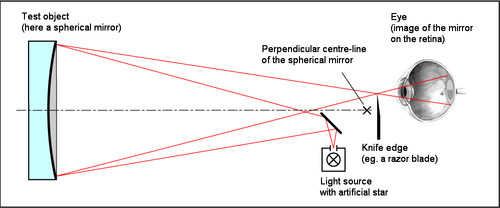
Two years later he invented the Foucault polarizer, and in 1888 devised a method of testing the mirror reflecting telescope to determine its shape – the so-called Foucault knife-edge test which is still used in amateur telescopes.

Foucault died of multiple sclerosis on February 11, 1868 at the age of 48 after being made a member of many of the top scientific societies in Europe.

His name among those of seventy-two French scientists, engineers, and mathematicians is engraved on the Eiffel Tower.


credits: UC Davis


Education:

“His teachers described him as lazy, he did not submit work on time, so that his mother had to employ tutors to educate him at home."

As we know, sometimes, the best students in school are not the 'genius' they will become! Einstein, and a good number of great scientists, musicians or poets demonstrate that.

From time to time we discover 'little genius' among our students! They are not the brightest in the classroom, but we feel that they have something special And we do everything to help them to understand their inner skills in order to develop them later,  finding their own path.

They are disconnected from the school, distracted, sometimes with a 'disruptive' behavior and even too shy. We pay attention and encourage them as 'special' students they are and need a different kind of individual encouragement in-person lessons and online learning.


Resources:

  • Interactive Doodle:


  • Well, the Google doodle will be a good interactive digital resource to include into school curriculum, if you a are teaching Physics.

    The Doodle allows students to manipulate the swinging bob according to where on earth they happen to be.

    Level: Secondary Education

    Curriculum : Sciences ; Physics.


  • Videos:


  • Books:


Léon Foucault
William Tobin

  • Sciences et Histoire : langue française


Foucault's Pendulum
Umberto Eco,1988


In 1988, the Italian novelist and essayist Umberto Eco wrote "Foucault's Pendulum" which will become a world bestseller translated into France two years later.

Synopsis:

Bored with their work, three Milanese editors cook up "the Plan," a hoax that connects the medieval Knights Templar with other occult groups from ancient to modern times. This produces a map indicating the geographical point from which all the powers of the earth can be controlled - a point located in Paris, France, at Foucault’s Pendulum.(...)

It would be interesting if students - up-to 15 years-old - read this novel  of multilayered semiotic adventure created by Eco. A superb cerebral reading.


After all, we can always enriched our lessons with different resources and activities. You can include Foucault's pendulum into different lessons and organize events or activities with the students to present at the school.

Schools are the best networks of 
teaching and learning. Schools and teachers have an important role aiming to renew and reinvigorate global knowledge as they have the mission to educate children and adolescents as future citizens.


Be creative! Use your imagination and students creativity. They are the great motivators to our lessons!


G-Souto


18.09.2013
Copyright © 2013G-Souto'sBlog, gsouto-digitalteacher.blogspot.com®

Licença Creative Commons
Schools : Léon Foucault in Physics curriculum : resources by G-Souto is licensed under a Creative Commons Attribution-NonCommercial-NoDerivatives 4.0 International License.