Showing posts with label engineering. Show all posts

Saturday, February 11, 2017

Education : Intl Day of Women & Girls in Science : Katherine Johnson


Katherine Johnson [1918-20209]
credits: via MSNBC


Katherine Johnson sits at her desk with a globe or 'Celestial Training Device'
credits: NASA

Today we celebrate #WomenInScience because gender equality and women’s empowerment are pre-conditions 4 sustainable development.

Just like NASA’s Katherine Johnson, many #WomenInScience have remained hidden figures Today is about shining a light & confronting stereotypes.

"I counted everything: the steps, the dishes, the stars in the sky," 

Katherine Johnson 


Katherine Johnson 
Presidential Medal of Freedom Honorees, 2015
credits: Carlos Barria/Reuters

President Barack Obama presents the Presidential Medal of Freedom to NASA mathematician Katherine G. Johnson in Washington, November 24, 2015.

Maths has given her joy for as long as she can remember, and it seems that becoming a professional mathematician was her destiny. As an African-American woman from rural West Virginia, however, the path that brought her to the profession seems as extraordinary as the equations she used to help send John Glenn into orbit around the earth and land Neil Armstrong on the moon.


credits: UNESCO

"Girls continue to face stereotypes and social and cultural restrictions, limiting access to education and funding for research, preventing them from scientific careers and reaching their full potential. Women remain a minority in science research and decision-making. This throws a shadow over all efforts to reach the 2030 Agenda for Sustainable Development and the Paris Agreement on Climate Change – both of which highlight the key roles of gender equality and science." Just 28% of researchers are women. 


Did you know that though 25% of boys and girls report they expect to work in science, they opt for very different careers? Boys are twice as likely as girls to expect to work as engineers, scientists or architects, on average across OECD countries.


Education:

The day must be inspirational for girls to study STEM. Promoting the work of women in science and encouraging girls to enter the sciences is important for achieving the Global Goals for Sustainable Development.


Goal 4

credits: Elyx Yak

So, the gap of girls and young women in science and technology in the 21st century is still a big problem. We must  motivate the young girls to pursuit Science studies.


Girls do as well as boys in science and maths at school but many more boys go on to further study science, technology and engineering.


As you read below statistics show that there is a noticeable gender gap, with much fewer girls choosing to study for STEM degrees. So the need for change is becoming increasingly urgent. 


credits: UNESCO

STEM subjects are still male dominated. And only about half of female Stem graduates go on to work in Stem roles. 

This may be due to lack of encouragement from parents, teachers or classmates, or down to the individual – they simply believe they are better suited to a different role."


  • Katherine Johnson:


Resources:


Hidden Figures
Thedore Melfi, 2016
Oscars 2017 nominee
Organize a school-out activity and go to the theater next to school to see the nominee film Hidden Figures.
The story of a team of African-American women mathematicians and scientists, Katherine Johnson, Dorothy Vaughan  and Mary Jackson who served a vital role in NASA during the early years of the US space program. 


When asked to name her greatest contribution to space exploration, Katherine Johnson talks about the calculations that helped synch Project Apollo’s Lunar Lander with the moon-orbiting Command and Service Module. She also worked on the Space Shuttle and the Earth Resources Satellite, and authored or coauthored 26 research reports.

NASA


Hidden Figures
Katherine Johnson/ Tariji P. Henson
Thedore Melfi, 2016
LA Times/ Science Now
http://www.latimes.com/science/l
"The International Day of Women and Girls in Science will directly influence the perception of women in science for sustainable development and elevate the contributions of women in science, past, present and future that equitably reflects the aspirations and ambitions of all global citizens."

G-Souto 
11.02.2017
Copyright © 2017G-Souto'sBlog, gsouto-digitalteacher.blogspot.com®
Creative Commons License
Education : Intl Day of Women & Girls in Science : Katherine Johnson bG-Souto is licensed under a Creative Commons Attribution-NonCommercial-NoDerivatives 4.0 International License.

Tuesday, October 11, 2016

Schools : Ada Lovelace Day : girls in STEM


Ada Lovelace

"That brain of mine is something more than merely mortal; as time will show." 

Ada Lovelace

Ada Lovelace Day (ALD) is an international celebration day of the achievements of women in science, technology, engineering and maths (STEM).


Mss draft of Ada Lovelace sonnet The Rainbow (Add MS 5408
"It aims to increase the profile of women in STEM and, in doing so, create new role models who will encourage more girls into STEM careers and support women already working in STEM."


 Ada Lovelace
credits: Hulton Archive/Getty Images
Founded in 2009 by Suw Charman-Anderson, it is now held every year on the second Tuesday of October. 
Ada Lovelace Day, aiming to raise the profile of women in science, technology, engineering and mathematics and celebrate their achievements.


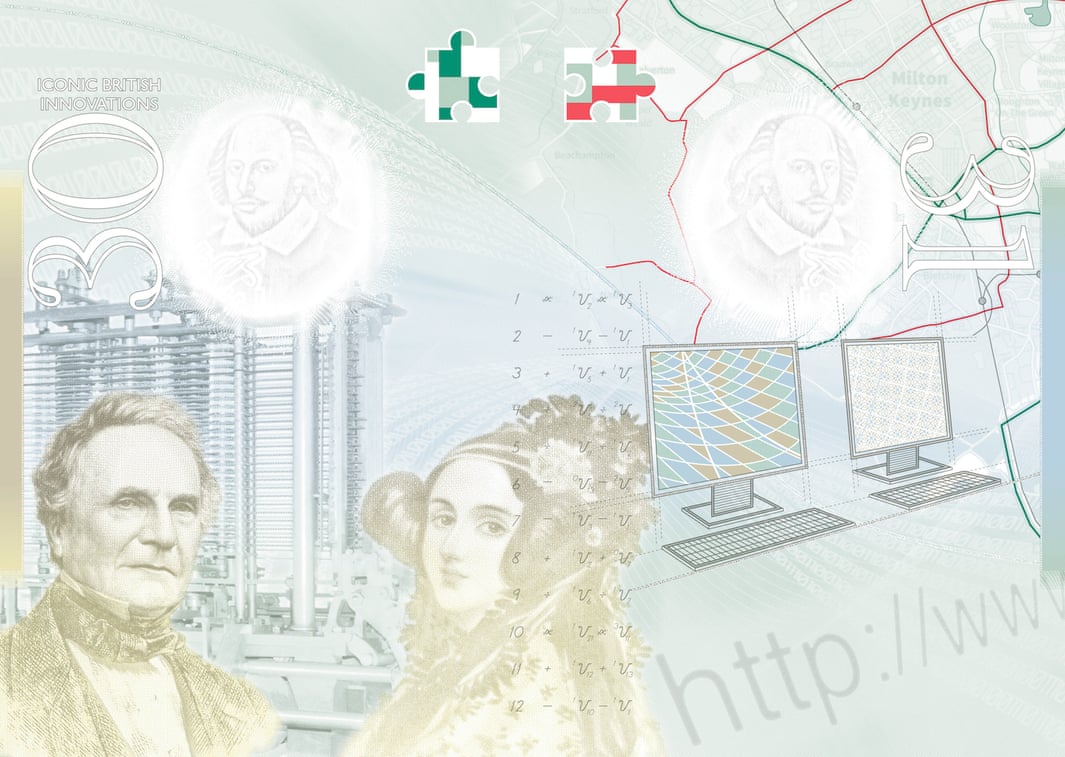
 Ada Lovelace & Charles Babbage
credits: tearlel/HM Passport Office
The day is named after Lord Byron’s daughter Ada, a mathematician who worked with Charles Babbage to create and program the world’s first general purpose computer, the analytical engine, creating the precursor to modern programming.
The day also includes dozens of grassroots events around the worldorganised entirely independently from the ALD Live!event. 
These events take many forms — from conferences to Wikipedia ‘edit-a-thons’ to pub quizzes — and appeal to all ages, from girls to university students to women with well-established careers. Last year and was the biggest ALD to date with over 150 independently organised Ada Lovelace Day events, in 82 cities, in 25 countries. 


Some information:
Called the 'Enchantress of number' by Charles Babbage, Lovelace was the daughter of infamous poet Lord Byron and the admired intellect Annabella Milbanke. 
She studied science and maths at a time when women rarely had access to such subjects and collaborated with Babbage on his calculating machines. 
Lovelace is now celebrated for identifying the machines' potential to manipulate symbols rather than just numbers, foreshadowing modern computing a century in advance.

Ada Lovelace
Cartoon: Sydney Padua
http://www.bodleian.ox.ac.uk/

Education:

"In the early nineteenth century there were no 'professional' scientists (indeed, the word 'scientist' was only coined by William Whewell in 1836), but the participation of noble women in intellectual pursuits was not widely encouraged." 

And what about in the 21st century? Here we are! The reason why Ada Lovelace Day is important.

How much tech progress has there been in tech companies themselves since Ada Lovelace Day began in 2009?
"We are trying to effect cultural change,” (...) “But you don’t change culture overnight. Equality is here, but it’s not evenly distributed. Some technology companies are doing a grand job. Other companies need to work a lot harder."
“These sorts of cultural problems can be solved much more quickly than we can train up a new generation of girls and women, but I don’t think this part of the problem is being taken seriously enough.”

Charman-Anderson, Silicon Valley


Ada Lovelace Day/ Women in Science

I'm not a woman of Sciences. But as an expert in Humanities & Technologies in Education, And Art. But I'm a big admirer of Ada Lovelace, the English scientist. 

Ada Lovelace who continues inspiring countless girls and women and young gilrsto achieve their goals in a time of achievements of women and young girls in science, technology, engineering and maths. 


Sydney Padua
Thrilling Adventures of Lovelace and Babbage: the (mostly) true story of the first computer

Ada Lovelace is a wonderful example to our students young girls. Lovelace keeps motivating young girls to pursuit STEM studies. 

The day must be inspirational for girls to study STEM. Promoting the work of women in science and encouraging girls to enter the sciences is important for achieving the Global Goals for Sustainable Development.

So, the gap of girls and young women in science and techonology in the 21st century is still a big problem. We must  motivate the young girls to pursuit Science studies.


Ada Lovelace


Some thoughts:

I wrote about Ada Lovelace on my blog to students, a blog to encourage my students to learn online using the technologies.

Girls and women are more and more proving in different situations at school and in business that they are equal to men in the intelligence and capacity.

This begins early in school where girls must be encouraged to access to science and technolyogy.

The aim is to encourage creativity in the field of science and new technologies and highlight the importance of developing innovative skills at an early age.

Sometimes, "women leave tech for a variety of reasons, such as not seeing opportunities for advancement, hostile male culture, feelings of isolation – it’s not that they want to leave to have a family, as is often assumed."

Charman-Anderson, Silicon Valley.

However, we must not give from encourage our students to achieve their goals in STEM.

Resources: Useful links

Finding Ada
http://findingada.com/blog/

On Ada Lovelace Day, we break down how diverse tech companies actually are
https://www.theguardian.com/technology/2016/oct/11/ada-lovelace-day-tech-company-diversity-equality

Thrilling Adventures of Lovelace and Babbage: the (mostly) true story of the first computer by Sydney Padua
https://penguinrandomhouse.tumblr.com/post/117282649895/pantheonbooks-hey-ada-lovelace-fans-looking

Sydney Padua: 'Once I started drawing Ada Lovelace, I couldn't stop' (graphic book)
https://www.theguardian.com/books/2016/oct/11/ada-lovelace-day-sydney-padua-babbage


G-Souto

11.10.2016
Copyright © 2016G-Souto'sBlog, gsouto-digitalteacher.blogspot.com®

Creative Commons License
Schools : Ada Lovelace Day : Girls & STEM b G-Souto is licensed under a Creative Commons Attribution-NonCommercial-NoDerivatives 4.0 International License.


Thursday, February 11, 2016

Schools : International Day of Women & Girls in Science


credits: UNESCO


"The new 2030 Agenda for Sustainable Development underlines the power of science as a driver for human rights and dignity, poverty eradication and the protection of the planet.

On this first International Day of Women and Girls in Science, UNESCO’s message is clear – the new Agenda will not meet its promise without investing in women’s and girls’ empowerment through and in science.
More than ever today, the world needs science and science needs women."

Irina Bokova, Former Director-General UNESCO, Message

Today the 11th February, we are celebrating the International Day of Women & Girls 2016.

The commemoration of the day will also enable people worldwide to discuss the many existing challenges and issues facing women and societies today, and then to determine the indispensable solutions, actions, policies and programmes to overcome these issues through science-based accomplishments in sustainable development by women in science.


Inclusion of an International Day of women and Girls in Science annually on 11 February during the annual session of the Commission on Social Development would bring the issue of advanced education in all scientific fields to wide public attention and help to popularize many of the SDGs in the mind of the greater public.

Commemorating the very first observance of the day, a High-Level Forum is being held on 11 February 2016 at the United Nations Headquarters by The Royal Academy of Science International Trust (RASIT) and DESA-DSPD.

Science and gender equality are both vital for the achievement of the internationally agreed development goals, including the 2030 Agenda for Sustainable Development

  • Theme:


Over the past 15 years, the global community has made a lot of effort in inspiring and engaging women and girls in science. 

Unfortunately, women and girls continued to be excluded from participating fully in science. According to a study conducted in 14 countries, the probability for female students of graduating with a Bachelor’s degree.

Paragraph 119 of the Synthesis Report states 2015: we have a long way to go to reach the necessary level of participation of women and girls in science, technology (including ICTs), engineering and mathematics for the world in the 21st century."


The Sustainable Development Goals (SDGs) to a great degree need a strong science base, and this cannot be achieved at any level unless girls and women have an incentive, such as recognition and the example of role models, to have in front of them.


  • Education:

The day must be inspirational for girls to study STEM. Promoting the work of women in science and encouraging girls to enter the sciences is important for achieving the Global Goals for Sustainable Development.


So, the gap of girls and young women in science and technology in the 21st century is still a big problem. We must  motivate the young girls to pursuit Science studies.


Girls do as well as boys in science and maths at school but many more boys go on to further study science, technology and engineering.


The Hypatia project (EU) encourages young women (secondary education, college, young researchers) to choose Science in their future careers. 


Hypathia
From "Little Journeys to the Homes of Great Teachers: Hypatia", by Elbert Hubbard, 1908

Hypatia was a mathematician, astronomer and philosopher, born in Greece around AD 350-415. Her person and way of thinking inspires this new Horizon 2020 project.


via Google Images Archive

HYPATIA is aimed at girls aged thirteen to eighteen both in and out of the educational setting. Its primary goal will be to interest these teenagers in STEM (science, technology, engineering and mathematics) degree courses.

Statistics show that there is a noticeable gender gap, with much fewer girls choosing to study for STEM degrees. So the need for change is becoming increasingly urgent.

There's an interesting article I wish I weren't the only girl in my computer science class that share some thoughts of a 17 years-old girl on the gender gap in STEM:


"Stem subjects are still male dominated: nearly four out of five of those who took A-level physics in 2012 were male. And only about half of female Stem graduates go on to work in Stem roles. 


This may be due to lack of encouragement from parents, teachers or classmates, or down to the individual – they simply believe they are better suited to a different role."


  • Activities:


As STEM teachers and students you can Act

  • Make a Pledge
  • Share your Activities
  • Design a Poster
  • Video
  • Photo
  • Find out How

Resources:

  • Women in Science: Explore the data Interactive tool produced by the UNESCO Institute for Statistics (UIS).

"The International Day of Women and Girls in Science will directly influence the perception of women in science for sustainable development and elevate the contributions of women in science, past, present and future that equitably reflects the aspirations and ambitions of all global citizens."

G-Souto 

11.02.2016
update
11.02.2026
Copyright © 2016G-Souto'sBlog, gsouto-digitalteacher.blogspot.com®

Creative Commons License
Schools : International Day of Women & Girls in Science bG-Souto is licensed under a Creative Commons Attribution-NonCommercial-NoDerivatives 4.0 International License.