Monday, May 9, 2016

Schools : Let's talk about Europe Day ! Resources & activities


Europe Day / May 9

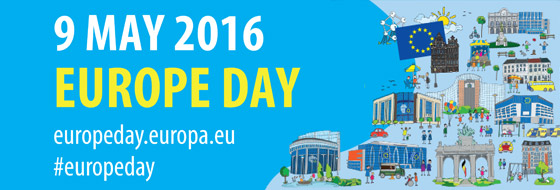
Today May 9 is Europe Day ! In May each year, the European Institutions celebrate the anniversary of the funding of the European Union.

This is an opportunity for citizens to learn about the day-to-day work of the institutions, as well as the broader issues, challenges and benefits of the European Union for its 508 million citizens.
On Saturday 28 May 2016, from 10 am to 6 pm, various locations in Brussels (from the Schuman Roundabout down Rue Belliard to the Place du Luxembourg) will be open doors.


EU Founders


Europe Day is celebrated since 1985 to honor the the architect of the European integration project, Robert Schuman.

The statesman Robert Schuman, a qualified lawyer and French foreign minister between 1948 and 1952, is regarded as one of the founding fathers of European unity.

In cooperation with Jean Monnet he drew up the internationally renowned Schuman Plan, which he published on 9 May 1950, the date now regarded as the birth of the European Union. 

Every year has a different theme. The theme for the 2016 edition of this event will be the European Union motto "United in diversity"


Europe is a multi-faceted melting-pot of languages, cultures, religions and political opinions, and this diverse identity is reflected in its fundamental values and governing institutions.


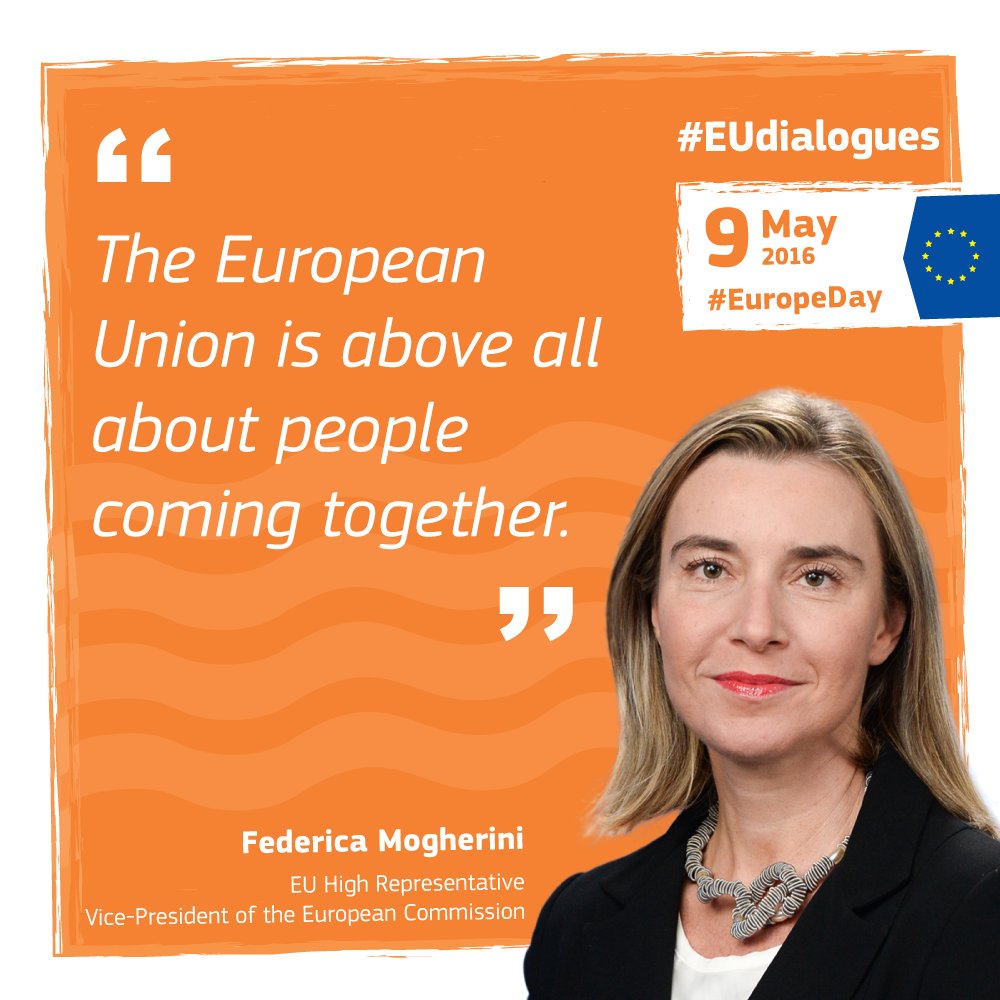
On #EuropeDay, a public debate with EU High Representative for Foreign Affairs and Vice-President Federica Mogherini and former President of Italy Giorgio Napolitano! 

Live streaming of the dialogue with interpretation to English: europa.eu/!Jv99xX 

*Take part in the online debate using #EUdialogues!


EU Symbols


Education:

Twenty eight European countries are members of the European Union. Schools across Europe are invited to participate by organizing debates, concerts, exhibitions, interactive activities (different schools from different European countries) around these issues on 9 May, Europe Day.

The EU was not always as big as it is today. When European countries started to cooperate economically in 1951, only Belgium, Germany, France, Italy, Luxembourg and the Netherlands participated.

Over time, more and more countries decided to joinPortugal is a member since 1986.

The union reached its current size of 28 member countries with the accession of Croatia on 1 July 2013.


Europe Day 2016


Every yearEurope Day is celebrated on May 9. For many Europeans it is not well known, but since 1985, Europe has its own day to celebrate the specific character of Europe. The unique European mix of numerous different languages, countries, regions, food, music; all in a rather small geographical location; that constitutes Europe.

Entertaining, informative activities are organised throughout Europe and beyond.Site visits, information stands, interactive activities, debates, concerts, exhibitions, other. Find more here

Of course all the European teachers will include Europe Day into the school curriculum. 

Curriculum : Cross-curricular.

Level : All levels. 


Some Activities :

  • Let the students explore all the links about European Union to be well informed about it.
  • Ask on a debate about the "pros & cons" to be a member of the EU or to become a new member of the EU.

Students must practice the critical thinking about a subject that is not consensual nowadays when Europe is experiencing a severe financial crisis and the UK want to leave the EU.

The austerity measures and social spending cuts extended the child poverty and child deprivation in the world’s advanced economies, a report revealed by UNICEF in 2015.

Children are affected by poverty in rich countries too. Today, there are 26 million children at risk of poverty or social exclusion in the EU.


Kids of the recession


If you teach young students, you will include into your lessons different activities to motivate kids to learn about the EU. 

Don't forget children's poverty in their own countries.

Resources:
  • The EU in slides : The page contains visual material (slide presentations) illustrating various aspects of the EU.
These slides may be a useful tool for teachers, speakers on EU issues, students and anyone interested in giving a presentation about the EU.
  • Learning corner : Information about the EU for young people, kids, teens and teachers.
  • Celebrating Europe Day 2016Building tours, concerts, exhibitions, conferences, tastings, activities for all ages: take your pick of the 164 activities planned to mark the anniversary of the European Union.

You have the time because the EU activities goes around May 28 Brussels #opendoors

"A great time to visit the EU institutions in Brussels on Saturday 28 May plenty of activities for all ages and discover how the institutions work ! "

European Commission


G-Souto

09.05.2016

update 09.05.2024
Copyright © 2016G-Souto'sBlog, gsouto-digitalteacher.blogspot.com®

Creative Commons License
Schools : Let's talk about Europe Day ! Resources & activities bG-Souto is licensed under a Creative Commons Attribution-NonCommercial-NoDerivatives 4.0 International License.


Friday, May 6, 2016

Science education : Don't miss Eta Aquarid meteor shower


credits: David Kingham / Flickr
Tonight greatest number of Eta Aquarid meteors will light up the predawn darkness on May 6, 2016. 

In a dark sky, especially at latitudes in the Southern Hemisphere, the Eta Aquarids can produce up to 20 to 40 meteors per hour – or more.
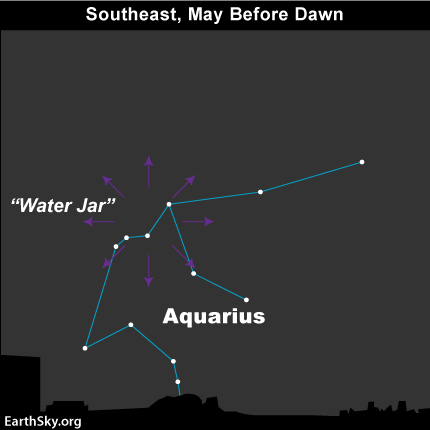
These meteors are named "Eta Aquarid" because they appear to emanate out of the constellation Aquarius, which takes the shape of a dude pouring out a jug of water for eternity. 
The meteors fly out from a star near the top of the constellation named Eta Aquarii
We come across this patch of debris again in October, when the skies light up with the Orionid meteor shower


credits: EarthSky
The Eta Aquarid meteor shower is usually active between April 19 and May 28 every year. Twice every year Earth collides with a ring of debris left behind by Halley’s comet, creating a pair of sibling meteor showers that can dazzle in the night sky.

2016 should be a good year for this shower, with the May 6 new moon guaranteeing deliciously dark skies for the 2016 Eta Aquarids. 

The Eta Aquarids is one of the fastest meteor showers. Its specks pierce the sky at about 148,000 miles per hour.


The Eta Aquarids is one of two meteor showers created by debris from Comet Halley. 
Halley's comet won't return to the skies until the 2060s. But tonight, you can catch a glimpse of it in the Eta Aquarid meteor shower.
The Earth passes through Halley's path around the Sun a second time in October. This creates the Orionid meteor shower, which peaks around October 20.


Comet Halley. Credit: ESA/Max-Planck-Institute

Comet Halley takes around 76 years to make a complete revolution around the Sun. 

This shower favors the Southern Hemisphere, ranking as one of the finest showers of the year. At mid-northern latitudes, these meteors don’t fall so abundantly, though mid-northern meteor watchers will catch some, too, and might be lucky enough to catch an earthgrazer – a bright, long-lasting meteor that travels horizontally across the sky – before dawn. The Eta Aquarids are mainly a predawn shower. 

Earth is currently passing through a patch of debris created in the wake of the comet's tail. When that debris hits our atmosphere, it will burn up and scar the night sky as meteors in the predawn hours between May 5 and 6 (though you may be able to see a few meteors a night until May 28) .


credits: EarthSky
When and how should I watch the Eta Aquarids? 
The 2016 Eta Aquarid meteor shower is expected to produce the greatest number of meteors in the wee hours before dawn on May 5 and 6. However, the broad peak of the Eta Aquarid shower may present a decent showing of meteors during the predawn hours on May 4 and May 7, too.
We don’t have to locate the Water Jar, or the radiant of the shower, to enjoy the Eta Aquarids. These meteors fly every which way across the sky, in front of numerous constellations. We can find a dark, open sky away from artificial lights, and sprawl out on a reclining lawn chair to comfortably watch the wondrous nighttime attraction.
The Eta Aquarids are viewable in both the Northern and Southern hemispheres during the pre-dawn hours. 
The best time to watch these fast and often bright meteors is in the early morning hours, before the onset of morning twilight. 
We must give at least an hour of viewing time for watching any meteor shower. Meteors tend to come in spurts that are interspersed by lulls. Also, it can take as long as 20 minutes for your eyes to adapt to the dark.
We don't need no special equipment to watch a meteor shower, but a little luck always helps. Meteor watching is a lot like fishing. Sometimes you catch a good number of them and sometimes you don’t.


credits : REUTERS/ Ognen Teofilovski)
Education:
Today, 06 Maythe awesome Eta Aquarid meter shower will be a spectacular show. 

Most of us are excited about the Eta Aquarid meteor shower. Science teachers and students. Skywatchers as well. 

I'm not a science pedagogue, but I love science and all the high technology near science.

Do you remember Science education : Ready to watch the Geminids shower last December 2015? Or Catching the Falling Stars, the Perseids last August 2015? Just awesome! A sky full of stars. 

Teachers invite your students to be ready as skywatchers. Sciences curriculum will be enhanced with the help of another awesome event in the sky. The Eta Aquari meteor shower.

Do you want a better science lesson ? Two nights on live science. Wow! No special equipment. 

Activities: 

During Eta Aquarid meteor shower skywatching, teachers, students can be skywatchers, and at the same time do some good shots, or videos with iphones, smartphones or tablets. 

The event will be discussed next week in the classroom. 

Resources: 


Teachers be prepared for the next great event! May 9 Mercury will cross the Sun!

G-Souto

06.05.2016
Copyright © 2016G-Souto'sBlog, gsouto-digitalteacher.blogspot.com®

Creative Commons License
Science education : Ready to watch the Geminids shower ? bG-Souto is licensed under a Creative Commons Attribution-NonCommercial-NoDerivatives 4.0 International License.

References:

NASA | Earth Sky


Sunday, May 1, 2016

April rundown of the most read posts & Claude Shannon !


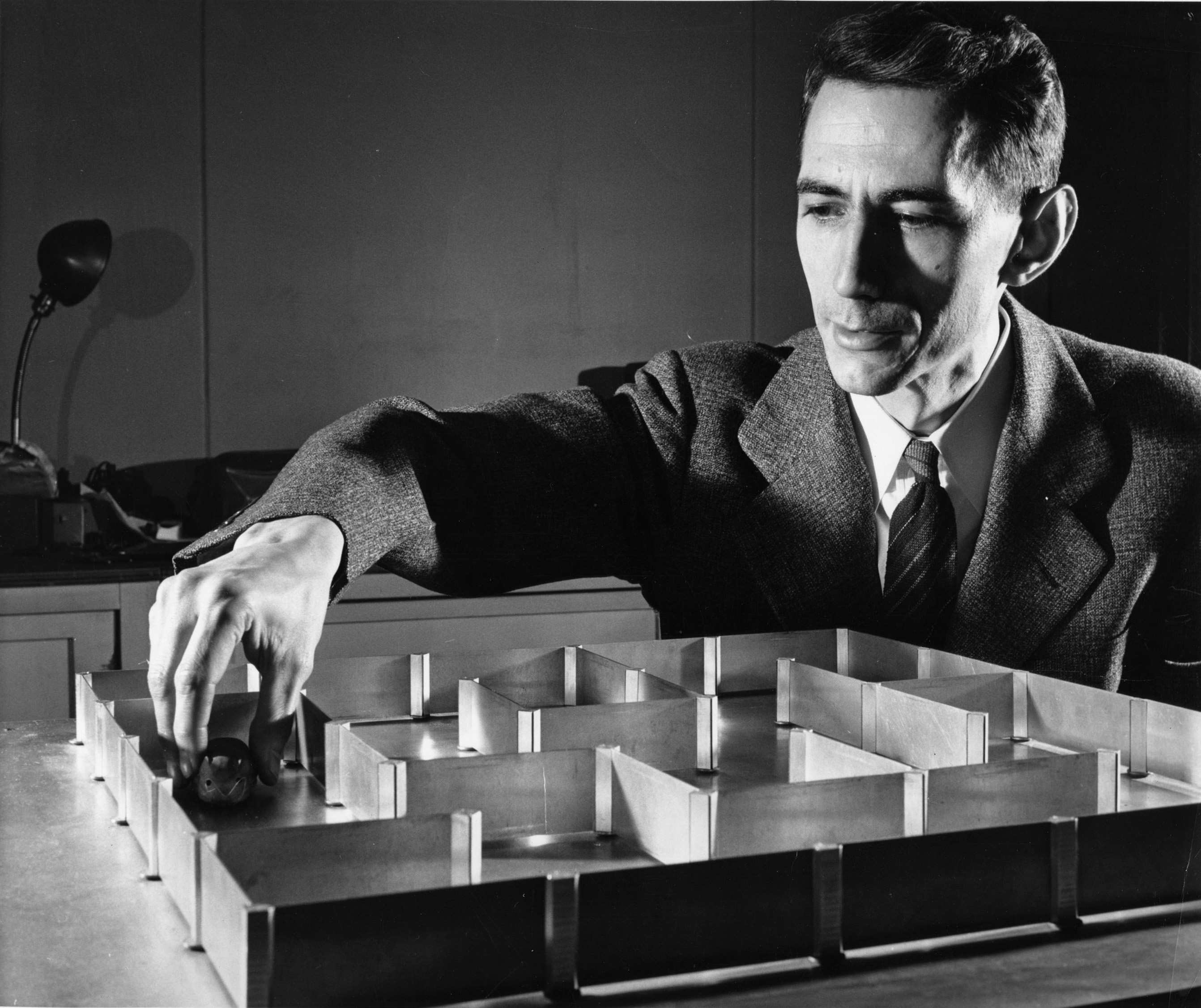
Claude Shannon
Alfred Eisenstaedt / The Life Picture Collection / Getty

How a hundred years after his birth, Claude Shannon’s fingerprints are on every electronic device we own. Shannon was a Member in the School of Mathematics from 1940–41?

Google Doodle:


Claude Shannon's 100th Birthday
doodler: the artist Nate Swinehart


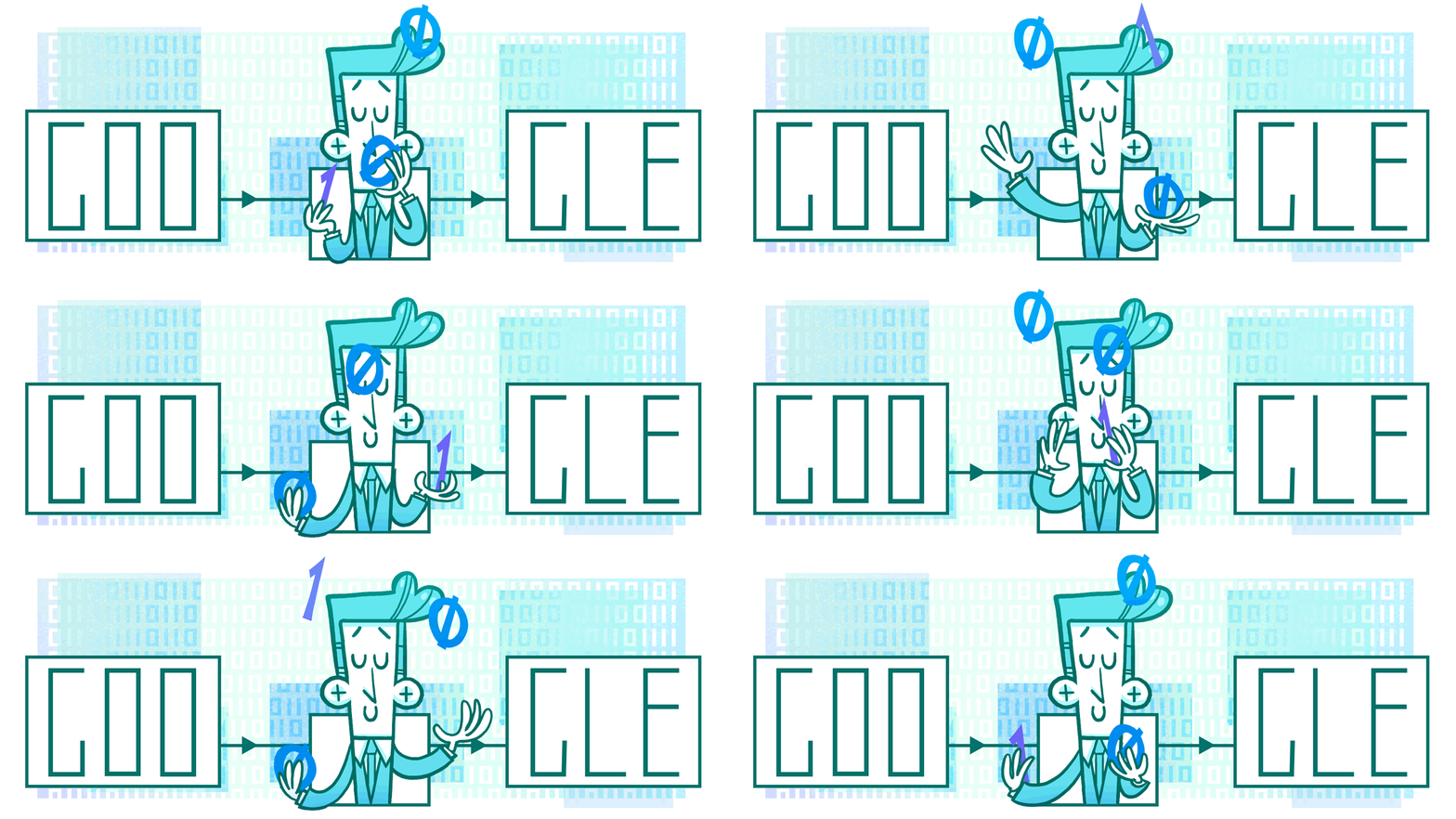
Last Saturday, 30 April, Google celebrated the 100th Anniversary of Claude Shannon with an interactive Doodle. The creative Doodle by Nate Swinehart celebrated the brilliance and lightheartedness of the father of modern digital communication.


In its time the Google Doodle has celebrated mathematicians such as, George Boole and Hertha Marks Ayrton - as well codebreaker Alan Turing, the 100th anniversary of whose birth was 23 June 2012.
Now it is the turn of Claude Shannon, who worked with Turing on Allied code breaking during the Second World War - not at Bletchley Park, but in Washington, where Turing had been seconded in 1943 to bring the US up to speed with British crypt analytic developments. 


Claude Shannon
credits: Getty

Claude Elwood Shannon is often described as the father of the information age who created the term "bit", short for binary digits. 

It'impossible to overstate the legacy of Claude Shannon. The paper he wrote for his master’s thesis is the foundation of electronic digital computing.  


Claude Shannon
Alfred Eisenstaedt / The Life Picture Collection / Getty

His most famous work is A Mathematical Theory of Communication (1949) in which Shannon introduced information theory, the branch of mathematics focused on transmitting digital data. 

It was in this masterpiece that he coined the term "bit", the fundamental unit of information which relates to digital certainty: true or false, on or off, yes or no.


Education:
Include this Doodle into your sciences and math curriculum at school and let your students discover the incredible sicentific work of Claude Elwood Shannon's research work as possible.
Discuss with your students the importance of this mathematician to modern digital communication.
I couldn't miss this Doodle (my usual readers know I am a fan of Doodles, a awesome resource to introduce any theme in the classroom) as the introduction of the rundown of the most read posts in April.

Here are the most popular posts of the last month:

Schools: Intl Children's Book Day 2016 

Schools: It's Earth Day 2016 : apps & games 

Education: World Book and Copyright Day 2016

Schools, participate ! Girls in ICT Fay 2016 

Éducation: Tout en haut du monde : film animation 

Schools: It's Intl Dance Day? Let's Dance! 

Escolas : Voltemos ao 150º aniversário de Alice 


Hope you enjoyed the different themes and resources published on April on my blog It was a fantastic month full of good themes - books, ICT, arts, environment, animated movies - different pedagogical resources to motivate some of your lessons.

I'm back to posting the normal roundup every week. 

G-Souto 


01.05.2016
Copyright © 2016G-Souto'sBlog, gsouto-digitalteacher.blogspot.com®

Creative Commons License
April rundown of the most read posts bG-Souto is licensed under a Creative Commons Attribution-NonCommercial-NoDerivatives 4.0 International License.