Showing posts with label child poverty in developed countries. Show all posts

Monday, May 9, 2016

Schools : Let's talk about Europe Day ! Resources & activities


Europe Day / May 9

Today May 9 is Europe Day ! In May each year, the European Institutions celebrate the anniversary of the funding of the European Union.

This is an opportunity for citizens to learn about the day-to-day work of the institutions, as well as the broader issues, challenges and benefits of the European Union for its 508 million citizens.
On Saturday 28 May 2016, from 10 am to 6 pm, various locations in Brussels (from the Schuman Roundabout down Rue Belliard to the Place du Luxembourg) will be open doors.


EU Founders


Europe Day is celebrated since 1985 to honor the the architect of the European integration project, Robert Schuman.

The statesman Robert Schuman, a qualified lawyer and French foreign minister between 1948 and 1952, is regarded as one of the founding fathers of European unity.

In cooperation with Jean Monnet he drew up the internationally renowned Schuman Plan, which he published on 9 May 1950, the date now regarded as the birth of the European Union. 

Every year has a different theme. The theme for the 2016 edition of this event will be the European Union motto "United in diversity"


Europe is a multi-faceted melting-pot of languages, cultures, religions and political opinions, and this diverse identity is reflected in its fundamental values and governing institutions.


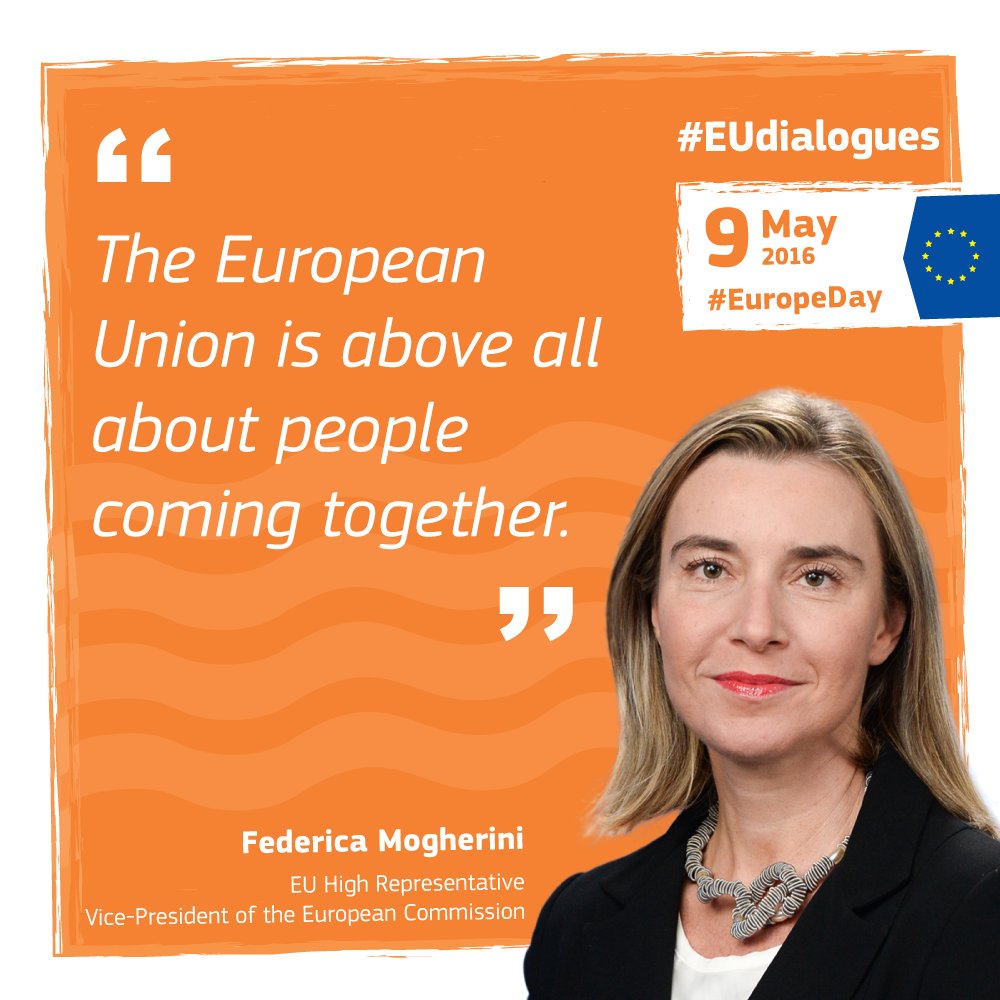
On #EuropeDay, a public debate with EU High Representative for Foreign Affairs and Vice-President Federica Mogherini and former President of Italy Giorgio Napolitano! 

Live streaming of the dialogue with interpretation to English: europa.eu/!Jv99xX 

*Take part in the online debate using #EUdialogues!


EU Symbols


Education:

Twenty eight European countries are members of the European Union. Schools across Europe are invited to participate by organizing debates, concerts, exhibitions, interactive activities (different schools from different European countries) around these issues on 9 May, Europe Day.

The EU was not always as big as it is today. When European countries started to cooperate economically in 1951, only Belgium, Germany, France, Italy, Luxembourg and the Netherlands participated.

Over time, more and more countries decided to joinPortugal is a member since 1986.

The union reached its current size of 28 member countries with the accession of Croatia on 1 July 2013.


Europe Day 2016


Every yearEurope Day is celebrated on May 9. For many Europeans it is not well known, but since 1985, Europe has its own day to celebrate the specific character of Europe. The unique European mix of numerous different languages, countries, regions, food, music; all in a rather small geographical location; that constitutes Europe.

Entertaining, informative activities are organised throughout Europe and beyond.Site visits, information stands, interactive activities, debates, concerts, exhibitions, other. Find more here

Of course all the European teachers will include Europe Day into the school curriculum. 

Curriculum : Cross-curricular.

Level : All levels. 


Some Activities :

  • Let the students explore all the links about European Union to be well informed about it.
  • Ask on a debate about the "pros & cons" to be a member of the EU or to become a new member of the EU.

Students must practice the critical thinking about a subject that is not consensual nowadays when Europe is experiencing a severe financial crisis and the UK want to leave the EU.

The austerity measures and social spending cuts extended the child poverty and child deprivation in the world’s advanced economies, a report revealed by UNICEF in 2015.

Children are affected by poverty in rich countries too. Today, there are 26 million children at risk of poverty or social exclusion in the EU.


Kids of the recession


If you teach young students, you will include into your lessons different activities to motivate kids to learn about the EU. 

Don't forget children's poverty in their own countries.

Resources:
  • The EU in slides : The page contains visual material (slide presentations) illustrating various aspects of the EU.
These slides may be a useful tool for teachers, speakers on EU issues, students and anyone interested in giving a presentation about the EU.
  • Learning corner : Information about the EU for young people, kids, teens and teachers.
  • Celebrating Europe Day 2016Building tours, concerts, exhibitions, conferences, tastings, activities for all ages: take your pick of the 164 activities planned to mark the anniversary of the European Union.

You have the time because the EU activities goes around May 28 Brussels #opendoors

"A great time to visit the EU institutions in Brussels on Saturday 28 May plenty of activities for all ages and discover how the institutions work ! "

European Commission


G-Souto

09.05.2016

update 09.05.2024
Copyright © 2016G-Souto'sBlog, gsouto-digitalteacher.blogspot.com®

Creative Commons License
Schools : Let's talk about Europe Day ! Resources & activities bG-Souto is licensed under a Creative Commons Attribution-NonCommercial-NoDerivatives 4.0 International License.


Thursday, September 4, 2014

Schools : International Day of Charity : Activities


International Day of Charity
UN 2014

"Charity plays a significant role in the work of the United Nations and its agencies. On this International Day, I call on people everywhere to act on the charitable impulse that resides in every human being - to start giving and to keep on giving."
Secretary-General Ban Ki-moon
Message for the International Day of Charity, 5 September 2014
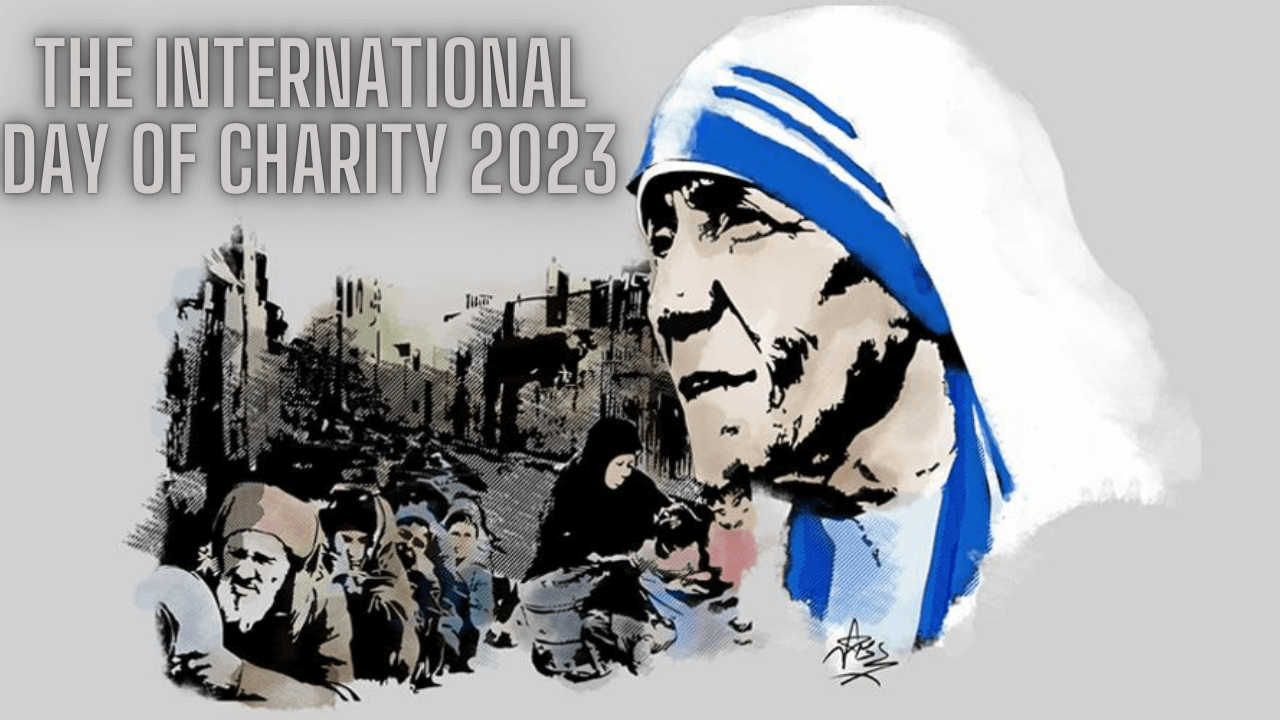
On 5 September, we are celebrating the International Day of Charity. The date of 5 September was chosen in order to commemorate the anniversary of the passing away of Mother Teresa of Calcutta, who received the Nobel Peace Prize in 1979 "for work undertaken in the struggle to overcome poverty and distress, which also constitute a threat to peace."


Mother Teresa

International Day of Charity was established with the objective of sensitizing and mobilizing people, NGOs, and stakeholders all around the world to to help others through volunteer and philanthropic activities.
On this International Day of Charity, the United Nations invites all Member States and all international and regional organizations, as well as civil society, including non-governmental organizations and individuals, to commemorate the Day in an appropriate manner, by encouraging charity, including through education and public awareness-raising activities

"Of the 925 million people suffering from chronic hunger, 98 percent live in the developing worldUnlike famines that receive emergency-aid, chronic hunger is a silent, invisible, day-after-day condition."
Poverty persists in all countries of the world, ‎regardless of their economic, social and cultural situation, particularly in developing countries.


Child poverty in delveloped countries

Education:

“It's not how much we give but how much love we put into giving.”

Mother Teresa
"Charity can alleviate the worst effects of humanitarian crises, supplement public services in health care, education, housing and child protection
Child poverty in the developed world is more of an issue than many people realize, and the effects can be seen even more starkly when examining minority populations.

For some children, socializing and learning are being cruelly complicated by homelessness. And we have this reality in our classroom among some our students!

Teaching charity in school contributes to the promotion of dialogue, solidarity and mutual understanding ‎among students.‎


In 2012 UNICEF warned that poverty due the impact of global financial crisis puts children's future health, education and employment prospects at risk. It risks damaging childhoods and children's life chances.

UNICEF


Teachers in their own countries have a crucial role on the alert of poverty cases among their students.


Many schools and other educational institutions make a special effort to inform children of their rights according to the Declaration of the Rights of the Child and the Convention on the Rights of the Child. 

But most important is to encourage the value of charity by small things in your lessons, every day.

To give you some ideas on how you can get started, here are the top five ways you can get involved today:


#CharityDay

Of course I don't agree to ask young students for money donation. Giving doesn't mean spending money. If it's all they have got to give, a smile is plenty in this special day.

However, to give you some ideas on how students can get started, here are some ways they can get involved today:


Activities:
  • Ask students to learn about Mother Teresa' work. by a research (tablets or smartphones). UN website have important information here;
  • Charity Kitchen can take place in school organized by the students to alleviate people poverty in the city by inviting some poor people in the neighbour; 
  • Ask your students to pack some lunches to be distributed at nearby areas;
  • Provide learning and interesting activities about Charity value: videos; movies, news about the celebrities who are involved in their own charities;
  • Spread the word on social media: Use Facebook, Twitter, Instagram school accounts to tell their friends and family about the International Day of Charity. 
  • Don’t forget to use #charityday in your posts in order to join the conversation and see how others are celebrating this special occasion;
  • Volunteering: There are several charitable organizations in your community that could use some extra helping hands. If the class can’t volunteer on September 5th, call and set up a time to do so in the next couple of days. Students can even ask some of their friends or classmates to join them!

All students and teachers have time for random acts of kindness! As you go through your school day, think about simple ways students can help others. 

Do a chore without being asked, be kind to people at school even if they’re not kind to you, or go out of your way to do something nice for someone. 


“Not all of us can do great things. But we can do small things with great love.”


Mother Teresa


G-Souto

05.09.2014
update 05.09.2023
Copyright © 2023G-Souto'sBlog, gsouto-digitalteacher.blogspot.com®

Creative Commons License
Schools : International Day of Charity bG-Souto is licensed under a Creative Commons Attribution-NonCommercial-NoDerivatives 4.0 International License.

Tuesday, December 10, 2013

Human Rights Day at school


20 Years Human Rights

"As we commemorate the 20th anniversary of the Vienna Declaration and Programme of Action, let us intensify our efforts to fulfill our collective responsibility to promote and protect the rights and dignity of all people everywhere."

UN Secretary-General Ban Ki-moon

The UN General Assembly proclaimed 10 December as Human Rights Day in 1950, to bring to the attention ‘of the peoples of the world’ the Universal Declaration of Human Rights as the common standard of achievement for all peoples and all nations.

In 2013, the Office of the UN High Commissioner for Human Rights marks 20 years since its establishment.

The United Nations General Assembly created the mandate of High Commissioner for the promotion and protection of all human rights in December 1993. The General Assembly was acting on a recommendation from delegates to the World Conference on Human Rights held in Vienna earlier the same year.


"To realise freedom and equality in dignity and rights for all women and men, we must do everything to support countries in meeting the Millennium Development Goals by 2015."
Irina Bokova, UNESCO Director-General


Theme:

This year’s theme will focus on "inclusion and the right to participation in public life."
"The open and global network offers you that chance to be a part of public matters and provides a platform for you to help influence the decisions that shape your communities. 
It has given a voice to the voiceless, pushed the boundaries of human innovation, built new communities, and helped them flourish in a way that was previously unimagined."


This year we have a chance to celebrate the Internet as a tool that’s helped enable universal rights such as freedom of opinion and expression, to peaceful assembly and association, and to take part in the conduct of public affairs (articles 19, 20 and 21 of the Universal Declaration of Human Rights)


Photo: Li Qihua | Rex Features

Education:

But nothing better to celebrate Human Rights Day than remember Nelson Mandela. UNESCO pay tribute to Nelson Mandela,  UNESCO Goodwill Ambassador and his legacy here

"We give thanks for his life, his leadership, his devotion to humanity and humanitarian causes."

Nelson Mandela Foundation

Education should encompass values such as peace, non-discrimination, equality, justice, non-violence, tolerance and respect for human dignity. 
Quality education based on a human rights approach means that rights are implemented throughout the whole education system and in all learning environments.
All schools and other educational institutions make a special effort to inform children of their rights according to the Declaration of the Rights of the Child and the Convention on the Rights of the Child. 

Credits: OECD
Teachers have a crucial role on the alert of poverty or child labour cases among their students.

In our days, teachers help students draw attention to situations like students living below poverty line in their own schools, or countries.

Let us draw inspiration from some good actions to strengthen respect for human rights to children and young people. 

Activities:

Please consult my post "Human Rights Day & New Generations" here


Children's Rights

The United Nations Human Rights office is organizing a Google+ Hangout on the 12th December, at 4:00pm until 4:30pm in UTC+01 to discuss child rights, access to justice for children and the new Optional Protocol to the Convention on the rights of the Child on a Communications Procedure. 


The Google+ Hangout will be moderated by James Heenan, the Chief of the Human Rights Treaties Division at the UN Human Rights Office (OHCHR).

Participants will include Anita Goh, Advocacy Officer at Child Rights Connect, Olga A. Khazova, Member of the UN Committee on the Rights of the Child and Hatem Kotrane, Member of the UN Committee on the Rights of the Child.

Take part in the conversation via:
  • Twitter
  • Google+ 
  • Facebook
Send your questions to the participants using hashtag #Justice4Kids.

"Nelson Mandela changed the world and made it a better place. He taught us all a lesson on the power of peace and  reconciliation;  the importance of forgiveness and respect for the dignity of each and every human being."

Irina Bokova, tribute


G-Souto

10.12.2013
Copyright © 2013G-Souto'sBlog, gsouto-digitalteacher.blogspot.com®

Licença Creative Commons
Human Rights Day at school bG-Souto is licensed under a Creative Commons Attribution-NonCommercial-ShareAlike 3.0 Unported License.