My thoughts about Education Humanities, Technology and Digital Culture. Interested on social media tools in educational contexts and
gamification in education.
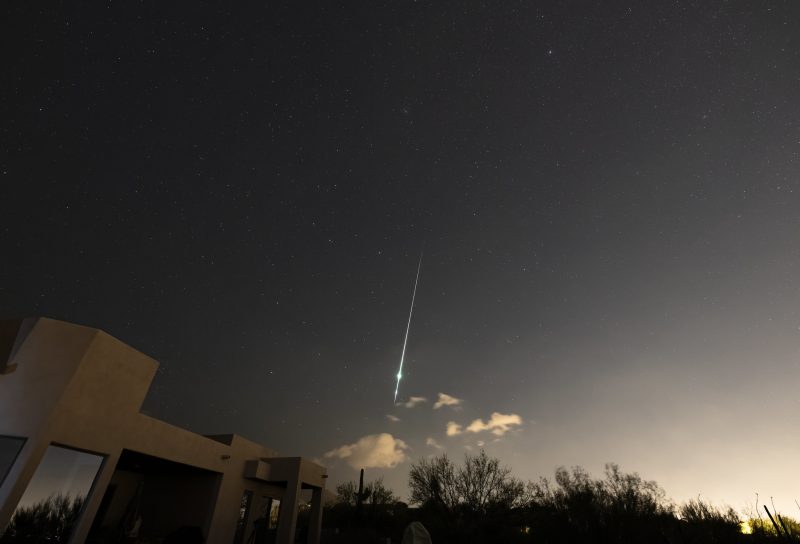
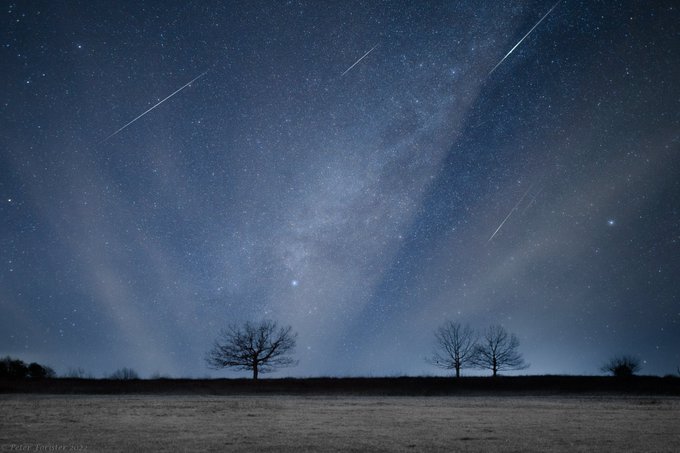
The Geminid meteor shower is one of the last major showers of the year. In 2022, the
Geminid meteor shower will peak on 13-14 December.
Usually,
as many as 150 meteors per hour can be seen in the show, which makes it among
the best of the year for actually spotting a meteor.
This
year, the brightness of the Moon will have a slightly diminishing effect, with NASA predicting between 30-40 meteors per hour.
“Don’t
miss the annual Geminids meteor shower,” NASA
tweeted.
Geminids facts:
Together with
the Quadrantids, the Geminids are the only major meteor showers not
originating from a comet.
The beautiful streaks we
see in the night sky can actually be caused by particles as small as a
grain of sand!
Geminids were first
observed in 1862, much more recently than other showers such as the Perseids and Leonids.
The Geminids are thought
to be intensifying every year.
Geminid meteor shower chart for 2022
via EarthSky
"Notice that the Geminids’ radiant point,
and the moon, are close together in Earth’s sky. But there’s still a window of
darkness between the time the radiant rises in mid-evening, and the moon rises around
midnight. That’s the time to watch for meteors this week.
EarthSky
Nearest moon
phase: In 2022, last quarter moon falls on December 16.
So, it’s a bright waning gibbous moon that’ll rise in the
midst of the Geminids’ peak in 2022.
When to watch:
The usual advice is that it’s best to get away from buildings and other
sources of light to watch the meteor shower. In many places, at this kind of
year, that’s going to be very difficult, given the weather. For Portugal, it
wil be very difficult because we have a severe weather this week.
All is not lost for others countries! Notice the rising time of the
Geminids’ radiant
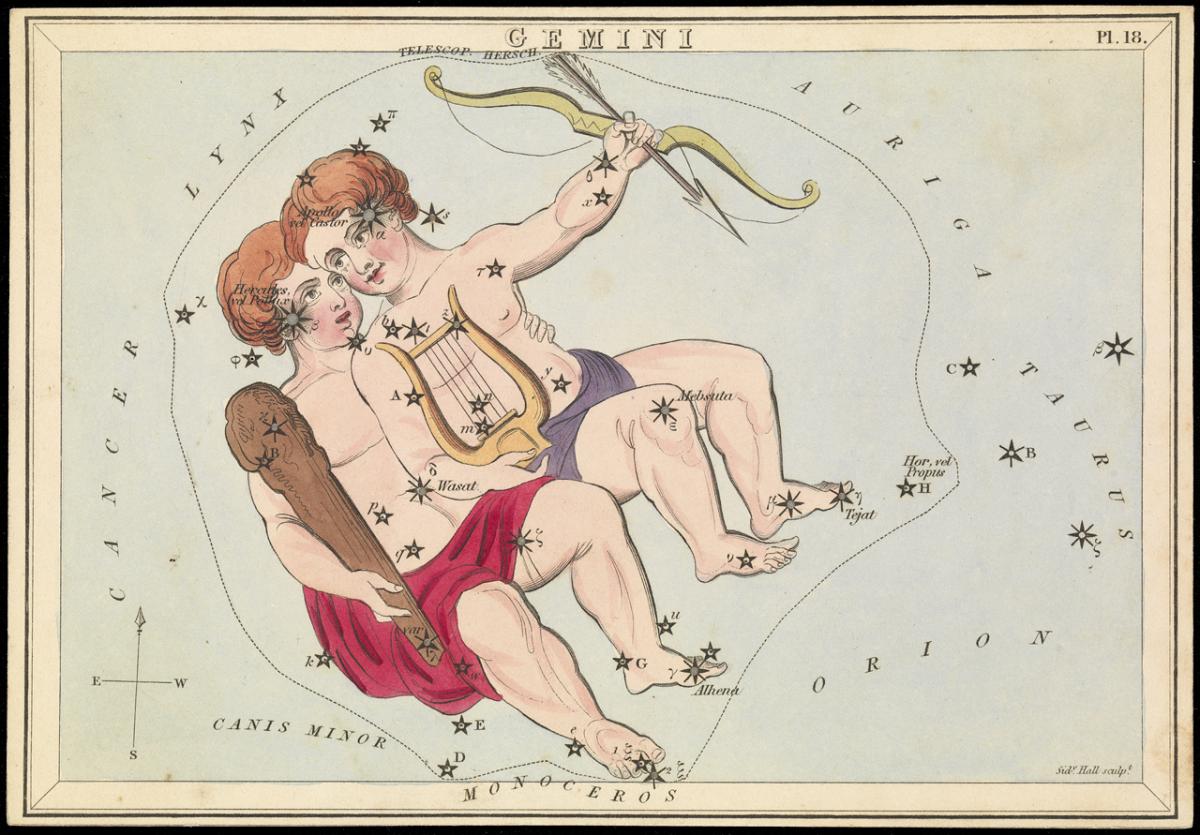
point. The constellation Gemini is up by mid-evening
in December. And moonrise isn’t until later, shortly before midnight, on the
evenings of both December 13 and 14. And the moon rises later on December 14,
providing more time for meteor-watching.
The peak time of night is around 2 a.m. for all parts of the globe.
Both evenings – December 13 and 14 – are worth a try! I wish you will be
lucky
You can still view Geminids just before or after this date, but the last
opportunity is on December 17.
I'm not a Sciences teachers. I'm Humanities and Arts teacher. But, I'm very attracted to Astronomy science.
The Geminids, along with thePerseids in August, are the two most active annual meteor showers. They can always be relied upon to put on a good show.
European schools are still working for a few days. Using smartphones, students will need a cable release chord. Luckily they can actually use their iPhone headphones' cable volume button to activate the shutter. And they also need an app designed to take long exposure photos.
Sciences curriculum will be enhanced with this awesome event! The Geminids meteor shower.
The biggest meteor shower of the year is set to put on a shooting-star show tonight when the Geminid streak across the sky - at least in places that won’t be overcast.
The so-called “rock comet” came within 6.4 million miles of earth this past December, although last year’s supermoon made it harder to appreciate the celestial light show. That won’t be a factor this year.
The Geminids will be the last of 2018’s major showers and will enter the Earth’s atmosphere at speeds of up to 70 kilometres per second.
The falling stars are considered different from other meteor showers in being multi-coloured, with white and yellow and a few green, red and blue lights.
The Royal Observatory Greenwich (ROG) says the colours "are partly caused by the presence of traces of metals like sodium and calcium, the same effect that is used to make fireworks colourful”.
People wishing to observe the meteor shower should try to get away from areas with light pollution.
Google celebrates the Geminid meteor shower with a Doodle! And it's adorable!
The slideshow Doodle follows the Geminids’ path through Earth’s atmosphere as it lights up the sky. As Phaethon’s orbit leads it near the sun, the extreme heat causes it to fracture and leaves a trail of debris in its orbital path.
Every December, Earth’s orbit leads us through the trail of 3200 Phaethon and its debris crashes into our atmosphere at 79,000 miles (127,000 km) per hour. Once through the Earth’s atmosphere, the Geminids’ radiant (or where it appears to originate) is the constellation Gemini—from which the meteor shower gets its name.
The Geminids are considered to be one of the more spectacular meteor shower during a year, with the possibility of sighting around 120 meteors per hour at its peak.
The Geminids appear every year in mid-December when Earth passed through a stream of debris from "rock comet" 3200 Phaethon. Typically more than 100 meteors per hour stream out of the radiant in the constellation Gemini. when the shower peaks on Dec. 13th and 14th.
Some history:
Named after the ancient Greek god Apollo’s son, 3200 Phaethon is an asteroid whose orbit brings it closer to our sun than Mercury.
First discovered via satellite data 35 years ago, Phaethon is responsible for bringing the spectacular Geminid meteor showers to Earth’s atmosphere each December. With each passing year since the mid-1800s, the proliferation of yellowish streaks of light in the night-time sky have grown more intense.
The Geminids. It’s a good time to bundle up, go outside and watch one of Mother Nature’s best sky shows!
If the weather is clear, 2018 should be the best year ever to watch the Geminids - so named because they seem to originate from the constellation Gemini.
Some information for skywatchers:
No need for a telescope or binoculars: fragments from Phaethon’s debris trail should become visible after 9 pm on December 13, peaking after midnight with as many as 120 meteors per hour. T
The cosmic dust may have resulted from a crash with another flying object, but there’s little danger of any Geminids landing on earth as it normally disintegrates in the earth’s atmosphere.
Graphic showing the locations of the Geminid radiant and Comet 46P/Wirtanen for 35 degrees north latitude at 10:30 p.m.
It’s pretty simple, actually. The nearly First Quarter Moon sets around 10:30 p.m. local time, so wait until then to go out – the light from the Moon washes out the fainter meteors, which are more numerous.
Find the darkest place you can, and give your eyes about 30 minutes to adapt to the dark. Avoid looking at your cell phone, as it will mess up your night vision.
Lie flat on your back and look straight up, taking in as much sky as possible. You will soon start to see Geminid meteors. As the night progresses, the Geminid rate will increase, hitting a theoretical maximum of about 100 per hour around 2 a.m.
Wow! Here's again the spectacular Geminids meteor shower, this 13 December until dawn December 14! The awesome Geminid meteor shower will be back with its awesome show.
The winter, cold temperatures contribute in making this shower neglected by the public, while it offer bright, very enjoyable meteors.
Most of us are excited about the Geminids shower. Schools, teachers, students and all Skywatchers lovers.
I'm not a Sciences teachers. I'm Humanities and Arts teacher. But, I love science and all the high technology near science.
The Geminids, along with theAugust Perseids, are the two most active annual meteor showers. They can always be relied upon to put on a good show, and that is especially true this year, because the moon will be only a few days old, setting early in the evening.
This year the European teachers and students are still at school for a few days, just ending school time before Holiday season.
Using the smartphones, students will need a cable release chord. Luckily they can actually use their iPhone headphones' cable volume button to activate the shutter. And they also need an app designed to take long exposure photos.
Sciences curriculum will be enhanced with this awesome event! The Geminids meteor shower.
Do you want a better science lesson ?
For optimal viewing conditions, get as far away from city lights as possible, and remember to dress warmly as you enjoy one of the greatest shows on/or above earth.
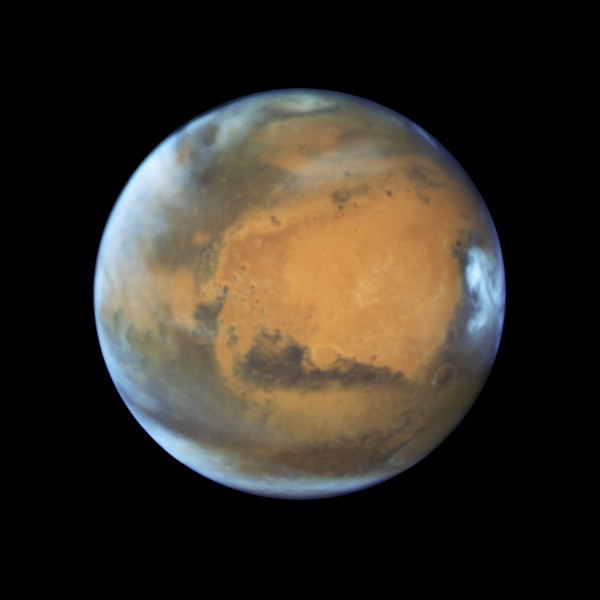
On May 30,2016, tomorrow, the red planet Mars comes closer to Earth than it has been since November, 2005.
Great time to get a close-up look at Mars, even if you don't have a telescope. The next Mars Close Approach is July 31, 2018.
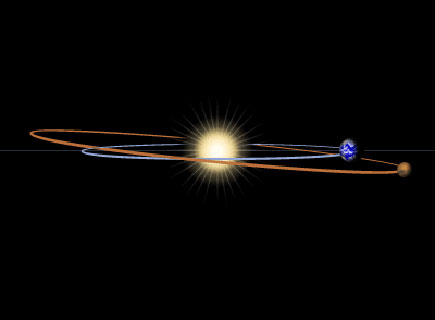
It lies 46.8 million miles (75.3 million km) from Earth on this date. This is Mars’ closest point for this year. That’s in spite of the fact that Earth passed between Mars and the sun (the martian opposition) on May 22.
The red planet is closer to Earth than it has been for 11 years. Yes, that's still a long way off, but sometimes Mars is 249 million miles (400 million kilometers) from Earth.
"Mars Close Approach is May 30, 2016. That is the point in Mars' orbit when it comes closest to Earth. Mars will be at a distance of 46.8 million miles (75.3 million kilometers). Mars reaches its highest point around midnight -- about 35 degrees above the southern horizon, or one third of the distance between the horizon and overhead. Mars will be visible for much of the night."
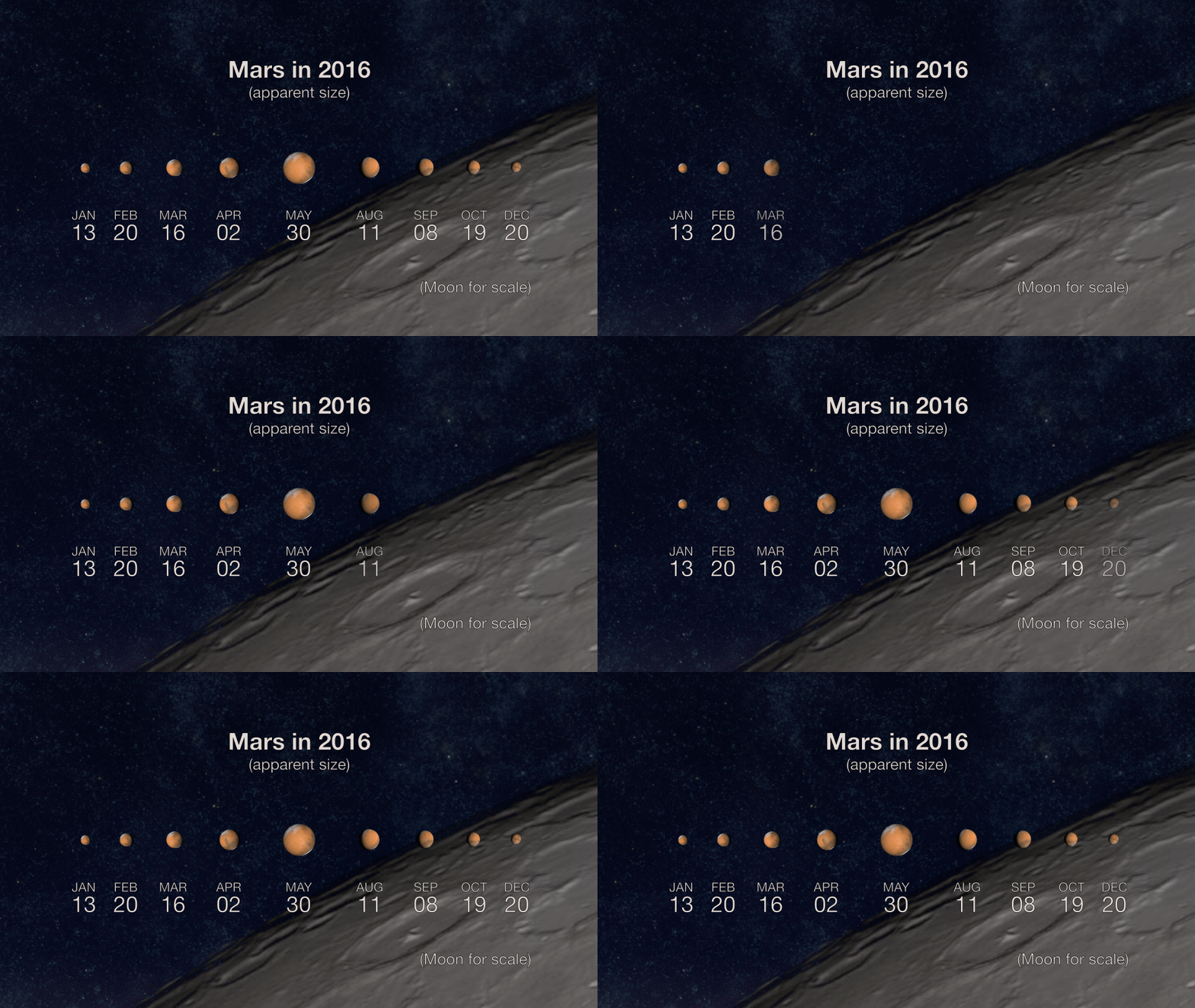
What does this close approach mean for sky watchers? It means Mars will appear bigger and brighter until June 3, according to NASA.
You don't need a telescope or binoculars to see Mars as it moves in for its close-up. In fact, you'll probably be able to find it without a star chart or an astronomy app.
Generally speaking, Mars is brightest in 2016 from about May 18 to June 3. It is now shining nearly on par with the planet Jupiter, and it’s not very often that Mars can match Jupiter in brilliance!
You might think Mars should be brighter when closest to Earth on May 30 than when it was at opposition on May 22. Although Mars is still plenty bright, it’s a tiny bit fainter than at its May 22 opposition. That’s because of something known as opposition surge. Mars directly reflects sunlight back to Earth at opposition, accentuating Mars’ brilliance. Before and after opposition, sunlight is reflected at a slightly slanted angle relative to Earth, thereby reducing Mars’ brightness.
Tonight’s close encounter between the Earth and Mars will be the closest until around the time of the Martian opposition on July 27, 2018.
Another interesting event near by. Your school class has an account on #Facebook?
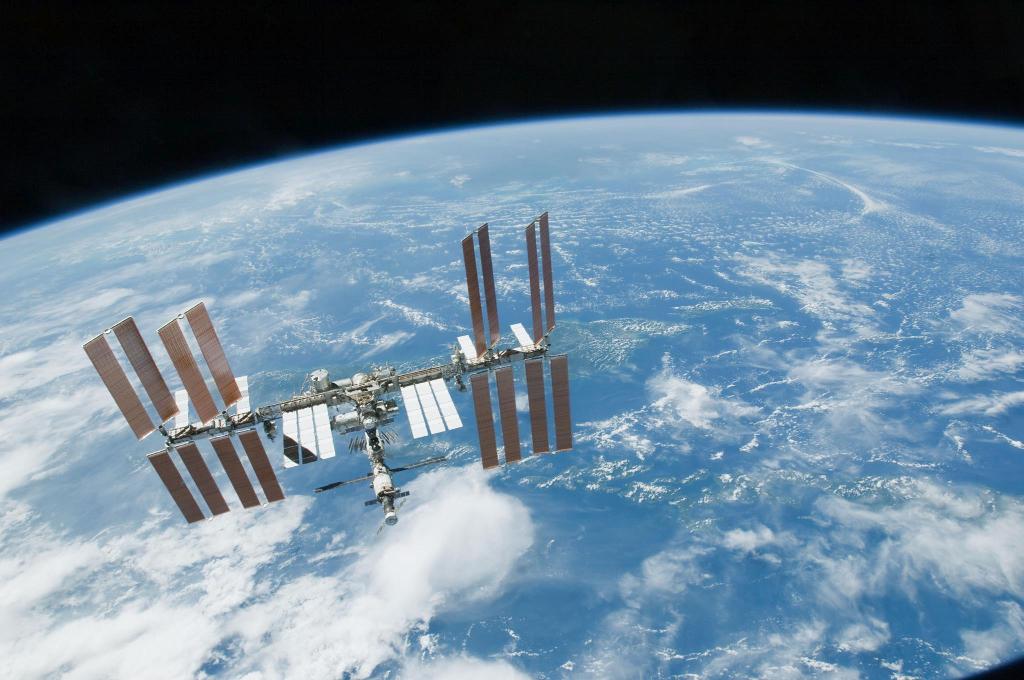
"Join Mark Zuckerberg as he connects with the astronauts on the International Space Station to ask questions from you, the users of Facebook via a Facebook Live event on Wednesday, June 1 at 12:55pm ET/11:55am CT/10:55am MT/09:55am PT/16:55 UTC."