Showing posts with label Geography. Show all posts

Wednesday, July 31, 2019

Science education : Don't miss the Black Moon : resources


Image via EarthView
What a moment of the year! Ah, summer! The season of pleasure. Surfing, swimming, travelling, relaxing, and lazy days. And meteor showers and supermoon? Wow!
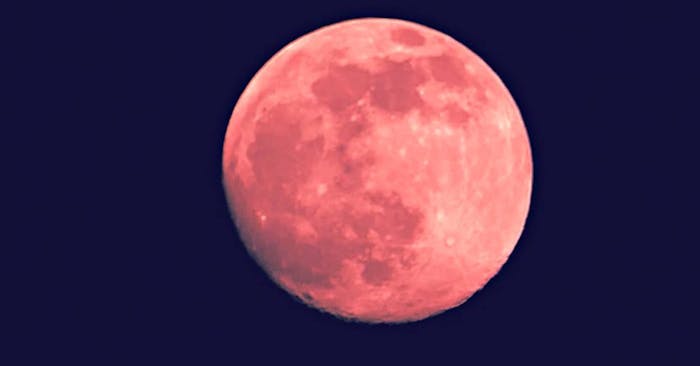
Today, 31 July the new moon will bear the name Black Moon, and it’ll be a supermoon. You won’t see it, though. Like all new moons, it’ll cross the sky with the sun during the day.


Delta Aquarids
via Space.com
If you have seen a shooting star last Sunday or Monday, the chances were that it came from the direction of the constellation of Delta Aquarius, the Water Bearer
The Delta Aquariids are active beginning in mid-July and are visible until late-August. These faint meteors are difficult to spot, and if there is a moon you will not be able to view them. If the moon is not present, your best chance to see the Delta Aquariids is when meteor rates rise during the shower's peak at the end of July. 
If you were unable to view the Delta Aquariids during their peak, look for them again during the Perseids in August: You will know that you have spotted a Delta Aquarid if the meteor is coming from the direction of the constellation Aquarius—its radiant will be in the southern part of the sky. The Perseid radiant is in the northern part of the sky.


via The Old Farmer Almanach

What's a Black Moon?
So you've heard of a blood moon, and maybe even a blue moon, but what about a black moon?

Like Blood Moon and Blue Moon, Black Moon is not an astronomical term. In fact, if you ask an astronomer, professional and amateur, very few will have even heard of it. It’s not even a particularly widely known folklore thing. 
The phenomenon is occurring again in North America on July 31 - the first one since 2016. The rest of the world will have to wait until August 30.
But, what does this even mean? Why is it important? Here's everything you need to know about this celestial event:


A black moon is basically the second new moon of the month, something that rarely occurs. It works similarly to a Leap Year. A lunar cycle typically takes about 29 days to complete, but our months are slightly longer. So sometimes, about every 32 months, we happen to get two full moons or two new moons. 
The second full moon in a month is called a blue moon, and the second new moon is called a black moon.
But a black moon also refers to a month where there are no new moons - which is only possible in February because of its fewer days. This is less common than the other type of black moon, and occurs about once a decade.

What we will see during a Black Moon?

Uh, not much. Like all new moons, it travels across the sky with the sun during the day.  Humans can’t see the new Moon in the Sun’s glare.

A new Moon is practically invisible to the naked eye, so there’s nothing to see during a so-called Black Moon.
But the gravitational influence of the new moon and sun combine to physically affect our water planet, which people along the ocean coastlines may notice in the coming days.
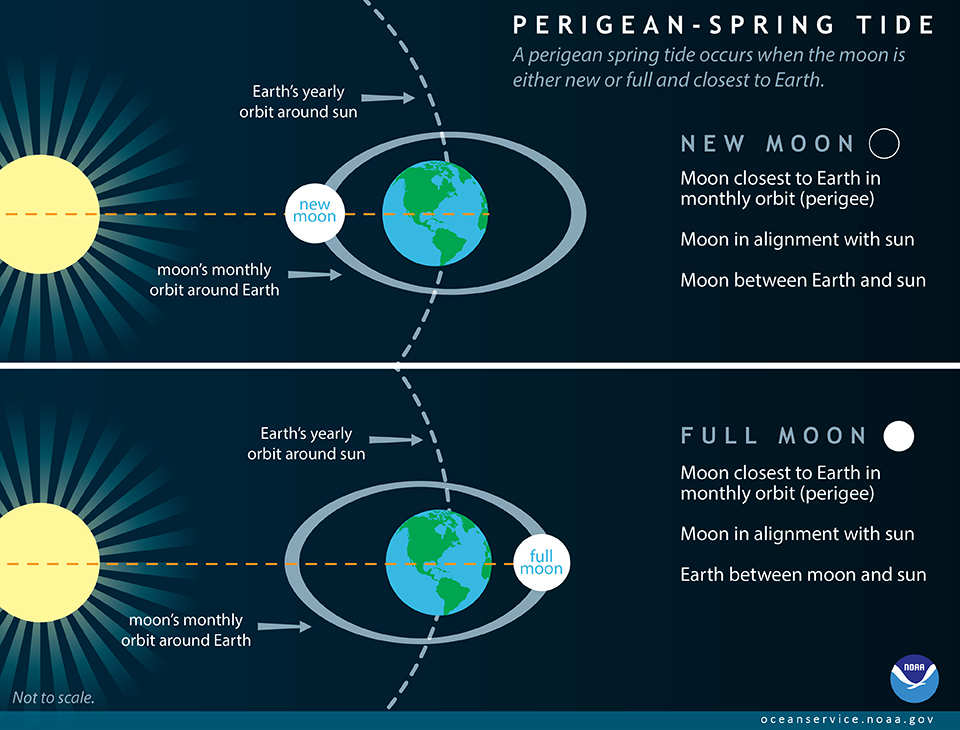
Moreover, this new moon is a supermoon, that is, a new moon happening in close conjunction with lunar perigee – the moon’s closest point to Earth in its monthly orbit. 


image via Physical Geographic

Don’t listen to curmudgeon-y old astronomers telling you supermoons are 'hype'. Supermoons aren’t hype; the name has arisen from folklore, like Blue Moon or Black Moon or the beloved Harvest Moon. Remember Neil Young!

"Because I'm still in love with you
I want to see you dance again
Because I'm still in love with you
On this harvest moon."
Neil Young, Harvest Moon


via Weather Channel
When to see?
The new moon falls on August 1, 2019, at 03:12 UTC; that is, July 31 at 23:12 p.m. EDT. For some parts of the world, then, this will be the second new moon of July, and thus some will called it a Black Moon. It’s also a supermoon. Following this new moon, you’ll likely see the young crescent moon again – in the west after sunset – in early August.
Expect to see the moon next in the western evening sky after sunset. You might see it as soon as August 2, for example.


Astrology:
The American astrologer Richard Nolle is credited for coining the word supermoon. That’s probably one reason some astronomers object to it, although others embrace it as a simpler and catchier name than perigean new or full moon, which is what we called these moons before the term supermoon came along. Nolle defined a supermoon as:
"… a new moon or full moon at or near (within 90 percent) of its closest approach to earth in a given orbit."
The moon in its orbit comes closest to Earth at perigee and swings farthest from Earth at apogee. At apogee, the moon is at 0 percent of its closest distance to Earth; and at perigee, it’s at 100 percent of its closest distance to Earth. A new or full moon aligning with perigee is about 30,000 miles (50,000 km) closer to Earth than a new or full moon aligning with apogee.


Education
Oh, my ! It should offer some pretty photo opportunities for sky watchers. Ask students to take some photos if they are lucky or capture small videos (some seconds) with their smartphones and tablets to explore in Science classroom next week or after school holidays.

Guess what? The year’s farthest and smallest full moon (micro-moon) will occur on September 14, 2019, exactly one fortnight after the new moon supermoon of August 30 and one fortnight before the new moon supermoon of September 28, 2019.
In fact, the July 31-August 1, 2019, new moon will present the first in a series of three straight new moon supermoons, to fall (by Universal Time) on August 1, August 30, and September 28.
After Summer holiday, teachers and students will discuss their experiences and knowledge about summer solstice and Strawberry Moon. I'm sure!

Curricula: Cross-curricular: Geography; History; Sciences; Languages  & Literature (traditions, poetry, prose)

Level : All levels.

Teachers must consider the activities to every level or curriculum they are teaching.

G-Souto

31.07.2019
Copyright © 2019G-Souto'sBlog, gsouto-digitalteacher.blogspot.com®
Creative Commons License
Science education : Don't miss the Black Moon : resources G-Souto is licensed under a Creative Commons Attribution-NonCommercial-NoDerivatives 4.0 International License

References: EarthSky/ Space.com

Tuesday, June 26, 2018

Schools : Watch out ! Strawberry Moon most colorful full moon all year : resources


June 21st was the summer solstice in the Northern Hemisphere, and if you’re feeling a little happier at the end of the week, science may explain why. The summer solstice are one of the happiest days of the year, and it’s all thanks to that sweet, sweet sunshine.
Philip Gehrman, associate director of the Behavioral Sleep Medicine Program at the University of Pennsylvania, says that people are generally more cheerful in the summertime. 
Why? Light is the strongest cue when it comes to the body regulating circadian rhythms like the sleep cycle and hormonal fluctuations, more light is generally a good thing when it comes to improving your mood. I'm Sun addict for sure!


Margaux Motin
On the Summer Solstice, June’s waxing moon will reach its full lunar phase in the wee hours of June 28, kicking off a summer of celestial happenings. Stargazers are in for a treat since this full moon, known as the Strawberry Moon, also happens to arrive during Saturn opposition, meaning Saturn will be at its closest and brightest this year.

  1. Strawberry Moon? Why?

Yes, June Full Moon is called the Full Strawberry Moon. This Full Moon got its name from the Algonquin tribes who knew it as a signal to gather the ripening fruit of wild strawberries.  This is a diverse group of tribes that covered the continent as far as California.


Algonquin couple, 18th-century watercolor by unknown artist
Courtesy of the City of Montreal Records Management & Archives, Montreal, Canada

The Strawberry Moon has different nicknames in different cultures:
  • the Full Rose Moon (Europe)
  • the Honey Moon (Europe)
  • the Mead Moon (Europe)
  • the Green Corn Moon, 
  • the Planting Moon,
  • Birth Moon. 


NASA illustration of how different Mars can look, depending on its distance to Earth
https://www.inverse.com/
Summer will offer rare opportunities for stargazers. Events such as Mars opposition in late July will bring the red planet closer to Earth than it has been in 15 years, giving anyone with a telescope the chance to see Mars’ unique features more closely than usual. 
The Strawberry Moon will be the season’s first celestial event visible to stargazers, and thanks to Saturn opposition occurring on the same night, it won’t disappoint.
So wherever you happen to be, don’t miss it!

The Strawberry Moon will share the spotlight with Saturn this year
https://www.inverse.com/
This year’s Strawberry Moon, which marks the short harvesting season for strawberries, offers an exciting event for celestial sightseers. But this year, Saturn’s opposition will be visible until September. 
“It’s the most colorful of all full moons,” Daniel M. Soref, Milwaukee Public Museum’s Theater & Planetarium director, told the Milwaukee Journal Sentinel in an interview published Monday. “We always get more color in the sky when things are lower.”
One thing to note is that the moon will also appear as a minimoon, which is difficult to notice with the naked eye but means the moon is at the furthest possible position from Earth.  A minimoon happens when the moon is at its furthest point from Earth (called the apogee). It will appear just a tad bit smaller in the sky.
For the two celestial events to share a set time is a rare treat for stargazers, but it’s just the first of many cosmic happenings slated for this summer.


Stonehenge
via European Heritage /before Brexit

  •  Traditions:
Summer solstice, also called 'midsummer' is a special day for many as it means the start of the summer. It has links to many ancient cultural practices as different cultures have celebrated it being symbolic of renewal, fertility and harvest.
Every year, hundreds of pagans and non-pagans congregate at Stonehenge to see the sun rise in the morning and welcome in the summer. Stonehenge is a UNESCO World Heritage Site along with it’s neighbour AveburySome pagans and druids perform a fire ritual to celebrate the occasion. This involves people with unlit candles forming a circle around a large lit central candle and lighting theirs off it one at a time.
Don´t forget that 2018 is the European Year of Cultural Heritage. So, share the interesting sites of Europe where Summer solstice is celebrated.


Science
On June 27, Earth’s orbit will bring the planet in between Saturn and the sun, which will place Saturn opposite the sun in Earth’s sky and create a rare opportunity to observe the ringed planet throughout the night. Saturn will rise in the southeast sky around sunset, where it will be at its closest and brightest in 2018 before setting in the west around sunrise.
Stargazers can catch the Strawberry moon on June 27 as well, on June 28. Saturn will be at its highest in the sky around midnight, making it easy to observe alongside the moon.
While the Strawberry Moon will only hang around for one night, there will be opportunities to see Saturn and its bright opposition until September. For the two celestial events to share a set time is a rare treat for stargazers, but it’s just the first of many cosmic happenings slated for this summer.

Education:
On June 27 and 28, 2018, find the full moon and look in the moon’s glare for a starlike point. That point is a planet, Saturn.

Such an incredible event the Strawberry Moon June 28 and most European students (primary, elementary education) are enjoying summer holiday.

Only high junior schools/ lycées (secondary education) and universities exams season is happening.


So teachers can't include Summer solstice and Strawberry Moon (June 2018) into school lessons. However, students are curious, and they will pay attention on YouTube perhaps? Yes, they are the YouTubers generation

So the date of the June 2018 full moon depends on your time zone. From the most of the contiguous U.S., the moon turns full on the evening of June 27. 

From Portugal and the western portions of Africa, the instant of full moon occurs before sunrise June 28. 

For Asia, Indonesia, Australia, New Zealand and the most of Europe, the moon turns full during the daylight hours on June 28, at which time the sun is above the horizon and the moon is below it.


After Summer holiday, teachers and students will discuss their experiences and knowledge about summer solstice and Strawberry Moon. I'm sure!

Curricula: Cross-curricular: Geography; History; Sciences; Languages (traditions, literature).

Level : All levels.

Teachers must consider the activities to every level or curriculum they are teaching.

G-Souto

26.06.2018
Copyright © 2018G-Souto'sBlog, gsouto-digitalteacher.blogspot.com®
Creative Commons License
Schools : Watch out ! Strawberry Moon most coloful full moon all year : resources G-Souto is licensed under a Creative Commons Attribution-NonCommercial-NoDerivatives 4.0 International License
References:
The Old Farmer's Almanac
Inverse
EarthSky

Saturday, March 24, 2018

Schools : Daylight Saving Time ? Oops ! Spring Forward, let's go ! Resources


Daylight saving cartoon


It's that time of year when most of us in European countries and North America have to move their clocks forward by one hour. USA states did on March 11, 2018, 3:00am local daylight time instead. Also called Spring Forward, Summer Time, and Daylight Savings Time.


It is that time of year, when wake-up calls mean sunshine and days get a bit longer. Early risers rejoice and those of you who hit the snooze button - at least you get to do it with a bit of light in your room. However, this year students are happy, because DST starts on Easter season. Wow! They are lucky!


Well, at this time of the year, time changes! In Europe clocks changes next Sunday 25 March  (almost in all countries!).


However there's a great campaign against the day light saving time. 
People around the world are far way to change their time. Efforts to kill off daylight saving time are nearly as old as the time shift itself. And many of the commonly offered rationales for daylight saving time no longer hold true.


The implementation of Daylight Saving Time has been fraught with controversy since Benjamin Fran
klin conceived of the idea. 


And then there's the physiological cost of DST: fatigue! The Centers for Disease Control and Prevention regard insufficient sleep as a public health problem in general - and the hour you lose in the spring makes it worse. 


"Lack of sleep has many ramifications, from minor to major, depending on your accumulated sleep debt. Short term, lack of sleep tends to have an immediate effect on your mental and emotional states."


About 60 percent of people feel the effects of lost sleep the Monday after they Spring forward, the "consumer education" arm of sleep products manufacturers. 


Daylight Saving Time wasn't introduced in Europe until 1914 and America until 1918, when it was meant to conserve energy for World War I


The practice became widespread on 21 March 1918 as a way to reduce the number of hours homes needed to use lighting and electricity. 


The thought was, essentially, Franklin
's: that people tend be more active in the evenings, so the extra daylight there would mean fewer hours where people lit their houses at night. 


In 1942, during World War II, DST was enacted again, but year-round. Afterwards, well, adoption varied.


credits: Manjunath Kiran/AFP/Getty Images


Education:

That's right, Daylight Saving Time starts on Sunday.  That means that on Monday morning some students may come to class complaining about their lost hour of sleep. They may also wonder why we have Daylight Saving Time.


Like anytime you lose sleep, Springing forward causes decreases in performance, concentration, and memory common to sleep-deprived individuals, as well as fatigue and daytime sleepiness.


Well, teachers know that DST can be disruptive for some teenagers and school children everywhere. Students feel tired in the morning courses during the first week.


The rationale behind changing the times on the clock makes little (or more likely, no) sense to them.


Be patient! Day Light Saving Time must go on this year. So, here you have some resources. 


credits: Adrienne Hedger


Resources:

The following videos offer concise explanations of Daylight Saving Time:

  • Videos


You can include one or two of these videos into your school curriculum to provide a good explanation of the rationale for Daylight Saving Time. Students will understand better the reasons of DST. And please, discuss pros and cons with your students. They will explain better their reasons to be so sleepy in the first weeks after DST.


Kids are always curious to know why 'things' happen! Here a good way to let them learn about Day Light SavingSpring Equinox and some traditions of different civilizations.


In Portugal and the UK clocks change soon after the start of Spring. We have the same time (GMT). 


This year watches will go forward by one hour at 1am on 25 March, which is the final Sunday of the month. 


This marks the start Daylight Saving Time - which means there will be less sunlight in the morning and more in the evenings. 


Students will be invited to do some research about DST in other countries around the world as some different traditions in every country.


  • Curricula: Sciences; Languages, History, Geography. 

  • Level : Primary education; Secondary Education.


Teachers must adapt the activities to the levels they are teaching, of course. It's very important!


Wishing all a Happy Spring time! I love Spring !

G-Souto

24.03.2018

update 29.03.2025
Copyright © 2018G-Souto'sBlog, gsouto-digitalteacher.blogspot.com®

Creative Commons License
Schools : Daylight Saving Time ? Oops ! Spring Forward, let's go ! Resources by G-Souto is licensed under a Creative Commons Attribution-NonCommercial-NoDerivatives 4.0 International License.