Showing posts with label cross curricular project. Show all posts

Saturday, March 24, 2018

Schools : Daylight Saving Time ? Oops ! Spring Forward, let's go ! Resources


Daylight saving cartoon


It's that time of year when most of us in European countries and North America have to move their clocks forward by one hour. USA states did on March 11, 2018, 3:00am local daylight time instead. Also called Spring Forward, Summer Time, and Daylight Savings Time.


It is that time of year, when wake-up calls mean sunshine and days get a bit longer. Early risers rejoice and those of you who hit the snooze button - at least you get to do it with a bit of light in your room. However, this year students are happy, because DST starts on Easter season. Wow! They are lucky!


Well, at this time of the year, time changes! In Europe clocks changes next Sunday 25 March  (almost in all countries!).


However there's a great campaign against the day light saving time. 
People around the world are far way to change their time. Efforts to kill off daylight saving time are nearly as old as the time shift itself. And many of the commonly offered rationales for daylight saving time no longer hold true.


The implementation of Daylight Saving Time has been fraught with controversy since Benjamin Fran
klin conceived of the idea. 


And then there's the physiological cost of DST: fatigue! The Centers for Disease Control and Prevention regard insufficient sleep as a public health problem in general - and the hour you lose in the spring makes it worse. 


"Lack of sleep has many ramifications, from minor to major, depending on your accumulated sleep debt. Short term, lack of sleep tends to have an immediate effect on your mental and emotional states."


About 60 percent of people feel the effects of lost sleep the Monday after they Spring forward, the "consumer education" arm of sleep products manufacturers. 


Daylight Saving Time wasn't introduced in Europe until 1914 and America until 1918, when it was meant to conserve energy for World War I


The practice became widespread on 21 March 1918 as a way to reduce the number of hours homes needed to use lighting and electricity. 


The thought was, essentially, Franklin
's: that people tend be more active in the evenings, so the extra daylight there would mean fewer hours where people lit their houses at night. 


In 1942, during World War II, DST was enacted again, but year-round. Afterwards, well, adoption varied.


credits: Manjunath Kiran/AFP/Getty Images


Education:

That's right, Daylight Saving Time starts on Sunday.  That means that on Monday morning some students may come to class complaining about their lost hour of sleep. They may also wonder why we have Daylight Saving Time.


Like anytime you lose sleep, Springing forward causes decreases in performance, concentration, and memory common to sleep-deprived individuals, as well as fatigue and daytime sleepiness.


Well, teachers know that DST can be disruptive for some teenagers and school children everywhere. Students feel tired in the morning courses during the first week.


The rationale behind changing the times on the clock makes little (or more likely, no) sense to them.


Be patient! Day Light Saving Time must go on this year. So, here you have some resources. 


credits: Adrienne Hedger


Resources:

The following videos offer concise explanations of Daylight Saving Time:

  • Videos


You can include one or two of these videos into your school curriculum to provide a good explanation of the rationale for Daylight Saving Time. Students will understand better the reasons of DST. And please, discuss pros and cons with your students. They will explain better their reasons to be so sleepy in the first weeks after DST.


Kids are always curious to know why 'things' happen! Here a good way to let them learn about Day Light SavingSpring Equinox and some traditions of different civilizations.

In Portugal and the UK clocks change soon after the start of Spring. We have the same time (GMT). 


This year watches will go forward by one hour at 1am on 25 March, which is the final Sunday of the month. 


This marks the start Daylight Saving Time - which means there will be less sunlight in the morning and more in the evenings. 


Students will be invited to do some research about DST in other countries around the world as some different traditions in every country.


  • Curricula: Sciences; Languages, History, Geography. 

  • Level : Primary education; Secondary Education.


Teachers must adapt the activities to the levels they are teaching, of course. It's very important!


Wishing all a Happy Spring time! I love Spring !

G-Souto

24.03.2018

update 29.03.2025
Copyright © 2018G-Souto'sBlog, gsouto-digitalteacher.blogspot.com®

Creative Commons License
Schools : Daylight Saving Time ? Oops ! Spring Forward, let's go ! Resources by G-Souto is licensed under a Creative Commons Attribution-NonCommercial-NoDerivatives 4.0 International License.

Monday, October 31, 2016

Schools : It's Halloween : Let's learn & have fun ! Resources

Halloween! We all know that students love Halloween! So every educator has one or two activities to do in the classroom on Halloween.
Over the centuries, Halloween's already weathered a lot of changes, and I've summed some activities, two games and other resources to make your school students happy and have fun.


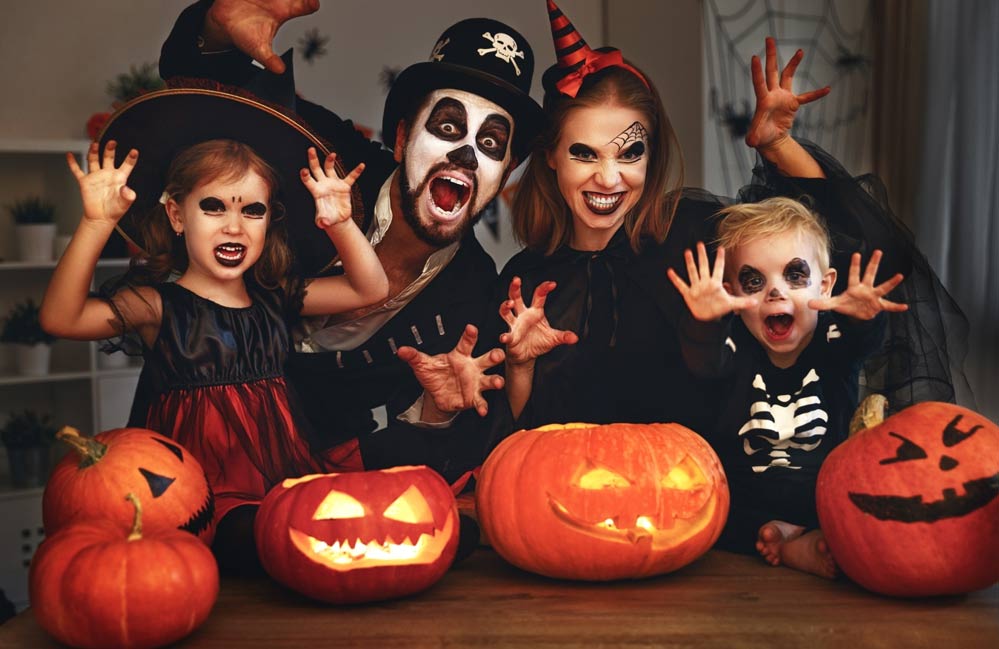
"Straddling the line between fall and winter, plenty and paucity, life and death, Halloween is a time of celebration and superstition." 


credits: unknown
via Google Images

  • Ancient History:

Halloween is thought to have originated around 4000 B.C., which means Halloween has been around for over 6,000 years and is one of the oldest celebrations in the world. 


  • History of Halloween: Pagan Progenitor

It is thought to have originated with the ancient Celtic festival of Samhain, when people would light bonfires and wear costumes to ward off roaming ghosts. 

Halloween's origins date back more than 2,000 years. On what we consider November 1, Europe's Celtic peoples celebrated their New Year's Day, called Samhain (SAH-win).

On Samhain eve - what we know as Halloween - spirits were thought to walk the Earth as they traveled to the afterlife. Fairies, demons, and other creatures were also said to be abroad.


All Saints' Day
Fra Angelico

  • Christian Influence:

Samhain was later transformed as Christian leaders co-opted pagan holidays. In the seventh century Pope Boniface IV decreed November 1 All Saints' Day, or All Hallows' Day.
The night before Samhain continued to be observed with bonfires, costumes, and parades, though under a new name: All Hallows' Eve—later "Halloween."
In the eighth century, Pope Gregory III designated November 1 as a time to honor all saints and martyrs; the holiday, All Saints’ Day, incorporated some of the traditions of Samhain. The evening before was known as All Hallows’ Eve and later Halloween

Snap-Apple Night
painted by Daniel Maclise, 1833

The Christian holiday is likely rooted in the Celtic holiday, Samhain, or a number of other pre-Christian harvest festivals.

  • Secular Halloween:

Over time, Halloween evolved into a secular, community-based event characterized by child-friendly activities such as trick-or-treating. 


Edward Scriven's engraving of John Masey Wright's 
illustration to Robert Burns' Halloween

The word appears as the title of Robert Burns' Halloween (1785), a poem traditionally recited by Scots. 

It was brought to North America in the 1800s by immigrants from Europe who would celebrate the harvest celebration around a bonfire, sharing ghost stories, singing, dancing and telling fortunes.

Anoka, Minnesota, may be home to the United States' oldest official Halloween celebration. Beginning in 1920, the city began staging a parade and bonfire.


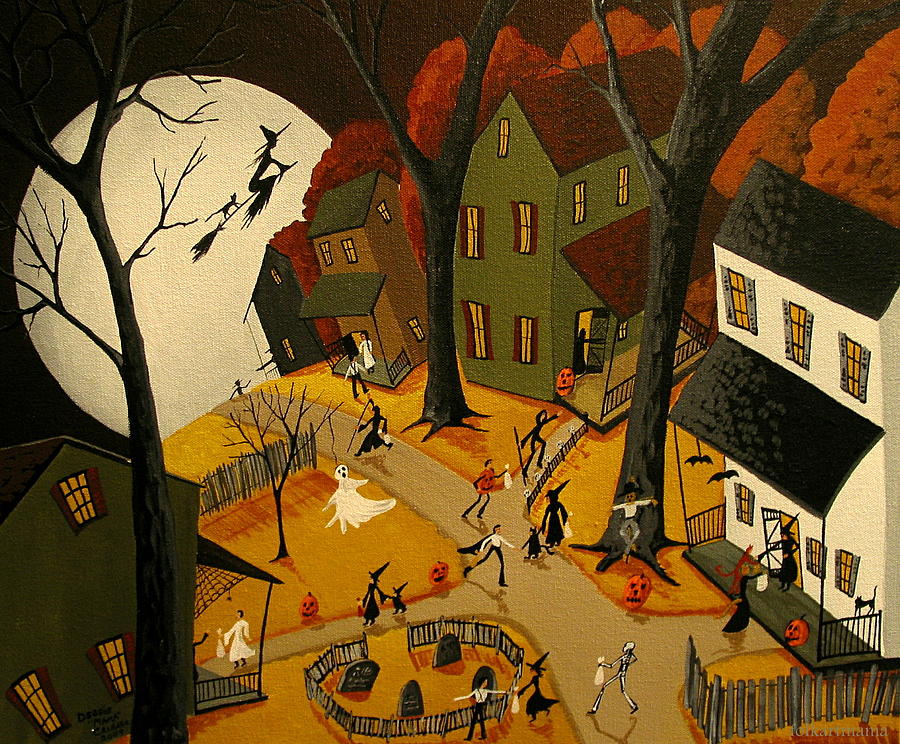
Secular Halloween
credits: unknown
via Google Images


In a number of countries around the world, as the days grow shorter and the nights get colder, people continue to usher in the winter season with gatherings, costumes and sweet treats.

Resources: 

  • National Geographic | History

National Geographic has a wonderful article all the origines of Halloween: Pagans, Celtic traditions, Christian influence, costumes, cards, Halloween Sugar Rush, pumpkins, magic and urban legends.


Halloween in the USA infographics
  • History:

History as well has different resources that you can include into your school curriculum telling the History of Halloween: videos, pictures, interactives, other.


Halloween
via Ancient Origins


Education: 

Halloween is a cross-curricular subject and students can develop their creativity in different matters. At the same time, they will evolve curricular skills.
The two articles on the National Geographic and History include a wonderful list containing useful information and resources that educators can explore on their own way, according students profile they are teaching.
Students will be encouraged to make a critical research using tablets and smartphones. They will be encouraged to be creative in their activities, have fun and learn about urban culture and traditions.

Gadgets help to prepare students to thrive in an increasingly digital world. And they love it! They are effective and vivacious in the activities that teachers propose for the course.


Curricula: 

Languages, Arts, History, Music, Civics.

A cross-curricular project would be awesome.

Levels:

All levels: (primary, elementary, high junior schools)

Teachers will adapt the activities to the level they are teaching.


Other Resources: Games & Doodles
  • Google Doodle Halloween


Google Doodle interactive game Halloween

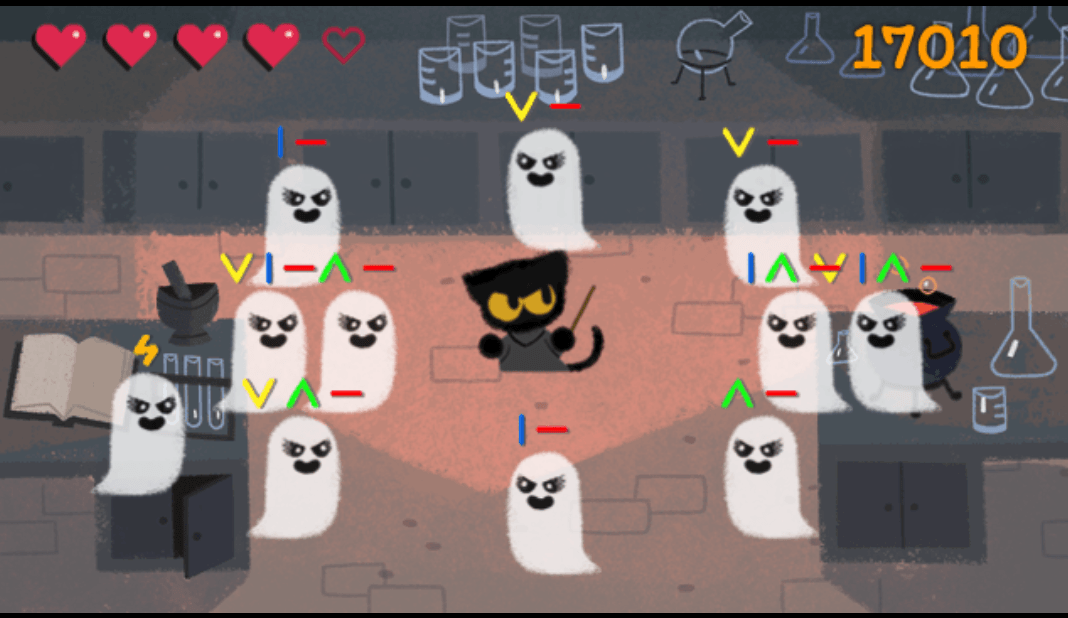
"This year’s Halloween Doodle follows freshman feline Momo on her mission to rescue her school of magic. Help her cast out mischievous spirits by swiping in the shape of the symbols above the ghosts’ heads. And you’d better pounce fast - the ghost that stole the master spell book is getting away!

Google Doodles are always super fun. This year’s Halloween one is no exception. Before I say something, you should go and check it out. No, seriously. Do it.
Adorable, right? The Google Halloween Doodle is an amazing mini game starring a little cat wizard at Magic Cat Academy. 
In it, students play the protagonist, Momo the cat in a kind-of zoological Hogwarts. The game has you draw various shapes and lines to cast spells on ghosts and spirits as they try and get you - think Harry PotterWhile they’re hard at work in the library, ghosts burst in, wrecking the place.


screenshot Google Doodle Halloween 2016
via TNW
https://cdn1.tnwcdn.com/
Students action is to fight them off. To do that, they’ve got to cast the right spell. This is done by drawing symbols that correspond with those shown above each ghost.
At first it is easy as only one symbol like a dash or an I appear. Soon though a ghost has a whole code on his head. This little game gets difficult pretty fast. 
As students progress, the ghosts get tougher and faster, and it becomes a fast-paced fight to stay alive. 

Students will celebrate Halloween by playing through five fun levels and beating devious boss ghouls along the way. 


screenshot Google Doodle Halloween 2016
via TNW
https://cdn1.tnwcdn.com/
I had a lot of fun playing the game. It's a real nice treat from the Google Doodle team
This game is especially great to play on a smartphone or tablet. A great game for students of any age. 
It’s a ridiculously fun way to procrastinate at school, much like I’m doing now. 
The inspiration for this year’s cat spell-casting game came from a real-life black cat named Momo (photo here) that belongs to Doodler Juliana Chen. It seemed like a good opportunity for a cat hero, since the winner of last year’s Candy Cup Doodle was Yellow Witch and her black cat. 


Pokemon Go Halloween game

  • Pokémon Go Halloween
Halloween is here, and Pokémon GO has its own treats to give out! Started October 26 until November 1, students can receive more Candies than usual. Every Pokémon they catch will award six Candies - twice the normal amount finding the game’s spookiest Pokemon: Drowzee, Hypno, Ghastly, Haunter, Gengar, Golbat and Zubat.

For returning students, there’s also a motivation to play pretty intensely for the next few days. Keeping with the Halloween theme, there are more treats everywhere, and players will get double candies for catching and transferring Pokémon, as well as quadruple candies for walking with their buddy Pokémon.
It’s all quite nice if your students are still playing Pokémon GoSome spooky Pokémon will also be much more common leading up to Halloween. Be on the lookout for more of the following Pokémon on your trick-or-treat route:


For more Halloween fun, students can visit Pokemon.com/Halloween, where they can download Pokémon pumpkin stencils and share their festive photos using the hashtag #PokemonHalloween.
Note: Pay attention to the age of your students on this activity. 


credits: Luna Joulia


Halloween screen
credits: Luna Joulia

  • Have fun: Screens

If your students want to change the screen of their iphones or tablets for Halloween, they can download from here. I think girls will be more enthousiastic about that than boys.

  • Literature:

Poem: The Raven by Edgar Allen Poe


Edgar A. Poe
credits: Gothic illustration 
BohemianWeasel

The Raven by Edgar Allen Poe

Once upon a midnight dreary, while I pondered, weak and weary, 
Over many a quaint and curious volume of forgotten lore— 
    While I nodded, nearly napping, suddenly there came a tapping, 
As of some one gently rapping, rapping at my chamber door. 
“’Tis some visitor,” I muttered, “tapping at my chamber door— 
            Only this and nothing more.” 

(...)

Students will read the entire poem here

Of course in the next lessons you will study the poem with your students,right?

G-Souto
31.10.2016

update 31.10.2021
Copyright © 2021G-Souto'sBlog, gsouto-digitalteacher.blogspot.com®

Creative Commons License
Schools : It's Halloween : Let's learn and have fun ! bG-Souto is licensed under a Creative Commons Attribution-NonCommercial-NoDerivatives 4.0 International License.