Showing posts with label Summer solstice. Show all posts

Tuesday, June 26, 2018

Schools : Watch out ! Strawberry Moon most colorful full moon all year : resources


June 21st was the summer solstice in the Northern Hemisphere, and if you’re feeling a little happier at the end of the week, science may explain why. The summer solstice are one of the happiest days of the year, and it’s all thanks to that sweet, sweet sunshine.
Philip Gehrman, associate director of the Behavioral Sleep Medicine Program at the University of Pennsylvania, says that people are generally more cheerful in the summertime. 
Why? Light is the strongest cue when it comes to the body regulating circadian rhythms like the sleep cycle and hormonal fluctuations, more light is generally a good thing when it comes to improving your mood. I'm Sun addict for sure!


Margaux Motin
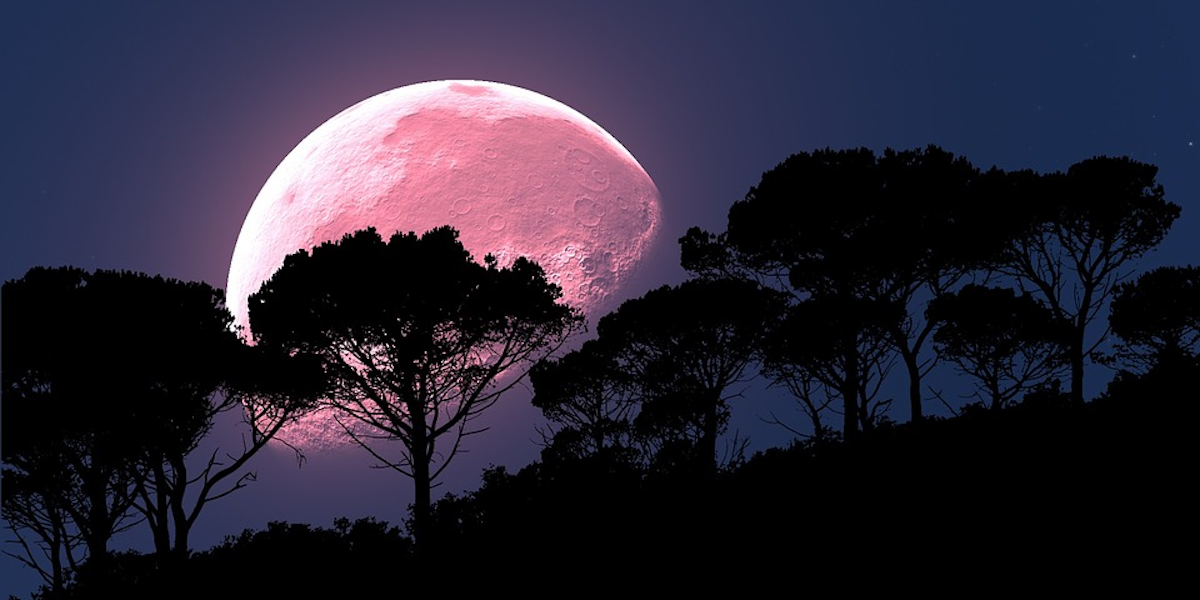
On the Summer Solstice, June’s waxing moon will reach its full lunar phase in the wee hours of June 28, kicking off a summer of celestial happenings. Stargazers are in for a treat since this full moon, known as the Strawberry Moon, also happens to arrive during Saturn opposition, meaning Saturn will be at its closest and brightest this year.

  1. Strawberry Moon? Why?

Yes, June Full Moon is called the Full Strawberry Moon. This Full Moon got its name from the Algonquin tribes who knew it as a signal to gather the ripening fruit of wild strawberries.  This is a diverse group of tribes that covered the continent as far as California.


Algonquin couple, 18th-century watercolor by unknown artist
Courtesy of the City of Montreal Records Management & Archives, Montreal, Canada

The Strawberry Moon has different nicknames in different cultures:
  • the Full Rose Moon (Europe)
  • the Honey Moon (Europe)
  • the Mead Moon (Europe)
  • the Green Corn Moon, 
  • the Planting Moon,
  • Birth Moon. 


NASA illustration of how different Mars can look, depending on its distance to Earth
https://www.inverse.com/
Summer will offer rare opportunities for stargazers. Events such as Mars opposition in late July will bring the red planet closer to Earth than it has been in 15 years, giving anyone with a telescope the chance to see Mars’ unique features more closely than usual. 
The Strawberry Moon will be the season’s first celestial event visible to stargazers, and thanks to Saturn opposition occurring on the same night, it won’t disappoint.
So wherever you happen to be, don’t miss it!
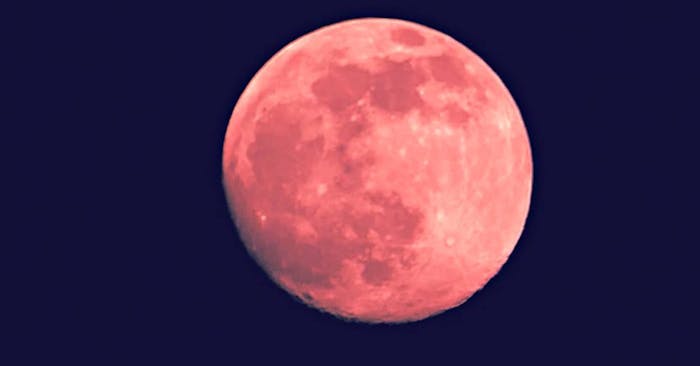
The Strawberry Moon will share the spotlight with Saturn this year
https://www.inverse.com/
This year’s Strawberry Moon, which marks the short harvesting season for strawberries, offers an exciting event for celestial sightseers. But this year, Saturn’s opposition will be visible until September. 
“It’s the most colorful of all full moons,” Daniel M. Soref, Milwaukee Public Museum’s Theater & Planetarium director, told the Milwaukee Journal Sentinel in an interview published Monday. “We always get more color in the sky when things are lower.”
One thing to note is that the moon will also appear as a minimoon, which is difficult to notice with the naked eye but means the moon is at the furthest possible position from Earth.  A minimoon happens when the moon is at its furthest point from Earth (called the apogee). It will appear just a tad bit smaller in the sky.
For the two celestial events to share a set time is a rare treat for stargazers, but it’s just the first of many cosmic happenings slated for this summer.


Stonehenge
via European Heritage /before Brexit

  •  Traditions:
Summer solstice, also called 'midsummer' is a special day for many as it means the start of the summer. It has links to many ancient cultural practices as different cultures have celebrated it being symbolic of renewal, fertility and harvest.
Every year, hundreds of pagans and non-pagans congregate at Stonehenge to see the sun rise in the morning and welcome in the summer. Stonehenge is a UNESCO World Heritage Site along with it’s neighbour AveburySome pagans and druids perform a fire ritual to celebrate the occasion. This involves people with unlit candles forming a circle around a large lit central candle and lighting theirs off it one at a time.
Don´t forget that 2018 is the European Year of Cultural Heritage. So, share the interesting sites of Europe where Summer solstice is celebrated.


Science
On June 27, Earth’s orbit will bring the planet in between Saturn and the sun, which will place Saturn opposite the sun in Earth’s sky and create a rare opportunity to observe the ringed planet throughout the night. Saturn will rise in the southeast sky around sunset, where it will be at its closest and brightest in 2018 before setting in the west around sunrise.
Stargazers can catch the Strawberry moon on June 27 as well, on June 28. Saturn will be at its highest in the sky around midnight, making it easy to observe alongside the moon.
While the Strawberry Moon will only hang around for one night, there will be opportunities to see Saturn and its bright opposition until September. For the two celestial events to share a set time is a rare treat for stargazers, but it’s just the first of many cosmic happenings slated for this summer.

Education:
On June 27 and 28, 2018, find the full moon and look in the moon’s glare for a starlike point. That point is a planet, Saturn.

Such an incredible event the Strawberry Moon June 28 and most European students (primary, elementary education) are enjoying summer holiday.

Only high junior schools/ lycĂ©es (secondary education) and universities exams season is happening.


So teachers can't include Summer solstice and Strawberry Moon (June 2018) into school lessons. However, students are curious, and they will pay attention on YouTube perhaps? Yes, they are the YouTubers generation

So the date of the June 2018 full moon depends on your time zone. From the most of the contiguous U.S., the moon turns full on the evening of June 27. 

From Portugal and the western portions of Africa, the instant of full moon occurs before sunrise June 28. 

For Asia, Indonesia, Australia, New Zealand and the most of Europe, the moon turns full during the daylight hours on June 28, at which time the sun is above the horizon and the moon is below it.


After Summer holiday, teachers and students will discuss their experiences and knowledge about summer solstice and Strawberry Moon. I'm sure!

Curricula: Cross-curricular: Geography; History; Sciences; Languages (traditions, literature).

Level : All levels.

Teachers must consider the activities to every level or curriculum they are teaching.

G-Souto

26.06.2018
Copyright © 2018G-Souto'sBlog, gsouto-digitalteacher.blogspot.com®
Creative Commons License
Schools : Watch out ! Strawberry Moon most coloful full moon all year : resources G-Souto is licensed under a Creative Commons Attribution-NonCommercial-NoDerivatives 4.0 International License
References:
The Old Farmer's Almanac
Inverse
EarthSky

Thursday, July 7, 2016

June rundown of the most read posts & Euro 2016


Portugal team
semi-final Euro 2016
credits: Paul Ellis/AFP/Getty Images

The UEFA European Championship is one of the world's biggest sporting events, although the competition's genesis was more difficult than might be expected.

Championships for national associations had already begun in other continents by the time the idea of a European competition for national teams began to reach fruition in the 1950s. 

History:

At the time that UEFA was born, in 1954, the impetus for a European championship was coming from the distinguished French sports newspaper L'Equipe, which proposed a competition with home-and-away matches to be played in midweek in the evening.


Henri Delauny
credits: AFP

Adding to the French drive for such a tournament was Henri Delaunay, first UEFA General Secretary and former French national association general secretary. Read more here


Euro 2016
credits: UEFA Euro 2016

Activities:

Many parents are writing about the enthusiam of their kids on football since the Euro 2016 began.

Well, as extra and funny summer hobby, educators can do some funny learning activities about Europe and football.

Young people might enjoy finding out more about the countries taking part in Euro 2016, particularly Iceland and Wales, which are hosting the tournament for the first time. 

Ask them to find each country's flag and then locate the competing nations on a map of Europe. Which teams will have to travel furthest from home to play in the competition?


And what about Code of Conduct?  If kids were to give the national squad a list of rules to follow, what would they be?

Ok. So it's time to end the introduction of the rundown of the most read posts in June.

Here are the most popular posts of the last month:


Arts Education : Lotte Reiniger & animated films


Summer break continues. Schools are closed in the most part of European countries, as well in North America, Australia, and most countries in the world. High schools and universities are still working. Exams time!

Well, I will back to posting some ideas and educational resources until August. My summer break.


G-Souto 


07.07.2016

Copyright © 2016G-Souto'sBlog, gsouto-digitalteacher.blogspot.com®

Creative Commons License
June rundown of the most read posts & Euro 2016 bG-Souto is licensed under a Creative Commons Attribution-NonCommercial-NoDerivatives 4.0 International License.

Friday, July 3, 2015

June rundown of the most read posts & University of Coimbra Annivesary


University of Coimbra Portugal
 3D


University of Coimbra, Portugal

Hello! Today, the University of Coimbra is celebrating 775 years with a big 3D event that links the history of Portugal and University of Coimbra, XIIIth century, one of oldest universities in Europe.

I'm sure it will be a awesome 3D show presented by some students of the university.

Now, let's back to the reality! As well, at the end of every month I put together a list of the most popular posts of June. 
My usual readers know I wrote in English, French and Portuguese. This month, I wrote in English and French.

Here my list of the most popular posts of the month :

Et voilĂ  Bac 2015 . on bachote ? 

Music at school : App for students with visual disability

Apprendre les langues : Et voilĂ  Larousse et Petit Robert 2015

Languages learning : 5th Chambers Thesaurus 2015 

Éducation : Parlons d'enfants victimes d'exclusion social 

Photo Competition 2016 for Young - Hotter, Drier and Wetter : Face de Future 

World Environment Day in School Education 

Education : Don't miss Venus & Jupiter tonight ! 

Children's rights and social justice ? Let's end Child Labour & Slavery

Education : Summer solstice, science & traditions 


May be some of you are already enjoying summer break. If not, I hope that you have the enthusiasm to go ahead with some different subjects and activities.

Hope will you feel inspired in one or two subjects published on June on my blogI think so! Numbers are great ! I'm glad.

G-Souto

03.07.2015

Sunday, June 21, 2015

Education : Summer solstice, science & traditions


Matosinhos/Porto, Portugal
credits : Onda Pura

"A day without sunshine is like, you know, night."

Steve Martin

Ah, summer! The season of surfing, swimming, relaxing, and lazy days in the sun arrives this Sunday, June 21, the summer solstice for the Northern Hemisphere.

Today marks the beginning of the year’s sweetest season, a time of hot days, short nights, and soaking up the sun: the Summer Solstice. People love it !


The June solstice is the Summer Solstice in the Northern Hemisphere and the Winter Solstice the Southern Hemisphere. The date varies between June 20 and June 22.


Solstices

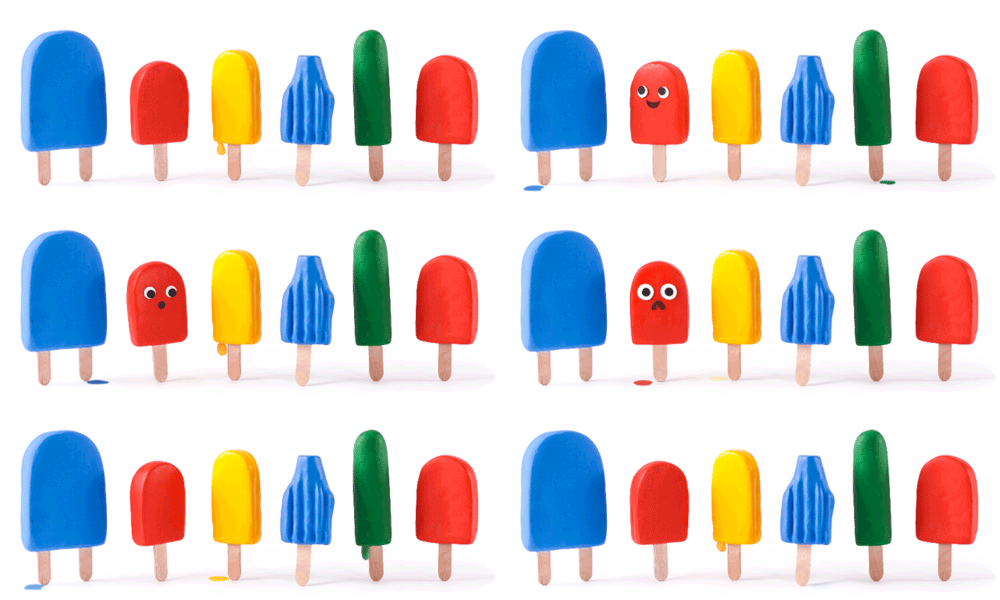
Google celebrates Summer solstice and winter solstice (Brazil) with two doodles by the guest artist Kirsten Lepore


Google doodles 2015

What is Solstice? 

It’s an astronomical event that creates the longest day of the year in one of the two hemispheres. 


Today, the Earth’s northern half will be bathed in light for the greatest percentage of a single day. Giving us all a good excuse to stay outside for another hour. Or two. Or until the fireflies come out!

Solstice' (Latin: 'solstitium') means ‘sun stands still' because the point where the sun appears to rise and set, stops and reverses direction after this day.

This year it’s taking place on Sunday 21st June. The sun is expected to rise at 4:25am.

Weather forecasters are predicting a warm weekend with temperature highs of 24C. And it's true. Since Friday we have in Portugal more than 30c. Wow! Difficult to dit in front of the computer. Not in Brazil, of course !


Stonehenge UK
credits: PA


Traditions:

Summer solstice, also called 'midsummer', has long been recognized and often celebrated by many cultures. 

It links to many ancient cultural practices as different cultures have celebrated it being symbolic of renewal, fertility and harvest.

Egyptians built the Great Pyramids so that the sun, when viewed from the Sphinx, sets precisely between two of the pyramids on the summer solstice. 

The Inca of South America celebrated the corresponding winter solstice with a ceremony called Inti Raymi, which included food offerings and sacrifices of animals, and maybe even people.

Archaeologists have also discovered the remains of an astronomical observatory in a long-buried Maya city in Guatemala, in which the buildings were designed to align with the sun during the solstices. During such times, the city's populace gathered at the observatory to watch as their king appeared to command the heavens.

But the perhaps the most famously, Stonehenge in the UK has been associated with the winter and summer solstices for about 5,000 years.

Every year, hundreds of pagans and non-pagans congregate at Stonehenge to see the sun rise in the morning and welcome in the summer.

Stonehenge is a UNESCO World Heritage Site along with it’s neighbour Avebury. Some pagans and druids perform a fire ritual to celebrate the occasion. This involves people with unlit candles forming a circle around a large lit central candle and lighting theirs off it one at a time.

Awed by the great power of the sun, civilizations have for centuries celebrated the first day of summer otherwise known as the Summer Solstice, Midsummer - Shakespeare Midsummer Night's Dream - St. John's Day, or the Wiccan Litha.

The Celts & Slavs celebrated the first day of summer with dancing & bonfires to help increase the sun's energy. 

The Chinese marked the day by honoring Li, the Chinese Goddess of Light.

In Sweden, it’s traditional to eat your way through the entire day. Feasts typically involve lots of potatoes and herring. 


summer solstice
credits: NASA


Science:

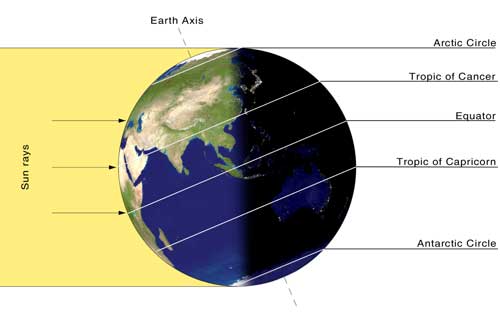
The Earth spins on an axis tilted 23.5 degrees from the Earth's orbit around the sun.

As a result, the most direct sunlight shifts between a band of latitudes of the Earth throughout the year, providing the change of seasons we know in the middle and higher latitudes.

On June 21 at noon, the sun will be directly overhead at the Tropic of Cancer, a line of latitude located at 23.5 degrees north of the equator.

During the summer, the northern hemisphere receives the most direct sunlight because it's tilted toward the sun.
Think of the summer solstice as the exact moment each year when the North Pole is most directly oriented toward the sun. According to NASA, the North Pole receives 30 percent more incoming solar radiation than the equator on the solstice.

The sun will be at its highest point in the sky at noon on June 21 for areas north of the Tropic of Cancer. Those locations will experience their greatest amount of daylight of any day this year.

source: NASA


Education:

"Astronomy has been important to people for thousands of years. The ancient construction known as Stonehenge in England may have been designed, among other purposes, to pay special honor to the solstices and equinoxes. These are the times and locations during Earth's journey around the Sun that we humans have long used to mark our seasons."

NASA

It's a pity. European schools (primary, elementary education) are enjoying summer holiday.

Only high junior schools/ lycĂ©es (secondary education) and universities are on  exams season.

So teachers can't explain all about summer solstice, but students, if they are curious, they will be excited to learn about.

After Summer holiday, teachers and students will discuss their experiences and knowledge about summer solstice when winter solstice will come on December.

Curricula: Cross-curricular: Geography; History; Sciences; Languages (traditions, literature).

Level : All levels.

Teachers must consider the activities to every level or curriculum they are teaching.

G-Souto

21.06.2015
Copyright © 2015G-Souto'sBlog, gsouto-digitalteacher.blogspot.com®