Showing posts with label ancient traditions. Show all posts

Thursday, November 28, 2019

Education : Traditions : Family & friends : Happy Thanksgiving !


credits: unknown
via CountryLiving


Beloved in the United States, Thanksgiving is a holiday celebrated typically on the fourth Thursday of November. It’s a time to reflect on the year, be thankful, and celebrate with friends and family by enjoying a delicious meal together.


It's downright historic.
Over the centuries, Thanksgiving evolved into a national holiday, officially recognized by President Abraham Lincoln in 1863 as a day of national thanksgiving and praise. 


In 1939, President Franklin D. Roosevelt moved the holiday to the fourth Thursday of November, where it remains today. Thanksgiving has become a time to contemplate the blessings in our lives, be thankful for the bounty of food and the love of family and friends.


In the US Thanksgiving is celebrated on the fourth Thursday of November while in Canada nearly one month and a half earlier. The second Monday of October


In 1621, the Plymouth colonists and Wampanoag Indians shared an Autumn harvest feast that is acknowledged today as one of the first Thanksgiving celebrations in the colonies. 


For more than two centuries, days of thanksgiving were celebrated by individual colonies and states. It wasn’t until 1863, in the midst of the Civil War, that President Abraham Lincoln proclaimed a national Thanksgiving Day to be held each November.


In 1817, New York became the first of several states to officially adopt an annual Thanksgiving holiday.


credits: Amazon.com
https://www.amazon.com/


Thanksgiving or Turkey Day:

In many American households, the Thanksgiving celebration has lost much of its original religious significance; instead, it now centers on cooking and sharing a bountiful meal with family and friends.


credits: Etsy.com

Turkey has become the traditional Thanksgiving fare because at one time it was a rare treat. During the 1830s, an eight- to ten-pound bird cost a day’s wages. Even though turkeys are affordable today, they still remain a celebratory symbol of bounty. 


Nearly 90 percent of Americans eat turke, whether roasted, baked or deep-fried. Poor turkeys! Thanks God! I'm a vegetarian.


Education:

Thanksgiving is a great time to be thankful and appreciate who you have and what you have. 

It's a time for families to meet, socialize and enjoy each other's company, sometimes the only opportunity in a year. 

Curricula:

Languages; History; Geography; Civics; Multimedia.


Resources:


  • History: video


  • Videos for kids:


Activities:


credits: English Portal 


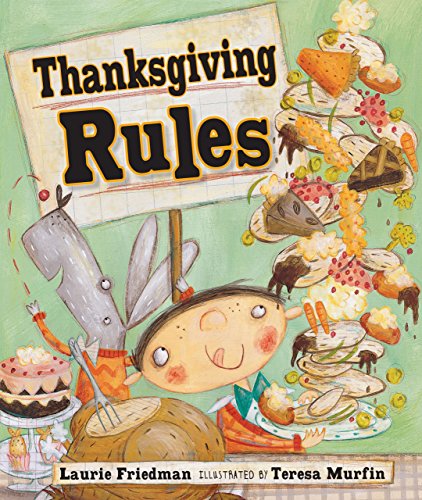
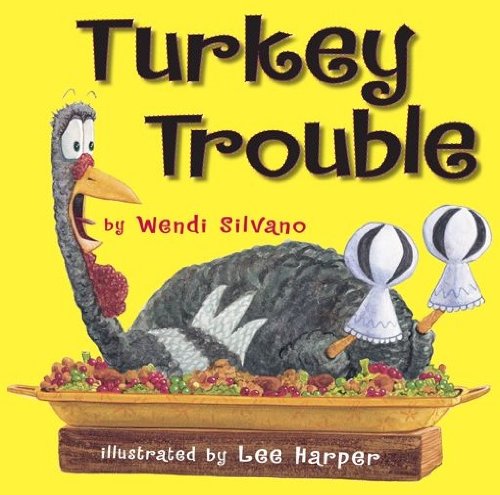
Children's Thanksgiving Books


  • Children's books:

Kids love stories. So here some books to share with the youngest...


Teresa Murfin (illustration) 
Kindle


Lee Harper (illustration)


Whether you celebrate the #Thanksgiving holiday or not, it's always nice to say thank you.


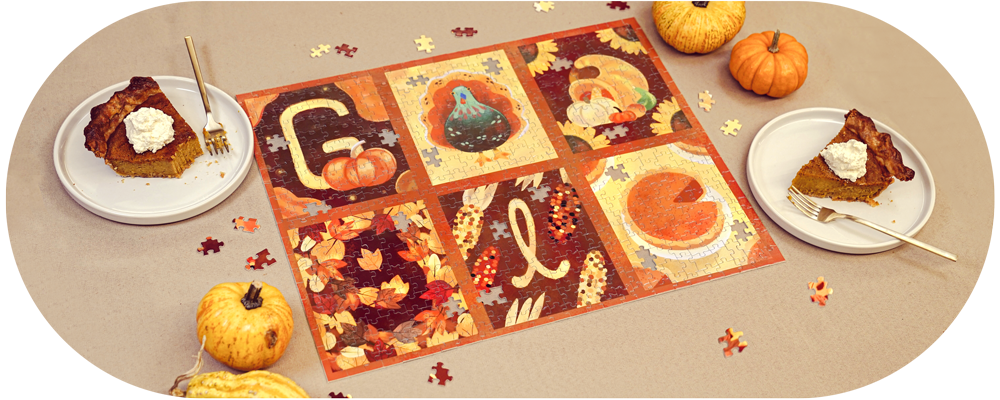
Google Doodle Thanksgiving 2025
https://doodles.google/doodle/


This Doodle was made with a very special collaborator, Tiny Chef! "Cheffy," the lovable herbivore chef who lives in a tree stump and makes the world's smallest (and cutest) dishes, is sharing his favorite holiday things with us this Thanksgiving.


Cheffy shows us that cooking isn't about size or perfection—it's about sharing with heart and making something to share with your friends and family.


Google Doodle Thanksgiving 2023


Thanksgiving day is stuffed with activities. Across the US, people and families spend the day preparing and eating delicious dishes, watching parades, or participating in fun runs. Many people also lean into the spirit of giving through volunteering with local organizations to prepare and serve free dinners to their communities.

Thanksgiving is a great time to be thankful and appreciate who you are and what you have.


It's a time for families to meet, socialize and enjoy each other's company, sometimes the only opportunity in a year. We know.


Today, the 23 November 2023, Americans will recognize the spirit of the special holiday in other way: time for everyone to reflect on their blessingsappreciate loved ones both near and far, and embrace new traditions. Wherever they are.


“Be present in all things and thankful for all things.”

Maya Angelou


Be thankful ! Stay safe !

G-Souto

28.11.2019

update: 27.11.2025

Copyright © 2023G-Souto'sBlog, gsouto-digitalteacher.blogspot.com®

Creative Commons License
Education : Traditions : Family & friends : Happy Thanksgiving ! bG-Souto is licensed under a Creative Commons Attribution-NonCommercial-NoDerivatives 4.0 International License. 


References:


History.com/ CountryLiving.com/ Google Doodles


Tuesday, June 26, 2018

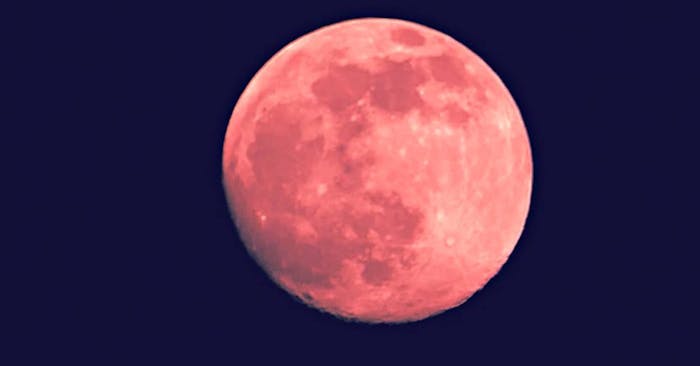
Schools : Watch out ! Strawberry Moon most colorful full moon all year : resources


June 21st was the summer solstice in the Northern Hemisphere, and if you’re feeling a little happier at the end of the week, science may explain why. The summer solstice are one of the happiest days of the year, and it’s all thanks to that sweet, sweet sunshine.
Philip Gehrman, associate director of the Behavioral Sleep Medicine Program at the University of Pennsylvania, says that people are generally more cheerful in the summertime. 
Why? Light is the strongest cue when it comes to the body regulating circadian rhythms like the sleep cycle and hormonal fluctuations, more light is generally a good thing when it comes to improving your mood. I'm Sun addict for sure!


Margaux Motin
On the Summer Solstice, June’s waxing moon will reach its full lunar phase in the wee hours of June 28, kicking off a summer of celestial happenings. Stargazers are in for a treat since this full moon, known as the Strawberry Moon, also happens to arrive during Saturn opposition, meaning Saturn will be at its closest and brightest this year.

  1. Strawberry Moon? Why?

Yes, June Full Moon is called the Full Strawberry Moon. This Full Moon got its name from the Algonquin tribes who knew it as a signal to gather the ripening fruit of wild strawberries.  This is a diverse group of tribes that covered the continent as far as California.


Algonquin couple, 18th-century watercolor by unknown artist
Courtesy of the City of Montreal Records Management & Archives, Montreal, Canada

The Strawberry Moon has different nicknames in different cultures:
  • the Full Rose Moon (Europe)
  • the Honey Moon (Europe)
  • the Mead Moon (Europe)
  • the Green Corn Moon, 
  • the Planting Moon,
  • Birth Moon. 


NASA illustration of how different Mars can look, depending on its distance to Earth
https://www.inverse.com/
Summer will offer rare opportunities for stargazers. Events such as Mars opposition in late July will bring the red planet closer to Earth than it has been in 15 years, giving anyone with a telescope the chance to see Mars’ unique features more closely than usual. 
The Strawberry Moon will be the season’s first celestial event visible to stargazers, and thanks to Saturn opposition occurring on the same night, it won’t disappoint.
So wherever you happen to be, don’t miss it!

The Strawberry Moon will share the spotlight with Saturn this year
https://www.inverse.com/
This year’s Strawberry Moon, which marks the short harvesting season for strawberries, offers an exciting event for celestial sightseers. But this year, Saturn’s opposition will be visible until September. 
“It’s the most colorful of all full moons,” Daniel M. Soref, Milwaukee Public Museum’s Theater & Planetarium director, told the Milwaukee Journal Sentinel in an interview published Monday. “We always get more color in the sky when things are lower.”
One thing to note is that the moon will also appear as a minimoon, which is difficult to notice with the naked eye but means the moon is at the furthest possible position from Earth.  A minimoon happens when the moon is at its furthest point from Earth (called the apogee). It will appear just a tad bit smaller in the sky.
For the two celestial events to share a set time is a rare treat for stargazers, but it’s just the first of many cosmic happenings slated for this summer.


Stonehenge
via European Heritage /before Brexit

  •  Traditions:
Summer solstice, also called 'midsummer' is a special day for many as it means the start of the summer. It has links to many ancient cultural practices as different cultures have celebrated it being symbolic of renewal, fertility and harvest.
Every year, hundreds of pagans and non-pagans congregate at Stonehenge to see the sun rise in the morning and welcome in the summer. Stonehenge is a UNESCO World Heritage Site along with it’s neighbour AveburySome pagans and druids perform a fire ritual to celebrate the occasion. This involves people with unlit candles forming a circle around a large lit central candle and lighting theirs off it one at a time.
Don´t forget that 2018 is the European Year of Cultural Heritage. So, share the interesting sites of Europe where Summer solstice is celebrated.


Science
On June 27, Earth’s orbit will bring the planet in between Saturn and the sun, which will place Saturn opposite the sun in Earth’s sky and create a rare opportunity to observe the ringed planet throughout the night. Saturn will rise in the southeast sky around sunset, where it will be at its closest and brightest in 2018 before setting in the west around sunrise.
Stargazers can catch the Strawberry moon on June 27 as well, on June 28. Saturn will be at its highest in the sky around midnight, making it easy to observe alongside the moon.
While the Strawberry Moon will only hang around for one night, there will be opportunities to see Saturn and its bright opposition until September. For the two celestial events to share a set time is a rare treat for stargazers, but it’s just the first of many cosmic happenings slated for this summer.

Education:
On June 27 and 28, 2018, find the full moon and look in the moon’s glare for a starlike point. That point is a planet, Saturn.

Such an incredible event the Strawberry Moon June 28 and most European students (primary, elementary education) are enjoying summer holiday.

Only high junior schools/ lycées (secondary education) and universities exams season is happening.


So teachers can't include Summer solstice and Strawberry Moon (June 2018) into school lessons. However, students are curious, and they will pay attention on YouTube perhaps? Yes, they are the YouTubers generation

So the date of the June 2018 full moon depends on your time zone. From the most of the contiguous U.S., the moon turns full on the evening of June 27. 

From Portugal and the western portions of Africa, the instant of full moon occurs before sunrise June 28. 

For Asia, Indonesia, Australia, New Zealand and the most of Europe, the moon turns full during the daylight hours on June 28, at which time the sun is above the horizon and the moon is below it.


After Summer holiday, teachers and students will discuss their experiences and knowledge about summer solstice and Strawberry Moon. I'm sure!

Curricula: Cross-curricular: Geography; History; Sciences; Languages (traditions, literature).

Level : All levels.

Teachers must consider the activities to every level or curriculum they are teaching.

G-Souto

26.06.2018
Copyright © 2018G-Souto'sBlog, gsouto-digitalteacher.blogspot.com®
Creative Commons License
Schools : Watch out ! Strawberry Moon most coloful full moon all year : resources G-Souto is licensed under a Creative Commons Attribution-NonCommercial-NoDerivatives 4.0 International License
References:
The Old Farmer's Almanac
Inverse
EarthSky

Tuesday, March 21, 2017

Schools : And now, World Poetry Day !


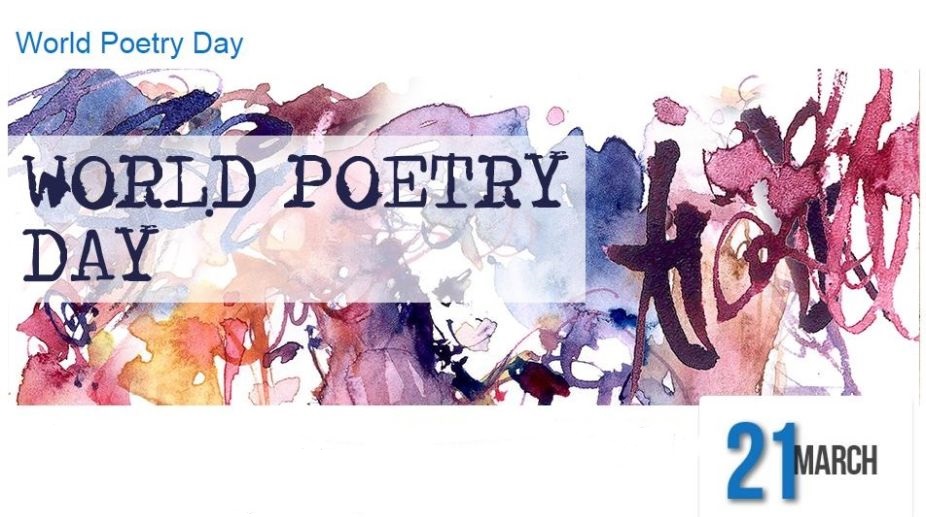
World Poetry Day 
©Shutterstock


We have not wings, 
we cannot soar; 
But we have feet to scale and climb 
By slow degrees, by more and more, 
The cloudy summits of our time.

Henry Wadsworth Longfellow


"Poetry is a window onto the breath-taking diversity of humanity."

Irina Bokova, Former Director General, message on World Poetry Day 2017

At a time when the challenges we face – from climate change, inequality and poverty to violent extremism – seem so steep, the words of the poet Henry Wadsworth Longfellow give us hope.

Those are the first words from Irina Bokova's message for World Poetry Day 2017.

Held every year on 21 March, World Poetry Day celebrates one of humanity’s most treasured forms of cultural and linguistic expression and identity. 

Practiced throughout history – in every culture and on every continent – poetry speaks to our common humanity and our shared values, transforming the simplest of poems into a powerful catalyst for dialogue and peace.


UNESCO first adopted 21 March as World Poetry Day during its 30th General Conference in Paris in 1999, with the aim of supporting linguistic diversity through poetic expression and increasing the opportunity for endangered languages to be heard.

In celebrating World Poetry Day, March 21, UNESCO recognizes the unique ability of poetry to capture the creative spirit of the human mind.

One of the main objectives of the Day is to support linguistic diversity through poetic expression and to offer endangered languages the opportunity to be heard within their communities.


World Poetry Day
credits: UN


World Poetry Day is the occasion to honor poets, revive oral traditions of poetry recitals, promote reading, writing and teaching of poetry, foster the convergence between poetry and other arts such as theatre, dance, music and painting, and raise the visibility of poetry in the media.  As poetry continues to bring people together across continents, all are invited to join in.


credits: UN
 

The Nobel prize poet Pablo Neruda wrote, “poetry is an act of peace.” Poetry is unique in its ability to speak across time, space and culture, to reach directly the hearts of people everywhere. This is a wellspring for dialogue and understanding – this has always been a force to challenge injustice and advance freedom. 

As UNESCO’s new Goodwill Ambassador for Artistic Freedom and Creativity, Deeyah Khan has said, all art, including poetry, “has the extraordinary capacity to express resistance and rebellion, protest and hope.” 


Google Doodle:


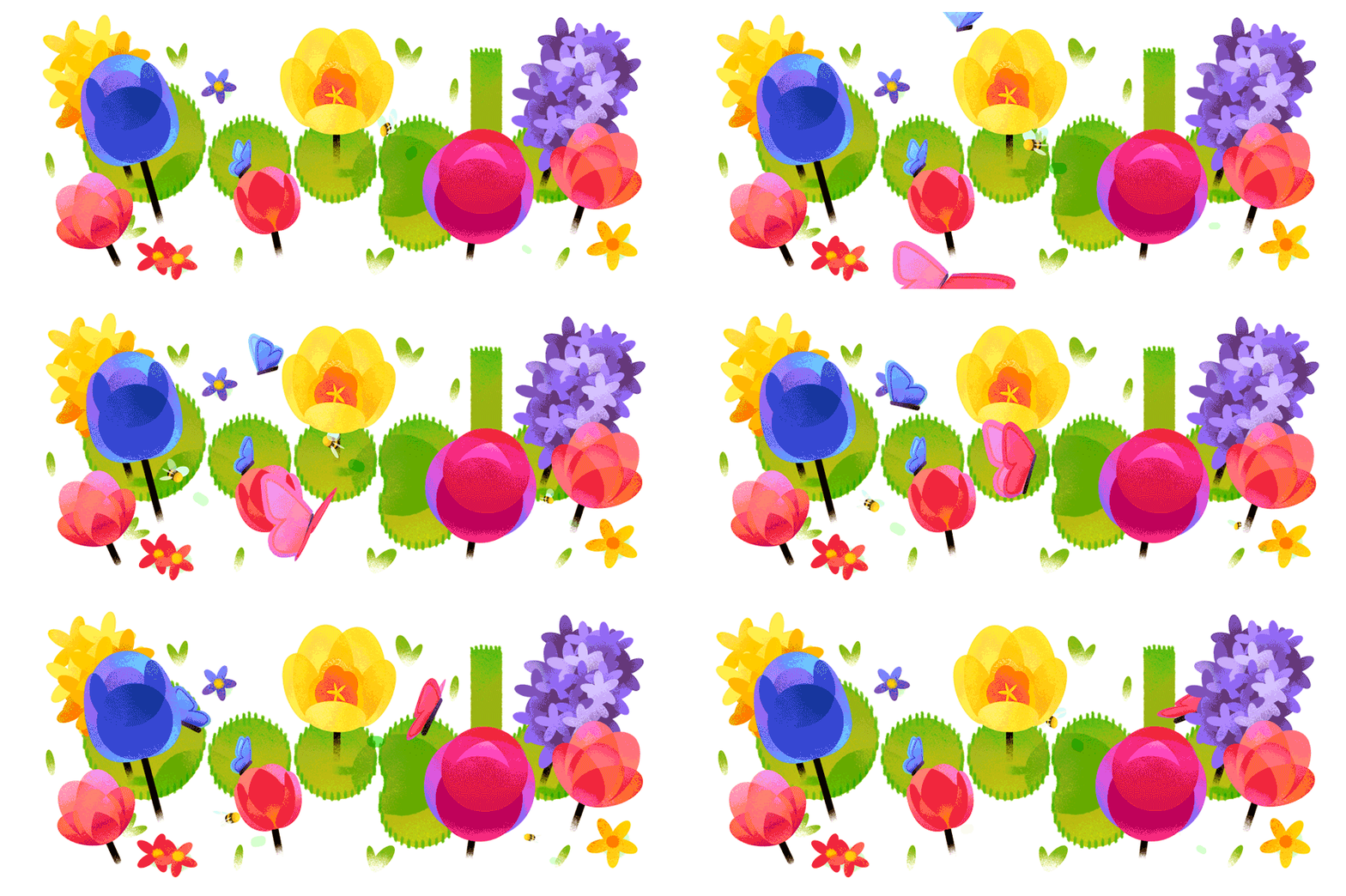
Nowruz 2017
https://www.google.com/doodles/

"Nowruz is a field where reconciliation and dialogue can take their roots."

Irina Bokova, Former Director General,
Message on International Day of Nowruz 2017

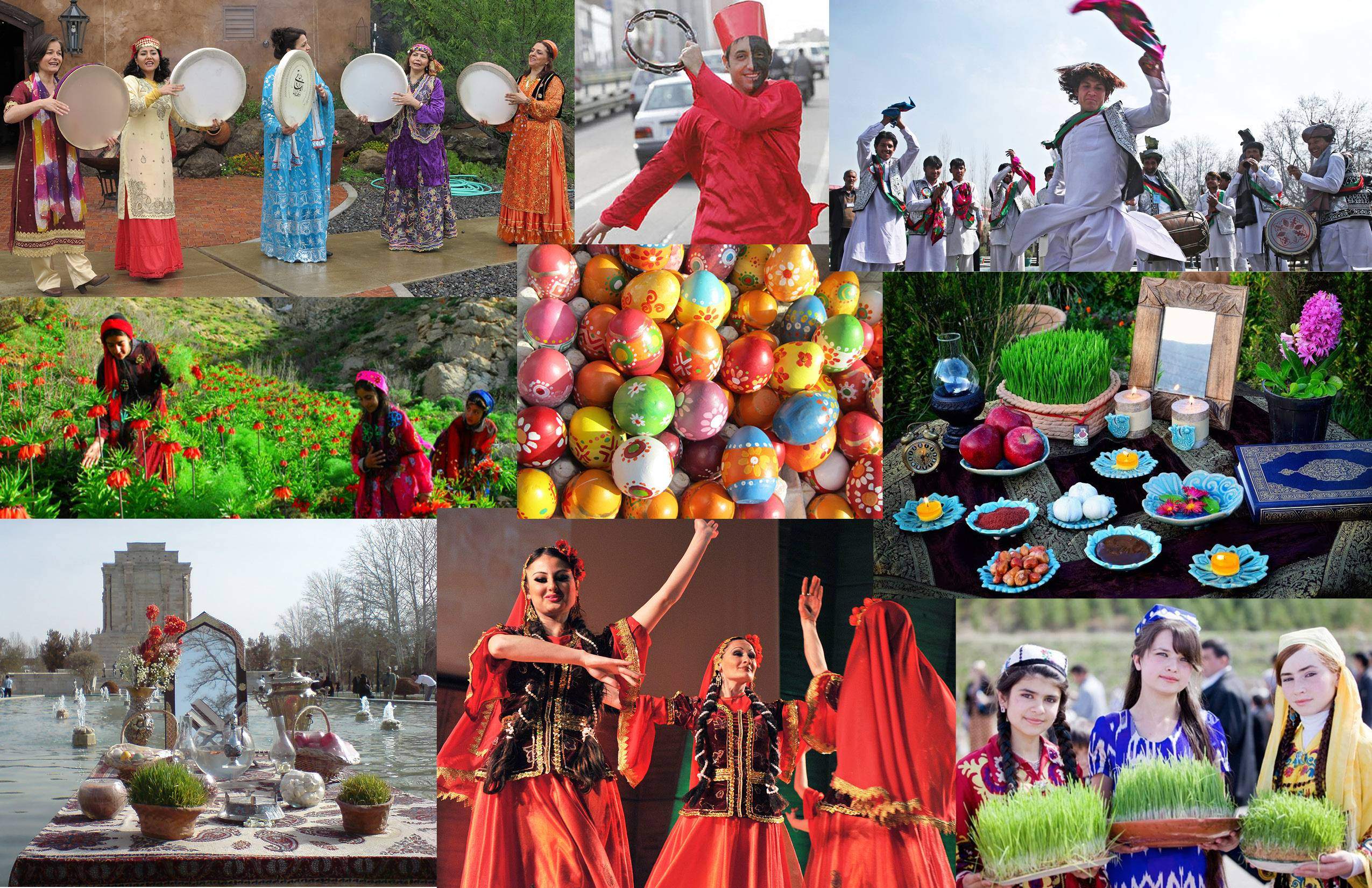
March 21, is also International Day of NowruzFor more than 3,000 years, people of Persian ancestry have been celebrating Nowruz, the return of Spring and the start of a new year. 

Google celebrates as well the 21 March Nowruz Day with springtime flowers, like the hyacinths and tulips in today’s Doodle.

A combination of the Persian words “now” for new and “ruz” for day, it is often celebrated at the exact moment of the vernal (spring) equinox, when the days start getting longer, and the celebrations can continue for up to two weeks.

Nowruz is a time of joyous renewal. Visits with friends and family, a clean house and new clothes, and special spring foods are traditional ways to celebrate the holiday. 

Perhaps the most enduring image of Nowruz is gathering together with friends and family around a bonfire. People also like to decorate with springtime flowers, like the hyacinths and tulips in today’s Doodle.


Nowruz traditions


Inscribed in 2009, and extended in 2016 on the Representative List of the Intangible Cultural Heritage of Humanity as a cultural tradition observed by numerous peoples, Nowruz is an ancestral festivity marking the first day of spring and the renewal of nature.

It promotes values of peace and solidarity between generations and within families as well as reconciliation and neighborliness, thus contributing to cultural diversity and friendship among peoples and different community.


Persian Poetry: Omar Khayyam. Rubáiyát
Translated by Edward FitzGerald with illustrations by Arthur Szyk 
New York: Heritage Press, ca. 1946

The rich Persian poetry is an ancestral art. The modern Persian speaker comprehends the literature of the earliest Persian poets including founder of the Persian poetry and literature Rudaki (approximately 1150 years ago) all the way down to the works of modern Persian poets. 


I saw a bird near the city of Sarakhs
It had raised its song to the clouds
I saw a colorful chador on it
So many colors on its chador

Abū ‘Abdallāh Rūdakī (858–ca. 941)

Often referred to as the father of modern Persian poetry, the ninth-century Persian poet Abū ‘Abdallāh Rūdakī (858–ca. 941) 


World Poetry Day
credits: Elyx
https://www.facebook.com/ElyxYak/

So, on World Poetry Day, teachers promote teaching poetry, restore a dialogue between poetry and the other arts such as theatre, dance, music, painting and other arts to  create an attractive image of poetry in the school so that the art of poetry will no longer be considered an outdated form of art but one.

Activities:

For different activities, you will find some interesting proposals on my Poetry Day post (2016) here


Poetry Day, UK

Education:

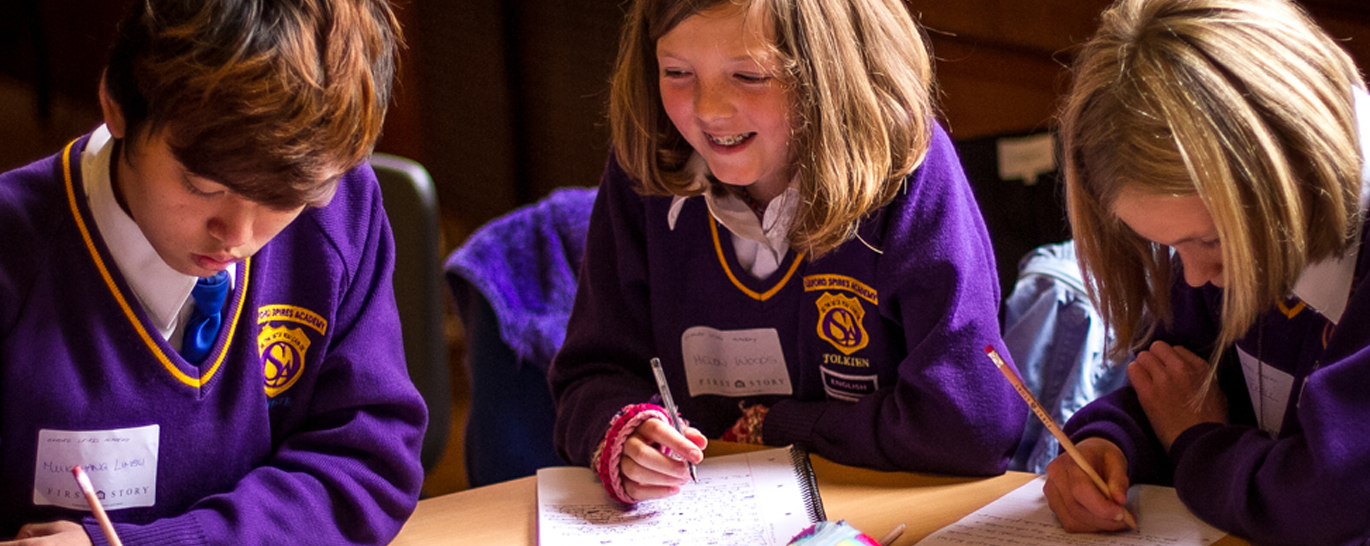
World Poetry Day is an opportunity for children to be introduced to poetry in at school (all levels). It is a time when classrooms are busy with lessons related to poetry, in which students examine poets and learn about different types of poetry. 

Students love poetry! Poetry is a good part or Languages and Literature
So here are some ideas that teachers can include into curriculum.


I love poetry. I read often poetry books. Here the reason why I'm always write 
about World Poetry Day and the importance of Poetry in our life. Poetry must be a part of children's education for the next citizen generation, women and men.
In adult life, they will be women and men of dialogue. Only dialogue can be established in difference and respect for difference. And who knows some among our students will be writers and poets.
All the Activities must be adapted to the levels you teach, of course. You will do wonderful I know. Include attractive poems into your lessons, so that the art of poetry will no longer be considered an outdated from of art but one. Poetry is a fundamental expression of peace.

World Poetry Day is symbolic. We can celebrate poetry every day.
"Poetry is not a luxury. It lies at the heart of who we are as women and men, living together today, drawing on the heritage of past generations, custodians of the world for our children and grandchildren. 
By celebrating poetry today, we celebrate our ability to join together, in a spirit of solidarity, to scale and climb “the cloudy summits of our time.” 
We need this to take forward the 2030 Agenda for Sustainable Development, to implement the Paris Climate Agreement, to ensure no woman or man is left behind."
Irina Bokova, Former Director-General of UNESCO

G-Souto
20.03.2017
Copyright © 2017G-Souto'sBlog, gsouto-digitalteacher.blogspot.com®

Creative Commons License
Schools : And now World Poetry Day ! bG-Souto is licensed under a Creative Commons Attribution-NonCommercial-NoDerivatives 4.0 International License.