Thursday, October 1, 2009

New Millenium Learners Conference 2009 : little report & some thoughts


Tom March slide

The OECD’s Centre for Educational Research and Innovation (CERI) launched the New Millennium Learners (NML) project in 2007. It has the global aim of investigating the effects of digital technologies on school-age learners and providing recommendations on the most appropriate institutional and policy responses from the education sector.

NML


Andreas Schleicher/ OECDICT and Education
http://www.nml-conference.be/

O conceito de New Millenium Learners sugere que a adopção das Tecnologias particularmente pelas novas gerações - os nativos digitais - tem uma presença forte na construção da sua identidade, no modo como comunicam socialmente em rede, e como administram a informação e o conhecimento.

The concept of New Millennium Learners suggests that technology uptake, particularly by younger generations, has an effect on the way people build their identities, communicate socially, and manage information and knowledge.


Roundtable chair Frances Kelly/ Educational Counsellor

http://www.nml-conference.be/

Durante três intensos dias de trabalho, investigadores de trinta países espalhados pelos vários continentes, apresentaram perspectivas desse impacto na Educação dos adolescentes Millenium.

No final de cada sessão foram apresentados vídeos com testemunhos de estudantes de uma escola secundária da Flandres, que demonstraram bem como o papel dos professores inovadores é importante no seu percurso escolar.

As chamadas competências do século XXI foram portanto o tema centralizador da Conferência. O consenso foi geral! A definição de aprendizagens e competências a serem exigidas aos jovens estudantes, de modo a tornarem-se futuros profissionais de qualidade e cidadãos responsáveis, é urgente.

These so-called 21st Century Competencies, which are the main topic of this conference, cover the range of skills and competencies that young people will be required to have in order to be effective workers and responsible citizens in the knowledge society of the 21st century.

Definiram-se várias estratégias, que passam pela transversalidade das Tecnologias e de temas de Cidadania em todos as áreas curriculares, pelo que áreas como Informática e Educação Cívica não terão mais razão de existir. Também são aconselháveis a modernização de alguns currículos escolares. 

A responsabilização das escolas na formação dos seus professores, e  consequente actualização dos mesmos, serão metas a atingir com carácter obrigatório. 


Reception & dinner

No penúltimo dia foi oferecido aos conferencistas e participantes um jantar de confraternização no 30º andar de um edifício, com uma  soberba panorâmica sobre uma grande área da cidade de Bruxela, num final de tade outonal de rara beleza. Um pôr-do-sol esplendoroso. 


Saí mais enriquecida no final deste diálogo internacional! O projecto NML será um êxito se todos nos empenharmos nas novas tendências e objectivos da Educação, neste século XXI.


Dr Francesc Pedró OECD/CERI
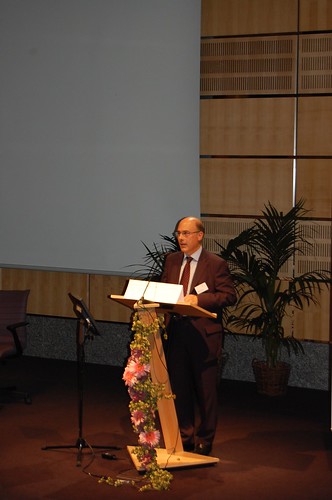
100 researchers, teachers and organisations from 30 countries participated at the  New Millenium Learners Conference that took place at the Flemish Ministry of Education, Brussels, Belgium, on 21-23 September 2009.

Micheline Scheys who manages the interface project between education and labour policy within the Flemish Ministry of Education and Training in Belgium has been an unique  hostess of NML Conference.

All the sessions took place in  the Auditorium of the Conscience Building. The first NML Conference aimed at showcasing the results of the first phase  to link them to the next.

Many speakers presented their overview about changing policies and programs. This slide from Marc Durando of the European Schoolnet succinctly captures the inhibitors to implementing such policies and programs.


Marc Durando/ European Schoolnet (slide)

Finland is a nation that has been very successful in raising education performance. The “Road Ahead” provided by Oystein Johannessen could be useful.  Mr Johannessen is the Deputy Director General from the Norwegian Ministry of Education and Research about to begin a secondment to the OECD’s Centre for Educational Research and Innovation (CERI).


Oystein Joahnnssen/Deputy General, NME*
slide
http://www.slideshare.net/

For three days, researchers presented their investigations and opened an interesting discussion with all participants, sharing ideas and experiences about "the range of skills and competencies that young students will be required to have in the knowledge society of the 21st Century".


Dirk Van Damme/Head of the CERI*

The last day, Anthony Mackay, conference rapporteur made the final report  with some key-notes. Dirk Van Damme, head of CERI, presented general conclusions, mentioned the Global Financial Crisis.

This ongoing event highlights the need to prepare students for an unknown future where the only certainty is change and the most successful people will be able to analyze what’s happening and to make choices that support their own and their community’s welfare.  This brings to clear focus the difference between ICT Literacy /  “High Tech job prep” and 21st Century Skills.

Dirk Van Damme

Between all sessions, some videos with students' voices from the Provinciale Secundaire School Diepenbeek had been presented. 
It's always very interesting to hear the voices of the students about their teachers, learning, e-skills, and Internet use, in school and out school, at home.

All the research outcomes or policy initiaves in the area can only be put in practice if teachers and students regard them as valuable and relevant to their teaching and learning experience.

NML country survey


My thougths:

I think, as an independent researcher on learning & ICT, and teacher/ e-facilitator that young people brought a fantastic new vision to Education, since the 'first digital generation', in the 90's with their visual spatial skills, non verbal intelligence, multi-tasking attitude, in the classroom. And of course, their first smartphones used in the classroom as an educative tool.

Schools must change. Completely! Curricula must be adapt to these 'new kids on the block'. Technology and digital devices will be incluse into school curriculum with books, pencils & other.

However there are some innovative teachers that are going digital and are more creative in their lessons.

As a "pioneer native" teacher and author, I create some educational digital resources in cross-curricular, increasing skills and competencies of my students, motivating them to go further "in order to be effective workers with the digital skills to have a decent job ans be responsible citizens in the knowledge society of the 21st century".

Wonderful and instructive conference!


G-Souto

01.10.2009
Copyright © 2009G-Souto'sBlog, gsouto-digitalteacher.blogspot.com®

Licença Creative Commons
New Millenium Learners Conference 2009 bG-Souto is licensed under a Creative Commons Attribution-NonCommercial-ShareAlike 3.0 Unported License.


References: Slides from Tom March's site.


Acknowledge:

Micheline Scheys
Flemish Ministry of Education
OECD/CERI


Sarina De Rijbel (Secretariat)


Monday, September 7, 2009

Digital Schools versus Digital Teachers


John Palfrey | Hanser
"Today's students – K through college – represent the first generations to grow up with this new technology. They have spent their entire lives surrounded by and using computers, videogames, digital music players, video cams, cell phones, and all the other toys and tools of the digital age."

Marc Prensky, 2001

Children and adolescents in digital societies are growing up in a world where digital technologies are ubiquitous.

Internet is used by net-generation also for education and learning purposes, often outside the classroom.

This emergence of digital native learners has major potential implications for Education.


Games and Digital Resources in School is an important and serious goal in the 21st century focus on the changing face of Education.

I am a "digital pioneer" teacher. I can not be called a "digital immigrant" . I did not grow up with Technology. Technology grew up with me, and I was there every step of the way. A "digital pioneer" who is doing an enthousiastic job infusing technology meaningfully into teaching and learning, in and out school.

I am a tech educational researcher and a learning author for quite a time! practise formal and informal learning called blended learning.

After previewing the digital resource, created by myself or choose by myself, I put it in context phase, that means in the classroom and out school, observing my own students as they interact with the digital resource selected.

The selection must be the most desirable in terms of educational objectives and constraints.

I could feel the enthousiasm of the "N-Gen", when the Web 2.0 entered into my  lessons as being part of the curriculum.

I teach on formal (face-to-face teaching) and informal learning (web 2.0). Never missing a new way or option to use digital resources in Education. 

My students can reach me by email, on Messenger since 1999, texting, blogs or Moodle plataform since 2002. 

As an tech-savvy educator, I am teaching to the current generation of digital natives in ways that support these students varied learning styles.


Rick Wilking/ Reuters 2009

Reseachers and teachers recognise that learning is ongoing and seeks to provide digital resources of quality to support learning on schools.

The assessment of these new tools and devices in curricula is crucial! These digital resources must be certified by experts in IT & Education who have the knowledge of school curricula contents .

The feed-back of experimentation done by teachers and students have an enormous impact.

The objective of the assessment is to analyse the N-Gen - "new learning generation" in the classroom and out school, understand their expectations and attitudes facing the "new ways of learning", using educational digital resources.

Expert teachers must analyse needs and goals carefully, specify the requirements, and finally, test digital resources in the classroom, with different students.

Digital resources, games, virtual worlds, web 2.0 technologies used in Education, after being analized and tested in real contexts, could join a kind of repository for teachers, parents, and students.

Something is already done by Merlot (Multimedia Educational Resource for Learning and Online Teaching).


Also European Schoolnet in cooperation with the International Software Federation of Europe (ISFE) organised an European Conference on the use of electronic games in schools on 5 May 2009 in Strasbourg, France.


gis_small013.jpg

Conference "Games on Schools"
John Dowell (University College London) concluded by raising the point that some argue from generation to generation that our intelligence is evolving2) and indeed rising. If this is true, intelligence is also evolving into different forms, such as games and may even be driven by this kind of popular culture.


Well, "Digital games in schools" has been published with the support of the Interactive Software Federation of Europe:


Written by Dr Patrick Felicia, a researcher at the Waterford Institute of Technology in Ireland, the handbook is intended for teachers interested in using digital games in their lessons. It provides the necessary information to understand the educational benefits of digital games and to learn how to use them as educational and motivational resources. The handbook is available in digital version below and can be ordered in print against a small fee to cover shipping cost.


Games in Schools Community of Practice report is now available in PDF (english version) here

I'ts a very good step on this long way from good practical examples!

"Should we create a parallel curriculum for 21st century learning? Games can surely contribute. Perhaps on EU level, we need to build such a curriculum?"

John Dowell


Some thoughts:

I don't know if we must create a parallel curriculum. I think it's very important to create new curricula crossing traditional pedagogy and digital tools for digital natives if we want keep our students focus on school time!

I have received notable recognition for using games, videos, blogs, web 2.0 technologies to inspire the students in educational contexts: school curriculum. They were creative and follow my innovation in school and out school (at home).

Now, I am a Certified Expert ICT and Curricula recognised by my pedagogical experience and scientific articles in the field of Education. I am a speaker at several national and international conferences.


The impact of Digital Educational Resources on cognitive skills and on learning expectations, and the evolution of social values and lifestyles are important issues.

G-Souto

07.09.2009
Copyright © 2009G-Souto'sBlog, gsouto-digitalteacher.blogspot.com®

Licença Creative Commons
Digital Schools versus Digital Teachers by  GinaSouto is licensed under a Creative Commons Attribution-NonCommercial-NoDerivatives 4.0 International License.

References:

Prensky, Marc, Digital Natives, Digital Immigrants, on Horiozon (MCB University Press, Vol. 9 No. 5, October 2001

Souto, Gina, Assessment of Digital Resources use in Education: Anatomy of Digital Resources in Learning Generation, Research, Reflections and Innovations in Integrating ICT in Education, Vol. 2, Formatex, Spain, April 2009

Palfrey, John, Publications

Games in Schools, European Scholnet, ISFE

Friday, May 22, 2009

m-ICTE2009 - Lisbon


top_micte_lx1.jpg
Decorreu em Lisboa, entre os dias 22 e 24 de Abril 2009 a V International Conference on Multimedia and Information and Communication Technologies in Education. Teve lugar na Universidade Nova de Lisboa e as sessões distribuíram-se por três auditórios.


img2.jpg

m-ICTE2009
www.formatex.org

O programa era vasto, dado que envolvia o uso das Tecnologias em áreas ligadas à Educação, às Ciências e à Engenharia.

As temáticas eram portanto diversificadas, o que fez com que investigadores de diferentes quadrantes partilhassem dos mesmos espaços e alguns trocassem ideias entre si mediante os seus interesses.

Quando enviei o meu abstract, quase à última da hora, não estava muito certa de ser aceite. Afinal era um evento aberto ao mundo e não apenas ao continente europeu!

img1.jpg

m-ICTE2009
Tentadora, mais uma vez, esta nova oportunidade de poder participar, ouvir, partilhar conceitos sobre os actuais paradigmas da evolução do e-learning, decorridos dois anos após a conferência eLearning Lisboa 2007 -Delivering on the Lisbon Agenda.

Assim, foi com satisfação que participei na conferência, desta vez com a apresentação e debate em Poster do tema Assessment of Digital Resources use in Education.

Posteriormente tomei conhecimento que o meu artigo-Poster fora alvo de atenção e, portanto, seria incluido no Proceedings Book vol. II cujo título é "Research, Reflections and Innovations in Integrating ICT in Education".

Foi a primeira vez que participei em conferências, nesta modalidade, sem dúvida diferente! Um pouco mais ingrata, na minha perspectiva, já que estamos numa situação de 'publicitar' mais do que apresentar um trabalho de investigação. Mas, foi sem dúvida uma experiência muito interessante!

img_gi1.jpg

m-ICTE2009
Houve duas sessões de apresentação de Posters, por dia. A apresentação do meu Poster "Anatomy of Digital Resources in Learning Generation" foi no dia 23 Abril 2009.

A distribuição dos espaços não foi feita por temas, o que causou, no meu ponto de vista, alguma dispersão por parte de quem assistia ou visitava. No entanto, o resultado final acabou por ser gratificante!

A organização foi impecável, o apoio a todos os participantes sempre atenciosa e prestativa. Os três dias decorreram num ambiente académico e informal em tempos de convívio entre pares.

img4.jpg

m-ICTE2009
368 researchers from 54 countries participated at the V International Conference on Multimedia and Information and Communication Technologies in Education, Lisbon, 22-24 April 2009.

All the sessions took place in three auditoriums at Universidade Nova de Lisboa. Different themes: Education, Chemistry, Sciences, Medecine, Engeneering.

94a172aa1e7097189a25b91e4546f6e1.jpg

m-ICTE2009
Poster sessions took place during three days of the conference at the great Hall.
All the posters were full of interest. Reseachers and participants shared experiences and ideas.

The Proceedings Book of the m-ICTE2009 Conference (III vol.) titled "Research, Reflections an Innovations in Integrating ICT in Education" is online.

itunes_store_podcasts.jpg


My participation was included on the theme Educational Software/Webs Experiences
The aim of my Poster was the presentation of some pedagogical experiences of the introduction of my e-learning platform Kidzlearn Lugares & Aprendizagens (Portuguese language curriculum, French language curriculum), and my eucational blog BlogdosCaloiros (Portuguese language curriculum) in Secondary Education.

Assessment of Digital Resources use in Education - "Anatomy of Digital Resources in Learning Generation" is a research and a pedagogical experience, and the importance of the assessment of Educational Digital Resources and Virtual Worlds used by teachers in educational contexts.

I am very happy because my presentation on Poster was very appreciated for the different speakers at the conference,

A lot of teachers asked about my experience and feedback with students in the classroom. They askedfor some pedagogical advices as well to introduce open educational resources in the classroom.

My open educational experience was the first elearning micro-innovation in Portugal and Europe in Secondary education.

My Poster is published in the Proceedings Book, vol II (2009)


elearningeuropa.info is one of the sponsors of the m-ICTE2009As a National Collaborator, I felt myself a delegate of this important European network of elearning.

G-Souto

22.05.2009
Copyright © 2009G-Souto'sBlog, gsouto-digitalteacher.blogspot.com®

Licença Creative Commons

Sunday, March 15, 2009

Environmental education and outdoor


A educação ambiental e as distracções ao ar livre são muito importantes para o desenvolvimento saudável dos jovens.

Agora que os alunos passam 90% do seu tempo no interior (casa ou escola) o déficit da desordem ambiental está a aumentar.

Um estudo recente demonstrou que os jovens passam pouco mais do que alguns minutos, por dia, em brincadeiras ao ar livre. O estudo concluiu que este estilo de vida está a causar consequências emocionais, educativas e físicas, incluindo a obesidade.


Trazer os jovens para o ar livre, mostrar-lhes o mundo que os rodeia, incentivá-los a apreciar a Natureza, aproveitando para fazer exercício físico é essencial para o seu equilíbrio.

earthday.net
(tradução livre)


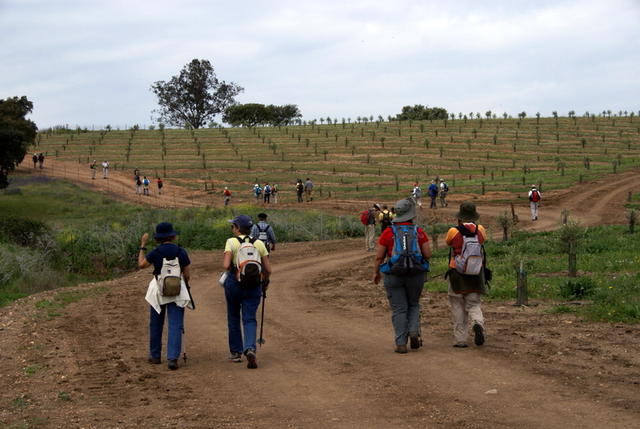
Walking outdoor classroom  (coountryside)
Environmental education and outdoor play is important for our children’s personal and academic growth. With students now spending 90% of their time indoors, “nature deficit disorder” is on the rise. A recent study found that children spend less than four minutes a day in “unstructured outdoor play.” This secluded lifestyle is causing emotional, educational, and physical consequences, including obesity. Getting kids outside teaches them about the world around them and gives them an appreciation for nature while providing an opportunity for sunshine and exercise.
Leave No Child Inside


Earth Day Network has been working with more than 600 groups, representing 42 million Americans, to pass the No Child Left Inside Act. This piece of legislation would get kids outside during the school day by providing new funding for environmental education. The funds would ensure that teachers are trained to provide high-quality, engaging lessons and would expand environmental learning opportunities across the country.
earthday.net

O sistema educativo português devia rever os seus métodos e permitir mais aulas ao ar livre, em lugar de nos ter aprisionados horas seguidas, em períodos tão longos do dia, fechados entre quatro paredes!

Poderíamos aproveitar a excelente situação geográfica da nossa cidade e da nossa escola. Fazer sessões de leitura no Parque da Cidade, nas margens do Douro, nos jardins de Serralves ou do Palácio de Cristal.


Outdoor classroom at Serralves

Também seria possível e muito salutar fazer-se caminhadas a pé ou de bicicleta nas praias da Foz e Matosinhos, correr ou passear no Parque na Cidade.

Tudo isto deveria fazer parte dos hábitos diários e dos currículos escolares. Estaríamos assim a contribuir para novas gerações muito mais saudáveis!

"La tecnología puede enviar a un hombre a la luna, desvelar los secretos del ADN y conseguir que la gente viaje alrededor del globo cada vez en menos tiempo. Pero, ¿puede sustituir a la naturaleza? Según los autores de ciencia ficción, tanto novelas como películas, en un futuro viviremos en casas sin ventanas que nos mostrarán a través de pantallas idílicos paisajes de todo el mundo que cambiarían aleatoriamente con sólo pulsar un botón".

Helena Martínez
El País.com (12.06.2008)


Impossível! O Homem jamais poderá viver sem a Natureza! Será que estamos a esquecer que somos humanos?!

O sol, o vento, as árvores, a água, o canto dos pássaros e tudo que nos evoque a Natureza nunca poderão ser igualados por mera invenção humana!
Vivamos e fruamos a Natureza!

Ah! Um conselho! Frequentem menos os centros comerciais e os lugares de fast-food.


Boa e saudável vida para todos!


G-Souto

15.03.2009
Copyright © 2010G-Souto'sBlog, gsouto-digitalteacher.blogspot.com®


Licença Creative Commons
Environmental Education and outdoor by G-Souto is licensed under a Creative Commons Attribution-NonCommercial-ShareAlike 3.0 Unported License.


References:

Saturday, January 17, 2009

Being a Teacher


Ce sont ses citoyens qui font la grandeur et la générosité d'une nation... Plus que tout autre groupe d'hommes ou de femmes, les enseignants déterminent les comportements et façonnent les idées et les aspirations de la nation.

Julius Nyerere, dans 'Le Pouvoir des Enseignants', 1966

Ontem foi o grande dia para todos os Torrinhas! Subiram ao palco para receber o diploma do Quadro de Excelência relativo ao ano lectivo 2007-08.

Sei por experiência própria o prazer que se sente ao ver o nosso trabalho recompensado! 

No meu caso, esse reconhecimento tem vindo mais de fora da minha escola e muito do estrangeiro. Lamentável não ser da escola onde exerço a minha profissão de pedagoga e de investigadora de tecnologias educativas em prol do sucesso escolar e do verdadeiro desenvolvimento do ensino e aprendizagem. 

Mas, enfim... não foi isso nunca que me fez parar!

A evolução das concepções pedagógicas contemporâneas veio acentuar o papel do aluno no seu processo de ensino e aprendizagem.

O aluno deve procurar outros recursos para a sua aprendizagem, e o professor é fundamental no desenvolvimento desses mesmos recursos.


O saber passou a ser compartilhado, e o aluno é o grande questionador, passando o professor a um plano mais discreto, mas fulcral nessa busca de respostas. 

O papel do professor é cada vez de maior responsabilidade, exactamente porque tem que orientar e moderar permanentemente as descobertas dos alunos, estimulando e desenvolvendo o espírito crítico e criativo dos aprendentes.

O professor tem desta forma a seu cargo, mais do que a transmissão da informação, moderar, estimular a aquisição de experiência por parte dos alunos.
mind_map.jpg

Ilustração do livro
Mapping Inner Space: learning and teaching visual mapping
Nancy Margulies with Nusa Maal
Second Edition - 2002

Para o desenvolvimento intelectual dos jovens é necessário que exista um professor especializado em determinada área curricular, nas tecnologias educativas na educação para a cidadania, para que os seus alunos atinjam níveis elevados de literacia, de cidadania, de aprendizagem e conhecimento. de resolução de problemas e de competências no domínio das tecnologias de informação e comunicação.

O que é importante mesmo é que sejamos reconhecidos pelas qualidades e pelo mérito de sabermos avançar, independentemente dos Velhos do Restelo que continuam a proliferar no presente! 

A nossa História, em todos os campos, está cheia dessas mentalidades que não avançam e coartam quem avança e progride! Não faz mal! Nós continuamos! 

Pois bem, amigos e alunos! Parabéns mais uma vez! Deixem os que dizem, os que falam! E avancem! Avancem sempre, de cabeça levantada com orgulho porque gostam de ser excelentes! E isso, é uma mais valia! 

Não olhem nem oiçam quem não gosta de vos ver acima, pelo trabalho, pelas qualidades, pela mentalidade aberta a todas as aprendizagens, pelo prazer de sentir bem no íntimo que são excelentes!! 

Às gerações que tenho acompanho na Francisco Torrinha, muito obrigada pelo carinho que me dedicam e que sentirão mais tarde. 

Pela alegria de poder trabalhar com alunos excelentes!

Pelos desafios que me lançam para eu poder ir sempre mais e mais longe na busca incessante de pôr à vossa disposição recursos educativos digitais, métodos avançados, projectos inovadores. E mesmo quando a escola não nos oferece os meios para os praticar, nós avançamos porque temos uma vontade inabalável de vencer!

Pela partilha de aprendizagens, pelo convívio, pela amizade! 

migueltorga.jpg


G-Souto

17.01.2009 
Copyright © 2009G-Souto'sBlog, gsouto-digitalteacher.blogspot.com®

Licença Creative Commons


Nota: Algumas imagens retiradas da Internet não se encontram creditadas por não terem identificação dos autores.