Thursday, November 22, 2012

MEDEA Awards 2012: The Winners


MEDEA Awards


The 2012 edition of the MEDEA Awards ended November 14 November with the Awarding Ceremony at the Media & Learning Conference

As you know since 2009 I am a member of the Jury MEDEA Awards. It's a pleasure to share this interesting award that encourages innovation and good practices in the use of media in Education.

As an educator, I know how important it is to be encouraged as I was a finalist at  Global Junior Challenge in 2004.


The announcement was made during the MEDEA Awards Ceremony which took place last night as part of the Media & Learning Conference currently taking place in the Flemish Ministry of Education and Training headquarters in Brussels.


As I wrote on MEDEA Awards: Submitt your entries, this year the competition attracted 213 entries from 32 countries. The closing date for receipt of entries for MEDEA 2013 was 30 September 2013.

Storytelling emerged as an useful and effective learning method. Find the names of all the winners and highly commended below:


French entry  "Quand la colère fait tomber les masques" is the winner of the "MEDEA Professional Production Award".

Quand la colère fait tomber les masques was made by Université Paris 1 in France and represented during the Awards by Catherine Loire. 

"Il s'agit d'un moyen métrage présentant le témoignage détaillé du principal acteur d'un conflit collectif de travail, le personnel se révoltant contre ce qu'il perçoit d'inhumain dans le management de la nouvelle direction."


Greek entry "And the Oscar goes to..." is the winner of the "MEDEA User-Generated Award".

"And the Oscar goes to..." was made by the 5th Primary School of Alexandroupolis (Greece) and Ecole Primaire de Rolampont (France). It was represented during the Awards by Petros Michailidis. 


It incorporates the way storytelling is used in movies in everyday teaching practice for subjects such as language learning, mathematics, social and science studies, art, English, ICT, as well as for learning attitudes like how to handle bullying. 

This project gives students the skills and competences to create their own videos on these subjects in collaboration with other countries. It gives learners an opportunity to learn to express themselves in other ways beside the  traditional written and oral communications.


The European Collaboration Award was awarded to Historiana "Your Portal to the Past" made by EUROCLIO - European Association of History Educators, The Netherlands and represented at the Awards by Geert Kessels. 


Historiana is designed primarily for students (from age 14), and their educators (including trainee teachers). It is conceived as  being a  complementary educational resource for history, heritage and citizenship education in Europe and beyond.

  
The  prize for "Educational Media Encouraging Active Ageing", set up to coincide with the European Year of Active Aging and Solidarity between Generations was won by "All that Jazz" made by Fundación Universidad Carlos III, Spain and represented by Raúl Jiménez. 


"All that Jazz" is the media part of a lifelong learning course which uses multiple media: video, audio, face to face classes, presentations, DVD, as well as a class blog.


Two additional prizes were awarded, the first, the Special Jury Prize was given to Flying Start made by the University of Leeds , UK and represented by Lizzie Caperon. 


This entry is built around a generic core content that introduces a range of academic skills throughout the 4 week period between the students receiving ‘A’ levels and starting at university. It was given this prize in recognition of the excellence of the underlying design.


Deborah Arnold greeting Steffen Toppler
credits MEDEA Awards


The other finalists who took part in the MEDEA Awards last night were: Schoolovision. Steffen Toppler from "SchoolVision 2012" receiving the audience award for best project, at the "Medea Awards", in Brussels, on 14th November.

"SchoolVision 2012" spans 38 countries across Europe, from Iceland in the north-west, to Azerbaijan in the south-east. 

Many hundreds of children are involved in this multi-award-winning "eTwinning project". Portugal is represented by Cunha Rivara school Évora.


"Il Girotondo del Tempo" made by Hyperfilm srl, Italy represented by Andrea Tua; Moving Image Techniques made by Christina dePian, Greece; "SignMedia" made by the University of Wolverhampton, UK and represented by Christine Jolly


In addition to the finalists, the Organising Committee also announced 15 entries that are Highly Commended. These are:  

A letter, a Story,  Greek Educational RadioTelevision of the  Greek Ministry of Education (Greece);  Cartini Animati, Istituto Scolastico Comprensivo Statale Ponte San Nicolò (Italy);  Child's Play: An Educational Issue, Deirdre Shelly (Ireland);  Crocodox, Unaymedia (Spain); Don Giovanni dans tous ses écrans, Université Rennes 2-CREA (France); El placer de la experiencia (I) y (II),  La Red Información (Spain); Face Up, Ariel Trust (UK);  Forum of Generations @School, Obchodna academia (Slovakia); Gloria trova un vero padrone, Giunti Progetti Educativi (Italy); 
Mustard vs Ketchup, Istituto professionale "Tommaso D'Oria" (Italy); Online projects among Greek and French EFL students, Maria Markaki School of Foreign Languages (Greece); Projekt "Podróże kształcą", Miejski Zespół Szkól nr 2 (Poland); Think Sustainable -  Little Eco-houses, Scuola Brofferio - Asti, Italy; In Trouble, UAM (Spain); 


And Plataforma “Cuenta Regresiva”  1 acción = 1 cambio", Educ.ar S.E. (Argentina);

"Cuentra Regressiva 1 acción = 1 cambio:  "Cuenta Regresiva" pone en escena la experiencia de cuatro personajes adolescentes que se comprometen en la lucha contra el tráfico ilegal de fauna en la Argentina.


"Cuatro jóvenes en acción, la red como herramienta y un gran desafío. Sumate a esta experiencia. Vas a descubrir hechos desconocidos, a enterarte de cosas que ni siquiera imaginabas, y algo en vos sentirá la necesidad de participar. Estamos en una cuenta regresiva… el tiempo es crucial. Si actuás, algo puede cambiar."


"Tráfico de Fauna" es un videojuego en el cual encarnas el papel de Capu, un mono capuchino, que debe liberar a sus amigos monos enjaulados por los traficantes de fauna. Para ello deberás moverte con sigilo, para no ser detectado por los traficantes, y encontrar todas las llaves que abren las jaulas.

You know how I like environmental education in school curricula! So many posts I write about it! Never too much to help the new generations to contribute for the protection of the planet and endangered species.

Presentations by all the finalists were given during the Media & Learning Conference which attracted over 270 participants from 40 countries and which provides the context for this year’s MEDEA Awards. 


G-Souto (member of the Jury)

22.11.2012

update 09-08-2026
Copyright © 2012G-Souto'sBlog, gsouto-digitalteacher.blogspot.com®

Licença Creative Commons


Tuesday, November 20, 2012

Éducation : Le Journal d'Anne Frank, une BD manga interactive


Anne Frank au Pays du Manga
Alain Lewkowicz 
Vincent Bourgeau (dessins)

Voilà un projet que j'ai bien aimé et qui va surprendre vos élèves! Anne Frank au pays du manga. La BD documentaire interactive a été diffusée sur le web le 15 Novembre 2012 par ARTE.tv.

Anne Frank au pays du manga est une BD documentaire interactive. Un voyage en BD documentaire interactive "pour comprendre ce qui, de la Shoah et d'Hiroshima, peut - ou non - constituer une expérience commune au Japon et à l'Europe."

Un best-sellerdisponible en manga, mais dans lequel Anne Frank est simplement perçue comme l'héroïne d'un roman à succès à la conclusion cruelle et émouvante.

Le Journal d’Anne Frank est un écrit exceptionnel, au sein de la guerre et d’une tragédie pour l’humanité. 

Dans tout le monde le Journal d'Anne Frank est um best-seller depuis sa parution et un livre 'obligatoire' dans les cours de Langues.


Le manuscrit du Journal d'Anne Frank


C'est le plu lu et le plus étudié dans tous les collèges ou lycées du monde. Traduit en plus de 30 langues.


Éducation:


Moi même, en étant enseignante de Langues, j'ai lu avec mes élèves cours da langues, Le journal d'Anne Frank de différentes générations. 

Tous les jeunes étudiants s'attachaient vraiment à ce récit de vie qui les faisaient réfléchir. 


"Créer l'Europe, c'est permettre la Paix."

Jean Monnet

Toutes ces générations de jeunes européens qui ne connaissent pas le cauchemar de la guerre, ce récit d'une jeune-fille de leur âge, victime de guerre, les touchent et les fait réfléchir. 

Quelle chance d'être nés dans une nouvelle époque de l'Europe - c'est ce qu'ils me disent. Pour eux, l'Europe, c'est l'union entre les pays et pas de guerre.


Exposition Anne Frank à Westerbork (2009)
AP Photo / Bas Czerwinski

Le Japon aussi n'echappe pas à cet émouvant récit d'une jeune-fille qui commence son journal à l'âge de 13 cachée dans l'Annexe et qui meurt deux ans après dans un camp de concentration pendant la Seconde Guerre Mondiale.

Depuis sa première édition en 1952, Le journal de Anne Frank est le livre le plus lu et le plus étudié parmi les livres étrangers au Japon. Toutes générations confondues, tout le monde connaît la petite fille d'Amsterdam et son destin tragique.

Le Journal d'Anne Frank reste un inusable best-seller, à tel point que le destin tragique d'Anne est même réinterprété en manga dont Anne Frank est devenue l’héroïne d’un roman à succès à la fin cruelle et émouvante.

Anne Frank au pays du manga sur une idée originale d'Alain Lewkowicz en dessins, photographies, et vidéos, jette le pont entre deux cultures en exploitant les représentations du passé dans la société japonaise d’aujourd’hui.


Note: Si vous ne voyez pas la vidéo, allez directement sur Vimeo

Mes pensées:

Le Japon a adopté Anne Frank, figure universelle, pour en faire un manga - une forme spécifiquement japonaise mais que le monde entier s'en est désormais approprié. Surtout les jeunes.

Le manga est un art que la plupart des étudiants aprécient et lisent. Et il y en a pas mal qui dessinent des mangas dans les cours d'Arts ou même les cours de Langues quand on demande aux élèves de créer des BD à partir d'un livre qu'on a lu dans les cours, ils choisissent souvent le fair selon l'art du manga.


Anne Frank au pays du manga
Alain Lewkowicz
 Vincent Bourgeau (dessins)

Le manga propose à la manière d’un roman graphique documentaire raconté à la première personne, une exploration interactive qui tente de comprendre ce qui de la Shoah et d’Hiroshima pourrait constituer une expérience commune au Japon et en Europe.

«Au pays du soleil levant, malgré l’alliance passée avec le Troisième Reich, rares sont ceux qui connaissent la Shoah, tragédie trop lointaine. Pour la plupart des Japonais, comme le résume le Révérend Makoto Otsuka, directeur du mémorial dédié à Anne Frank et à la Shoah, situé à proximité d’Hiroshima et unique en Asie : “La guerre, c’est horrible. Et nous en avons été les plus grandes victimes, lorsque les Américains ont largué leurs bombes atomiques sur nous.”»
Racontant à la 1ere personne le voyage de ses auteurs, Anne Frank au pays du manga est donc une BD documentaire numérique interactive qui explore les représentations du passé dans la société nippone de nos jours. 


Anne Frank au pays du manga
Alain Lewkowicz 
Vincent Bourgeau (dessins)


Activités & IT:

Un excellent documentaire interactive pour l'introduction de la Narration, et plus specifiquement 'le journal intime' dans des cours de langues et littérature.

La Narration 
La narration peut comprendre: 
le roman, le conte, 
le journal intime
la BD. 
Ce sont des récits avec des caractéristiques différentes qu'il faut que les étudiants travaillent au programme de langues.

Cette BD interactive comprend une soixantaine de pages avec le récit d’un voyage qui volontairement éclaire et dérange.


Outils:

  • Web (portables et tablets);
  • Smartphones ou tablets (la recherche)
  • Livres (plusieurs livres 'Journal d'Anne Frank' empruntés à la Bibliothèque scolaire)


Anne Frank au pays du manga
Alain Lewkowicz 
Vincent Bourgeau (dessins)

Lecture:

Proposez à vos élèves de lire le manga BD Anne Frank sur le web et de le comparer au Journal d'Anne Frank (livre papier).

  • Le manga est divisé en quatre chapitres précédés d'un prologue

Quand on passe la souris sur les planches, certaines cases se transforment en photos ou en vidéo.


Anne Frank au pays du manga
Alain Lewkowicz 
Vincent Bourgeau (dessins)

Les étudiants peuvent se diviser en groupes et travailler plusieurs activités que l'enseignant essayera de suivre comme tuteur. Rappelez-vous 'flipped classroom' si à la mode, à présent, mais que quelques enseignants innovateurs pratiquaient depuis quelques années.

L'enseignant est plutôt attentif aux besoins des étudiants et guide leurs activités. Les étudiants travaillent les activités librement, et collaborent en groupe. Ils peuvent poser des questions au professeur/tuteur qui parcourt la salle de classe pour bien accompagner tous les élèves. 


Écrire:

  • N'oubliez pas la création libre de textes à partir de journal intime. Mes élèves ont tellement aimé créer/écrire des morceaux d'un journal intime (en dialogue avec Anne) à partir d'un morceau du livre Le Jornal d'AnneFrank choisi par les différents groupes.

  • Ils aimaient bien aussi écrire des lettres qu'ils adressaient à Anne

  • La conclusion différente du journal d'Anne Frank est enormément proposée. Et les élèves sont créatifs, n'oubliant pas le drame qu'il faut tourner.

Les smartphones sont permis sur les tables des élèves dans la salle de classe pour faire de la recherche.


Réseaux sociaux comme ressource pédagogique? Sans doute! 

  • Facebook
Anne Frank au pays du manga ici 

Anne Frank House ici

  • Twitter
Anne Frank House @annefrankhouse

ARTE @ARTEfr

  • Instagram
Anne Frank House
https://www.instagram.com/annefrankhouse_official/


"Le rôle inducteur de technologies simples et intuitives pour l’amélioration de la pédagogie devrait nous encourager à penser l'intégration des TIC dans l'action et la durée en faisant évoluer notre système ou dispositif d'enseignement et d'apprentissage non à travers les outils eux-mêmes, mais à travers les usages que font les acteurs de ces outils."

Marcel Lebrun


screenshot ARTE


Langues: le web manga est disponible en deux langues:
  • Français 
  • Allemand
Il faut quand même avoir une bonne connexion parce que ça prend du temps entre les chapitres.

Niveau:
  • Collège
  • Lycée

screenshot Anne Frank au pays du manga
GooglePla


Appli:


L'application comprend: un prologue, 4 chapitres, 60 pages de BD animées et sonorisées, plus de 50 minutes de vidéos, 45 minutes d'audio et 169 photos. 

Pour pouvoir télécharger l’ensemble des contenus disponibles au sein de l’application vous devez disposer d’une connexion Wi-FI et d’un minimum de 400 Mo d’espace disponible. 


Mise à jour: 15 septembre 2016

L'appli a été recompensée au Salon du livre et de la presse Jeunesse Montreil 2013


Anne Frank au pays du manga
Alain Lewkowicz 


Encore quelques pensées:


Revisiter en bande dessinée cet oeuvre était osé et le pari est réussi pour Anne Frank au pays du manga. Un récit revisité sous la forme d’un 'voyage en BD interactive', un webdocumentaire réalisé par Alain Lewkowicz, Vincent Bourgeau, Samuel Pott et Marc Sainsauve pour ARTE.

Comme un pied de nez, mais aussi pour jeter un pont entre deux cultures, les auteurs retracent leurs parcours d’occidentaux au Japon en web-manga, mêlant dessins, photographies, sons et vidéo, pour dissiper le brouillard du relativisme culturel qui nimbe généralement l'Asie lorsqu'elle est observé de l'Occident.

Et maintenant, lancez la BD interactive ici pour bien préparer votre cours.

Je suis sûre que Anne Frank au pays du manga sera un excellent outil numérique à exploiter dans les cours de Langues et Histoire.

Un projet qui sera enrichi par la collaboration d'autres disciplines, comme par exemple:
  • Langues| Histoire-Géo| Arts | Musique.
Vos élèves se sentiront fiers de partager leurs points de vue et leurs activités avec d'autres étudiants (différents pays, différentes langues). 

Cherchez des échanges scolaires sur le web, sites d'établissements scolaires, ou réseaux sociaux, Facebook, Twitter ou WhatsApp, ou Instagram.


"Tant que tu pourras contempler le ciel sans crainte, tu sauras que tu es pur intérieurement et que malgré les ennuis tu retrouveras le bonheur. Richesse, considération, on peut tout perdre, mais ce bonheur au fond du coeur, il ne peut guère qu'être voilé et il saura nous rendre heureux, aussi longtemps que l'on vivra."


Anne Frank


G-Souto

20.11.2012

mise à jour: 23.09.2017
copyright © 2017G-Souto'sBlog, gsouto-digitalteacher.blogspot.com
Creative Commons License
Éducation : Le Journal d'Anne Frank, une BD manga interactive bG-Souto is licensed under a Creative Commons Attribution-NonCommercial-NoDerivatives 4.0 International License.

Thursday, November 15, 2012

Schools . World Philosophy Day : "Future Generations"


credits: UNESCO


"Beyond all of our differences, we are all equal in the exercise of reason – this is the sure way to build fairer, more equitable societies, sustained by the energy of critical thinking."

Irina Bokova, Former Director-General of UNESCO


Today, November 15, is the World Philosophy Day. "World Philosophy Day" is annually observed on the third Thursday of November to honor philosophical reflections around the world. 

UNESCO introduced World Philosophy Day in 2002 to honor philosophical reflections throughout the world by opening spaces and encouraging people to share their philosophical heritage, opening their minds to new ideas, and inspire public debate on society’s challenges.

Philosophy has opened the door for new concepts and innovative ideas, laying the foundations of critical thinking, independence and creativity across cultures for many centuries. 


credits: UNESCO


  • Theme 2012: "Future Generations"

The main theme of the 2012 World Philosophy Day which is “Future Generations”.

"What future is in store for those who will be 20 years old in 2062 and what will it mean to be young in the future? Will future young people live in a better world than the one in which today’s youth is living?"

Philosophers have a very important role in shedding light on contemporary challenges, especially when these relate to ethics and justice. 

UNESCO believe that critical thinking, foresight, and ethical judgment are invaluable ingredients for a healthy society. 


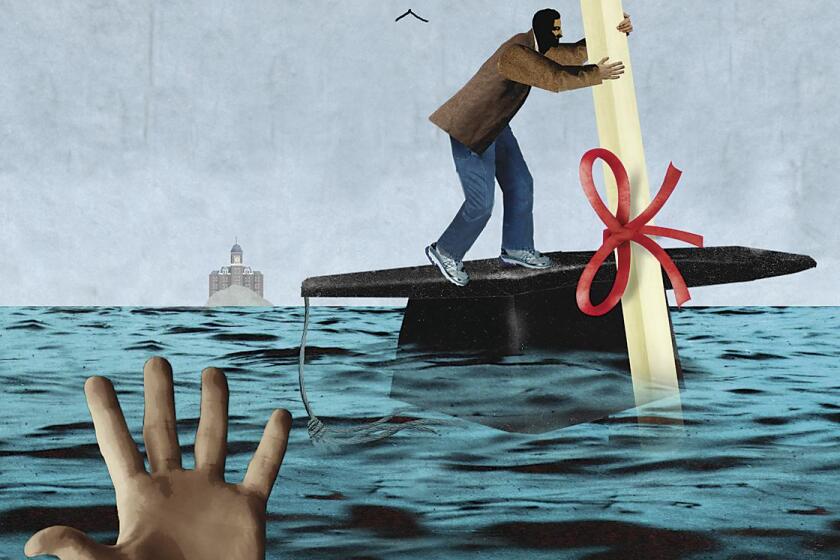
credits: Michael Morgenstern for The Chronicle review

Education:

"The importance of Philosophy, especially for young people, underlining that philosophy is a discipline that encourages critical and independent thought and is capable of working towards a better understanding of the world and promoting tolerance and peace”.


It is a day and/or a week for schools and students to share thoughts openly explore and discuss new ideas and inspire society’s challenges.

Children of all ages are open to discussing a multitude of problems and questions of philosophical nature which interest them personally. And we all know that young people in the XXI century are well informed and have an opinion about problems that concern them, their family, friends, and country. The Internet, social m

"The introduction of children to logical and rational thought not only develops the philosophical spontaneity of children but helps them to become enlightened citizens, capable of formulating their own critical judgment and clear and reflexive views about life from the very early age."


credits: UNESCO


Some thoughts:

The fundamental principle of education is to understand the truth for oneself. The fundamental principle of philosophy is to realise that all truth comes from reality. Thus educational philosophy must be founded on the truth of what exists. 


I particularly agree with Einstein, that education (and teaching students philosophy from a young age) has two central functions relating to the individual and their society.

  • To educate the individual as a free individual – To understand and use critical thinking skills for determining the Truth for themselves.
  • To educate the individual as a part of Society – Virtually all our knowledge, our clothes, our food is produced by others in our society, thus we owe Society and have a responsibility to contribute back to Society (that everyone must give as well as take.)

UNESCO will host demonstration lessons of philosophy teaching for children of different ages. 

The practice of philosophy with children is based on the recognition of every child as individual who should be respected, listened to and given the possibility to express his or her opinion and thoughts. 

"Philosophical workshops for children have become an integral and coherent part of primary school programmes. They permit children to develop their linguistic capacities and vocabulary, to learn to argue, to discuss, to respect and to listen to the opinion of the others. Philosophy practices with children are based on philosophical literature which enriches their personal culture and learns them to interpret literary texts and to understand the challenges they contain."

UNESCO believes that the practice of philosophy in primary schools has been developing over the last two decades and its popularity increases every year.

Unfortunaly, not in all countries. But, I believe that all children will access soon to philosophical activities in the curriculum.


© UNESCO/Isabelle Simon


“It’s you who will come and open these, not us,” Director-General Irina Bokova told an excited group of primary school children from the Paris region, during the “burial” today of the “UNESCO capsule for Future Generations”. 
The two metal cylinders are not to be opened before the same date in 2062.  They contain some 280 messages received from young people around the world, many of them expressing fear and fascination over technological developments, questions on the place of money in societies of the future, food, environmental concerns and values such as peace and equality.


They also contain various objects symbolizing today’s communication tools. These include a mobile telephone, photos, videos and a USB key with a song written and sung by children from the Andre Malraux and Jean Vassal de Crepy-en-Valois schools, two of the five that took part in the event.


I love this activity! How many students and teachers worked on it! What an excitement participating in such legacy!

“Our dialogue with future generations can only be an imaginary one, but this is what gives it such creative and even revolutionary power […] Thinking about future generations allows us to innovate, invent, and sometimes find solutions for the present.”

Irina Bokova, Former Director-General of UNESCO

I can't resist to share with you, educators of the world, this Albert Einstein talk

"My dear children: I rejoice to see you before me today, happy youth of a sunny and fortunate land. Bear in mind that the wonderful things that you learn in your schools are the work of many generations, produced by enthusiastic effort and infinite labour in every country of the world. All this is put into your hands as your inheritance in order that you may receive it, honour it, and add to it, and one day faithfully hand it on to your children. Thus do we mortals achieve immortality in the permanent things which we create in common. If you always keep that in mind you will find meaning in life and work and acquire the right attitude towards other nations and ages.


Albert Einstein, talking to a group of school children (1934)

G-Souto

15.11.2012

update 20.11.2023
Copyright © 2012G-Souto'sBlog, gsouto-digitalteacher.blogspot.com®

Licença Creative Commons
World Philosophy Day & Future Generations  bG-Souto is licensed under a Creative Commons Attribution-NonCommercial-NoDerivatives 4.0 International License. 

Credits: photos and images 
UNESCO | The Chronicle
    
References: UNESCO