Showing posts with label social media in school. Show all posts

Thursday, May 14, 2015

Nepal : Talking science & solidarity at school


Nepal | Everest
AP Photo/Tashi Sherpa
The second major earthquake within a short time in Nepal two days ago, May 12, reminds us of the importance of science in predicting earthquakes so that more lives can be saved.
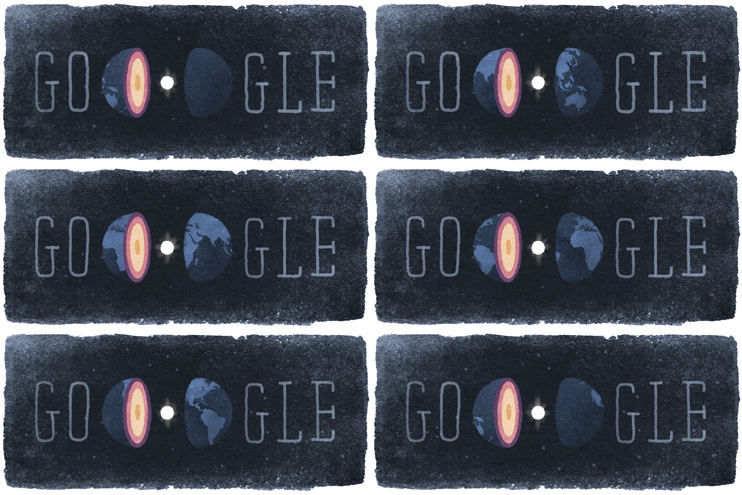

Google doodle 
Inge Lehmann 127th birthday

Thinking about it, Google’s latest doodle celebrated yesterday May 13 the birthday of Danish seismologist Inge Lehmann, who discovered the existence of an inner core in the Earth.
Coming 127 years after her birth, the doodle shows the Earth split in two with the inner core shining in the centre.
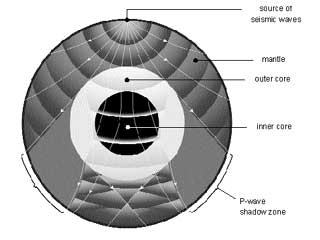
Lehmann, who died aged 104 in 1993, studied earthquakes to find that the Earth had both an inner and outer core, a revelation which redefined how the planet was studied.


Inge Lehmann
Illustration © American Museum of Natural History

Some biography:
"At the turn of the twentieth century, a teenager in Østerbro, Denmark felt the ground move beneath her feet. It was her first earthquake, but it wouldn’t be her last."

More than two decades of study and observation later, Inge Lehmann’s work sent shockwaves through the scientific community. 


Lehmann's research
Illustration © American Museum of Natural History

By observing earthquakes, she discovered the earth has both inner and outer cores. Her work has withstood the test of time. In fact, it’s still the foundation for seismological science today.

Education: Science & Solidarity

Inge Lehmann was a pioneer among women and scientists. Her early education was at a progressive school where boys and girls were treated exactly alike. 

This was a great contrast to the mathematical and scientific community she later encountered. Once she protested to her nephew, Niles Groes:

"You should know how many incompetent men I had to compete with—in vain."

She was given the highest honour of the American Geophysical Union, the William Bowie medal, in 1971.

She was a strong proponent of gender equality. Her pioneering spirit is an inspiration to all the young female students.

Pioneers like Inge Lehmann make this world a better place by helping us understand it from the inside out. 

But let's talk again about Nepal earthquakes. The earthquakes in Nepal have created tremendous suffering as we know. More than 1 million children need immediate assistance says Unicef.


Nepal earthquake
credits : AFP

This is another important issue to introduce into the school curriculum : solidarity. 
"At least 940,000 children living in areas severely affected by earthquakes in Nepal are in urgent need of humanitarian assistance"

UNICEF
This crisis leaves children particularly vulnerable - limited access to safe water and sanitation will put children at great risk from waterborne diseases, while some children may have become separated from their families.

Of course the immediate focus must be on saving lives, and keep the children healthy but thousands of schools are out of action or badly affected by the two earthquakes.

Almost one million children who were enrolled in school before the earthquake could now find they have no school building to return to,” 

Tomoo Hozumi, Unicef’s representative in Nepal

In the worst hit areas this will have a terrible impact on children's education and it will be important to help children back to school as quickly as possible.

“Prolonged interruption to education can be devastating for children’s development and future prospects.”


Nepal earthquake
credits : Athit Perawongmetha/Reuters

Some thoughts :

Schools all over the world are introducing into lessons the earthquakes in Nepal and its consequences.

And solidarity to these million of chidren who have no school now, it will be an important value to talk with the students.

It is a delicate subject, there are shocking images - videos, photos - running on the internet about the victims. 

But more shocking is to know that Nepalis chiidren would love to go every day to school and they can't.

Young adolescents are supportive, they understand, and discuss in the classroom what it is going on around the world and they engaged in actions to help another kids and adolescents victims natural catastrophes such as Haiti earthquaker (2010), Katrina hurricane in USA (2005), Haiyan typhoon in Philippines and now Nepal earthquakes.

They have a conscious idea about it. They are the "net-generation" they are "wired" all day. They are supportive on social media and sometimes begin humanitarian campaigns to help people around the world.

And we have a new environmentalist generation among our students. They involved in environmental campaigns or fight bad behaviors against Earth.

There are so many values in many lessons that can be taught about natural disasters and solidarity.

Curricula: Geography; Sciences; Civics; History.

I linked a few digital resources on this post to support the theme in your lessons.

Resources:

Different digital resources are available. As educators, we can adapt and introduce them in school curricula to assist students as they seek learning opportunities around emotion-charged dates.

Of course every teacher must review the resources before introducing them, and evaluate one by one in school context.

Photography:

There are thousands of photos online (newspapers, television). These are just some I selected. It's up to every teacher make a research of the best photos adapted to the curriculum and level they are teaching.

Oif course you can ask your students to search for their personal sights about Nepal earthquakes on the internet and social media.
Note: All reproductions of non-brand content must be credited, as follows: Photographs: “© UNICEF /photographer’s last name”; Videos: “© UNICEF video”, please credit UNICEF onscreen; Print content: “© UNICEF”. Assets not credited are not authorized. Thank you for supporting UNICEF.

Copyright to students:
  • Teaching Copyright provides lessons and ideas for opening your classroom up to discussion.
Let your students express their ideas and concerns, and then guide your students toward an understanding of the boundaries of copyright law.

The video below is a nice resource to talk about copyright:


Other resources: 
  • Games : Serious Game (SG) approach encourages students to explore and develop their own experience, 'live' inside, following their own path and personalizing the experience.

I wrote about two SG on this blog some time ago:
The two Serious Game might motivate students' awareness to the problems of natural disasters, solving some problems, and preparing to be active citizens.

  • Social media : Twiter ; Facebook ; Google + ; Pinterest ; other.~
  • Websites: 
  • National Geographic | Education
Natural disasters contains a selection of content from NG Education about natural disasters. Available for teachers and students.
  • Inge Lehmann | American Museum of Natural History
Discover of the Earth's Inner Core

Videos:

You have interesting and serious videos on BBC website : Nepal

As you see, talking about earthquakes without mention Inge Lehmann was impossible. She's the great scientist who make us to understand better why earthquake happens.

Hoping the Nepalis could pick up the pieces and get on with their lives, despite the challenge.

My thoughts are with the people of Nepal and neighboring countries. They need to rebuild their lives, homes, cities, and villages.


G-Souto

14.05.2015

Wednesday, September 24, 2014

Let's talk European Languages : Languages matter !

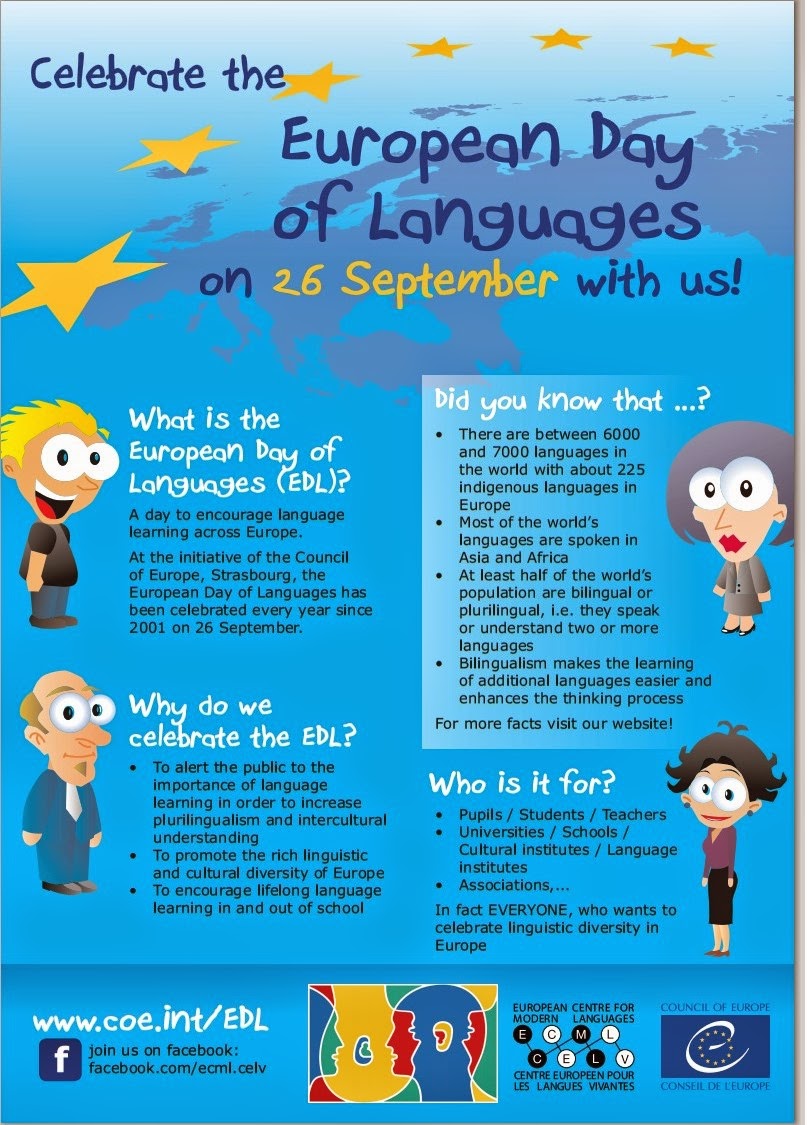
"A day to encourage language learning across Europe."
The European Day of Languages has been celebrated every year since 2001 on 26 September, as an initiative of the Council of Europe in Strasbourg.  

There are 24 official languages in the EU – as well as about 60 regional and minority languages Today is the best day to celebrate this diversity!


Throughout Europe, 800 million Europeans represented in the Council of Europe's 47 member states are encouraged to learn more languages, at any age, in and out of school. 

Being convinced that linguistic diversity is a tool for achieving greater intercultural understanding and a key element in the rich cultural heritage of our continent, the Council of Europe promotes plurilingualism in the whole of Europe.
The European Day of Languages continues, to raise public awareness of the languages used in Europe, and to promote cultural and linguistic diversity and to encourage people – schoolchildren and adults – to learn languages.


Aims:

Language skills are a necessity and a right for Everyone – that is one of the main messages of the European Day of Languages.

The overall objectives are to raise awareness of:

  • Europe’s rich linguistic diversity, which must be preserved and enhanced;
  • The need to diversify the range of languages people learn (to include less widely used languages), which results in plurilingualism;
  • The need for people to develop some degree of proficiency in two languages or more to be able to play their full part in democratic citizenship in Europe.
  • Promote the rich linguistic and cultural diversity of Europe;
  • Encourage lifelong language learning in and out of school.
In the EU28 in 2012, English was still the most commonly studied foreign language at lower secondary level1, with 97.1% of pupils learning it, far ahead of French (34.1%), German (22.1%) and Spanish (12.2%). The importance of English as a foreign language in the EU is also confirmed by its leadership in nearly all Member States.

Ok ! What about the other 25 languages? It's up to us, citizens, educators and students to promote our mother language in Europe. 

My students and I are Portuguese. So we care about our mother language on our blog in Portuguese.

But I teach French as well, so I have a blog in French language to enhance the skills of my students. 


26 September must be about having some fun together in different languages.
  • Check out the material for download and for order with your national relay ;
  • Watch the video "Countries names in international sign language". Students click on the map and will listen the name of each country in international sign language ;
  • A map showing the approximate distribution of indigenous languages in Europe (codes according to ISO 639-1 and ISO 639-2).

Credits: Wikimedia

Education:

On the occasion of the European Day of Languages, a range of events are organised across Europe. 

26 September must be about having some fun together in different languages, not only in English, French or Spanish.


Every year throughout Europe, events are organised to celebrate languages: shows, kids’ activities, music games, language courses, radio and TV programmes, conferences. 

Everything is permitted to motivate students to learn languages, all European languages.

In order to learn more about language diversity students can take part in different activities proposed by their teachers or following a school project. 

Whether large or small, don't forget: 

  • Have a good idea (an event such as a party, a tournament, a breakfast in school, a cultural presentation at the school library ;
  • Organise creative events with your students and promote on the EDL website here ;
  • Create promotional texts/flyers and distribute them at the school, at home;
  • Tell your school library about the event and about the European Day of Languages and ask to make a presentation to students and teachers on the importance to learn different languages.
  • Tell your national relay about your events, they may know of other ways of promoting your initiative ;

  • Enter the event into EDL database
Make it happen! 

But there is more ! Yes, something your students will love it ! A European Day of Languages Photo Contest !


DigiSkills network is promoting a photo contest. The European Day of Languages (EDL) Photo Contest 2014 is intended to illustrate language learning in action in different environments. 

Objectives :

The competition is open to persons of all ages living in all Council of Europe member states and observer states. The ECML will use the best photos for promotional purposes. 


Theme: Language learning in action

Important information:

  • Photos : The photo(s) should represent your experience of learning languages. Your upload needs to contain the following information: title, name of the contestant, email, age, country and place photo was taken.
  • Format : Images should be no smaller than 2000 pixels in width or height. No watermarks, signatures, or copyright notices may be added to images.
  • Submission period: Your photo(s) should be uploaded the between 14 September 2014 and 14 November 2014 on this page.
  • Voting period : Online voting will be from 15 November 2014 to 15 December 2014.
The winners will be announced on 18 December 2014.

  • Prizes: There will be prizes for first, second and third to be announced shortly. A small prize will be awarded for all photos that are subsequently used by the ECML.
For further information click here


#EDL
https://fbcdn-sphotos-a-a.akamaihd.net/

“On 26 September we celebrate Europe’s rich linguistic diversity. Let us take a moment to remember the words of Antoine de Saint-Exupery – that language is often the source of misunderstandings. Language can be used as a weapon, as an excuse to discriminate and humiliate. 

Together we can ensure that languages, rather than being the source of misunderstanding, become the key to intercultural dialogue and mutual respect. To do this, we must challenge existing mindsets and embrace diversity."

Thorbjorn Jagland, Secretary General of the Council of Europe


G-Souto

25.09.2014
copyright © 2014G-Souto'sBlog, gsouto-digitalteacher.blogspot.com  

Creative Commons License
Let's talk European Languages : Languages matter ! bG-Souto is licensed under a Creative Commons Attribution-NonCommercial-ShareAlike 3.0 Unported License.


Wednesday, June 12, 2013

Apps & Education : Europeana, the digital library : free app for schools !


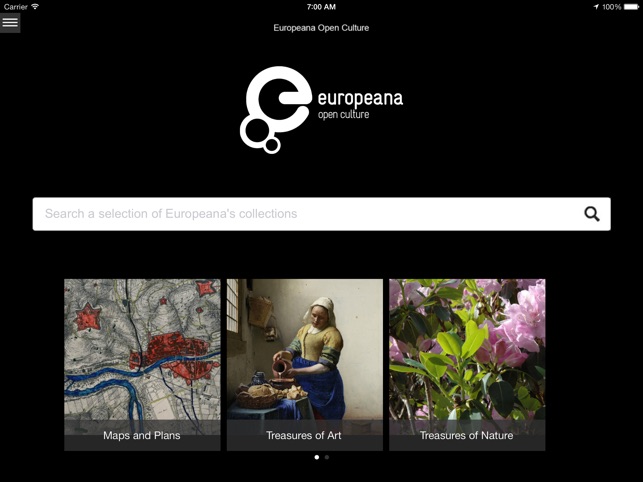
screenshot Europeana Open Culture app

Europeana is the European digital library, museum and archive. Europeana enables people to explore the digital resources of Europe's galleries, museums, libraries, archives and audiovisual collection. It is always open to new interactive resources-tools.


In 2011, Europeana Remix Europeana launched its first interactive video. Based on a short film pro­duced as a result of a crowdsourcing project The First World War in every­day doc­u­ments, the video turned into a new enrich­ed experience. Watch the video here


Europeana Remix


Now, Europeana launched the first free iPad app, Europeana Open Culture  introducing us to hand-picked and beautiful collections from some of Europe’s top institutions, and allowing us to explore, share and comment on them.


screenshot Europeana Open Culture app

The Europeana Open Culture app lets us explore hand-picked and beautiful image collections from some of Europe's top cultural institutions. 


Europeana Open Culture app

Features:

Students can browse, share and download for free more than 350,000 high-resolution images from four themes: 
  • Maps and Plans, 
  • Images of the Past, 
  • Treasures of Arts
  • Treasures of Nature.


screenshot| Europeana Open Culture app


Education:

Exploring Europe’s culture on our iPad! Oh, my!

Europeana enables students and teachers to explore the digital resources of Europe's museums, libraries, archives and audio-visual collections. 

It promotes discovery and networking opportunities in a multilingual space where users can engage, share in and be inspired by the rich diversity of Europe's cultural and scientific heritage."

But let's continue to present the ne app for iPad! This version allows students to search in selected image collections of Europeana, Europe’s cultural and scientific heritage portal. The images included are available for free re-use and cover five themes: Maps and Plans, Art, Photography, Treasures of the Past, and Treasures of Nature.


screenshot| Europeana Open Culture app

Ask your students to start their search by entering a keyword in the search field or by selecting one of the “badges” on the search page which represent entry points to the five themes. 

All relevant results will be shown as an interactive mosaic of image thumbnails. 

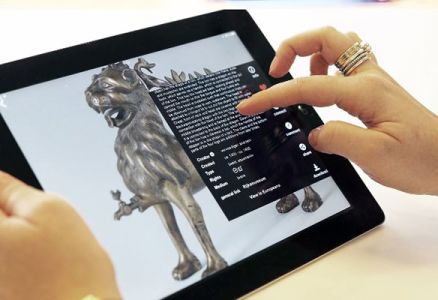
They can tap a thumbnail to view the image in full resolution, read other users’ comments, post their own impressions (teacher tutoring) and connect the image to other relevant pages on the web. 

They can also add the image to their favorites and create their own personal museum.


screenshot Europeana Open Culture app

The 350,000 images (wow!) available through the app come from collections as diverse as:
  • Royal Botanic Gardens, Edinburgh, UK
  • Rijksmuseum, The Netherlands
  • National Library of Poland
  • The Archaeological Museum, Portugal
  • Bulgarian Academy of Sciences
  • Digital Library of the Spanish Ministry of Defence
But there are more: Biblioteca Valenciana Digital, Biblioteca Virtual del Patrimonio Bibliográfico, Catálogo Colectivo de la Red de Bibliotecas de los Archivos Estatales, Central Library of Bulgarian Academy of Sciences, Fondo Fotográfico de la Universidad de Navarra, Institute of Balkan Studies and Thracology, Biblioteka Narodowa, University of Tartu - Museum of Geology, and University of Tartu - Natural History Museum.


screenshot Europeana Open Culture app

All images included are either in the public domain or are openly licensed which means they can be used for any purpose, for example in a school project or a thesis, in a presentation to your local history society, on blogs, Wikipedia, or even commercially. What’s more, Glimworm IT have released the open source code behind the app, meaning that developers can get hold of it, use it and experiment with it.

Curriculum: Cross-curricular, specially Arts, History, Literature, Languages, Civics, Open Culture.

Levels: All levels 

Teachers must prepare different activities to the different levels they are teaching.


screenshot Europeana Open Culture app


General information for teachers & stuents:

Free App?
  • Yes, the app is free of charge.
Languages:

The interface is in English, but the collections are in their original languages: 
  • English, 
  • Portuguese,
  • Dutch, 
  • Spanish, 
  • Polish, 
  • Bulgarian, 
  • Latin.
Devices:

Operating system ?
  • Apple for iPad.
And about on Android?
  • Right now it’s only available for Apple iOS but the code is open source, meaning that others can develop it as they choose.
  • Now the first Android version of the Europeana Open Culture app is available at Google Play
iPhone or iPod?
  • Right now it’s only available for iPad but the code is open source, meaning that others can develop it as they choose.

Where finding the source code?
  • At the Github repository: 

Can students use the images for school projects?
  • Yes. All the images in the app are public domain or openly licensed and so available for re-use, both commercially and non-commercially. 
  • Ask students to tap the ‘Rights’ link in an image’s details to learn whether it is in the public domain or is licensed.
Download the app for free:


screenshot Europeana Open Culture app (upgrade, 2014)

Update:

An upgrade to the Europeana Open Culture app has been released in January 2014.

The  new version of the app brings enhanced functionality, new content and a more user-friendly layout. 

The app is available in seven languages (English, German, French, Spanish, Dutch, Bulgarian, and Swedish) and for all Apple and Android tablets.


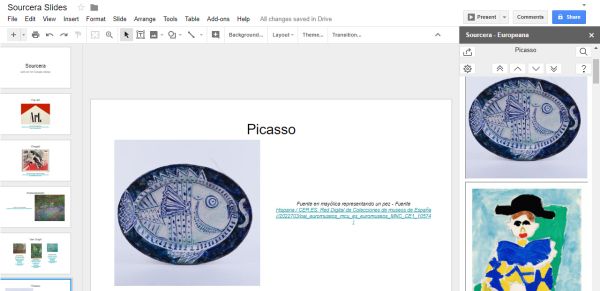
screenshot Europeana app upgrade
http://blog.europeana.eu/

This app makes digital libraries and archives fun and accessible. The new Europeana app is helping people to enjoy culture in new ways.


Useful information:


Remember, as educators, you can register on MyEuropeana and access easily to all the documents you need to prepare your lessons. You can choose your native language.

Europeana is a wonderful digital Library. It must be explored in schools.

Meanwhile, you can also participate in Europeana's community space linked to useful resources that can help you to explore, learn and share more about Europe's cultural and scientific heritage. They include photo sharing sites, forums and innovative digital projects.

This app makes digital libraries and archives fun and accessible. The new Europeana app is helping people to enjoy culture in new ways.

Enjoy your cultural tour – it’s only a fingertip away!


G-Souto

12.06.2013 

update: 25.01.2014
Copyright © 2014G-Souto'sBlog, gsouto-digitalteacher.blogspot.com®

Licença Creative Commons
Apps & Education : Europeana, the digital library : free app for schools ! bG-Souto is licensed under a Creative Commons Attribution-NonCommercial-ShareAlike 3.0 Unported License.