Showing posts with label sicence. Show all posts

Friday, January 20, 2017

Éducation : Science dans la classe : de Apollo à Pluto


Eugene Cernan sur la Lune, le 12 décembre 1972
crédits: Harrison J. Schmitt/Nasa
https://www.nasa.gov/

Non. Ce n'est de votre temps. Mais de vos parents et de vos professeurs. Le jour où un astronaute américain s'est promené sur la lune. C'était le 20 juin 1968. Nous n'avons pas dormi de la nuit, rien que pour regarder live sur la télévision cet incroyable événement.

Et bien, le dernier homme à avoir foulé la surface de la Lune en 1972 fut l'Américain Eugene Cernan. Il vient de mourir à l'âge de 82 ans, le dernier lundi 16 janvier 2017.


Neil Amstrong sur la Lune, 1968

Le premier homme à avoir marché sur la Lune, Neil Armstrong, est mort le 25 août 2012.

Le dernier homme à avoir marché sur la Lune, Eugene Cernan, est beaucoup moins connu vient de mourir.

Cela a afait quarante quatre ans, vendredi 14 décembre 2016, que son pied a quitté le sol de notre satellite, trois jours après l’alunissage de la mission Apollo 17.


Apollo 17 Commander Eugene Cernan and the U.S. flag on the lunar surface.
Credits: NASA


Notes biographiques:

Après un cursus universitaire scientifique,Eugene Cernan devient pilote d'avion de chasse dans la marine de guerre américaine. Il est recruté dans le corps des astronautes en 1963 par la NASA.


Eugene Cernan pendant sa marche sur ls Lune
Juin, 1966, Gemini IXA
crédits: NASA

Cernan est un des deux astronautes de la mission Gemini 9 au cours de laquelle il effectue la deuxième sortie extravéhiculaire américaine. Il est copilote à bord du module lunaire de la mission Apollo 10 qui effectue une répétition de l'atterrissage sur la Lune en s'approchant à moins de 14 km de sa surface.


Enfin, il est le commandant de la mission Apollo 17, la dernière mission du programme Apollo et à ce titre le dernier homme à avoir marché sur la Lune.

Au cours de celle-ci, Cernan effectue avec Harrison H. Schmitt trois sorties extravéhiculaires sur le sol lunaire d'une durée totale de 22 heures 4 minutes dans la vallée Taurus-Littrow.


La bille bleue 
la Terre vue par les membres de la mission Apollo 17 
crédits: NASA
@NASA


Les deux astronautes collectent 110 kilogrammes de roches lunaires et parcourent à bord de leur véhicule 36 kilomètres, établissant un nouveau record dans tous ces domaines.

Sur la liste des douze hommes ayant marché sur la Lune que publiait le New York Times après la mort de Neil Armstrong, Gene Cernan est listé en avant-dernier, pour une raison subtile: son coéquipier, le scientifique Harrison Schmitt, est devenu le dernier homme à poser le pied pour la première fois sur la Lune car il est sorti après lui du module lunaire, mais il y est aussi rentré avant lui, laissant à Cernan le titre de dernier homme sur la Lune.


Cernan/ Apollo 17 
Taurus-Littrow 
crédits: NASA
https://www.nasa.gov/

"Alors que nous quittons la Lune à Taurus-Littrow [une vallée lunaire, NDLR], nous partons comme nous sommes arrivés et, si Dieu le veut, comme nous reviendrons, en paix et avec de l’espoir pour toute l’humanité. Bon vent à l’équipage d’Apollo 17"

Eugene Cernan

Les missions Apollo 18, 19 et 20, prévues au programme, avaient auparavant été reportées puis annulées par la Nasa en 1970.


New Horizons Alan Stern comtent des premiers images du voyage à Pluto
crédits: NASA

Après lui, le prochain humain sur la Lune pourrait y aller, non pas au nom d’un pays ou de l’humanité, mais en tourisme privé, peut-être?

Pour le moment, Alan Stern, ancien administrateur de la direction des missions scientifiques de la Nasa conduit son programme New Horizons le  voyage à Pluto commencé en 2015.
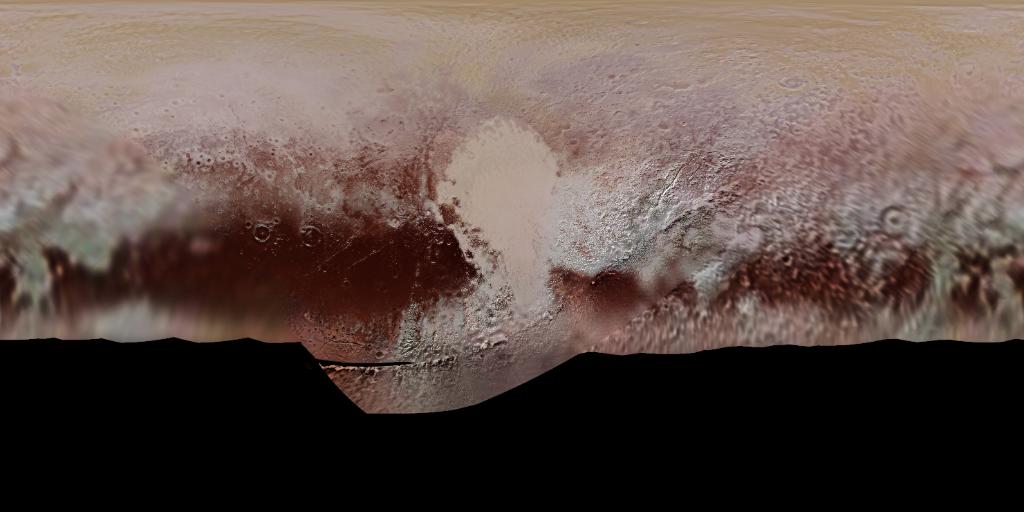


carte de Pluto basée d'après le survol
 New Horizons pendant le survol de Pluto en juillet 2015.
crédits: NASA/JHUAPL/SwRI

Le premier ensemble d'images et d'autres données recueillies par le vaisseau spatial New Horizons de la NASA lors du survol du 14 juillet de Pluton, retourné à la Terre le 15 juillet, a obligé les scientifiques du projet à réévaluer leur compréhension de la planète nain et de ses lunes.


Éducation: 


A propos du concours Faites voyager vos histoires dans l'espace, et du premier astronaute français dans l'espace, Thomas Pesquet, les enseignants de sciences et langues peuvent inviter les étudiants à connaître un peu mieux la grande odyssée de l'espace dès 1968 jusqu'à présent, en passant par le dernier astronaute qui a marché sur la Lune, Eugene Cernan.

Et puisque ils ont certainement accomgné len direct le survol Space Horizons à Pluto, faites-leur découvrir toutes les nouveautés en ligne sur le site NASA.

C'est sûr que ça leur donnera des idées pour créer son histoire à présenter au concours.


G-Souto

20.01.2017
Copyright © 2017G-Souto'sBlog, gsouto-digitalteacher.blogspot.com®

Creative Commons License

Éducation : Science dans la classe : de Apollo à Pluto bG-Souto is licensed under a Creative Commons Attribution-NonCommercial-NoDerivatives 4.0 International License.


Wednesday, October 28, 2015

ICT2015 : (im)possible report


The ICT 2015- Innovate, Connect, Transform Conference took place in Lisbon, Portugal, last week, 20-22 October 2015 at the Centro de Congressos de Lisboa. Organised by the European Commission, together with the Fundação para a Ciência e a Tecnologia

"The ICT 2015 Conference presented the new Commission policies and initiatives with regard to Research and Innovation in ICT, Excellent Science and Societal Challenges."

It was focused on how we can "Innovate, Connect and Transform" the Digital Society.

Near 6 000  people attended #ICT2015! Wow ! Amazing number! And it was so true. I attended the ICT2015The CCL was full of good vibration, animated talks between the sessions. People of so different coutries, not only from Europe. 


credits : ICT 2015

The ICT 2015 event comprised a huge number of activities:
  • A policy conference presenting the new Commission's policies and initiatives on Research & Innovation in ICT;
  • An interactive exhibition showcasing the best results and impact of most recent EU ICT Research & Innovation;
  • Many networking opportunities to enhance quality partnerships, help participants find partners, connect Research and Innovation and trigger collaboration;
  • Horizon 2020 Work Programme 2016-2017 thematic sessions, offering detailed information on the funding opportunities in ICT sector;
  • The Startup Europe Forum, offering a set of activities profiling EU policy actions for startups and SMEs, innovators, private and public investors.


5,723 participants, 120 networking sessions, 127 speakers, 150 successful EU-supported projects displaying their results, glass pavilion in the heart of Lisbon and thousands of visitors including Commissioners Günther H. Oettinger and Carlos Moedas7,000 followers & 18,000 tweets it's been a record-breaking . Impressive numbers, awesome event.


Off-site exhibition at Praça do Comércio

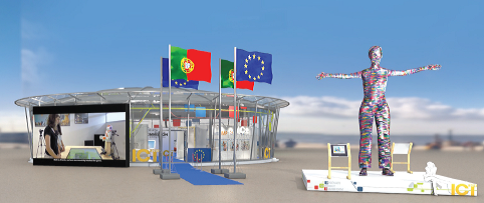
Besides, The ICT 2015 off-site exhibition took place between 18th-22nd October 2015 and was being held in a custom-built panoramic pavilion on Praça do Comércio, in the centre of Lisbon, Portugal.

Under the theme, What European ICT is doing for you it gathered five EU-funded ICT projects chosen to illustrate direct applications in citizens’ lives.


I wrote about this off-site exhibition Escolas : Visitas de Estudo Exposição ICT 2015 inviting teachers and students to visit it. I think it would be an interesting school experience about science, innovation and IT outside the classroom. It was a great success.

Hope you have been there with your students. Did they interact with the robot Alfred, one of the hosts of the exhibition? Hope so. Students love robotics.

Exhibitions are powerful resources to explore and include into the school curriculum. Students learn better when evolving competences outside the classroom in live events.


credits: GSouto (via iOS)
Overview of the interactive exhibition

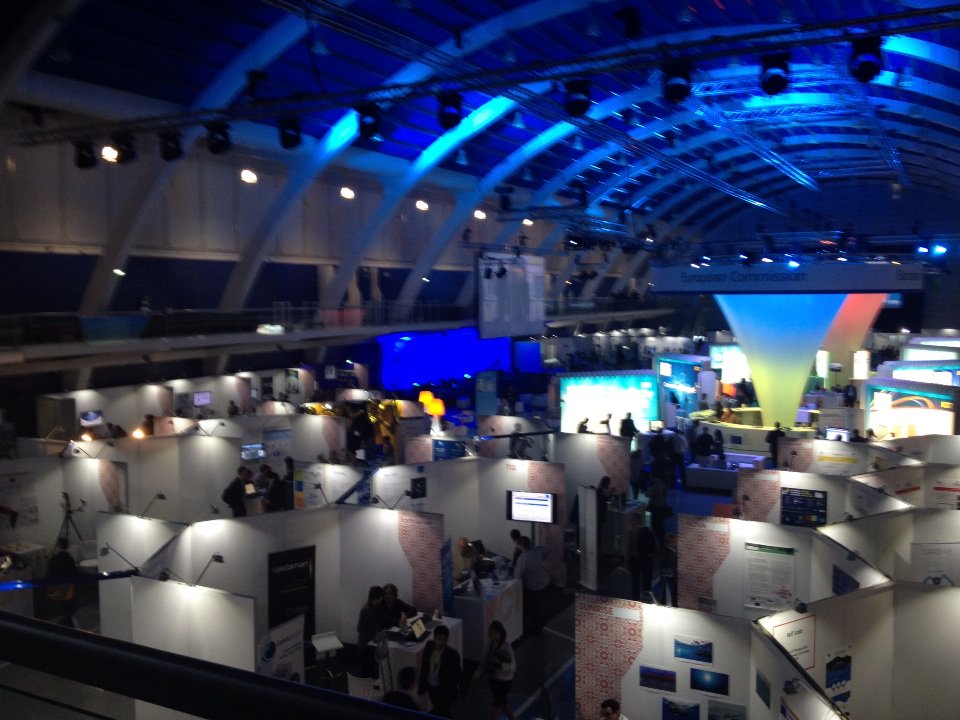
First day, on the 21 October, I started visiting, in different moments of the day, the interactive exhibition - the ah-ah of innovation, creativity, science and technology.  A dynamic showcase of "the best-in-class results of the existing European ICT Research & Innovation". 


The exhibition encompassed innovation at "the interconnection of science, technology and art"
Art elements, artistic representation of a project idea, artistic creativity on-site were foreseen to be streamlined throughout the exhibition.

The exhibition design was really awesome. Looking around for some time, I was fascinated with all I could see, the advanced research, future visions. Inspiring ideas. Amazing projects.


ICT 2015
credits: GSouto (via iOS)
https://twitter.com/gimst


After the exhibition my priority, as a creative educator, and a specialist in Education and Innovation, was to participate in the Plenary sessions: Opening Ceremony ; Innovation Potential in the Digital Age ;  Transforming Research and Innovation into Growth and Jobs, Prizes Award Ceremonies, Final Plenary: The Transformative Impact of Excellence Science.

The better way to have a good panoramic idea about all the good things at ICT 2015. I couldn't reach all the sessions with so many parallel sessions.  I was not there for business. So I focused myself on the Plenary sessions. 

But I participated in two parallel sessions on Digital Learning. Not so interesting. Traditional networks, no interacting or presenting innovative ideas about ICT in Education. This event deserved better parallel session in Education (Schools).


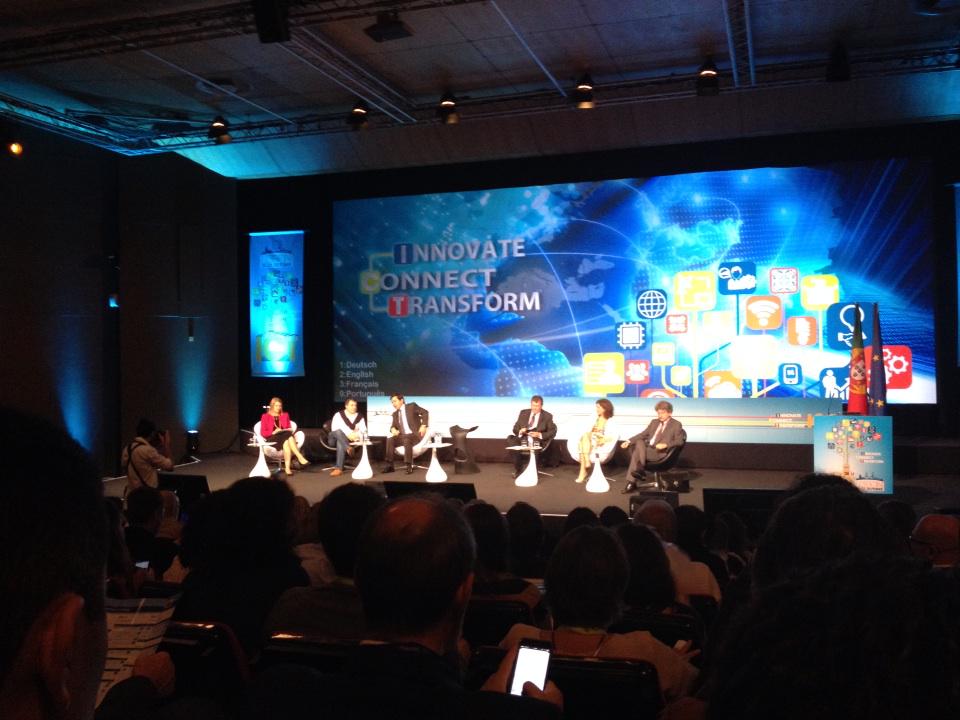
To me the real creative session was the Plenary 6 : Driving Innovation through Creativity and the Arts. It took place at the Auditorium 1, first day October 21. Awesome projects through Arts and creativity. Inspiring talks by an awesome panel. I would like to highlight Simona Maschi CIID, Denemark "From Inspiration to Impact", Gerfried Stocker, Ars Electronica Linz GmbH.

Starting from the idea "How can creative ideas be brought in from the edge to transform how we live and work?", the speakers explored  through inspirational examples in education, in industry, and in academia, on what more can be done to benefit from this exciting nexus and stimulate it further.

The aim of the session was to discuss how stimulating the crossovers of creative ideas, particularly from the Arts, can drive innovation in Europe. 

Speakers addressed how crossovers from culture/the Arts to innovation is done in industry, in education and in academia.


Visual summary from the 6th #ICT2015 Plenary Session
 Think Doodly | Verity Harrisson, visual storyteller

The visual storyteller Veronica Harrisson used the graphic illustration to capture the fundamental ideas of the speakers and gave us her own interpretation on this clear graphic facilation panel. Creative graphic facilitator. Applauded by the participants and the speakers.

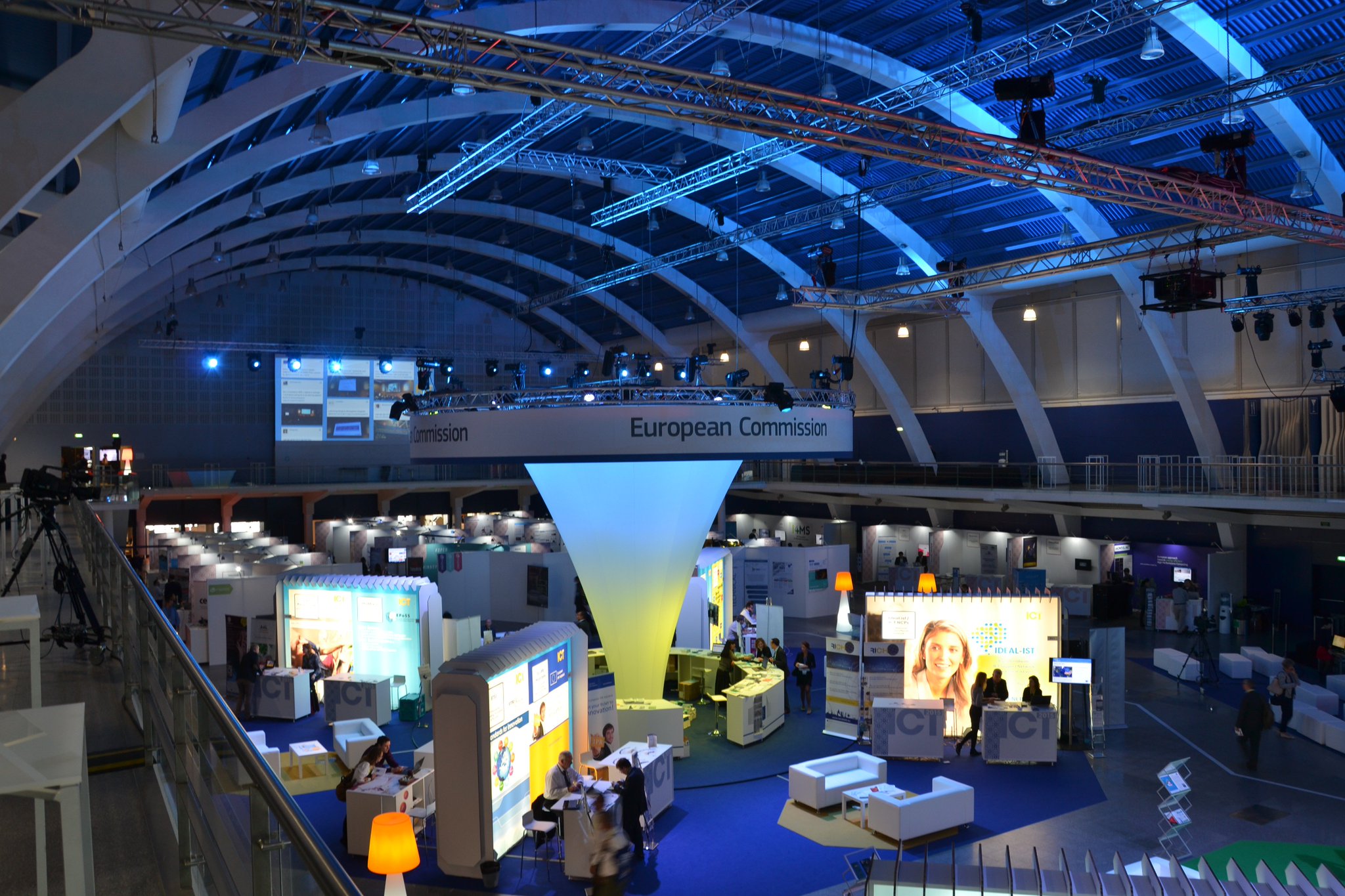
As I wrote before ICT 2015 hosted an exhibition of 140 Projects financed with European funds. The projects have been divided in 3 Categories : Innovate, Connect, Transform. There has been also the main Prize of the overall exhibition. 


Interactive exhibition
credits: ICT2015

And the four winners are: 
  • Best Exhibition Stand: USEMP, User Empowerment for Enhanced Online Presence Management
  • Innovate winner: Human Brain Project
  • Connect winner: No One left behind
  • Transform winner: Rockin Monarch


Rockin Monarch directed to children in hospitals & No One Left Behind directed to kids inclusion were my favorites, of course. My higher interests are the young people, special needs, inclusion and equity. I congratulate those two interesting projects.

Some considerations or a (im)possible report:

For three long days, speakers, researchers, practitioners, producers, skate holders and participants shared  interesting ideas and experiences.

I joined key speakers at Plenary sessions and two parallel sessions on digital learning, my area

I am an independent specialist in Education innovation (Schools), a European micro innovator (VISIR), I was very curious to hear about the new ideas.

I was focused on Digital learning and innovation potential in the Digital Age (arts, culture, technologies). I heard inspiring talks about innovation through arts, culture.

Digital learning and innovation potential in the Digital Age (arts, culture, technologies) were on my best interests. Heard inspiring talks about innovation through arts, culture.

On the lobby for lunch or break coffee, the participants could discuss the ideas. Enthusiastic talks

The event has been live web streamed and offered the possibility to interact with participants and followers on Twitter - huge participation - Facebook, YouTube.

Well, what can I say more? Impossible to describe the feeling of being a part of this incredible event. I had a fantastic time in Lisbon attending the ICT 2015 conference.

Amazing event incubating a multidimensional mass of sciences, art, technologies and culture. 

Best event I ever been ! Inspiring talks, creative vibes, excellent organization, awesome exhibition design, innovation, technologies.

Of course this is a (im)possible report of an impressive event. Some notes about the areas that touch my interests in this excellent and innovative big event.

"While a new idea is a thought about something new or unique, and making that idea real is an invention, innovation is an invention that has a socioeconomic effect. Innovation changes the way people live."

Bijker, 1995 - The social construction of technology


G-Souto

28.10.2015
Copyright © 2015G-Souto'sBlog, gsouto-digitalteacher.blogspot.com®

Creative Commons License
ICT 2015 : (im)possible report bG-Souto is licensed under a Creative Commons Attribution-NonCommercial-NoDerivatives 4.0 International License.

References:

ICT 2015 website & social networks (videos, some photos, and information)

Bijker's quote: thanks to Simona Maschi

Wednesday, January 30, 2013

Google Contest for Young Inventive Scientists


Google Science Fair 2013

"We're looking for the next generation of scientists and engineers. We're looking for ideas that will change the world."

Google

Today's, January 30th, Google Science Fair 2013 has launched online! The competition is focused on finding the brightest and most revolutionary teenagers. 

Google Science Fair is an international, online science and technology competition that encourages the next generation to be curious, ask questions, and perform science experiments to change the world.

In partnership with CERN, the Lego Group, National Geographic, and Scientific American, Google invites the students from around the world to post their science projects online so that they may compete for prizes, scholarships, and once-in-a-lifetime experiences. 

Students have some time to register and submitt in-depth investigation of a question or engineering problem, using a sound scientific method or engineering process.

They can register through the Google Science Fair website, although they will also need the consent of a guardian (parents or guardians).


Education:

Teachers can play a crucial role as mentors and partners to young scientists, offering practical advice on their projects, but also inspiring them on their journeys of exploration and discovery.

As educators, we know how curious and creative are our students. So let us involved and start to work on it on our lessons. 

Ages: 13 to 18

Let's tell our students about the competition, and encourage them to enter a project. They can be inspired visiting Google Science Fair website and Google Science Fair on Google +

Google present some good ideas to offer support to our students:
  • Checking stories out of sicence heroes who changed the world at at young age here; Ada Lovelace is among these stories. Girls in Science, remember?

  • Watching videos from the previous competions here;
  • Guiding them through using scientific method to talk through and implement their ideas;
  • Helping them find information and any specialized equipment they might need. Visit Student Resources here;
  • Checking in regularly to make sure they're on track to meet the submission deadline (no procrastinating!). Visit Experiment Guidelines (what to and what to avoid) here;

You can help keep sutdents on track as they work on their projects by sending them to the Student Pack: a self-help guide that offers explanations of science terms (like hypothesis and variables), and some practice questions so they can work through important concepts and then check their answers at the end.

The youngest must have some tutoring on Student Pack.

If you need some guidelines, there are lesson plans that you can use to get your students started, and tips on getting them involved - and excited.

Parents also have a section help on the website here.

Deadline: April 30, 2013

In June, Google will select 90 regional finalists (30 from North and South America, 30 from Asia, and 30 from Europe/Africa). Out of those 90, 15 will emerge as finalists and will be jetted to Google HQ in Mountain View.
On September 23rd, a panel of judges will pick the winners (one in each age category) and an overall Grand Prize winner.
The best submission will be awarded the grand prize, which includes a 10 day trip to the Galapagos Islands - Wow! - courtesy of National Geographic Expeditions.
Now, watch this increadible idea on the video below. At the age of 14, Jonah Kohn has made great progress in helping the hearing impaired experience music through his passion for Music. Beautiful!
Jonah was the winner of the 13-14 age group in the "2012 Google Science" for his project. 


Some conclusions:
Promoting the science interchange between young scientists and guiding them to a better world is a powerful learning strategy.
Contests are always important activities to include at the curriculum. Students are encouraged to demonstrate the inner creativity to develop their competences as innovators.
Of course an internationqal contest, in this case a world contest, is an opportunity for the young students to exchange new ideas, share common interests and gain experience from an event which involves some many teenagers scientists. 
"The great benefit of science is that it can make a tremendous contribution to the alleviation of suffering on a physical level, but it is only by cultivating the qualities of the human heart."
Dalai Lama
" It's your turn to change the world. Make sure you register."

G-Souto
30.01.2013
copyright © 2013G-Souto'sBlog, gsouto-digitalteacher.blogspot.com 
Licença Creative Commons
Google Contest for Young Inventive Scientists bG-Souto is licensed under a Creative Commons Attribution-NonCommercial-ShareAlike 3.0 Unported License.
Credits: videos | image Google