Showing posts with label Oskar Schlemmer. Show all posts

Monday, October 15, 2018

September in Review : Autumn time !


Study of a Figure Outdoors: Woman with a Parasol, facing left, 1886
Claude Monet/ Musée d'Orsay

Season of mists and mellow fruitfulness, 
   Close bosom-friend of the maturing sun; 
Conspiring with him how to load and bless 
   With fruit the vines that round the thatch-eves run; 
To bend with apples the moss'd cottage-trees, 
   And fill all fruit with ripeness to the core; 
      To swell the gourd, and plump the hazel shells 
   With a sweet kernel; to set budding more, 
And still more, later flowers for the bees, 
Until they think warm days will never cease, 
      For summer has o'er-brimm'd their clammy cells. (...)

John Keats, To Autumn

Yes! September is a lovely month! Autumn is here. I love Autumn. It’s so beautiful when the when leaves change colour and fall from the trees. 

As you know, I took a break first days in Autumn. Wonderful time!

Now the grapes in the vines are tasty, the apples are ready to do Apple pies, and the pumpkins are growing. 

The weather is now beautiful, after Leslie hurricane, last Saturday. Students already settled into the new school year. I hope that this first month of school is going well for you and your students.

As well, at the end of every month I put together a list of the most popular posts. You will find posts written in English, French and Portuguese. My usual readers know me.

And now, it's time to the review of the most popular posts of September.

Here are the most popular posts of the last month:

International Literacy Day : Literacy & Skills Development 

Culture, Science and Children's literature 

Irmãs Brontë 200 anos : visitas de estudo & recursos

Oh! La, La rentrée scolaire 2018-2019 . quelques lignes 

Let's talk about Arts : Oskar Schlemmer 

Autumn Break... en images 

Wherever you are, I hope you are happy teaching in your country.  Autumn is a calm season! 

Thanks all the educators from around the world who kindly continue to read my blog every day. 

The classroom must be an open window to the world. Students must feel free to talk and share ideas about all the subjects they care about, in and around every curriculum.

Have a nice time wherever you are! Here, Autumn is back after Leslie hurricane last Saturday.

G-Souto

15.10.2018
Copyright © 2018G-Souto'sBlog, gsouto-digitalteacher.blogspot.com®


Creative Commons License
September in review : Autumn time ! bG-Souto is licensed under a Creative Commons Attribution-NonCommercial-NoDerivatives 4.0 International License.

Thursday, September 6, 2018

Schools : Let's talk about Art : Oskar Schlemmer


The New Vision of Life
Oskar Schlemmer
Bahaus Master

Oskar Shlemmer once described the themes of his work: “the human figure in space, its moving and stationary functions, sitting, lying, walking, standing” as being “as simple as they are universally valid.”

German artist, choreographer and stage designer Oskar Schlemmer thrilled the world with his groundbreaking “Triadic Ballet”.

Space Dance, Gesture Dance, Rod Dance, Triadic Ballet, Oskar Schlemmer developed his costumed, masked dancer into an “art figure” synthesizing dance, costume and music. 


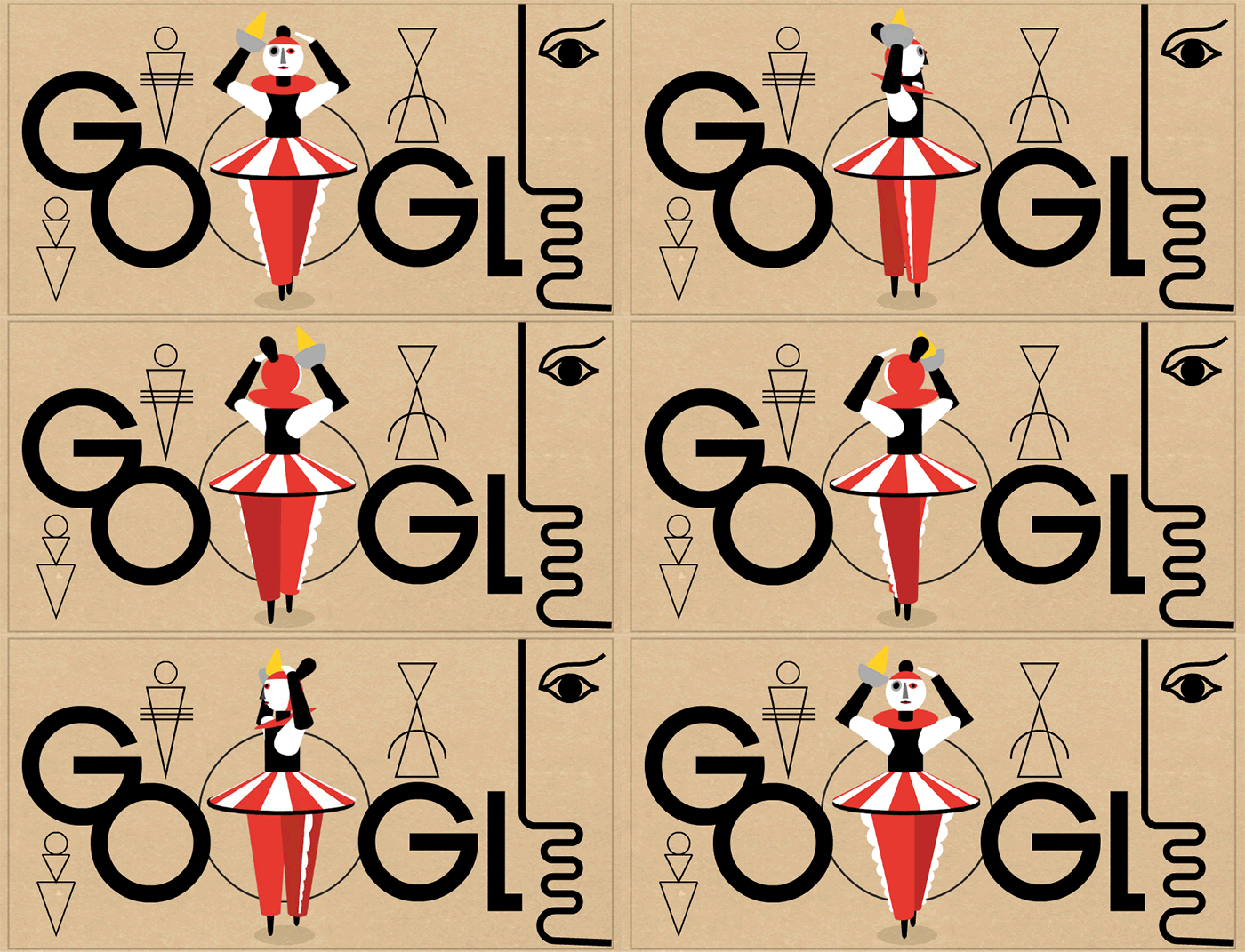
Oskar Shlemmer 130th Birthday
https://www.google.com/doodles/


  • Google Doodle:

The search engine Google celebrated last 4th September, Oskar Schlemmer’s 130th Birthday with a awesome animated Doodle.

Bulbous mechanical creatures wearing metallic masks are not the usual image that comes to mind when one thinks of ballet. But that’s precisely what Oskar Schlemmer used to stage his ‘Triadic Ballet,’ a groundbreaking production that premiered in Stuttgart, Germany in 1922.

The Doodle celebrating the artist, pays homage to Schlemmer’s “Triadisches (Triadic) Ballet”, the work which brought him international fame, with an animated representation of a seemingly mechanical ballerina in a metal mask.


Oskar Schlemmer
Photo: unknown, 1928.

  • Some biographical notes:
Oskar Schlemmer was born in Stuttgart on September 4, 1888, the youngest of six children, and had to become completely self-sufficient around the age of 15 following the death of his parents.

After pursuing apprenticeships in inlay and marquetry, began studying at art school in his home city, under the tutelage of prominent German landscape painters.

Schlemmer turned to sculpture after the war, exhibiting at Berlin’s Gallery Der Sturm, before becoming one of the most influential figures of the Bauhaus movement, teaching stage research and production at the eponymous school in Weimar.

Oskar Schlemmer, who almost nine decades after his death remains one of the most influential 21st century aesthetes, was the original multihyphenate. 

Scouted by Bauhaus founder Walter Gropius in 1921, the Stuttgart-born painter, sculptor and choreographer became one of the first masters of the “staaliche” movement in Weimar.


Costumes from Schlemmer's Triadisches Ballett (1922)

Born on 4th September 1888, Schlemmer was the youngest of six children who attended art school before traveling to Weimar, Germany, to join Walter Gropius’ avant-garde Bauhaus, where he became director of stage research and production. Schlemmer also experimented with painting, sculpture.


Group at Table, 1923
Oskar Schlemmer 
via Sothebys


However, it's his creative theater designs that are most remembered, influencing future artists like David Bowie.


Bauhaus ballet costume by Oskar Schlemmer 
based on Kansai Yamamoto / David Bowie
via Pinterest

Comparison of a Bauhaus ballet costume from the Triadisches Ballett directed by Oskar Schlemmer and one of David Bowie's Ziggy Stardust costumes designed by Kansai Yamamoto.


Ziggy Stardust
David Bowie & Kansai Yamamoto
https://www.davidbowie.com/

In his ideas, Oskar Schlemmer used elaborate costumes to transform costumed and masked dancers into 'artificial figures' in which dance, costume and music are united. Space Dance, Gesture Dance, Rod Dance, Hoop Dance, Metal Dance, Form Dance, Scenery Dance, and the Triadic Ballet.


Oskar Schlemmer  was a designer and choreographer associated with the Bauhaus school. In 1923 he was hired as Master of Form at the Bauhaus theatre workshop, after working some time at the workshop of sculpture. 

His most famous work is Triadisches Ballett, in which the actors are transfigured from the normal to geometrical shapes. 


Costums by Oskar Schlemmer (Bauhaus) for Ballet Triadic
at Metropol Theater in Berlin
credits: Ernst Schneider, 1926/ Getty Images
With three dancers, 12 movements, and 18 costumes, Schlemmer’s innovative approach to ballet broke with all convention to explore the relationship between body and space in new and exciting way. He described the performance as “‘artistic metaphysical mathematics,” and a “party in form and color.” 


Treppenszene (Stairway Scene), 1932
Oskar Schlemmer
 Kunsthalle Hamburg, Hamburg


Education:

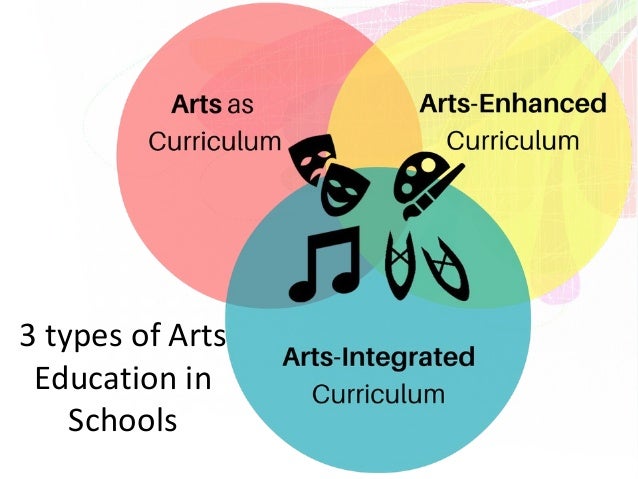
My usual readers know I write very often about Art in education. Art are absolutely necessary to a complete and better education of children and young people. 
Discovering Art in school education, some students can pick their inner path on Art and later they will choose Art colleges and Higher Schools of Arts to develop their aptitude by a real learning of Art no matter the field.


credits: Amy Zschaber slisdeshare

Students attending schools in high poverty communities have less access to Art instruction than their peers in more affluent communities.

Pressure to improve test scores in other content areas is another top barrier to Art education. 

And it's a scientific idea that Arts - music, dance, theater - are a wonderful therapy for hyperactive kids that have a great difficulty to concentrate.

Art give them the concentration discipline and the pleasure to express with creativity.

It's true that a lot of schools don't have specialists in Art in full-time-equivalent, although secondary schools are much more likely than elementary schools to employ specialists. 


However teachers with a special taste to Art can motivate students including Art into school curricula. And digital resources as this Doodle can motivate students to discover their path and develop aesthetic skills for life.

It would be important to give a different meaning of Art in school curricula and to have good teachers of Art providing professional first development for kids that could, in a different level of education, continue Art studies at Higher Schools of Arts

In our days, digital culture is well-come into the school curriculum as an important tool to tackle the world's toughest problems creating bridges and establish a truly intercultural world, where diversity can be celebrated, a world where different cultures not only coexist but value each other for their contributions and potential.


The Abstract, 1920
Oskar Schlemmer

Curricula: Arts ; Literature ; Design ; Digital Art.

Level: All levels. 
  • Focus on Art (Vocational Education) ; School of Arts (Higher Education).
  • Secondary education: cross-curricular Literature & Art.


G-Souto

08.09.2018
Copyright © 2018G-Souto'sBlog, gsouto-digitalteacher.blogspot.com®

Creative Commons License
Schools : Let's talks about Art : Oskar Schlemmer bG-Souto is licensed under a Creative Commons Attribution-NonCommercial-NoDerivatives 4.0 International License.