
José de Almada-Negreiros (1893-1970)
Sem título, sem data, grafite e guache sobre papel, 36 x 53,5 cm.
Sem título, sem data, grafite e guache sobre papel, 36 x 53,5 cm.
Colecção particular
"Isto de ser moderno é como ser elegante: não é uma maneira de vestir mas sim uma maneira de ser. Ser moderno não é fazer a caligrafia moderna, é ser o legítimo descobridor da novidade."
José de Almada Negreiros, conferência O Desenho, Madrid 1927
Está patente no Museu Gulbenkian a exposição José de Almada Negreiros: uma maneira de ser moderno. Um quarto de século depois da última grande mostra dedicada ao artista, abriu no dia 3 de Fevereiro e vai prolongar-se até 5 de Junho 2017.

José de Almada Negreiros (1893-1970)
Sem título, 1940, guache sobre papel, 46,7 x 58 cm.
Sem título, 1940, guache sobre papel, 46,7 x 58 cm.
Colecção particular em depósito no Museu Calouste Gulbenkian/Colecção Moderna
A retrospectiva reúne mais de 400 trabalhos do artista do Modernismo português, muitos dos quais inéditos, e que "reflectem a inesgotável energia criativa de um autor que se expressou numa imensidade de linguagens artísticas, ao longo da vida",
Gulbenkian, comunicado de apresentação da mostra nos anos 1910 atravessando todo o século XX.

José de Almada Negreiros (1893–1970)
"Auto-Retrato num Grupo", 1925
"Auto-Retrato num Grupo", 1925
Óleo sobre tela
Museu Calouste Gulbenkian/Coleção Moderna, inv. 83P57
Modernismo:
Em 1873, o poeta Rimbaud dera o mote: "Há que ser absolutamente moderno".
Almada Negreiros (1893-1970) leva-o à letra ao recusar entender o Modernismo como uma moda, segundo a qual bastaria vestir os estereótipos da representação (e depois da abstracção).
Para ele, o Modernismo seria antes a afirmação de uma condição autónoma do artista, ao qual atribuía a responsabilidade, não de pertencer à modernidade, mas de a fazer acontecer.

José de Almada Negreiros (1893-1970)
Autorretrato, 1940,
Autorretrato, 1940,
arame e gauche sobre madeira, 36 x 30 cm
Coleção particular
Almada Negreiros (1893-1970) deixou uma vasta obra de pintura, desenho, teatro, dança, romance, contos, conferências, ensaios, livros manuscritos ilustrados, poesia, narrativa gráfica, pintura mural e artes gráficas, cuja produção se estendeu ao longo de mais de meio século.
Almada catalisou a vanguarda artística dos anos 1910 e afirmou uma presença forte na arte ao longo do século XX.
Esta exposição antológica mostra a obra de Almada, um artista que catalisa a vanguarda nos anos 1910 e atravessa todo o século XX.

José de Almada Negreiros: uma Maneira de Ser Moderno
Fundação Calouste Gulbenkian
créditos: Tiago Petinga/ Lusa
via DN Artes
Esta exposição antológica mostra a obra de Almada, um artista que catalisa a vanguarda nos anos 1910 e atravessa todo o século XX.


Primário; Ensino Básico; Ensino Secundário; Ensino Vocacional (Artes & Design).

Visitas guiadas físicas e/ou virtuais:
A contactar o Museu Gulbenkian
Local:

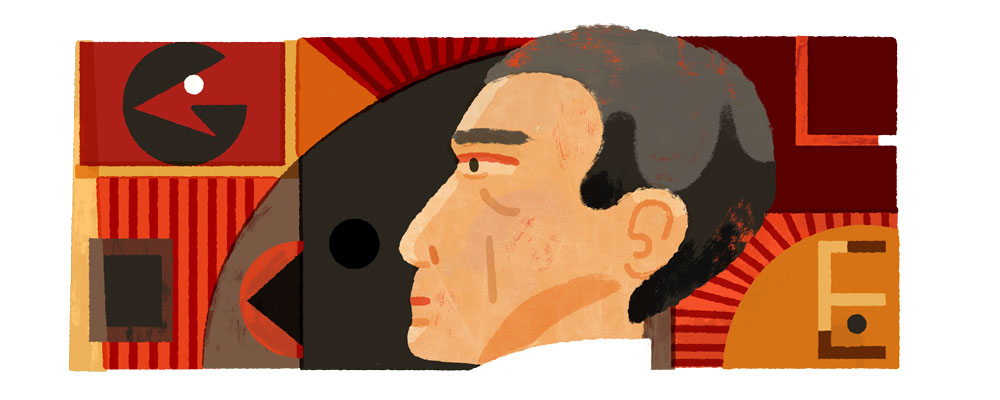
Google Doodle:
Afectos que podem ser transmitidos em aulas curriculares, e partilhados com pais e educadores.
Desde 2004 que partilho da convicção com resultados muito positivos que os conteúdos curriculares passam melhor em contexto vivo de aprendizagens.
Foi em 2004 que introduzi a estratégia de aulas no Museu para o estudo da Narrativa e a apropriação de técnicas de escrita criativa na área curricular de Língua e Literatura Portuguesa.

A exposição tem curadoria da historiadora de arte e investigadora Mariana Pinto dos Santos, com Ana Vasconcelos, conservadora do Museu Calouste Gulbenkian, e é acompanhada de um programa educativo e cultural que se alarga a outras instituições, como a Cinemateca Portuguesa.
Objectivos de uma visita de estudo:
- Estudo de autores portugueses: arte, literatura, dança, artes gráficas;
- Apropriação de técnicas;
- Apreensão de aprendizagens literárias, visuais, auditivas, cinestésicas, até de matemática (ver video abaixo)
- Envolvimento dos alunos numa actividade temática em projecto transcurricular;
- Desenvolvimento de auto-confiança e entusiasmo;
- Enriquecimento curricular;
- Inclusão (beneficia os alunos com maiores dificuldades de aprendizagem ou sócio-culturais.

José de Almada Negreiros
Auto-retrato
"Os meus olhos não são meus, são os olhos do nosso século!"
Almada Negreiros
Educação:
A Fundação Gulbenkian é uma entidade de referência em actividades culturais e lúdicas ligadas ao ensino.
Relembro Um Chá para Alice que divulguei neste blog em Janeiro de 2013. Celebrava o clássico de Lewis Carroll através de algumas sugestivas ilustrações contemporâneas sobre Alice. Ainda em Artes & Educação : Visitas de estudo.
A Fundação Gulbenkian é uma entidade de referência em actividades culturais e lúdicas ligadas ao ensino.
Relembro Um Chá para Alice que divulguei neste blog em Janeiro de 2013. Celebrava o clássico de Lewis Carroll através de algumas sugestivas ilustrações contemporâneas sobre Alice. Ainda em Artes & Educação : Visitas de estudo.
Também posso relembrar a visita à Fundação Museu de Serralves para admirar a Exposição sobre Paula Rego (2004)


Retrato de Almada Negreiros
- Competências:
A exposição propõe uma abordagem renovada acerca da presença de Almada Negreiros no Modernismo português e é acompanhada de uma programação variada, que evidencia a abrangência da obra do artista.
G-Souto
Os professores poderão aproveitar para veicular conhecimentos aos alunos de uma forma activa, cultural, estética, realizando visitas de estudo, físicas ou virtuais, à Fundação Gulbenkian.
As visitas de estudo a Museus permitem várias aprendizagens e/ou consistência de competências, sendo um complemento dos currículos de enorme alcance pedagógico e cultural, permitindo ainda o desenvolvimento pessoal dos adolescentes.
É óbvio que todos os alunos, independemente do currículo escolar e do nível etário, lucrarão com esta exposição, ou outras, na descoberta, e no apuramento da informação, desenvolvimento do sentido crítico e poder de organização de conhecimentos.
- Alguns pensamentos:
"A lesson at a Museum as a part of the curriculum will find your students enjoying the numerous exhibitions, the daily hands-on activities and the monthly special events."
G-Souto
Introduza os seus alunos na riqueza e diversidades de obras de arte de colecções e/ou exposições em Museus. Verá resultados inesperados, mesmo de alunos com baixo aproveitamento, a nível de uma aula 'clássica'.
Esta pequena introdução, ilustrada com alguns exemplos de aulas vivas, são prova de como os conhecimentos, informações, e ideias partilhadas em espaços de cultura podem envolver os alunos nas competências e aprendizagens a desenvolver ou já desenvolvidas nos currículos, apoiando assim a sistematização das mesmas, numa perspectiva real e vivenciada.

José de Almada Negreiros (1893-1970)
Linguagem do quadrado/ Pulsar
Painel de pedra gravada (anos 60?)
Átrio de entrada, edifício-sede da Fundação Calouste Gulbenkian
Currículos:
- Línguas & Literatura (materna e estrangeira);
- Artes: Educação Visual; Design;
- Matemática / Geometria de Almada
- Tecnologias: uso de algumas das ferramentas, de forma a enriquecer os conteúdos criados, enquadrando-os em suporte digital.
Níveis de aprendizagem:
Primário; Ensino Básico; Ensino Secundário; Ensino Vocacional (Artes & Design).

José de Almada Negreiros
Uma maneira de ser moderno
catálogo
- Informações úteis para Educadores:
A contactar o Museu Gulbenkian
Local:
- Galeria Principal e Galeria do Piso Inferior da Sede Fundação Gulbenkian;
- De segunda a sexta (terça-feira encerrado, 1 Maio) das 10:00 às 18:00 horas. E quintas e sábados das 10:00 às 21:00 horas (cursos profissionalizante;
- Entrada: 5€

app Lisboa de Almada
- App : Lisboa de Almada: conhecer Almada
Mas a arte de Almada não se restringe apenas à exposição na Gulbenkian. Almada está pela cidade de Lisboa.
E a Lisboa de Almada está disponível numa aplicação (app) gratuita para smartphones.
A visita guiada percorre os lugares de vida e trabalho do artista na cidade: a casa onde escreveu Nome de Guerra; os teatros das suas famosas palestras; os cafés onde se reunia em tertúlias e que ostentam alguns dos seus quadros a óleo; e ainda os museus depositários da sua obra plástica; edifícios que guardam os seus magníficos vitrais e painéis, da Gare Marítima de Alcântara à Cidade Universitária, do Diário de Notícias ao Hotel Ritz, da Igreja de Nossa Senhora de Fátima à Estação de Metropolitano Saldanha, entre muito outros.
Tudo ilustrado, documentado e legendado.
Compatibilidade: Smartphones IOS e Google Play.
Nota: Não me foi possível aceder aos links indicados IOS e Android. Desconheço se foi descontinuada.
No entanto, no vídeo acima publicado Geometria em Almada, o autor faz referência a esta app.
- Outros Recursos:
Celebrating José de Almada Negreiros
"On this day, 1st June 1911, Almada Negreiros made his artistic debut at the age of 18 by publishing a cartoon titled “A Weighty Reason” in the 4th issue of A Sátira, a Lisbon magazine."
"The Doodle celebrates the life, works and creative legacy of José de Almada Negreiros. He was a multi-faceted artist, writer and choreographer of Futurism, and widely considered one of the most influential Portuguese and European artists of the 20th century."
Almada-Negreiros é uma figura ímpar no panorama cultural português e europeu do século XX. Google acaba de o celebrar com um Doodle, dia 01 Junho 2022. Doodle ilustrado pela artista Melissa Crowton.
"Almada Negreiros was awarded the Columbano Prize by the National Secretariat of Propaganda in 1942 and the Domingos Sequeira Award in 1946, as well as numerous other honors and decorations throughout his lifetime."
"Almada Negreiros was awarded the Columbano Prize by the National Secretariat of Propaganda in 1942 and the Domingos Sequeira Award in 1946, as well as numerous other honors and decorations throughout his lifetime."
Considerações finais:
Aulas abertas em Museus são uma estratégia científco-cultural que nenhum educador deve desperdiçar sob pena de não facultar aos seus alunos, sobretudo aos oriundos de meios sócio-económicos mais desfavorecidos, experiências de vida que podem não voltar a ter.
Exposições são uma excelente estratégia para motivar os alunos a desfrutar de ambientes culturais que leverão a posteriores actividades: histórias, orais, escritas, ou descritas visualmente numa tela.
Os alunos apreciam tanto, que, posteriormente, incentivam os pais a visitar com eles exposições a que tiveram acesso com professores.
Exposições são uma excelente estratégia para motivar os alunos a desfrutar de ambientes culturais que leverão a posteriores actividades: histórias, orais, escritas, ou descritas visualmente numa tela.
Os alunos apreciam tanto, que, posteriormente, incentivam os pais a visitar com eles exposições a que tiveram acesso com professores.
Afectos que podem ser transmitidos em aulas curriculares, e partilhados com pais e educadores.
Desde 2004 que partilho da convicção com resultados muito positivos que os conteúdos curriculares passam melhor em contexto vivo de aprendizagens.
Foi em 2004 que introduzi a estratégia de aulas no Museu para o estudo da Narrativa e a apropriação de técnicas de escrita criativa na área curricular de Língua e Literatura Portuguesa.
Paula Rego no Museu de Serralves inspirou três turmas na criação de contos e histórias, bem como na consecução de várias actividades de enriquecimento curricular e cultural.
Seguiram-se, entre outras, aula aberta durante a exposição Anos 80, uma Topologia (2006), que pelos relatórios e opiniões dos alunos das turmas envolvidas em Visita de Estudo 6C e Visita de Estudo 6I se mostrou deveras enriquecedora para os currículos e para as vivências dos alunos, como futuros cidadãos abertos à arte e à cultura.
G-Souto
Seguiram-se, entre outras, aula aberta durante a exposição Anos 80, uma Topologia (2006), que pelos relatórios e opiniões dos alunos das turmas envolvidas em Visita de Estudo 6C e Visita de Estudo 6I se mostrou deveras enriquecedora para os currículos e para as vivências dos alunos, como futuros cidadãos abertos à arte e à cultura.
G-Souto
31.03.2017
actualizado 01.06.2022
Créditos: Google/ Citações em Inglês
Copyright © 2017G-Souto'sBlog, gsouto-digitalteacher.blogspot.com®
Escolas : Visitas de estudo : José de Alamada Negreiros : uma maneira de ser moderno by G-Souto is licensed under a Creative Commons Attribution-NonCommercial-NoDerivatives 4.0 International License


.jpg)


#/media/File:Strasbourg_Cin%C3%A9_Bal_de_l%27Aubette_janvier_2014-17.jpg)

#/media/File:Hugo_Ball_Cabaret_Voltaire.jpg)