Thursday, February 21, 2013

IMLD 2013 : books matter !


International Mother Language Day

"In this age of new technologies, books remain precious instruments, easy to handle, sturdy and practical for sharing knowledge, mutual understanding and opening the world to all. Books are the pillars of knowledge societies and essential for promoting freedom of expression and education for all."

Irina Bokova, UNESCO Director General 


International Mother Language Day has been celebrated every year on February 21 since 2000 to promote linguistic and cultural diversity and multilingual education, to highlight greater awareness of the importance of mother tongue education. 

"Linguistic and cultural diversity represent universal values that strengthen the unity and cohesion of societies. That is why UNESCO’s Director-General, in launching IMLD 2013, reinforces the importance of this core message and specifically highlight this year’s theme of access to books and digital media in local languages." 


International Mother Language Day


This year, the theme of the International Mother Language Day is "Books for Mother tongue education”.

IMLD 2013 aims to remind key stakeholders in Education that in order to support mother tongue education, it is essential to support the production of books in local languages.
Mother tongue education in its broader sense refers to the use of mother tongues in the home environment and in schools.

Languages are the most powerful instruments of preserving and developing our tangible and intangible heritage. All moves to promote the dissemination of mother tongues will serve not only to encourage linguistic diversity and multilingual education but also to develop fuller awareness of linguistic and cultural traditions throughout the world and to inspire solidarity based on understanding, tolerance and dialogue.


UNESCO

Today, a great number of languages lack a written form, yet progress has been made in developing orthography. 
Local and international linguists, educationalists, teachers work together with for example Indigenous peoples in Latin America, or tribes in Asia to develop orthography. 
The use of computers to produce books and the relatively low cost of digital printing are promising ways to produce cheaper written materials to enable wider access
Languages are the most powerful instruments of preserving and developing our tangible and intangible heritage. So, I think it always important to spread this message.

"If we look at the statical curve measuring amounst of diverse languages on one side and the number of internet users on the other, in see that in Europe for example we have low diversity but a hifg number of Internet users."

Daniel Prado, Unión Latina


©Google / ©UNESCO
Interactive Atlas of the World’s Languages in Danger


Linguistic diversity is our common heritage. It is fragile heritage. Nearly half of the more than 6,000 languages spoken in the world could die out by the end of the century. 

UNESCO’s Interactive Atlas of the World’s Languages in Danger is the performance chart for this struggle. Language loss impoverishes humanity. It is a retreat in the defence of everyone’s rights to be heard, to learn and to communicate. Genuine dialogue implies respect for languages. 


Fernando Pessoa
credits: Julio Pomar


Education:

"Sê plural como o universo"

Fernando Pessoa, Portuguese writer (1988-1935)

"To preserve a language, people should nourish that language, use it and produce materials in that language in both soft and hard copies. 

Technology can’t be blamed because it’s a tool and that’s how people use it. Once we start using the language then it gets passed on to the next generation. 

It’s the generational usage and technology that can enhance and support this transition.”

Abdul Hakeem, Education Advisor and Coordinator

of the Asia Pacific Programme of Education for All at UNESCO Bangkok

So, I share with you something special: In Portugal, there is a national dialect - Mirandês - spoken by 15 000 people in a small area of my country, in the northeastern of Portugal, along the frontier with Spain, covering the municipality of Miranda do Douro and a part of the municipality of Vimioso 

In the 19th century, the Portuguese ethnographer, 
José Leite de Vasconcelos described this national dialect as "the language of the farms, of work, home, and love between the Mirandese". 


Since 1986–87 it has been taught to students between the ages of 10 and 11, and so is recovering.
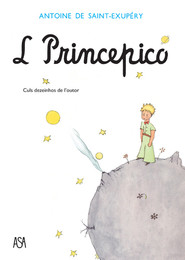


L Princepico, Mirandese national dialect
http://www.leyaonline.com/

Le Petit Prince has an edition in the national dialect Mirandês since April 2011. Its aim is to disseminate the Mirandese language lack written form. 

The Mirandese language is been used for years as a language passed on to the next generations by speakers only.

Do you want to read an excerpt of  L Princepico in Mirandês (Mirandese language?


·XVIII·

L princepico atrabessou l dezerto i só ancuntrou ua flor cun trés folhicas, ua florica ruinica...
- Dius mos dé nuonos dies, dixo l princepico.
"Buones dies mos dé Dius, dixo la flor.
- Adonde stan ls homes?" preguntou l princepico mi educado.
La flor biu, un die, ua recla de giente a passar:
- Ls homes? Hai-los, parece-me, seis ou siete. Abistei-los hai uns anhos, mas nun se sabe adonde stán. L aire lhieba-los dun lhado para outro. Nun ténen raízes i isso trai-le muitos porblemas.
- Adius, dixo l princepico.
Adius, dixo la flor.

Antoine de Saint-Exupéry, L Princepico, Mirandese version


Some thoughts:

Language acquisition and mother tongue literacy should ideally be supported by written resources such as - but not limited to - books, primers and textbooks, to support oral activities

Written materials in mother tongues reinforce learners’ literacy acquisition and build strong foundations for learning.

"Multilingualism is a source of strength and opportunity for humanity. It embodies our cultural diversity and encourages the exchange of views, the renewal of ideas and the broadening of our capacity to imagine."  


Irina Bokova, UNESCO Director General 


G-Souto

21.02.2013
Copyright © 2013G-Souto'sBlog, gsouto-digitalteacher.blogspot.com®

Licença Creative Commons
IMLD 2013 : Books matter ! bG-Souto is licensed under a Creative Commons Attribution-NonCommercial-ShareAlike 3.0 Unported License.

References for teachers:

International Mother Language Day | UNESCO

International Mother Language Day |UN

The Day of all languages: 21 February

Tuesday, February 19, 2013

Schools : Nicolaus Copernicus in sciences curriculum : resources & activities


 Portrait of Copernicus (probably painted in the 1780s) 
Collection of the Regional Museum in Toruń

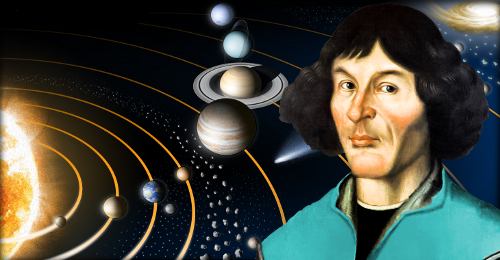
Nicolaus Copernicus, Polish Mikołaj Kopernik was born on February 19, 1473, in Toruń, Royal Prussia, Poland. A Polish astronomer who proposed that the planets have the Sun as the fixed point to which their motions are to be referred; that Earth is a planet which, besides orbiting the Sun annually, also turns once daily on its own axis; and that very slow, long-term changes in the direction of this axis account for the precession of the equinoxes. He died on May 24, 1543, Frauenburg, East Prussia (now Frombork, Poland).


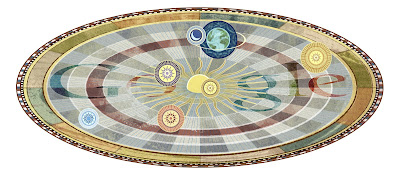
Google Doodle Nicolaus Copernicus' 540 Birthday


  • Google Doodle:
Wow! Awesome interactive Google doodle that we can include into school curricula. Today's Google celebrates with an interactive Doodle the 540th anniversary of Nicolaus Copernicusmathematician and astronomer, a shining star of the Renaissance.

His major contribution to science is his heliocentric theory, which asserts that the sun is the center of our solar system.

Copernicus' work helped popularize the idea that Earth revolves around the Sun, instead of the other way round, as was commonly believed at the time.

As the Earth was popularly assumed the center of the universe, his heliocentric theory rocked convention. Though the mechanics of this theory has mathematical underpinnings, its radical nature still gave Copernicus some pause. It was, therefore, not until his final year that he published his findings in De Revolutionibus orbium coelestium


The interactive Doodle shows the planets all gently orbiting our nearest star. It depicts the known planets of the time - Sun, Mercury, Venus, Earth, Mars, Mars, Jupiter and Saturn  - revolving around the Sun, while the Moon revolves around the Earth. This is solar system as described in De revolutionibus

"The resulting doodle is zen-like and unassuming. Its actions need not scream for attention, much like the slow publication of De Revolutionibus orbium coelestium. The orbits of the solar system are steady and true." 

At the time he was branded a heretic. The idea that the Earth orbited the Sun, conceived without the aid of any equipment, would only be proved half a century later, when Galileo built a telescope and pointed it heavenward. 


Nicolaus Copernicus
credits: Wellcome Library, London 

"Finally we shall place the sun at the center of the Universe. All this is suggested by the systematic procession of events and the harmony of the whole universe, if only we face the facts, as they say, ‘with both eyes open.’"

Nicolaus Copernicus


Astronomer Copernicus, or Conversations with God, 1873 
by Matejko. In background: Frombork Cathedral

  • Some biographical notes:

Born on 19 February 1473 as the son of a merchant in the city of Thorn, Poland, Copernicus studied at Krakow Academy, now the Jagiellonian University, before travelling to Italy to study law at the University of Bologna, in 1496. He stayed there until 1503.


While studying at the University of Bologna, his passions for geography and astronomy were encouraged by a mathematics professor, Domenico Maria de Novara.


He returned to Warmia, to live with his uncle, who enjoyed the title Prince-Bishopric of Warmia. Copernicus was his uncle's secretary and physician and resided in the Bishop's castle at Lidzbark (Heilsberg). This is where he began work on his heliocentric theory.


Nicolaus Copernicus
credits: Wellcome Library, London

Heliocentricism is the astronomical model in which the Earth and planets revolve around a relatively stationary Sun at the center of the Solar System. Though Heliocentricism has now been proven and is widely accepted, it wasn't the case during Copernicus's time, when many, including most religious institutions and leaders, believed that the Earth was at the center of the Universe. This belief has been termed GeocentrismHis heliocentric revolution was condemned by Martin Luther.

By 1532, Copernicus had all but completed his work and had consolidated his observations in a manuscript titled De revolutionibus orbium coelestium. However, he refused to have this published and shared beyond his inner circle as he did not want to risk the scorn "to which he would expose himself on account of the novelty and incomprehensibility of his theses."


Painting made by Aleksander Lasser 
on the occasion of the 400th anniversary of Copernicus' birth (1873)
Collection of the Regional Museum in Toruń

De Revolutionibus Orbium Coelestium was published in 1543, shortly before Copernicus died on May 24 at age 70. Legend has it the first copy was placed in his hands the day he died. 

Composed of six ‘books’, the 400-page manuscript of De revolutionibus written between 1515-30, and amended and corrected over the following decade, had a foreword written by the author and a letter dedicated to Pope Paul III in which the astronomer argued the legitimacy of the heliocentric theory.

In 1616 the Vatican placed it on the Index of Forbidden Books. It was removed only in 1835.


The remains of the astronomer Nicolaus Copernicus have been identified by Polish scientists 465 years after his death.


After centuries of searching, his grave was located in 2005, allowing his remains to be re-interred under a tombstone that bears a representation of Copernicus' model of the solar system.


Copernicus's schematic diagram of his heliocentric theory 
of the Solar System from De revolutionibus orbium coelestium

Education:

It is not the first time that I include Doodles into school curricula. It's a wonderful motivation and it can surprise students. 

Doodles are fun, surprising, and sometimes spontaneous changes that we can include into our lessons to teach about famous writers, poetspioneers, and scientists.

Everyday we must include something captivating in our lessons, even we are teaching important skills of curriculum. 

Passion is what will make our students enter every day in the classroom waiting for something special into the lessons. Students will learn easily.

I am not a math educator. However I believe that sciences are as important as humanities.


credits: Getty Images

After all, this day is symbolic. We can include Copernicus into different lessons to organize an event at school and develop different activities.

Schools are very important environments of teaching and learning. They have an important role aiming to renew and reinvigorate global knowledge as they have the mission to educate children and adolescents as future citizens.

These resources are educational challenges to promote some good values near the new generations. Young students will be vigilant and will help to find new paths towards precious solutions to society and the planet. Humanities and Sciences are the basic curricula.


Some Activities:

I selected several activities that I think may involve your students but you are free to propose your own ideas:

  • Organize an open day (today or/and nex week) at the school with your students to highlight the importance of science to the evolution of the world;
  • Open discussion in the classroom to enphazise  the many different ways science & technologies touch our daily lives;
  • Contact national and local media (radio, newspapers) to highilight the importance of celebrating Science & Copernicus at shool;
  • Ask your students to write articles, comics, little reports in the classroom about the importance of science for sustainable societies and publish the best works in the school newspaper;
  • Build classroom-to-classroom connections between schools via the Internet:  schools websites, schools accounts on Facebook or Twitter, and share science projects that will interest students;
  • Create a video with Animoto (students and teachers)
  • Arrange a visit to a Science Museum near you. Museums are awesome places to have a live lesson.

Levels: All levels (different activities for different grades).


Nicolaus Copernicus


Some thoughts:

So as you see, can we say that formal learning is a non captivating method? Of course, not! Must be creative! 

Well, there are a lot of funny and engaging activities about Sciences and Humanities that we can create and propose to our students, on informal learning (online learning) and formal learning (face-to-face teaching). Don't forget BYOD (bring your own device). 

Believe me! You will have a motivated class that will learn literature or science. 

To us, "the attitude" of changing methods, and the creative mind to facilitate different learning activities at our young students!


"A good goal should scare you a little. And excite you a lot!"  

Joe Vitale

G-Souto

19.02.2013

Copyright © 2013G-Souto'sBlog, gsouto-digitalteacher.blogspot.com®

Licença Creative Commons
Schools : Copernicus & science curriculum : resources & activities bG-Souto is licensed under a Creative Commons Attribution-NonCommercial-NoDerivatives 4.0 International License.


Links for teachers:

Europeana | Nicolaus Copernicus

Copernicus, Nicolaus (1473-1543)

NASA | Nicolaus Copernicus

16t-century skeleton identified as astronomer Copernicus


Sunday, February 17, 2013

RoboParty 2013: live pedagogical resource


RoboPary 2013

Mais uma vez o mote está dado para atrair centenas de jovens das escolas portuguesas. 

A 7ª edição do RoboParty que vai decorrer de 14 a 16 Março 2013 já excedeu as expectiativas dos organizadores. Cem equipas inscritas e umas tantas em lista de espera, embora o prazo de inscrições já tenha encerrado.

No entanto, na página do Facebook, a organização esclarece que vai reunir para deliberar aumentar o número de equipas participantes, de acordo com a logística.

Este evento que terá lugar no pavilhão desportivo da Universidade do Minho, em Guimarães é organizado pela Universidade do Minho (Grupo de Automação Controlo e Robótica do Dep. de Electrónica Industrial, da Escola de Engenharia) e pela empresa SAR - Soluções de Automação e Robótica, Lda., que é uma Spin-Off da Universidade do Minho.

Roboparty consiste num evento pedagógico que reúne equipas de 4 pessoas (três jovens e um adulto) durante 3 dias e duas noites.
  
Ensina a construir robôs móveis autónomos, de uma forma simples, divertida e com acompanhamento por pessoas qualificadas.


Componentes do kit 2011


É dada uma curta formação prévia para aprender a dar os primeiros passos em Electrónica, programação de robôs, e construção mecânica, e depois é entregue um KIT robótico desenvolvido pela empresa SAR - Soluções de Automação e Robótica e pela Universidade do Minho, para ser montado pelos participantes (Mecânica, electrónica, e programação).

Todas as equipas têm acompanhamento de pessoas com conhecimento para ajudar na construção e programação dos robôs.

RoboParty® é um evento pedagógico e educacional. de 3 dias e duas noites, non-stop, onde os jovens, trazendo um saco cama e um computador, passam o tempo a construir um robô com os suas próprias mãos. 
São ainda dadas a conhecer as regras das competições nacionais e internacionais de robótica mais importantes, para poderes participar.

Para consultar a programação e actividades, ver aqui e descarregar o panfleto detalhado aqui


Panfleto | Flyer
http://www.roboparty.org/

As provas, como já sabem, são três: Prova de ObstáculosProva de Perseguição e Prova de Dança
Em paralelo com toda esta dinâmica de aquisição de conhecimento, decorrem várias actividades lúdicas e desportivas tais como desporto, música, jogos, festas, nas quais todos podem participar.

The 7th RoboParty takes place in Guimarães, Portugal, March 14-16, 2013 at the Pavilhão Desportivo (Sports Hall) of the University of Minho.


The RoboParty 2013 as RoboParty 2012 aims to immerse students from the 1st grade to college studies, as well among the general public in the exciting world of Science and Technology (Electronics, Robot Programming, and Mechanics).

Find out in 2 minutes what is RoboParty in this informative leaflet.


Education:

"Use the motivational effects of robotics to excite students about science and technology." 
As you know, I write a lot about the increasingly important role of Robotics in Education. For boys and girls, of course.
Robotics has aroused great curiosity among young people. There are more groups and robotics clubs throughout Portugal concentrated in universities, secondary and vocational schools.
Remember my posts: Robotics in Education (April 12, 2011) about robot competition, or assistive robotics, whose goal was to aid gifted young students, improving the quality of their lives.

And Robotics in Education Seminar (January 12, 2011), whose aim was to promote Technology among young girls to increase gender equality in their future career.


RoboParty 2012

As practitioners, we know that we must teach to students in different levels in the same class. Let us teach whatever we have to (or like to), but using different educational tools and resources.
Robotic experiences may be exploited in many more contexts and for other educational purposes.  So the importance of those events are very important and a fantastic live pedagogical resource.

The result of events like this it is a fun, exciting and stimulating environment in which students discover the important connection between classroom lessons and real-world applications.


RoboPary 2013

Robotics is used in education in a variety of ways and for a multitude of purposes. However, one can probably classify the way such use is motivated into one of the following two (fortunately overlapping to a large extent) classes:
  • “Robotics in education”: Robotics, besides being engineering and science, is fun. Let us convince our students that indeed it is so and, besidesthat, teach them something useful.
  • “Robotics for education”: Robotics is useful in the educational process. Let us teach whatever we have to (or like to), but using robotics as one of theeducational tools.
Dr Jacek Malec, Department of Computer Science Lund University (Sweden)

RobyParty 2013 is on Facebook. And later, on March 14-16 there will be live stream.

G-Souto

17.02.2013
Copyright © 2013G-Souto'sBlog, gsouto-digitalteacher.blogspot.com®

Licença Creative Commons
RoboParty 2013: live pedagogical resource by G-Souto is licensed under a Creative Commons Attribution-NonCommercial-ShareAlike 3.0 Unported License.