
International Mother Language Day
"In this age of new technologies, books remain precious instruments, easy to handle, sturdy and practical for sharing knowledge, mutual understanding and opening the world to all. Books are the pillars of knowledge societies and essential for promoting freedom of expression and education for all."
Irina Bokova, UNESCO Director General
International Mother Language Day has been celebrated every year on February 21 since 2000 to promote linguistic and cultural diversity and multilingual education, to highlight greater awareness of the importance of mother tongue education.
"Linguistic and cultural diversity represent universal values that strengthen the unity and cohesion of societies. That is why UNESCO’s Director-General, in launching IMLD 2013, reinforces the importance of this core message and specifically highlight this year’s theme of access to books and digital media in local languages."

International Mother Language Day
This year, the theme of the International Mother Language Day is "Books for Mother tongue education”.
IMLD 2013 aims to remind key stakeholders in Education that in order to support mother tongue education, it is essential to support the production of books in local languages.
Mother tongue education in its broader sense refers to the use of mother tongues in the home environment and in schools.
Languages are the most powerful instruments of preserving and developing our tangible and intangible heritage. All moves to promote the dissemination of mother tongues will serve not only to encourage linguistic diversity and multilingual education but also to develop fuller awareness of linguistic and cultural traditions throughout the world and to inspire solidarity based on understanding, tolerance and dialogue.

Languages are the most powerful instruments of preserving and developing our tangible and intangible heritage. All moves to promote the dissemination of mother tongues will serve not only to encourage linguistic diversity and multilingual education but also to develop fuller awareness of linguistic and cultural traditions throughout the world and to inspire solidarity based on understanding, tolerance and dialogue.
UNESCO
Today, a great number of languages lack a written form, yet progress has been made in developing orthography.
Local and international linguists, educationalists, teachers work together with for example Indigenous peoples in Latin America, or tribes in Asia to develop orthography.
The use of computers to produce books and the relatively low cost of digital printing are promising ways to produce cheaper written materials to enable wider access
Languages are the most powerful instruments of preserving and developing our tangible and intangible heritage. So, I think it always important to spread this message.
"If we look at the statical curve measuring amounst of diverse languages on one side and the number of internet users on the other, in see that in Europe for example we have low diversity but a hifg number of Internet users."
Daniel Prado, Unión Latina

©Google / ©UNESCO
Interactive Atlas of the World’s Languages in Danger
Interactive Atlas of the World’s Languages in Danger
Linguistic diversity is our common heritage. It is fragile heritage. Nearly half of the more than 6,000 languages spoken in the world could die out by the end of the century.
UNESCO’s Interactive Atlas of the World’s Languages in Danger is the performance chart for this struggle. Language loss impoverishes humanity. It is a retreat in the defence of everyone’s rights to be heard, to learn and to communicate. Genuine dialogue implies respect for languages.


Fernando Pessoa
credits: Julio Pomar
Education:
"Sê plural como o universo"
Fernando Pessoa, Portuguese writer (1988-1935)
"To preserve a language, people should nourish that language, use it and produce materials in that language in both soft and hard copies.
Technology can’t be blamed because it’s a tool and that’s how people use it. Once we start using the language then it gets passed on to the next generation.
It’s the generational usage and technology that can enhance and support this transition.”
Abdul Hakeem, Education Advisor and Coordinator
of the Asia Pacific Programme of Education for All at UNESCO Bangkok
So, I share with you something special: In Portugal, there is a national dialect - Mirandês - spoken by 15 000 people in a small area of my country, in the northeastern of Portugal, along the frontier with Spain, covering the municipality of Miranda do Douro and a part of the municipality of Vimioso.
In the 19th century, the Portuguese ethnographer, José Leite de Vasconcelos described this national dialect as "the language of the farms, of work, home, and love between the Mirandese".
In the 19th century, the Portuguese ethnographer, José Leite de Vasconcelos described this national dialect as "the language of the farms, of work, home, and love between the Mirandese".
Since 1986–87 it has been taught to students between the ages of 10 and 11, and so is recovering.
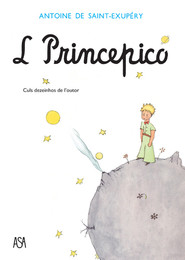
Le Petit Prince has an edition in the national dialect Mirandês since April 2011. Its aim is to disseminate the Mirandese language lack written form.
The Mirandese language is been used for years as a language passed on to the next generations by speakers only.
·XVIII·
L princepico atrabessou l dezerto i só ancuntrou ua flor cun trés folhicas, ua florica ruinica...
- Dius mos dé nuonos dies, dixo l princepico.
"Buones dies mos dé Dius, dixo la flor.
- Adonde stan ls homes?" preguntou l princepico mi educado.
La flor biu, un die, ua recla de giente a passar:
- Ls homes? Hai-los, parece-me, seis ou siete. Abistei-los hai uns anhos, mas nun se sabe adonde stán. L aire lhieba-los dun lhado para outro. Nun ténen raízes i isso trai-le muitos porblemas.
- Adius, dixo l princepico.
- Adius, dixo la flor.
Antoine de Saint-Exupéry, L Princepico, Mirandese version
Some thoughts:
Language acquisition and mother tongue literacy should ideally be supported by written resources such as - but not limited to - books, primers and textbooks, to support oral activities.
Written materials in mother tongues reinforce learners’ literacy acquisition and build strong foundations for learning.
"Multilingualism is a source of strength and opportunity for humanity. It embodies our cultural diversity and encourages the exchange of views, the renewal of ideas and the broadening of our capacity to imagine."
Irina Bokova, UNESCO Director General
G-Souto
21.02.2013
Copyright © 2013G-Souto'sBlog, gsouto-digitalteacher.blogspot.com®

IMLD 2013 : Books matter ! by G-Souto is licensed under a Creative Commons Attribution-NonCommercial-ShareAlike 3.0 Unported License.
References for teachers:
International Mother Language Day | UNESCO
International Mother Language Day |UN
The Day of all languages: 21 February


