Showing posts with label Robotics in education. Show all posts

Tuesday, October 1, 2013

Education: Let's talk about International Music Day


Oh! What a special day! Today, October 1 is International Music Day!

As you already know me well as my usual readers, it would be impossible to me not to write about Music Day.

"No truly cultural pursuit, involving the intellect and the emotions, is complete unless it can be regarded as both an end and a means. It is an end in itself so far as it moves the aesthetic sense, gives immediate pleasure and becomes a part of our being. It is a means in the sense that it should raise us to a higher level, make us capable of going further to accomplish other, more difficult, more pregnant acts of cognition-in short, of developing our own powers and helping to develop those of the community."

Georges Duhamel, Académie Française

Education:

"Music has the potential to achieve social and psychological transformation of children and young people. Their sensibility will be accurate. We must never waste such an opportunity as teachers! Captivating the major interests of our students about Music."

GSouto

Music, as you can read on several posts on my blog, is fundamental in Education of children and young people.

I think music should be taught in all schools, from primary to secondary education as a serious curriculum.


The aim is not to form not only professional musicians, but to develop the appreciation, taste and critical judgment of the listener from his earliest youth, so as to train him and enable him to appreciate the beauty and wealth of musical masterpieces. 

Watch the video below and listen Einar Soulbu, Dean of the Faculty of Performing Arts at the Oslo National Academy of the Arts, talking about Music and Education and the importance of preparing the next generation for being the masters of their own lives and supporters of the lives of the others. 


What is needed to ensure a vibrant, diverse future for the many different forms of music and music activity on the planet.

And what about special needs students? Yesterday, I read a fantastic article on FastCompany website: How to write Music in color! Absolutely! Agree!

The article is about the sound-artist|designer Yuri Suzuki ! As a dyslexic kid he learned music not through sheet music but through “Color Chaser".

Since debuting it in 2010, the Color Chaser has proven popular with children in Suzuki’s workshops


Yuri Suzuki

And what is Color Chaser? Color Chaser (2010) is a small, wheeled robotic box that is programmed to follow a black line drawn on a piece of paper. 

Perpendicular scribbles across this line in turn relate to different musical notes, depending on the color. 

Yuri explains that this project was "all about inventing new ways of visually understanding melodies, or “the physical representation of the music;” 

When he was a young boy, his dyslexia made reading traditional sheet music almost impossible (something that proved problematic during his early years in a ska band).

“My band members were trying to be professional at that time and they wanted me to read the score. They told me: if you can’t read the score we have to fire you.” 

Yuri Suzuki

The Color Chaser project was about finding a way around that. Color Chaser has two Arduino boards:
  • one to read and follow the black ink track 
  • other to chirp different sounds for each color. 
“Looks Like Music” has five varieties of cutely shaped Color Chasers, each chirping different tunes for the appropriate colors. Watch the video below:


Credits: Yuri Suzuki

Unsurprisingly, the Color Chaser has proven popular with the children in the educational workshops Yuri is involved in. 

“It’s quite helpful” he says, “because even though they don’t have any real knowledge about music, they can still understand the principle.” 

“Modern technology is like magic. People rarely understand what’s actually happening inside."
Yuri Suzuki

It’s this combination of innovative educational ideas and a sense of playfulness that encourages and also rewards interaction with a Suzuki design. 

I was completely fan about Yuri Suzuki's idea, thinking about Music curriculum for special needs students in School.

Some thoughts:

"Music, like all the arts, has the happy property of making the good lovable through beauty. It can open hearts and awaken an interest in certain subjects to which children would otherwise be indifferent. 

It can lend attraction to ideas which the minds of children are not yet capable of grasping in the form of abstract truths."

L. Gelber, Directress, Musical Education Secretariat, Malines, Belgium 

If music is thus integrated into general education, it becomes a useful auxiliary to the other subjects of School Education. 

It will have a great impact in students' adult life. I can say it ! I have a Music degree among other degrees. I feel thankful to my parents who knew the importance of Music in my entire life.


"The man that hath no music in himself, 
Nor is not moved with concord of sweet sounds, 
Is fit for treason, stratagems and spoils. 
The motions of his spirit are dull as night 
And his affections as Erebus. 
Let no such men be trusted." (...)

Shakespeare, The Merchant of Venice, excerpt

Have a wonderful Music Day!

G-Souto

01.10.2013
Copyright © 2013G-Souto'sBlog, gsouto-digitalteacher.blogspot.com®

Licença Creative Commons
Education: Let's talk about International Music Day ! bG-Souto is licensed under a Creative Commons Attribution-NonCommercial-ShareAlike 3.0 Unported License.


Sunday, February 17, 2013

RoboParty 2013: live pedagogical resource


RoboPary 2013

Mais uma vez o mote está dado para atrair centenas de jovens das escolas portuguesas. 

A 7ª edição do RoboParty que vai decorrer de 14 a 16 Março 2013 já excedeu as expectiativas dos organizadores. Cem equipas inscritas e umas tantas em lista de espera, embora o prazo de inscrições já tenha encerrado.

No entanto, na página do Facebook, a organização esclarece que vai reunir para deliberar aumentar o número de equipas participantes, de acordo com a logística.

Este evento que terá lugar no pavilhão desportivo da Universidade do Minho, em Guimarães é organizado pela Universidade do Minho (Grupo de Automação Controlo e Robótica do Dep. de Electrónica Industrial, da Escola de Engenharia) e pela empresa SAR - Soluções de Automação e Robótica, Lda., que é uma Spin-Off da Universidade do Minho.

Roboparty consiste num evento pedagógico que reúne equipas de 4 pessoas (três jovens e um adulto) durante 3 dias e duas noites.
  
Ensina a construir robôs móveis autónomos, de uma forma simples, divertida e com acompanhamento por pessoas qualificadas.


Componentes do kit 2011


É dada uma curta formação prévia para aprender a dar os primeiros passos em Electrónica, programação de robôs, e construção mecânica, e depois é entregue um KIT robótico desenvolvido pela empresa SAR - Soluções de Automação e Robótica e pela Universidade do Minho, para ser montado pelos participantes (Mecânica, electrónica, e programação).

Todas as equipas têm acompanhamento de pessoas com conhecimento para ajudar na construção e programação dos robôs.

RoboParty® é um evento pedagógico e educacional. de 3 dias e duas noites, non-stop, onde os jovens, trazendo um saco cama e um computador, passam o tempo a construir um robô com os suas próprias mãos. 
São ainda dadas a conhecer as regras das competições nacionais e internacionais de robótica mais importantes, para poderes participar.

Para consultar a programação e actividades, ver aqui e descarregar o panfleto detalhado aqui


Panfleto | Flyer
http://www.roboparty.org/

As provas, como já sabem, são três: Prova de ObstáculosProva de Perseguição e Prova de Dança
Em paralelo com toda esta dinâmica de aquisição de conhecimento, decorrem várias actividades lúdicas e desportivas tais como desporto, música, jogos, festas, nas quais todos podem participar.

The 7th RoboParty takes place in Guimarães, Portugal, March 14-16, 2013 at the Pavilhão Desportivo (Sports Hall) of the University of Minho.


The RoboParty 2013 as RoboParty 2012 aims to immerse students from the 1st grade to college studies, as well among the general public in the exciting world of Science and Technology (Electronics, Robot Programming, and Mechanics).

Find out in 2 minutes what is RoboParty in this informative leaflet.


Education:

"Use the motivational effects of robotics to excite students about science and technology." 
As you know, I write a lot about the increasingly important role of Robotics in Education. For boys and girls, of course.
Robotics has aroused great curiosity among young people. There are more groups and robotics clubs throughout Portugal concentrated in universities, secondary and vocational schools.
Remember my posts: Robotics in Education (April 12, 2011) about robot competition, or assistive robotics, whose goal was to aid gifted young students, improving the quality of their lives.

And Robotics in Education Seminar (January 12, 2011), whose aim was to promote Technology among young girls to increase gender equality in their future career.


RoboParty 2012

As practitioners, we know that we must teach to students in different levels in the same class. Let us teach whatever we have to (or like to), but using different educational tools and resources.
Robotic experiences may be exploited in many more contexts and for other educational purposes.  So the importance of those events are very important and a fantastic live pedagogical resource.

The result of events like this it is a fun, exciting and stimulating environment in which students discover the important connection between classroom lessons and real-world applications.


RoboPary 2013

Robotics is used in education in a variety of ways and for a multitude of purposes. However, one can probably classify the way such use is motivated into one of the following two (fortunately overlapping to a large extent) classes:
  • “Robotics in education”: Robotics, besides being engineering and science, is fun. Let us convince our students that indeed it is so and, besidesthat, teach them something useful.
  • “Robotics for education”: Robotics is useful in the educational process. Let us teach whatever we have to (or like to), but using robotics as one of theeducational tools.
Dr Jacek Malec, Department of Computer Science Lund University (Sweden)

RobyParty 2013 is on Facebook. And later, on March 14-16 there will be live stream.

G-Souto

17.02.2013
Copyright © 2013G-Souto'sBlog, gsouto-digitalteacher.blogspot.com®

Licença Creative Commons
RoboParty 2013: live pedagogical resource by G-Souto is licensed under a Creative Commons Attribution-NonCommercial-ShareAlike 3.0 Unported License.

Thursday, May 3, 2012

April: rundown of the most-read posts


"If education is to be relevant for today’s learners, it needs to break from the  constraints of conformity and allow for differentiation by focusing on individual identity development within each individual’s own context, culture and ability.”


Mentis (2007)

This quote identifies the diversity of pedagogical proposals that I share with you throughout the year. I believe and practice the differentiation by focusing on individual identity of my students. I wrote about it on the differentt posts of my blog.

April rundown shows the diversity of subjects and summarize the most-read topics in a collection of seven posts.


Poster: Juan Gedovius

April 2 is a very special day! International Children's Day! And why is so special? It is special because I love books,  I love reading, I love children's books. And I share this  love of reading with all my students.

Since 1967, on or around Hans Christian Andersen's birthday, 2 April, International Children's Book Day (ICBD) is celebrated to inspire the love of reading and to call attention to children's books.

Mexico is the sponsor country 2012! The theme is "Once upon a time,


"Había una vez un cuento que contaba el mundo entero. Ese cuento en realidad no era uno solo, sino muchos más que empezaron a poblar el mundo con sus historias de niñas desobedientes y lobos seductores, de zapatillas de cristal y príncipes enamorados, de gatos ingeniosos y soldaditos de plomo, de gigantes bonachones y fábricas de chocolate."(...)

Francisco Hinojosa 


The winner: Portuguese team
One of the world's best known and long-lived international robot competitions, the low-cost annual Trinity College Fire Fighting Home Robot Contest (TCFFHRC) brought robot enthusiasts and engineers of all ages to Trinity’s campus in Hartford on the weekend of March 31-April 1, 2012. 

Portuguese students win Robotics competitionThe winner in the category "Junior Division 2012" is the Portuguese team "BeeFree NewTech", students from University of Coimbra and Instituto Politécnico Coimbra, Portugal.

The winner project, "BeFree" connects the robotic and therapy for individuals with mobility impairment.


Wall-E (filme)

Let's continue to inspire our students, this time for Earth Day 2012, elevating the importance of environmental issues around the world.  School time is a wonderful place to begin this values.

Wall-E! A green resource for Earth Day 2012Yes! Because I was thinking about Wall-E as a green digital resource to display in the classroom. A touching digital storytelling about the planet.

Earth Day is not about a day! Earth Day is about every day! So, educators can teach environment values in different moments of their lessons, providing some thoughts and digital resources, educating young people for a sustainable future and inspiring them being a good example.


The Portuguese Robotics Schools Open 2012 & International Conference which had its 1st edition in 2006, aims at promoting Science and Technology among students from the 1st grade to vocational and university studies through robot competitions. 
The Festival includes also an international conference where national an international researchers present their latest work in the field of Robotics.


You know I believe in Robotics in school education. Last week I wrote  Portuguese students win Robotics Competion and if you search "Robotics in education" on this blog, you will find other publications in 2011 and 2010.

The result is a fun, exciting and stimulating activity in which students discover the important connection between classroom lessons and real-world applications.


World Dance Day & Education: Since 1982, by the initiative of the International Theatre Institute (ITI), Dance is celebrated throughout the world every year on the 29th of April. 

In 2012, ITI organized the celebration of the 30th Anniversary of International Dance Day on the 25th of April at UNESCO in Paris, honoring one of the most talented dance artists of our time, the Belgian-Moroccan Sidi Larbi Cherkaoui


"Je crois que la danse est l’une des formes d’expression les plus honnêtes, que nous devons chérir : car lorsque les gens dansent, que ce soit dans un ballet, une 
battle hip hop, un spectacle expérimental de danse contemporaine ou simplement dans une discothèque, ils se lâchent, et rarement alors les mensonges peuvent se déployer, les masques se porter."

Sidi Larbi Cherkaoui

Dance is a fun and fresh integrative part in the school curricula. Dance is also a good therapy for young people in the school. Dance movement therapy and the power of dance is used to inspire, uplift and heal.

Dance give to students the concentration discipline and the pleasure to express themselves with creativity.


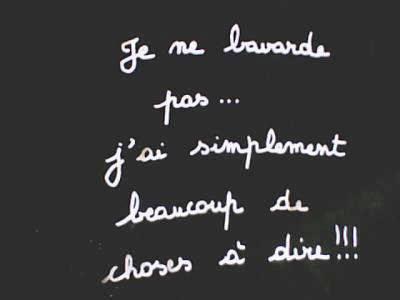
"J’enseigne la philosophie en lycée depuis bientôt vingt ans et, au fil des années, je me suis rendu compte que, dans les classes, le problème le plus répandu et le plus délicat à négocier était le bavardage.

Florence Ehnuel

Bavardage! Parlons-en? Le bavardage? Pas facile à définir. Il peut marquer des états différents: un réel intérêt pour le cours ( et ça j'aime bien et j'en profite) ou alors un réel détachement. 

Moi, en tant que peofesseure de langues, je vois souvent le bavardage comme un élément positif, Il peut contenir une certaine pédagogie active, en particulier de la mienne, à savoir un bavardage pleinement 'autorisé', un temps d’expression verbal surtout d’entrée de cours ou petite 'pause' pendant le cours.
Il n'est pas à proscrire, et il est conseillé si c'est le reflèxe de l'interêt des étudiants au sujet qu'on présente en cours. 


Antero de Quental | Google doodle
www.google.com
Verdade! Hoje Google homenageia o poeta e filosófo português Antero de Quental no seu 170º Aniversário.

Depois de celebrar Fernando Pessoa, uma nova homenagem a outro grande poeta (e filsósofo) de língua portuguesa.

A homenagem de Google, ligação às novas gerações, provocará certamente a curiosidade dos estudantes mais jovens.


Poderia ser então ponto de partida para uma interessante introdução ao autor num mês que é profundamente dedicado aos livros, à poesia, à literatura em geral

Entre o Dia Internacional do Livro Infantil  (blogue educativo língua portuguesa) ouInternational Children's Book Day e World Book and Copyright Day falar de Antero de Quental e da sua poesia poderá ser uma excelente motivação para  o posterior aprofundamento do estudo da obra do autor.


I really hope that you enjoy every pedagogical proposal written in April or discover some new pedagogical ideas to introduce in your lessons.

Thank you very much to all the colleagues from around the world that kindly read my blog and visit it every day.

G-Souto

03.05.2012
copyright © 2012G-Souto'sBlog, gsouto-digitalteacher.blogspot.com

Licença Creative Commons
April: rundown of the most-read posts bG-Souto is licensed under a Creative Commons Attribution-NonCommercial-ShareAlike 3.0 Unported License.