Thursday, May 13, 2010

8th Wonderland, a virtual world for Citizenship?


What happens when virtual worlds as an educational tool becomes a 'virtual world' movie official selectioned at different International Festival Films? Take a look!


We've seen the power of Facebook and Twitter to rally people for a cause. 


Imagine if all the people on social networks shared a common view and declared themselves a virtual country. 


This is the concept behind 8th Wonderland a French film by Jean Mach and Nicolas Alberny.

Synopsis:


«Scattered all over the world, everyday people, sick and tired of political systems and being controled by the media, decide to create a virtual state and instore their democracy.» 


A fantastic fiction-political thriller easy to screen worldwide!  
It takes us from Russia to the United States, from South America to Japan passing through Europe and the Middle East.
  
                                                                 
8th Wonderland had the "Mention Spéciale du Jury" award of the "International Fantasy Festival Film of Brussels 2009"  and some others.

You can join this virtual world on the website 8th Wonderland... but don't forget! It's only a game!! But an interesting idea to play with.


Education:

Perhaps too radical for Civics curriculum in Junior High School or Further Education? But why not try? 


Starting with a pedagogical introduction, watching the movie and a critical debate, students could learn to deal with the right side and the wrong side and become engaged citizens.

G-Souto

13.05.2010

Copyright © 2010G-Souto'sBlog, gsouto-digitalteacher.blogspot.com®

Licença Creative Commons
8th Wonderland, a virtual world for Citizenship? by G-Souto is licensed under a Creative Commons Attribution-NonCommercial-ShareAlike 3.0 Unported License.

Saturday, May 8, 2010

The Spoilt Generation


Synopsis

In the space of a few decades the way we parent has changed dramatically. Something we once did intuitively has become the subject of political fashion, guided by experts. 
As parents we are older and more time-poor than ever before, with the highest proportion of single-parent households in history. 
Our children are now spoiled in ways that go far beyond materialism. But they are suffering to a degree we never anticipated: we now have the highest rates of child depression, underage pregnancy and violent and anti-social behaviour since records began. 
Yet adults, at every level, have retreated from authority and in doing so have robbed our children of their basic supporting structures. 
In this book, Dr Sigman takes issues by the scruff of the neck, among them children's sense of entitlement, the effects of TV and computers, single-parent homes and 'blended' families, parental guilt and the compensation culture. He offers a clear practical message to us all - parents, grandparents, teachers and policy-makers alike - as to how we can redress the status quo, redefine our roles and together cultivate happier and better-behaved children.


Amazon.com


The review of the press:


An explosive new book… Sigman specialises in uncomfortable truths...


The Sunday Times

Children of the spoilt generation are used to having their demands met by their parents and others in authority, and that in turn makes them unprepared for the realities of adult life.

Daily Mail Online
Children no longer have boundaries. It's bad for children and it's bad for parents. Some parents, due to a lack of time, pressures at work and so forth, are trying to buy their children's love, which is toxic.


Michele Elliott

in the moment of unbelievable but true stories in the schools throughout the world, perhaps an interesting book to read.

Polemic and practical, it offers ideas, answers, and directions for all those involved in bringing up the next generation.

G-Souto 07.05.2010
Copyright © 2010G-Souto'sBlog, gsouto-digitalteacher.blogspot.com®


Licença Creative Commons


Friday, April 30, 2010

Éducation : Googler ou ne pas googler ?

Getty Images
www.elle.fr

Les enseignants s'actualisent! Ils ont bien compris que les adolescents dominent les technologies dans leur vie hors école (réseaux sociaux, messenger, blogs, portables, iphones). 

Montrer que tous ces outils sont bienvenus au collège ou lycée, et qu'on peut apprendre enormément à l'aide de toute cette parafralie techonologique est le rôle du 'nouveau' professeur !


Les jeunes et les médias

L’école est l’endroit idéal pour apprendre aux enfants et aux adolescents à maîtriser l'Internet.

Comment peut-on les aider à utiliser le mieux possible un outil si important dans la vie des ados, notamment dans le cadre de devoirs, de recherches ou d'exposés?


Tout d'abord il faut que l'apprentissage d'internet  fasse partie du curriculum, n'importe lequel! Les curricula scolaires, au 21e siècle est impensable sans l'utilisation des techonologies, dans le cas, de l'internet.

Des ateliers (les étudiants peuvent utiliser leurs mob-phones) doivent être organisés parmi les différentes disciplines pour  apprendre aux collégiens à maîtriser cet outil. Et ça passe aussi, bien sûr, pour apprendre à gogler correctement.

Il faut faire comprendre aux élèves qu'ils doivent rester critiques face au moteur de recherche par rapport aux infos qu'ils y trouvent.


C'est aussi important de leur expliquer que les résultats ne sont pas toujours fiables. 

On doit toujours faire différentes recherches, comparer les réponses du moteur de recherche, lire, questionner, approndir, et surtout recouper les sources, pas les copier et coller. Surtout pas, se contenter de recopier tout simple!


C'est vrai qu'on peut apprendre en imitant les autres, mais attention! Il faut que l'imitation respecte la propriété intellectuelle ou droits de l'auteur

Alors à nous, les professeurs des différentes disciplines, de sensibiliser les apprennants à la propriété intellectuelle.


http://images.google.pt

Les méthodes de travail des enseignants doivent aussi évoluer et s’adapter aux progrès technologiques. Par exemple, il y a cinq ans on donnait comme devoir aux élèves une biographie d'auteur. 

Aujourd’hui, ils doivent remplir un questionnaire très précis sur ce même sujet. L’élève est ainsi obligé de lire dans le détail ce qu’il trouve sur Internet, faire de la recherche de plusieurs sources, sans oublier la recherche à la bibliothèque.


Finalement, les plus créatifs ou les accros en technologie peuvent présenter leur devoir/éxposé en vidéo, podcast, web page, ou iphone.


Google Books sur mobile phone

Où est la bibliothèque, à présent? Les ados oublient la recherche à la bibliothèque, surtout quand on leur parle qu'il y a Google Books ou quand on leur dit qu'on peut lire des livres sur kindle ou leqtor.


Leqtor

C'est essentiel qu’il y ait un mouvement entre le papier et le numérique. Après tout, certains contenus de livres sont uniques. Et c'est pareil pour Internet. Nous le savons tous!


Quoi de meilleur que leur montrer le plaisir de lire, de toucher du papier, de sentir l'odeur de l'encre du livre en papier? Et qu'on ne doit jamais subestimer un outil si personnel!


Lire au collège

C'est pareil sur internet. Il y a des contenus extraordinaires! Et on touche le savoir du bout des doigts.


Des erreurs? On peut les trouver aussi bien dans des encyclopédies en papier ou Wikipedia. L'esprit critique este le meilleur conseiller!


Jocelyne Prenoveau
Cheneliere, 2007

Quelques pensées:

Lire en papier, et 'googler', c'est essentiel à faire apprendre aux élèves, tout en exerçant un esprit critique. Les deux stratégies sont très valables dans nos jours.

L'important, c'est le contenu, pas le support! Mais tous les supports peuvent être à l'origine d'un excellent travail de recherche! Pas vrai?


G-Souto

30.04.2010
Copyright © 2010G-Souto'sBlog, gsouto-digitalteacher.blogspot.com®


Licença Creative Commons
Éducation : ogler ou ne pas googler ? by G-Souto is licensed under a Creative Commons Attribution-NonCommercial-ShareAlike 3.0 Unported License.


Saturday, April 17, 2010

And now, Alice for the Ipad


Alice - Ipad screenshot

Of course I love paper books. But I have to admit that ebooks can, indeed, do stuff that paper books cannot. 

Education:

A good example of this is Alice for the iPad, Lewis Carroll’s story of Alice’s Adventures in Wonderland turned into a children’s storybook but with an interactive twist.

Every illustration is restored from the original Alice in Wonderland book, by Lewis Carroll, then rendered in mesmerising full-color. 

This iPad app includes 52 pages and 20 amazing animated scenes. It’s stunning!


Alice - Ipad screenshot

It will be a lovely educational resource to be used into the classroom, on Primary education.

The story will never be the same twice because you’re Alice’s guide through Wonderland.


Yes, still I bealive (and practice) that reading should be a quiet and relaxing activity, and that there’s nothing quite like communing with the pages of a well-read classic, but this video makes reading “Alice in Wonderland” look likes like a lot of fun. 

Techonologies and imagination don't stop! Marvelous!


G-Souto
15.04.2010
Copyright © 2010G-Souto'sBlog, gsouto-digitalteacher.blogspot.com®


Licença Creative Commons
And now, Alice for the iPad by G-Souto is licensed under a Creative Commons Attribution-NonCommercial-ShareAlike 3.0 Unported License.


Monday, April 12, 2010

Alice in Wonderland, a video game for young kids at school ?


Alice
Nintendo DS

Here we are again talking about Alice in Wonderland, the fantastic movie by Tim Burton! 

Alice In Wonderland is a 2-D side-scrolling platform adventure whose primary focus is puzzle-solving. 

To track down the items Alice needs, her allies embark on a search through the different levels of Wonderland. 

Now, I would like to let you know my opinion about this Nintendo DS game Alice for young kids (7 years-old, primary school). 

Features: 
  •  Join Alice and help her fulfill destiny

  • Play as multiple characters with special powers
  • Explore worlds, solve puzzles, engage in combat

In the role of the White Rabbit, the Cherishe Cat or the Mad Hatter's, the player must save Alice, threatened at any time by the Red Queen.

Each character that you play uses his special power to change the game: the Rabbit can speed up forward or accelerate time, the caterpillars Absolum stretches to reach inaccessible places.


Alice
Nintendo Gameplay Images

Alice is a target that must not give an inch, or she will be taken by a Vortex or hit by a slap from a giant flower. Because, if we let Alice alone too long or standing still, she tends to be spotted or vanish.

The path you take to browse wonderland is full of bad guys, obstacles and puzzles to solve. 

Education: 

Do not expect a game of intense reflection. Every action you make is almost suggested by a subtitle. It's entertaining... for kids, don't forget! Not for adults.


Alice
Nintendo Gameplay Image

Some negative points: 

The dialogues are, sometimes, very long. The game is on flash-drive wich requires an adjustment period.


Visual side: 

While the design of the Wii version is highly developed, that of the DS is much more simplistic.


Very dark graphics throughout with touches of color, typically "Burton",  and validated by Tim Burton himself. 

The landscapes are gothic, sometimes psychedelic. A sure choice of the creators, but it works very well!


A fun game, designed especialy for children. A special mention to the originality of the graphism. 

Note:

Teachers must pay attention to these critical thoughts before exploring the game in the classroom.

Target :  Primary education / 7 years-old.

Distributor: Disney Interactive Studios

The DS game is available since 2 March 2010 


Update: May 20, 2014, the Nintendo Wi-Fi Connection service for Nintendo DSi and Wii systems has been retired. 

Online features of this game are no longer available after this date but this game still provides an entertaining experience in offline mode.

G-Souto

12.04.2010
Copyright © 2010G-Souto'sBlog, gsouto-digitalteacher.blogspot.com®


Licença Creative Commons
Alice in Wonderland, a video game for young kids at school ? by G-Souto is licensed under a Creative Commons Attribution-NonCommercial-ShareAlike 3.0 Unported License.

Monday, April 5, 2010

Games can make a better world? Let's start in school


credits: Sean Gallup/Getty Images

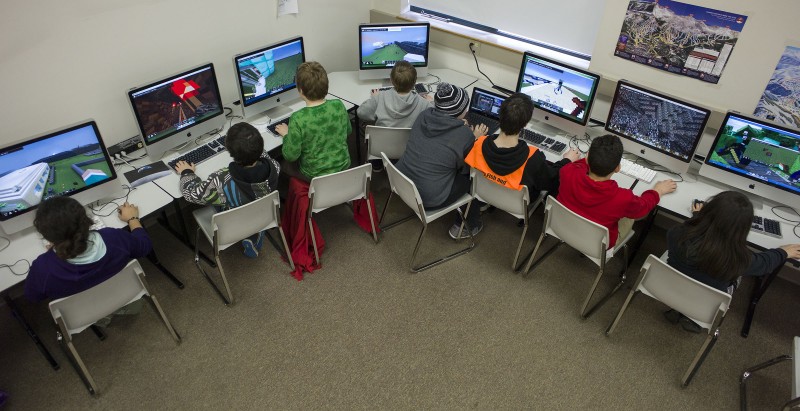
There are teachers introducing games in schools curriculum. But not so many as it would be suaitable. Playing is funny and students can learn with pleasure.

Jane McGonigal says that if  we playing, the world could be a better place. So, let's start this wonderful idea at school!

Watch her video and make your own conclusions!


"Reality is broken and we need to make it work more like a game."

Jane McGonigal


Interesting, don't you think? Let's start games in school!


G-Souto

05.04.2010


Copyright © 2010G-Souto'sBlog, gsouto-digitalteacher.blogspot.com®


Licença Creative Commons
Games can make a better world? Let's start in school by G-Souto is licensed under a Creative Commons Attribution-NonCommercial-ShareAlike 3.0 Unported License.

Credits: video TEDTalks