Showing posts with label outdoor lessons. Show all posts

Thursday, November 20, 2014

Schools : Take a selfie with a Painting


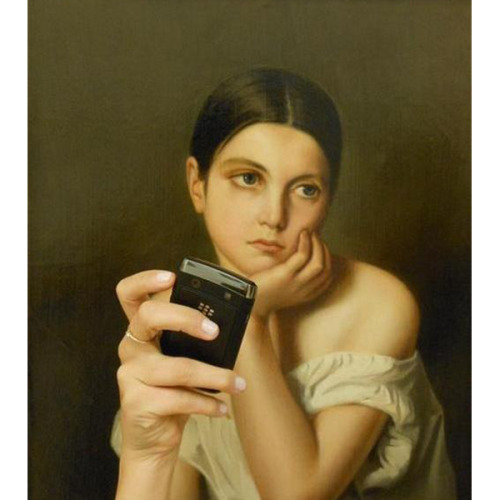
Junges Mädchen (Melancholie), von Théodore Chassériau (1835)
credits :  Kunsthalle Bremen
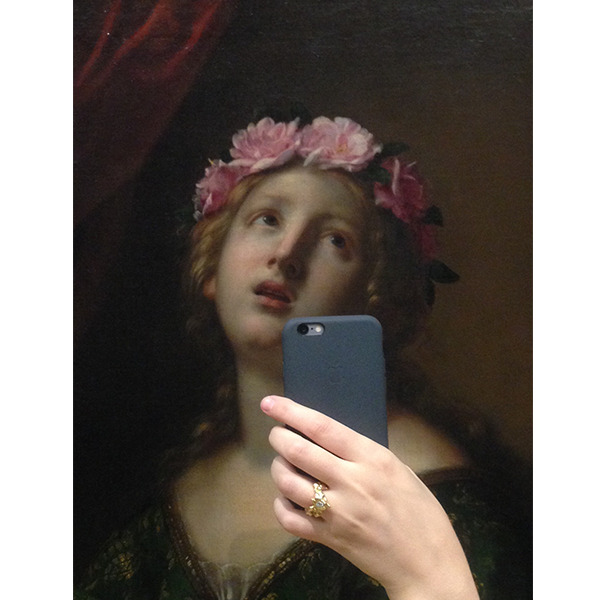
"Welcome to the Museum of Selfies. 
This is a project that started when my friend aka. right hand and I went to the National Gallery of Denmark in Copenhagen.
I took a picture for fun and liked how this simple thing could change their character and give their facial expression a whole new meaning."

Olivia Muus


credits: Forest_thicket
Of course, you read about the Olivia Muus project on the media a few days ago.

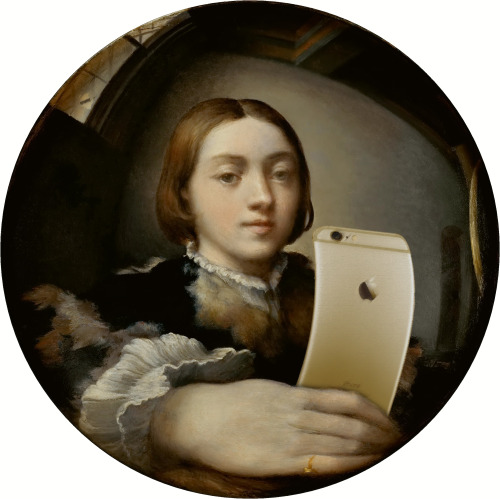
Art director Olivia Muus had the incredible idea while wandering through a museum and now she's curating the tumblr called Museum of Selfies .
"This is a project that started when my friend aka. right hand and I went to the National Gallery of Denmark in Copenhagen. I took a picture for fun and liked how this simple thing could change their character and give their facial expression a whole new meaning."


credits : Michael Shoch
She was inspired to start the series after taking a photo of her friend Sophie Hotchkiss’s hand in front of a painting at the National Gallery of Denmark in Copenhagen.

“I took a picture for fun and liked how this simple thing could change their character and give their facial expression a whole new meaning,” 

“I think it’s interesting how we get a whole new perception of a person, as soon as there is a smartphone in front of their face.”

Olivia Muus


credits: Olivia Muus
Anything that can be learned by a normal young people on a trip to a foreign country can be learned more quickly, cheaply, and easily by visiting a museum.

And museums are no longer lonely spaces without a new fresh air. People circulate, talk, ask, take pics hear music. Museums changed definitely. For good.

Watching the Museum of Selfies, we can understand that arts is no more 'untouchable' in the good sens of the word.


credits: Albertina Museum @albertina_museum


Education :

Why not adapt this event to a pedagogical project into your lessons to enhance curriculum? Students will be so excited!

Art & Selfie coul be an interesting activity to motivate the youngest to admire classical painting, don't you think?


Cindy Sherman
credits: Serralves Museum
There are things that can happen in a museum that can’t happen in a classroom. Students love to visit museums with their teachers, believe me.

I can give you two good examples:

Students love pop art, I could explore an interesting exhibition The 80's : A Topology in 2006 at Serralves Museum in Porto. They learn incredible things about the 80's throught art and relating objects. It was a two hours lesson outside the school where students learned much more about the history of the 80's than a full day in the classroom.


Paula Rego exhibition | Serralves Museum (2004)
credits: Serralves Museum

Paula Rego's Exhibition was another good lesson at the museum, in 2004. This live lesson captivated the interest of the students and introduced the narrative text. 

A fantastic pedagogical project enchanced writing skills through Paula Rego's paintings  in cross-curricular activities:

  • Languages, 
  • Arts, 
  • History, 
  • ICT

Students were so excited! For the most part, it was the first time they went to a museum. They felt happy, curious about art, made a lot of questions, took incredible notes that we discussed after the school visit. It gave the students the chance to learn better by enjoying art.

They learned a lot, the creativity they expressed in the classroom was amazing. They developed awesome projects (storytelling, drawing) with the help of technology.


credits: Matthias Eichele
We can adapt the Museum of Selfies project . Moblie phones, tablets, are now allowed at the museums.  Yes, all the museums go digital. 

Activities:
  • Invite your students to admire online the Museum of Selfies. Let them start a discussion on the theme. 
  • Students must choose a 'selfie' to make some reseach ;
  • Organize a school visit at a museum ;
  • Check to see if photography is allowed. Ask for permission to take photos during the visit ; 
  • Remember the students not to touch/accidentally fall into the painting and/or annoy the custodians or other visitors ;
  • Invite the students to take a selfie in front of a painting. Let them free to choose one painting;
  • Students must get some information about the painting they chose at the museum;
  • After the school visit, students get their selfie in the classroom an make their own research on the painting : painter, title, year, collection/museum.
  • Present an exhibition from your class at the school library. It will be a success! 
Of course you can develop some other activities:
  • Storytelling;
  • Biography;
  • Diary.

Curricula : Cross-curricular - Languages ; Arts ; History ; ICT.

Level : Secondary Education, Further Education.

Finally, choose the best 'selfies' to submit at Olivia Muus Museum by email. Every student send the email in the classroom, and the teacher can help the youngest.

Young people are great on the internet, texting, chating, tweeting, but sometimes they don't have the digital skills to send an email.

Being involved in this Museum of Selfies help the younger generation to understand the painters of the past.


credits: Olivia Muus | National Gallery of Denmark
Some thoughts :


"Museums are wonderful for school groups because you get something that goes far beyond information transmission – the possibility of enthusiasm and motivation."

Daniel Willingham , Professor of Psychology, University of Virginia

There are things that can happen in a museum that can’t happen in the classroom, be sure. And you know it. There's a difference between seeing a great work of art at the museums, and looking at a picture in a book or online, or listening a teacher tell students about it.

There's something about being in the presence of a physical painting or object that is real. They can't touch, but they feel different at a museum. It's real interactivity.

Being in the presence of a palpable object and being told it's a 200 or 300 years old is really motivating.

We can make museum visits part of the curriculum, and have broader goals than particular content knowledge. For example, helping students understand what excites and motivates and interests them can be part of the curriculum.

So it’s really about how we are creating a curriculum that is going to meet standards and goals for a particular school. 
A lot of educators are worried that their goals for education are being overwhelmed by standards that are being set externally.

Well, face this special adventure. A wonderful learning experience to your students. 

Young people need to feel free to express own choices and opinions when creating and sharing digital media content.

You will feel happy with the enthusiasm of your students.

"If a child sees and gets excited about a work of art or a science demonstration, or discovers an interest in animals, the teacher will want to pursue that and figure out how to help the child continue to pursue that interest, and how that interest can be leveraged in other content areas."

Daniel Willingham , Professor of Psychology, University of Virginia


G-Souto

20.11.2014

Wednesday, September 3, 2014

August rundown of the most read posts : back to school


Serralves | Porto, Portugal

As the summer comes to an end and the new academic year begins, teachers are a sort of excited and a bit nervous. Students are feeling more or less like you. They are excited, nervous, curious about  you and the new curriculum.

After the first two or three days at school, why not go out with your students making some interesting activities free-of-textbooks and trying to know each other better at a park near you school? 
You could walk on the park, taking some photos with your smartphones and iphones, talking about each pic. Why not share your childhood memories of playing in nature ? 

Outdoor playing activities are essential for children’s personal and academic growth. To start the new academic year, they  will feel free to let their imaginations run wild and their creativity will flourish. Find out who these kids really are. After that you will be prepared to start your lessons and find out what your students love deeply and then build the curriculum around that.

August was my summer break. However I wrote a few posts in English and French, sharing resources to ease and enrich the lives of educators and their students that will facilitate effective teaching and learning.

Here are the most popular posts of the last month:


International Youth Day 2014


Wherever you are for the new academic year, don't lose your joy and spontaneity of teaching. Teaching is a challenging job with many unique frustrations, but the rewards of teaching are numerable. Keep that in mind.

I'm back to posting the normal roundup every week.

G-Souto

03.09.2014
Copyright © 2014G-Souto'sBlog, gsouto-digitalteacher.blogspot.com®

Creative Commons License
August rundown of the most read posts : back to school bG-Souto is licensed under a Creative Commons Attribution-NonCommercial-NoDerivatives 4.0 International License.

Thursday, September 19, 2013

August roundown of the most-read posts


Credits: © GSouto
Sunset on Atlantic Ocean at Porto
Portugal

I know I know! Your saying August roundown of the most-read posts on September 19? Ok! You know I can explain!

First week of September, i was enjoying my summer holiday in Paris. It has been wonderful! Walking on the streets of Paris, all along the 'quais' de la Seine, traversing the beautiful bridgesvisiting Musée d'Orsay, Petit Palais Museum, Centre Pompidou, some monuments, the Bagatelles parc, attending two concerts. Oh! So nice. I had an incredible time!

Back home, I had the time to write just one post about MEDEA Awards before travelling again for two days.

This time, on work! I went to Lisbon to attend the Great Lisbon Conference on Games and TEL. Later, I will write my impressions about the conference.

But now, let's doing about August roundown. This is the five posts in my Summer Learning School Series of August. These are some posts with resources, tips and tools for you to try something  new or something you can take to your classroom now that we're all back to school. 

I added seven posts, on different subjects in August. Here my list of the 5 most-read of the month - presented in most reading order - together with a quote or two.

My frequent readers know that I write in three different languages: English, Français and Português.

And I am glad to see that the most-read post of August is Musique au collège: Debussy & Google doodle (en français). If you are my regular reader you know I am pledging for Music as a serious curriculum in shool education.

Google Doodle Debussy

Je ne pourrais pas perdre ça! Google Doodle rend hommage à Claude Debussy! Aujourd'hui, 22 août 2013, le compositeur français fait l'objet d'un Doodle mondial de la part de Google.

En effet, la célébration du 151ème anniversaire de la naissance de Claude Debussyest marquée par une animation sur la page d’accueil du géant de la recherche.
Éducation:

La Musique a toujours occupé une place particulière sur mon blog et dans mes cours de Langues. Selon moi, l'enseignement de la musique doit faire partie d'une éducation intégrale de tous les enfants, dès les premières années.

Apporter des connaissances sur la musique, développer des compétences pour écouter et produire la musique, doivent former les deux axes pédagogiques majeurs de l’éducation musicale dans l’enseignement scolaire. 

On connait bien ses bénéfices! La concentration, coordination, mémoire, auto-estime, joie, entre autres.

Pour l'instant, je vous propose juste de faire une belle motivation en introduisant le Doodle interatif 'free' dédié à Debussy dans l'une de vos leçons.

Disciplines: Langues; Musique; Arts (l'interdisciplinarité est bien venue)

Outils: Tablettes tactiles, smartphones, iphones.


La rentrée 2013. Allez! On y est depuis le 3 Septembre. Beaucoup de nouvelles réformes.

Ma pensée va aux 'nouveaux' jeunes enseignants! C'est tellement dur les premiers jours de cours! Et sans formation! Les rythmes,  les élèves - oh! ils ont le flair quand ils regardent les professeurs 'nouveaux' - et l'année sera difficile! Faut pas dire non.

Heureusement, il y a toujours des profs plus expérimentés qui vous soutiendront! N'hésitez pas d'appeler 'au secours' quand vous vous sentez paniquer!

Vacances, rythme scolaire, matières, évaluations... qu'est-ce qui va changer cette nouvelle année?

Certaines réformes seront mises en place, à commencer par celle des rythmes scolaires. 


Un meilleur accompagnement des jeunes professeurs


Ah! Voilà! On pense aux jeunes enseignants! La formation

Tout le monde sait que l'une des grosses difficultés des jeunes enseignants ces dernières années, c'était le manque de formation. Ils ne bénéficiaient plus d’une formation à la gestion d’une classe, et étaient catapultés directement dans les salles de cours, souvent dans des zones sensibles. 

Des écoles supérieures du professorat et de l’éducation (ESPE) seront créées dès la rentrée.  

Les professeurs y feront une formation pratique pour apprendre à enseigner, transmettre leur savoir, gérer mieux une classe agitée, savoir introduire les technologies. Pas si faciles que ça bien qu'ils appartiennent déjà tous à l'ère du numérique.
  

"In a handful of nations, virtually all children are learning to make complex arguments and solve problems they’ve never seen before. They are learning to think, in other words, and to thrive in the modern economy. What is it like to be a child in these new education superpowers?"

Parents and Teachers:The Smartest Kids in the World. Amanda Ripley's new book is on sale since August 13, 2013. It chronicles life inside the world's new education superpowers.

In the new book, The Smartest Kids in the World: And How They Got That Way, the journalist for Time and The Atlantic magazines, and author Amanda Ripley sets the scene for what is turning out to be battle for the soul of US Education.

Using PISA 2009 results as the backbone of her story, Ripley sets out to find out why it is that American students are falling behind their contemporaries in countries that aren’t as wealthy or innovative as the United States.

“PISA could not tell me how those countries got so smart, or what life was like for kids in those countries, day in and day out, compared to life in America,” 

Amanda Ripley's book 


Credits video: Amanda Ripley's website 

So, she followed three Americans embedded in these countries for one year. Kim, 15-year-old, moving from Oklahoma to Finland; Eric, 18-year-old, exchanging a high-achieving Minnesota suburb for a booming city in South Korea for a year; and Tom, 17, leaving a historic Pennsylvania village for a gritty city in Poland

According to Amanda Ripley, parents have a critical role to play - but not always in the way we think. Effective parents "let their children make mistakes and then get right back to work. They teach them good habits and give them autonomy," 


Perseid 2012
David Harpe, Boulder USA

"We have found that one meteor shower produces more fireballs than any other," (...) "It's the Perseid meteor shower, which peaks on August 12th and 13th."

Bill Cooke, NASA's Meteoroid Environment Office 

Catching the Falling Stars: Science curriculum. According to NASA research, the upcoming Perseid meteor shower produces more fireballs — bright meteors that streak across the sky — than any other annual shower, earning it the title of "fireball".


Of course, you must keep the idea of the beauty and the pedagogical watching of this marvelous summer falling stars shower.

Education:

Most of us were on vacation. But students could watch this exciting event of the summer with family or in campus summer.

Back to school, i you are a Sciences teacher you can do amazing lessons displaying this video or other to explain the Perseid show.

"The Perseid are the highlight of the astronomical calendar and a must see! They are ideal for those who want to see a meteor/ shooting star for the first time.


"Every child needs nature. Not just the ones with parents who appreciate nature. Not only those of a certain economic class or culture or gender or sexual identity or set of abilities. Every child."
Richard Louv

Education: Time for Vitamine 'N'. It is not the first time I write about the importance of Nature in Education. Children's Day: let's go outdoor; Environmental Education and outdoorWorld Environmental Day in School EducationIberian wolf as environmental education; are some of the publications on my blog. My regular readers know well.


So The Nature Principle and Last Child in the Woods by Richard Louv could be interesting for parents and for teachers, of course if they are new for you.

Education:

Research suggests that exposure to the natural world – including nearby nature in cities – helps improve human health, well-being, and intellectual capacity in ways that science is only recently beginning to understand.

What do we know about how human beings, particularly children and young people are affected by the absence of nature’s intrinsic benefits? 

And teachers! Believe it! Nature is also good for stimulating creativity. Research shows that children play more creatively in free, outside space and will be more creative in school activities.

Well, we all deserve some vacation after a good school year. And summer time is the most most enjoyable time of the year. Hoping you had a wonderful summer time break and you are back to school fresh and full of new ideas to share with your students in the classroom.

G-Souto

20.09.2013
Copyright © 2013G-Souto'sBlog, gsouto-digitalteacher.blogspot.com®

Licença Creative Commons
August rundown of the most-read posts bG-Souto is licensed under a Creative Commons Attribution-NonCommercial-ShareAlike 3.0 Unported License.