Showing posts with label Grace Hopper. Show all posts

Friday, May 16, 2014

Women in Science : Maria Gaetana Agnesi & Dorothy Hodgkin


Google Doodle Maria Gaetana Agnesi's 296th birtday


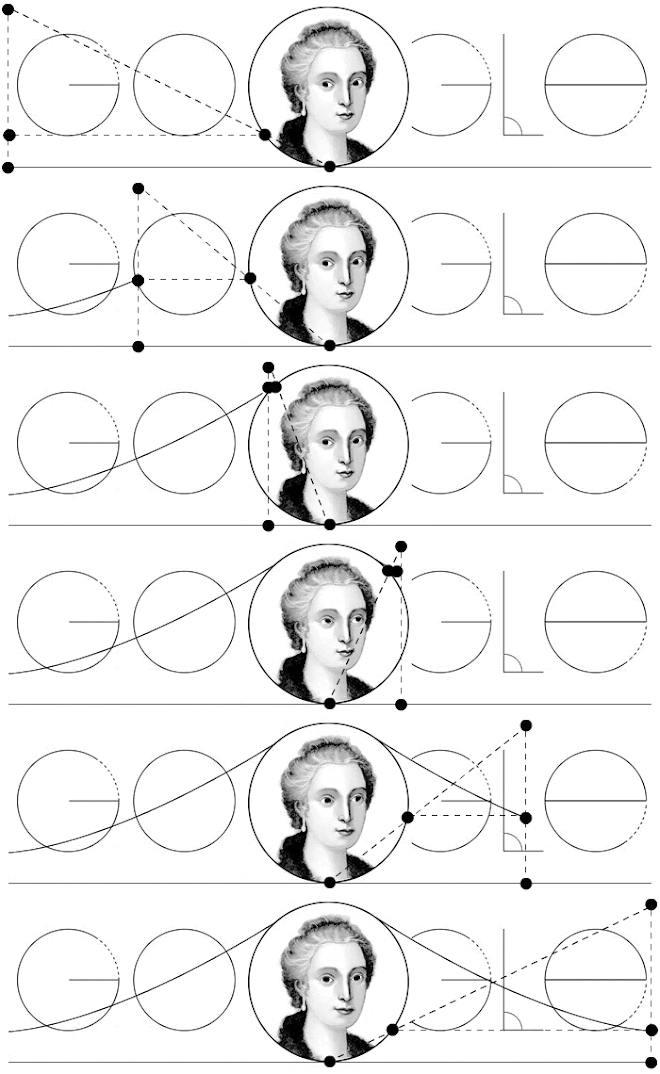
Four days afteDorothy Hodgkin, a British chemist, Google's doodle, celebrates the 296th birthday of the Italian mathematician and philosopher Maria Gaetana Agnesi. The Doodle showsthe Witch of Agnesi curve. 
The mathematical curve named after her is achieved by drawing a line from the source through the circle of radius.


Maria Gaetana Agnesi
credits: Alamy Stock Photo

Their real-life uses were only fully recognised in the late 20th and early 21st centuries, by physicists and mathematicians working with x-rays, optical lines, and electrical circuits.

Maria Gaetana Agnesi:

Gaetana Agnesi, born on 16 May 1718, to a wealthy and literate Milanese silk merchant, Agnesi was recognised as a child prodigy and became interested in mathematics and several modern languages, as well as Latin, Greek, Hebrew.

Propositiones philosophicae or “Propositions of Philosophy”, a series of essays on natural philosophy and history based on her discussions before such gatherings, was published in 1738.


Maria Gaetana Agnesi

At an early age she composed and delivered an hour-long speech in Latin to some of the most distinguished intellectuals of the time on the subject of women’s right to be educated. Wow ! That's interesting if we think she lived in the 18th century.


Some decades before Leopold Mozart dragged his young son Wolfgang Mozartto any prince or archbishop who had half a chance of offering a decent appointment, a Milanese girl with a genius intellect was made the center of an ongoing academic circus routine by her status-hunting father.


Maria Gaetana Agnesi
Library of Congress, Washington, D.C. (digital file no. 3b09774)

Agnesi is believed to be the first woman in the west to gain recognition as a mathematician, at a time when most Europeans did not see the value of education for women.

Maria Gaetana Agnesi, remembered today only for a curve, the Witch of Agnesi, which shows up in the margins of introductory calculus texts from time to time, and which she didn’t actually discover.


Maria Gaetana Agnesi

Agnesi best-known work, Instituzioni analitiche ad uso della gioventù italiana, or the Analytical Institutions for the Use of Italian Youth, explored algebra and analysis (two volumes). In it she discusses the algebraic curve, now known as the witch of Agnesi.

After her father’s death, she apparently lost all interest in scientific work and turned to religion and devoted the last four decades of her life to studying theology and to charitable work, taking charge of a home for the poor and infirm in 1771.


Maria Gaetana Agnesi stamp
Italia, 2018
For the remaining fifty years of her life, she gave comfort to the mentally ill and elderly from 1771, and hunted the streets for children to be brought to her catechism class. The woman who had been regarded as one of the greatest minds of Italy, consulted from every corner of Europe for her advice on matters mathematical and philosophical, died unremarked on 9 January 1799.


Dorothy Hodgkin:
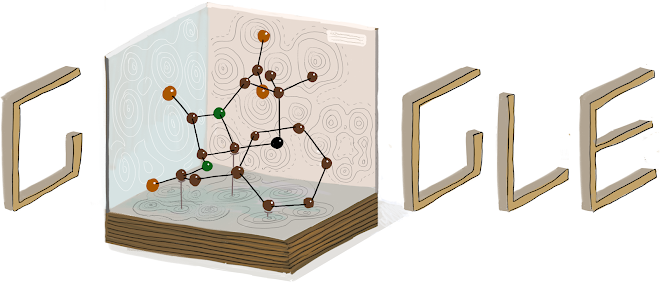


Google Doodle Dorothy Hogkin's 104th birthday
On Monday, 12th May, Google Doodle celebrated Dorothy Hodgkin's 104th birthday, the British chemist.


Dorothy Hodgkin
credits: : Harold Clements / Freelancer


Hodgkin was the third woman to be awarded the Nobel Prize in Chemistry (1964) which she won for her discovery of the structure of vitamin B12 in 1964.


Dorothy Hodgkin and her husband Thomas at the Nobel ball in 1964 
© The Hodgkin Family
She is the only British woman to have won the prize to date. Born in Cairo on May 12, 1910 to English parents, Hodgkin went on to study chemistry at the University of Oxford's Somerville College, before going on to earn her PhD at the University of Cambridge.


Dorothy Crowfoot Hodgkin honored  postage stamp 
The biochemist was best known as a pioneer in the advancement of the technique of X-ray crystallography, a method used to determine the three-dimensional structure of biomolecules.


Dorothy Hodgkin
Hodgkin's love of her work was clear, and she was quoted as saying: 

"I was captured for life by chemistry and by crystals".
She was also know for her contribution to the discovery of the structure of insulin and penicillin.
She returned to Oxford in 1934 and in 1936 was appointed Somerville's first fellow and tutor in chemistry – a post which she held until 1977.


Dorothy Hodgkin a life
by Georgina Ferry

She was the chair of the Pugwash Conference from 1976 to 1988, an organization inspired by a manifesto by Albert Einstein and Bertrand Russell that works to reduce harm and conflict caused by scientific discoveries (like nuclear weapons.)


Girls in science
credits: unknown

Education:

No doubt! Google loves women in science. Ada Lovelace, Rosalind Franklin, Marie Curie, Grace HoperDorothy Hodgkin and today Gaetana Agnesi. And of course, women in Humanities as Hannah Arendt, Catherine Mansfield, Simone de Beauvoir among others.

The discussion of a better understanding of the role of the girls and young women dimension in many different STEM areas of study, and how these findings can lead to new ideas and new markets for girls and women in science knowledge is on the news every day.

This must begin early in school where girls must be encouraged to access to science and technology


Girls in Science
via Cambridge Assessment

The aim is to encourage creativity in the field of science and new technologies and highlight the importance of developing innovative skills at an early age.

However I read on The Guardian, this week, an interesting article : Women in technology : no progress on inequality for 10 years says:

" A report by the research firm Gartner on chief information officers (CIOs) and the challenges they face in the industry has shown that the percentage of women taking the role has remained largely static at 14% since 2004, when the firm started gender analysis.
The situation in the EU is also worse than developing nations and the US, where the proportion of women in leadership roles is higher. Gartner’s data showed women occupied 11.2% of technology leadership roles in Europe, the Middle East and Africa compared with 18.1% in North America, 13.4% in Latin America and 11.5% in Asia."

Samuel Gibbs, Technology

Some thoughts:
All the initiatives trying to change this situation are welcome. And teachers have an important role on it by fighting inequality for girls in science.
You can begin to include Doodles of women in science into school curriculum to motivate girls. 

G-S 
16.05.2014
Copyright © 2014G-Souto'sBlog, gsouto-digitalteacher.blogspot.com®
Creative Commons License
Women in Science : Google doodles at school bG-Souto is licensed under a Creative Commons Attribution-NonCommercial-NoDerivatives 4.0 International License.

Monday, December 9, 2013

November : The most popular posts


Grace Hopper Google Animated Doodle

Humans are allergic to change. They love to say, "We've always done it this way." I try to fight that. That's why I have a clock on my wall that runs counter-clockwise."

Grace Hopper


Trbute to Grace Hopper

Yes. Today Google Animated Doodle honors computer scientist pioneer Grace Hopper, United Sates Navy Rear Admiral born on December 9, 1906.
Hopper is known for being one of the designers of COBOL, one of the first modern programming languages, which was created in 1959 during the Conference on Data Systems Languages.
It's interesting because it coincides with the Computer Science Education Week which begins today. 
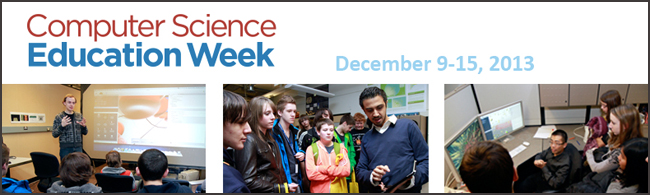
Computer Science Education Week (Dec 9 - 15, 2013) is an annual international event dedicated to showing K-12 students the importance of computer science education. The event is organized by the Computing in the Core coalition and Code.orgThe week wiil be full of resources and events to help curriculum directors and educators integrate and implement computer science lessons.

Europe Code Week
Like it is interesting because Europe Code week has been celebrated all over the Europe on November 25-30. 
So Grace Hopper quote could be my inspirational quote for this post. I believe and practice the change in education. Students welcome changes in our lessons.

Back my regularly scheduled program today! November, the most popular posts of the month.

So, let's doing! This is November in review of education tips.

I added six posts in November on different subjects. Here my list of the 5 most popular, presented in most reading order. 

In November, I wrote posts in EnglishFrançais. The two most read were wirtten in French.

I am happy to see that the most-read post of the month is a serious matter: Éducation: Parole aux enfants victimes d'exclusion. Child poverty is something sad every where and in developed countries, it is a flagellum in our days.


Child Poverty in Developed Countries

« Il y a un risque de génération sacrifiée »
Michèle Barzach, la présidente d’Unicef France. 

La Jorunée Internationale des Droits de L'Enfant établie par les Nations Unies (UN) en 1954 se célèbre le 20 Novembre.

Dans une étude inédite très récente, l'Unicef France s'est penché sur le lien qui existe entre "privations et exclusion sociale" chez les enfants. 

Entre février et juillet 2013, 22.500 enfants, âgés de 6 à 18 ans, et originaires de plus de soixante-dix villes de France, ont répondu à 133 questions sur leur vie quotidienne.

Crédits: Infographie Unicef

Les résultats de la consultation ont montré que près d'un jeune sur cinq est en situation "préoccupante" d'exclusion sociale.

Et tout est lié. Cette étude réalisée sous l'égide de l'Unicef France le prouve: pauvreté et exclusion sociale sont bien liées. 

Les 14,5% d’entre eux qui sont en situation de grande ou d’extrême privation voient également leur qualité de vie se dégrader proportionnellement à leur niveau de pauvreté. 


Photo: Lorea Marchand
Crédits: Unicef

Selon cette étude, 7% d’entre eux souffrent d'une "exclusion extrême". Le rapport mesure l’intégration des plus jeunes à l’école, à la maison, ainsi que dans la ville. 

"Vivant dans la précarité, ils se perçoivent aussi, plus en difficulté à l’école ou dans leur famille, plus éloignés du système de soins, plus marginalisés dans leur quartier, plus en insécurité dans leur environnement proche et moins associés à la vie de la collectivité que les autres enfants." 

Unicef

"Plus un enfant est dans la précarité, plus il connaît des difficultés à s'intégrer dans l'ensemble de sa vie", observait ce matin en conférence de presse Michèle Barzach, la présidente d’Unicef France. 


Comme enseignants, nous nous rendons bien compte de tous ces problèmes de précarité, exclusion, harcèlement, entre copains ou violence de la part des parents, défavorisent de plus en plus les droits des enfants et des jeunes ados, diminuent leur intelligence, ne leur permettant pas de faire des études.


"Les vrais artistes ne méprisent rien ; ils s'obligent à comprendre au lieu de juger." 

Albert Camus

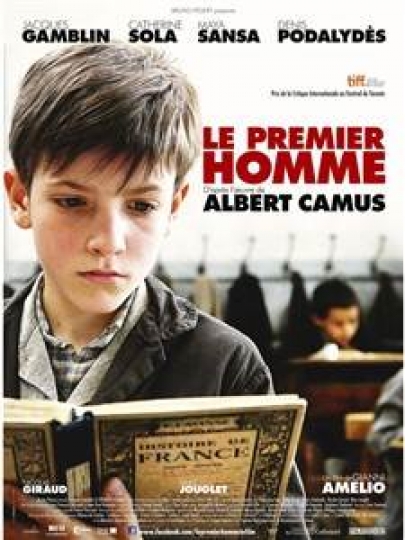
Albert Camus, écrivain, philosophe, romancier, dramaturge, essayiste et nouvelliste français, né le 7 novembre 1913, fut aussi un journaliste engagé dans la Résistance Française (II Guerre Mondiale) et dans les combats moraux de l'après-guerre.

Google a consacré un Doodle pour le centenaire de l'écrivain Albert Camus. Et l'auteur fut aussi à l'honneur "sur les planches marseillaises et aixoises où ont été présentées une création, L'étranger, et deux oeuvres théâtrales, Les justes et Caligula". Trois spectacles fêtent donc le philosophe. Sans oublier l'exposition à Aix-en-Provence.

"Je crois que ce qui est beau chez lui pour les jeunes générations, c'est quelque chose qui peut être appliqué à soi-même et en même temps donner un élan collectif".

Aurélie Filippetti 

Discours d'Albert Camus lors de sa remise au Prix Nobel

L'auteur de La Peste et de L'Etranger est un des écrivains français les plus importants du XXème siècle, probablement le plus connu, cité et traduit à l'étranger. 
Prix Nobel de Littérature (1957) " for his important literary production, which with clear-sighted earnestness illuminates the problems of the human conscience in our times", il semblait naturel que ses écrits soient célébrés. Mais ni la Bibliothèque nationale de France ni Beaubourg ont acccueilli de rétrospective.

Dommage qu'un auteur aussi connu dans le monde et tellement lu et étudié ( au Secondaire à peine quelques oeuvres ) mais à la fac (études, recherches)  - Littérature, Philosophie - soit si 'oublié' 53 ans après sa mort. Et alors, un centenaire!
Éducation:
Cent ans après sa naissance, Camus continue une figure mythique de la littérature française et mondiale, par "sa pensée visionnaire, sa soif de justice, son ittinéraire exceptionnel".

Ressources pédagogiques: A lire sur le post
"Chaque génération, sans doute, se croit vouée à refaire le monde. La mienne sait pourtant qu'elle ne le refera pas. Mais sa tâche est peut-être plus grande. Elle consiste à empêcher que le monde se défasse."

Albert Camus,


(extrait du Discours de réception du Prix Nobel de Littérature, 1957)
Europe Code Week

Europe Code Week, took place between November 25 and 30, 2013 all over Europe. It was an open source initiative, aiming to connect initiatives that could encourage European citizens and students to learn more about the art and science of computer programming.

"Computer programming is being heralded as the new literacy, yet it is still widely perceived as a skill that can only mastered with a computer science degree. 

With the wider availability of internet connectivity and freely available, easy to use technologies, this is no longer the case."

Technology is shaping young lives, bringing crazy ideas to life, build things that will bring joy to others.

"It's never been easier to make your own app, build your own robot, or invent flying cars, why not! It's not an easy journey, but it's a journey full of creative challenges, a supportive community, and tons of fun."
Why Coding? Read on the post


I am sure you were ready to accept the challenge and engaged you students to become makers?
Sometimes, I share with you some good talks about Education. I think it is important to hear specialists and discuss their ideas.

Today, I would like to share George Siemens, Professor at Athabasca University (Canada), in a talk about changing schools, changing knowledge.


Education:

Interesting, isn't it? Change knowledge needs and structures are influencing the development of new learning systems and models. And it is not easy. 
A good critical talk. He provides a critical evaluation of the testing/evaluation narrative in education and of the future of education.

As an educationalist, I think these kind of talks of innovative thinkers about different subjects touching Education are always very useful to us.

It's up to us reflect and reach some conclusions.

Don't forget to review Education: Stop Natural Disasters wich share some educational  digital resources or World Science Day for Peace and Development at school education sharing educational resources and activities.

I hope that all of you had a great weekend and feel ready for the new week ahead. As I do every month, I've put together a short list of the most popular posts of the previous month. 

Hoping that all of you tried some of my tips, resources or ideas to change your lessons and surprise your students.

Have a great  week !

G-Souto

09.12.2013
Copyright © 2013G-Souto'sBlog, gsouto-digitalteacher.blogspot.com®

Licença Creative Commons
November : The most popular posts bG-Souto is licensed under a Creative Commons Attribution-NonCommercial-ShareAlike 3.0 Unported License.