Showing posts with label Marie Curie. Show all posts

Friday, May 16, 2014

Women in Science : Maria Gaetana Agnesi & Dorothy Hodgkin


Google Doodle Maria Gaetana Agnesi's 296th birtday


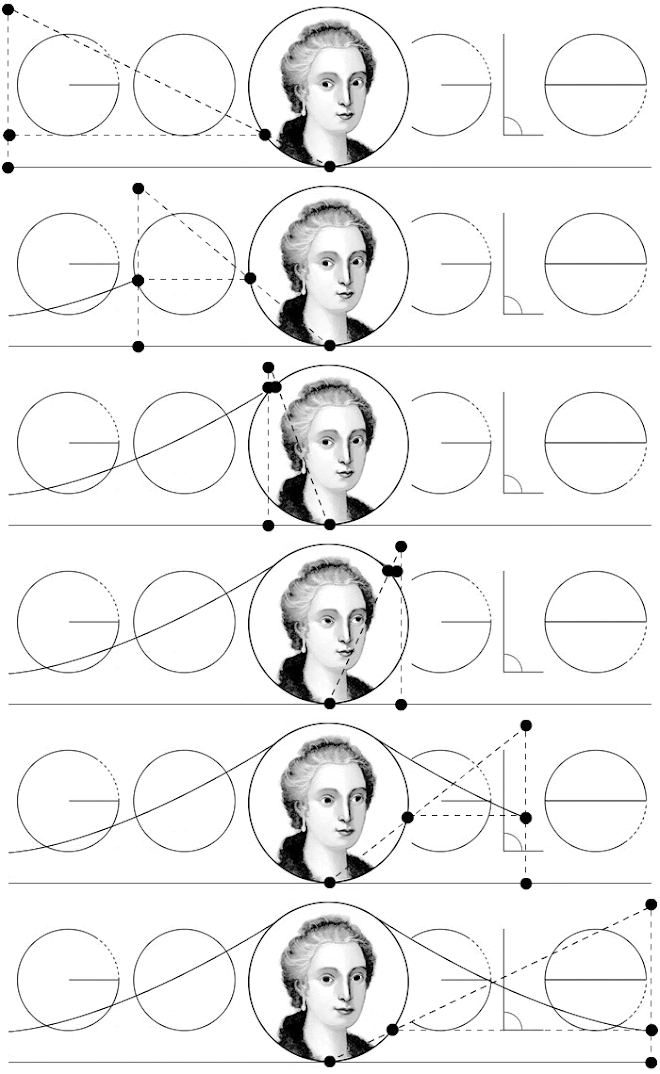
Four days afteDorothy Hodgkin, a British chemist, Google's doodle, celebrates the 296th birthday of the Italian mathematician and philosopher Maria Gaetana Agnesi. The Doodle showsthe Witch of Agnesi curve. 
The mathematical curve named after her is achieved by drawing a line from the source through the circle of radius.


Maria Gaetana Agnesi
credits: Alamy Stock Photo

Their real-life uses were only fully recognised in the late 20th and early 21st centuries, by physicists and mathematicians working with x-rays, optical lines, and electrical circuits.

Maria Gaetana Agnesi:

Gaetana Agnesi, born on 16 May 1718, to a wealthy and literate Milanese silk merchant, Agnesi was recognised as a child prodigy and became interested in mathematics and several modern languages, as well as Latin, Greek, Hebrew.

Propositiones philosophicae or “Propositions of Philosophy”, a series of essays on natural philosophy and history based on her discussions before such gatherings, was published in 1738.


Maria Gaetana Agnesi

At an early age she composed and delivered an hour-long speech in Latin to some of the most distinguished intellectuals of the time on the subject of women’s right to be educated. Wow ! That's interesting if we think she lived in the 18th century.


Some decades before Leopold Mozart dragged his young son Wolfgang Mozartto any prince or archbishop who had half a chance of offering a decent appointment, a Milanese girl with a genius intellect was made the center of an ongoing academic circus routine by her status-hunting father.


Maria Gaetana Agnesi
Library of Congress, Washington, D.C. (digital file no. 3b09774)

Agnesi is believed to be the first woman in the west to gain recognition as a mathematician, at a time when most Europeans did not see the value of education for women.

Maria Gaetana Agnesi, remembered today only for a curve, the Witch of Agnesi, which shows up in the margins of introductory calculus texts from time to time, and which she didn’t actually discover.


Maria Gaetana Agnesi

Agnesi best-known work, Instituzioni analitiche ad uso della gioventù italiana, or the Analytical Institutions for the Use of Italian Youth, explored algebra and analysis (two volumes). In it she discusses the algebraic curve, now known as the witch of Agnesi.

After her father’s death, she apparently lost all interest in scientific work and turned to religion and devoted the last four decades of her life to studying theology and to charitable work, taking charge of a home for the poor and infirm in 1771.


Maria Gaetana Agnesi stamp
Italia, 2018
For the remaining fifty years of her life, she gave comfort to the mentally ill and elderly from 1771, and hunted the streets for children to be brought to her catechism class. The woman who had been regarded as one of the greatest minds of Italy, consulted from every corner of Europe for her advice on matters mathematical and philosophical, died unremarked on 9 January 1799.


Dorothy Hodgkin:
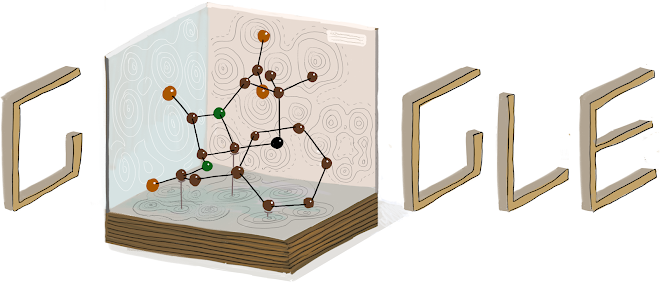


Google Doodle Dorothy Hogkin's 104th birthday
On Monday, 12th May, Google Doodle celebrated Dorothy Hodgkin's 104th birthday, the British chemist.


Dorothy Hodgkin
credits: : Harold Clements / Freelancer


Hodgkin was the third woman to be awarded the Nobel Prize in Chemistry (1964) which she won for her discovery of the structure of vitamin B12 in 1964.


Dorothy Hodgkin and her husband Thomas at the Nobel ball in 1964 
© The Hodgkin Family
She is the only British woman to have won the prize to date. Born in Cairo on May 12, 1910 to English parents, Hodgkin went on to study chemistry at the University of Oxford's Somerville College, before going on to earn her PhD at the University of Cambridge.


Dorothy Crowfoot Hodgkin honored  postage stamp 
The biochemist was best known as a pioneer in the advancement of the technique of X-ray crystallography, a method used to determine the three-dimensional structure of biomolecules.


Dorothy Hodgkin
Hodgkin's love of her work was clear, and she was quoted as saying: 

"I was captured for life by chemistry and by crystals".
She was also know for her contribution to the discovery of the structure of insulin and penicillin.
She returned to Oxford in 1934 and in 1936 was appointed Somerville's first fellow and tutor in chemistry – a post which she held until 1977.


Dorothy Hodgkin a life
by Georgina Ferry

She was the chair of the Pugwash Conference from 1976 to 1988, an organization inspired by a manifesto by Albert Einstein and Bertrand Russell that works to reduce harm and conflict caused by scientific discoveries (like nuclear weapons.)


Girls in science
credits: unknown

Education:

No doubt! Google loves women in science. Ada Lovelace, Rosalind Franklin, Marie Curie, Grace HoperDorothy Hodgkin and today Gaetana Agnesi. And of course, women in Humanities as Hannah Arendt, Catherine Mansfield, Simone de Beauvoir among others.

The discussion of a better understanding of the role of the girls and young women dimension in many different STEM areas of study, and how these findings can lead to new ideas and new markets for girls and women in science knowledge is on the news every day.

This must begin early in school where girls must be encouraged to access to science and technology


Girls in Science
via Cambridge Assessment

The aim is to encourage creativity in the field of science and new technologies and highlight the importance of developing innovative skills at an early age.

However I read on The Guardian, this week, an interesting article : Women in technology : no progress on inequality for 10 years says:

" A report by the research firm Gartner on chief information officers (CIOs) and the challenges they face in the industry has shown that the percentage of women taking the role has remained largely static at 14% since 2004, when the firm started gender analysis.
The situation in the EU is also worse than developing nations and the US, where the proportion of women in leadership roles is higher. Gartner’s data showed women occupied 11.2% of technology leadership roles in Europe, the Middle East and Africa compared with 18.1% in North America, 13.4% in Latin America and 11.5% in Asia."

Samuel Gibbs, Technology

Some thoughts:
All the initiatives trying to change this situation are welcome. And teachers have an important role on it by fighting inequality for girls in science.
You can begin to include Doodles of women in science into school curriculum to motivate girls. 

G-S 
16.05.2014
Copyright © 2014G-Souto'sBlog, gsouto-digitalteacher.blogspot.com®
Creative Commons License
Women in Science : Google doodles at school bG-Souto is licensed under a Creative Commons Attribution-NonCommercial-NoDerivatives 4.0 International License.

Monday, November 7, 2011

Schools : Marie Curie: 100th Anniversary Nobel Prize in Chemistry


Portrait Marie Curie, 1921

"Nothing in life is to be feared, it is only to be understood. Now is the time to understand, so that we may fear less."

Marie Curie


Google doodle Marie Curie's 144th Brithday
https://www.google.com/doodles/

I am a big fan of Google doodles! You know it! It is not the first time I wrote about Google doodles. Why? Because doodles can be interesting resources for educators.

Today, Google honors Marie Curie, physicist-chemist, with an impressionistic doodle on her 144th birth anniversary

Marie Curie was the first person to win two Nobel Prizes : Physics and Chemistry. She is the only woman to win a Nobel Prize in two fields. Nobel Prize for Physics in 1903 (with her husband, Paul Curie) and Nobel Prize for Chemistry, in 1911. Marie Curie is the first person honored with two Nobel Prizes. 


"The doodle shows Marie Curie working at a table. The Google logo looks like a radioactive trace."

Of course you hear about 2011 as the International Year of Chemistry ! And it ends soon. So, let's talk about it, taking advantage of this tribute


I already wrote about this important event on two or three posts. And in all of them, I emphasized Marie Curie

First on International Woman's Day Centenary, the official theme was "Equal access to education, training and science and technology: Pathway to decent work for women".


Google doodle Robert Bunsen's 200 Birthday
https://www.google.com/doodles/robert-bunsens-200th-birthday


After, on my post Google celebrates Robert Bunsen and 'International Year of Chemistry 2011' where I mentioned the video message by Irina Bokova's, Director General of UNESCO, for the Opening of the International Year of Chemistry (IYC) 2011.


Nobel Prize 1911 Marie Curie

"Marie Curie was honored with a Nobel Prize in Chemistry (1911). Since then, only  3 women having been honored on this way. It's important to encourage young women to contribute their talent to this exciting field."

Irina Bokova, Director General UNESCO


Again, on my post Rap in Chemistry curriculum? Fantastic! Inspired by a good and funny video created by the rapper Oort Kuiper  who wrote here

And today! Marie Curie is an inspiring woman for all young girls who choose Science and Chemistry to complete their higher education.


Marie Curie Actions EU

Last September, Polish Presidency of the European Union and the European Commission organised the Marie Curie Researchers  Symposium Science - Passion, Mission, Responsabilities to celebrate the 15th anniversary of the Marie Curie Actions and the 100th anniversary of Marie Sklodowska-Curie's Nobel Prize for Chemistry.


The Geffen Playhouse in Los Angeles, CA, is producing the world premiere of Radiance: The Passion of Marie Curie. It will run from November 1 through December 11, 2011.

"Radiance delves into the life and romance of one of the most brilliant female scientists in history.  Famous for her groundbreaking research in radioactivity, Curie was the only person ever to win two Nobel Prizes in multiple sciences, but not without a struggle. For all the answers that come to her in the lab, Curie’s life is peppered with questions of how to realize the passion she has for both knowledge and love." 


Ciclo de conferências :uma questão de química

Em Portugal, a Fundação Calouste Gulbenkian promove um "Ciclo de Conferências Ciência - Uma questão de química".

É já amanhã, dia 8 Novembro 2011, que terá lugar a conferência  As Químicas do Nobel por Raquel Gonçalves-Maia, às 18:00, a transmitir aqui (compatível com iPhone, iPad e Android).


Education:

It is a wonderful year to promote Science and Chemistry studies for girls in the schools and universities. Marie Curie is the best example that educators could share with female students.

Marie Curie demonstrates that young women who choose scientific careers, stunning success is possible.


Other resources :
  • 100 years : Marie Cury & the Great War here
  • A History of Chemistry here
  • Life Without Chemistry - Chemistry at Trinity College Dublin - Professor David Grayson. TCD Open Day January 2011 here

"I am among those who think that science has great beauty. A scientist is his laboratory is not only a technician: he is also a child placed before natural phenomena which impress him like a fairy tale."

Marie Curie


(in 2011, I think Marie Curie would say 'her' and 'she')


G-Souto


07.11.2011

Copyright © 2011G-Souto'sBlog, gsouto-digitalteacher.blogspot.com® 

Licença Creative Commons
Marie Curie: 100th Anniversary Nobel Prize in Chemistry by G-Souto is licensed under a Creative Commons Attribution-NonCommercial-ShareAlike 3.0 Unported License.


References:

Marie Curie Actions | EC Research & Innovation
http://www.mariecurie2011.pl/Default.aspx?id=3

Radiance: The Passion of Marie Curie | IYC 2011
http://www.chemistry2011.org/participate/activities/show?id=1620

Thursday, March 31, 2011

Schools : Robert Bunsen & International Year of Chemistry 2011 : resources


Robert Wilhelm Bunsen
 engraving by C. Cook, 1850s

"Science or chemistry was never one of my stronger classes in school, but I get nostalgic every time I see a chemistry set and a Bunsen burner." 

Born March 30 or 31 - biographers diverge - 1811, in Göttingen, Germany, the German chemist who, with Gustav Kirchhoff, about 1859 observed that each element emits a light of characteristic wavelength.

Such studies opened the field of spectrum analysis, which became of great importance in the study of the Sun and stars and also led Bunsen almost immediately to his discovery of two alkali-group metalscesium and rubidium.


Bunseniana
Adolf Meyer, 1904


Bunsen had a great reputation for warm heartedness, and enjoying jokes and fun. His students admired him greatly. He told a great many anecdotes, published after his death in a short book called 
Bunseniana.


Google Doodle 200th Birthday Robert Bunsen


Google Doodle:

Today, March 31, Google celebrates the 200th birthday of one of the most important chemists, Robert Wilhelm E. Bunsen. He investigated emission spectra of heated elements and discovered cesium (1860) and rubidium (1861) with Gustav Kirchhoff. 

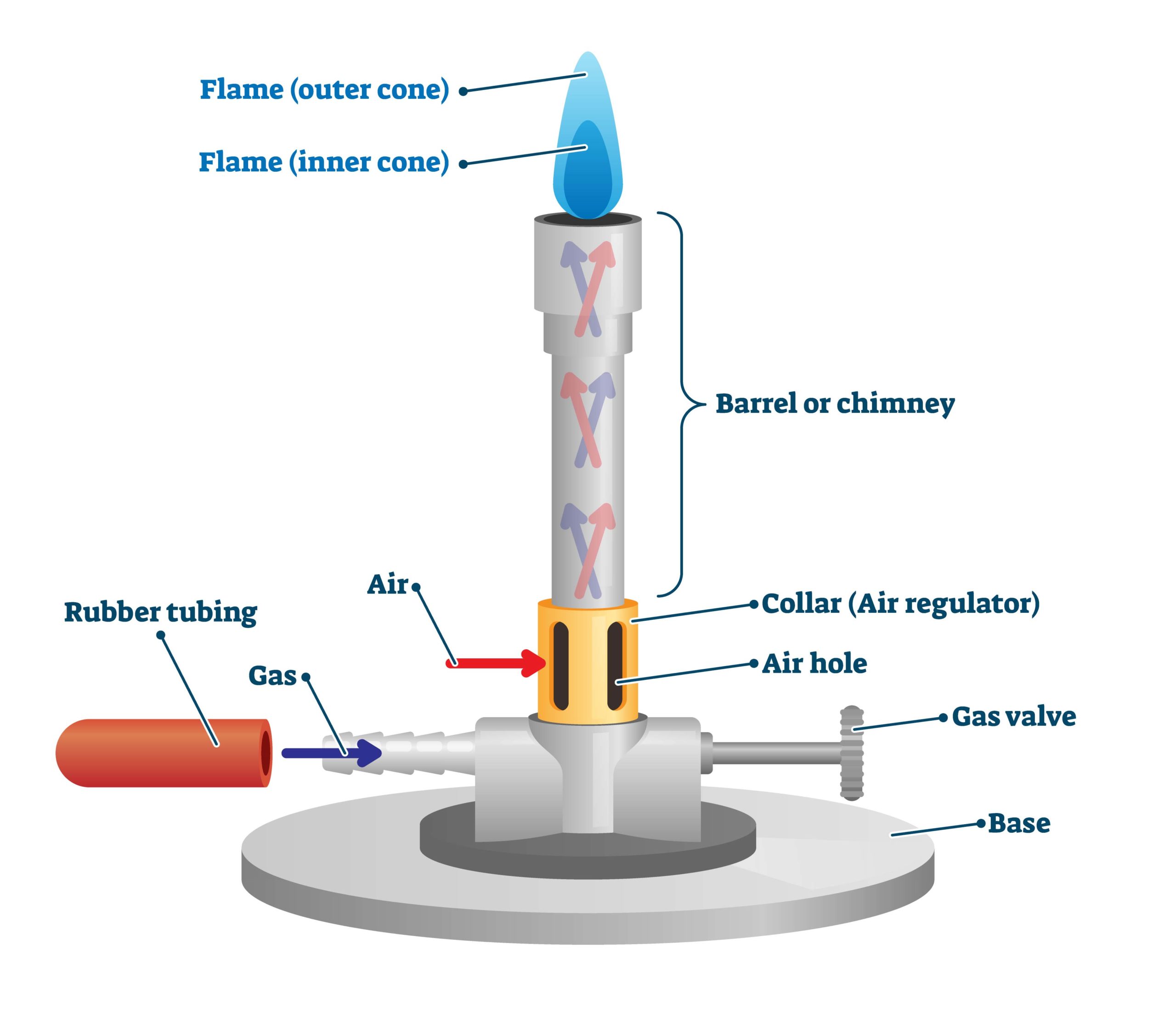
Bunsen burner
credits: Wikipedia

Bunsen was a pioneer in photo chemistry. He developed the laboratory gas burner, now popular as the Bunsen burner and still in use in our days.

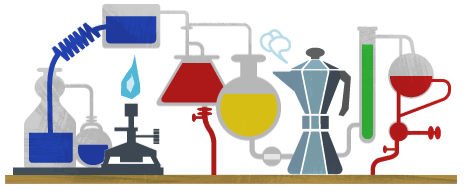
Once again, Google reminds us an important fact or person, on the occasion, an interactive chemical laboratory Doodle. Why? To celebrate the flaming Bunsen burner. 


Invite students to visit the Google Doodles page, if they don't live in Germany, Otherwise, Google browser presents the Doodle. On updated web browsers, students can move their mouse - now touching screen - anywhere on the screen to control the intensity of the flame and the level of the fluids in the beakers. 

"It was a pretty intense session getting all of the work done in time for the doodle to launch, but don't worry, we managed to avoid any (major) lab disasters and/or explosions in the process."

Mike Dutton & Jonathan Tang


Gustav Kirchhoff & Robert Bunsen
Inventors of a Spectroscope

Bunsen–Kirchhoff Award, named after Bunsen and his colleague Gustav Kirchhoff, is a prize awarded in recognition for "outstanding achievements" in analytical spectroscopy.


Bunsen using a spectroscope
credits: New York Public Library/Science Source


Some information:

After taking a Ph.D. in Chemistry at the University of Göttingen in 1830, Bunsen taught at the Universities of Marburg and Breslau and elsewhere. As professor at Heidelberg (1852–99), he built up an excellent school of chemistry. 

Never married, he lived for his students, with whom he was very popular, and his laboratory. He chiefly concerned himself with experimental and analytical work.

In 1860 Robert Bunsen and Gustav Kirchhoff discovered two alkali metals, cesium and rubidium, with the aid of the spectroscope they had invented the year before. 

Bunsen and Kirchhoff met and became friends in 1851, when Bunsen spent a year at the University of Breslau, where Kirchhoff was teaching. 


Robert Bunsen
credits: Gary Brown/ Science Photo Library


Bunsen burner
via Britannica


In 1855 Robert Bunsen had created the Bunsen burner for use in flame tests of various metals and salts: its non-luminous flame did not interfere with the colored flame given off by the test material. This line of work led to the spectroscope. 

It was Kirchhoff who suggested that similarly colored flames could possibly be differentiated by looking at their emission spectra through a prism. When he shone bright light through such flames, the dark lines in the absorption spectrum of the light corresponded in wavelengths, with the wavelengths of the bright, sharp lines characteristic of the emission spectra of the same test materials.


Robert Bunsen memorial 
Hauptstrasse, Heidelberg 

Education:


"In my day, we studied science and not, as now so often happens, only one of them."

Robert Bunsen

Bunsen was one of the most universally admired scientists of his generation. He was a master teacher, devoted to his students, and they were equally devoted to him. 

At a time of vigorous and often caustic scientific debates, Bunsen always conducted himself as a perfect gentleman, maintaining his distance from theoretical disputes. 

He much preferred to work quietly in his laboratory, regularly enriching his science with useful discoveries. 

On a point of principle, he never took out a patent, despite the fact that his new battery and new laboratory burner would surely have brought him great wealth.

in Wikipedia


In the International Year of Chemistry what a wonderful digital resource include into chemistry and physics school curriculum. Teachers and students are joining the celebrations of IYC.


International Year of Chemistry 2011


The Chemistry 2011:

The IYC 2011 will be a year-long celebration in which anyone can participate. Teachers can coordinate an activity, engage students in a project, or simply share an idea. Join in now and become part of something special. 

Teachers can share, discuss and plan ideas about IYC 2011. 

Students can plan activities with their teachers in the classroom and then share with IYC 2011, by country.

And to add an event or events to the list, go to the Activities section and submit a description of the activity. 

Don't miss the video message by Irina Bokova, director general of UNESCO, for the Opening of the International Year of Chemistry (IYC) 2011.


Marie Curie


The year 2011 has coincided with the 100th anniversary of the Nobel Prize for Chemistry awarded to Marie Sklodowska-Curie (1867-1934), one of the most extraordinary persons in all of human history. It also marks the 100th anniversary of the founding of the International Association of Chemical Societies.


"Marie Curie was honoured with a Nobel Prize in Chemistry (1911). Since then, only three women having been honoured on this way. It's important to encourage young women to contribute their talent to this exciting field."


Irina Bokova, former director -general UNESCO 

 
"Chemistry - our life, our future."

the official slogan of the IYC 2011

G-Souto

31.03.2011

update: 31.03.2021
Copyright © 2021G-Souto'sBlog, gsouto-digitalteacher.blogspot.com®

Licença Creative Commons
Schools : Robert Bunsen & International Year of Chemistry 2011 : resources bG-Souto is licensed under a Creative Commons Attribution-NonCommercial-NoDerivatives 4.0 International License.


References: Britannica/ IYC 2011/ UNESCO/ UN