Showing posts with label Goal 4. Show all posts

Monday, August 12, 2019

Schools : International Youth Day : Youth2030


credits: Elyx Yak, virtual ambassador UN


"Education should help young people learn how to learn: combining knowledge, life skills & critical thinking. "

Antonio Guterres, Secretary General of UN 

Today we celebrate the International Youth Day. On 17 December 1999, the United Nations General Assembly endorsed the recommendation made by the World Conference of Ministers Responsible for Youth the 12 August be declared International Youth Day.


Theme 2019:


“Transforming education.”


The theme of International Youth Day 2019, “Transforming education”, highlights efforts to make education more relevant, equitable and inclusive for all youth, including efforts by youth themselves. 

There are currently 1.8 billion young people between the ages of 10 and 24 in the world. This is the largest youth population ever. 

But 1 in 10 of the world’s children live in conflict zones and 24 million of them are out of school. Political instability, labour market challenges and limited space for political and civic participation have led to increasing isolation of youth in societies.


Rooted in Goal 4 of the 2030 Agenda for Sustainable Development – to “ensure inclusive and equitable quality education and promote lifelong learning opportunities for all”.


credits: UN

Youth engagement is crucial to bringing about more relevant, equitable and inclusive education. Youth-led organizations are transforming education by partnering with Governments, educational institutions and other stakeholders, lobbying and advocating education policies and developing complementary training programs. 


Joshua Wong
credits: AFP
via The Telegraph

Youth-led organizations are addressing barriers for youth on the basis of economic status, ethnic group, gender, and other characteristics; 


via Race Peace Campaign

Updating education plans and school curricula to include lessons about peace, justice and the environment and climate change, among many other areas. 


Greta Thunberg
@GretaThunberg

Youth engagement is essential to the transformation of education into a means for inclusive youth development and sustainable development more broadly.


Olga Misik
credits: Vera Oleinikova
via BBC

"On , we celebrate all those who are working to transform education to make it more inclusive, accessible & relevant to today’s world."

Antonio Guterres, on Twitter

Let's talk Malala YousafzaiGreta Thunberg, Olga Misik, Emma González and Joshua Wong. Five young activists who are changing some important issues in their countries and all over the world. They are educated, developed critical thinking and they know how to fight for values: girls education, democracy, climate change and gun control.


credits: unknown
via Google Images


Education:

International Youth Day 2019 will highlight good practices and lessons learned in the efforts undertaken to ensure that education is relevant, equitable and inclusive for all youth. It will also sketch out the road ahead for the various stakeholders engaged in this endeavour.

This year’s theme highlights efforts to make education more inclusive and accessible for all youth, including efforts by youth themselves.

Are your school celebrating #YouthDay? Planning a special activity? UN wants to know! Tweet or email at youth@un.org


Spread the word:


"The function of education is to teach one to think intensively and to think critically. Intelligence plus character - that is the goal of true education."

Martin Luther King. Jr.

G-Souto

12.08.2019
Copyright © 2019G-Souto'sBlog, gsouto-digitalteacher.blogspot.com®


Creative Commons License
Schools : International Youth Day : Youth2030 by GinaSouto is licensed under a Creative Commons Attribution-NonCommercial-NoDerivatives 4.0 International License.

Tuesday, August 9, 2016

Schools : Let's talk about Intl Day of the World’s Indigenous Peoples


Intl Day of the World’s Indigenous Peoples
credits: © Muellek Josef/ Shutterstock.com

"We will not achieve the Sustainable Development Goals if we fail to address the educational needs of indigenous peoples."

Secretary-General, Ban Ki-moon


credits: UNESCO


August 9 is the International Day of the World’s Indigenous People. The United Nations created this day 9 August 1994, “to strengthen international cooperation for solving problems faced by indigenous people in such areas as human rights, the environment, development, education and health.”


Women learning to write in Chiapas, Mexico
credits: © UNESCO/Victor M. Camacho Victoria

This year’s International Day of the World’s Indigenous Peoples is devoted to the right to education.
The right of indigenous peoples to education is also protected by a number of other international human rights instruments, including the Universal Declaration of Human Rights.
The right of indigenous peoples to education is protected by the UN Declaration on the Rights of Indigenous Peoples, which in Article 14 states:
“Indigenous peoples have the right to establish and control their educational systems and institutions providing education in their own languages, in a manner appropriate to their cultural methods of teaching and learning.”


 indigenous peoples education in Colombia
credits: UN Gill Fickling

Goal 4 of the 2030 Agenda for Sustainable Development calls for ensuring equal access to all levels of education and vocational training for the vulnerable, including persons with disabilities, indigenous peoples and children in vulnerable situations.
This agenda recognizes, for the first time at this level, indigenous peoples as distinct groups, and their role in global efforts to build a better future for all. 
In spite of these instruments, the right to education has not been fully realized for most indigenous peoples, and a critical education gap exists between indigenous peoples and the general population.


Indigenous little girl Brazil
via Pinterest

Since 2011, the European Union and UNICEF have been working together with countries now in the process of joining the European Union, such as Albania, Bosnia and Herzegovina, Serbia and Turkey. 
"We rely on UNICEF's and EDF's expertise and knowledge to influence policies that have an impact on children who are victims of violence and children with disabilities". 

Some data: 
  • There are an estimated 370 million indigenous people in the world, living across 90 countries. 
  • They make up less than 5 per cent of the world's population, but account for 15 per cent of the poorest. 
  • They speak an overwhelming majority of the world's estimated 7,000 languages and represent 5,000 different cultures. 


Intl Day of the World’s Indigenous Peoples

On this day, Unesco pays tribute to the world’s 370 million indigenous people, and reaffirm UNESCO’s determination to safeguard and promote their identities, languages and knowledge systems. 
Indigenous peoples are custodians to rich cultural diversity, carrying unique wisdom of sustainable living and respect for biodiversity. Nurturing and harnessing this potential calls for inclusive and equitable quality education for all. Too many indigenous peoples are still denied the full right to quality education. 


Intl Day of the World’s Indigenous Peoples
Education:

"Children of indigenous people remain less likely to be enrolled in school and more likely to underperform than non-indigenous children. Linked with socio-economic and cultural barriers, this marginalization often creates a vicious circle of disadvantage. This moral and development gap undermines humanity as a whole."
Irina Bokova, Director-Generale of Unesco

Some facts: 
  • Barriers to education for indigenous students include stigmatization of indigenous identity and low selfesteem of indigenous learners; 
  • Discriminatory and racist attitudes in the school environment, including in textbooks and materials and among non-indigenous students and teachers; 
  • Language barriers between indigenous learners and teachers; 
  • Inadequate resources and low prioritization of education for indigenous peoples, reflected in poorly trained teachers as well as lack of textbooks and resources.

Human rights, cultural and linguistic diversity are good subjects to include into the school curriculum.

One of the clear things that we see among a lot of students is the desire to connect with other students and that's something that technologies facilitate.

Students and educators from different nations are encouraged to participate in observing the day to spread the UN’s message and UNESCO message on this special day that has the theme Indigenous peoples' right to Education.

Activities may include educational forums and some activities in the classroom to gain an appreciation and a better understanding of indigenous peoples, their cultural and linguistic diversity


Intl Day of the World’s Indigenous Peoples
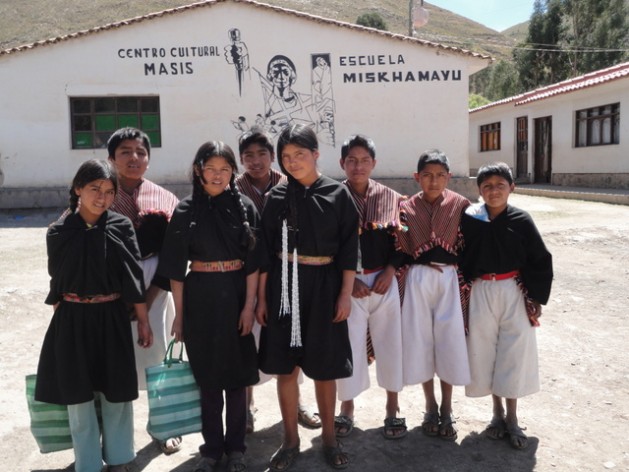
Indigenous children in Chile

Activities:

  • Consulting the Education Targets and discuss the items in your lessons (more than one lesson);
  • Messages from your students for indigenous young people and educators via UN, UNESCO or UFCW Canada;
  •  Sending textbooks and educational resources (devices students don't use anymore via Unicef;
  • Performances about indigenous artists and culture;
  • Panel discussions on cultural and linguistic diversity, gender equality;
  • Videos watching on cultural and linguistic diversity;
  • Role of women as navigators in indigenous people. 

Let's use the media to create bridges between young people and establish a truly intercultural world, where diversity is celebrated.

A world where different cultures not only coexist but value each other for their contributions and potential.

Students and educators are an important part of society to built bridges on a true dialogue. 

They are spontaneous, curious and love to learn about different cultures and languages.

"Our key challenge is to bring this wealth of knowledge and culture together for the benefit of all, in full respect of human rights. This is UNESCO’s mandate, and this is our renewed pledge on this International Day."

Irina Bokova, Director-Generale of Unesco

G-Souto
09.08.2016
Copyright © 2016G-Souto'sBlog, gsouto-digitalteacher.blogspot.com®

Creative Commons License
Schools : Let's talk about Intl Day of the World's Indigenous Peoples by G-Souto is licensed under a Creative Commons Attribution-NonCommercial-NoDerivatives 4.0 International License.

Tuesday, March 8, 2016

Schools : Talking about International Women's Day


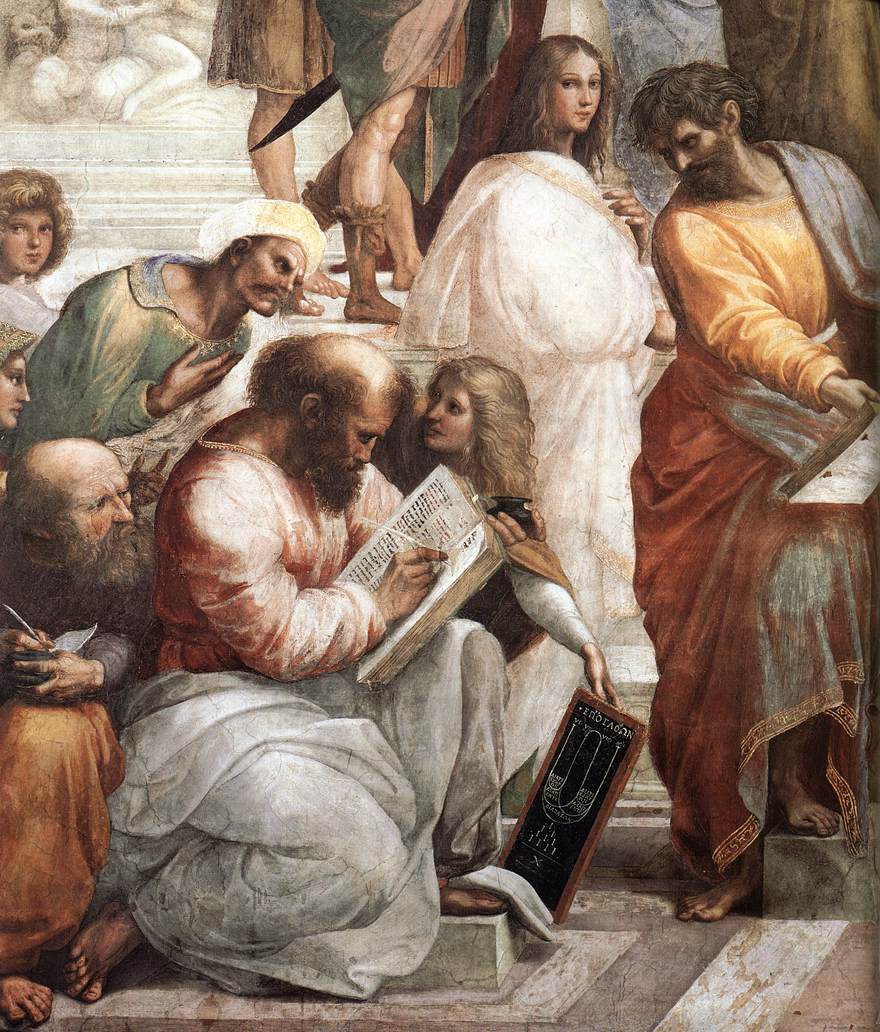
Hypathia of Alexandria
Hypatia by Rafael(1509-10)
Vatican Museums

"Let us devote solid funding, courageous advocacy and unbending political will to achieving gender equality around the world. There is no greater investment in our common future."

UN Secretary-General, Ban Ki-moon


International Women’s Day is a global celebration of all women, everywhere. It is a rallying call; both for reflection on lessons learned and for accelerating momentum towards gender equality and the empowerment of every girl and woman.

credits: Elyx by Yak
Goal 4 : Education

With the adoption of Sustainable Development Goal 4, governments have pledged to eliminate gender disparities and ensure that every child is in school and learning by 2030. 


Infographic | UNESCO
Yet one out of eight children between the ages of 6 and 15 are denied a basic education, and girls are the first to be excluded. More than 63 million girls are out of school and data suggest that the number is rising.  

It is a day to rejoice in the extraordinary acts of women and to stand together, as a united force to advance gender equality around the world.

This year’s theme for International Women’s Day is: “Re-thinking women empowerment and gender equality in 2016"


Some facts:
  • 31 million girls of primary school age are not in school (UNESCO, 2013)
  • Nearly two thirds of illiterate people are women, a proportion that has remained unchanged for two decades (UN, 2015)
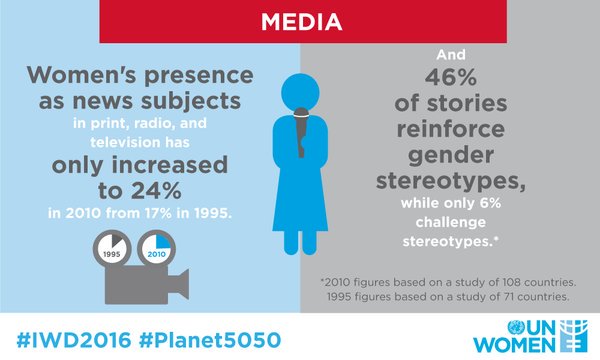
  • Less than 4% of CEOs in the world’s largest 500 corporations are women (UN, 2015)
  • Women are underrepresented in scientific and technological disciplines. Only 29% of the world’s researchers are women (UNESCO, 2014)
  • 35% of women worldwide have experienced either physical and/or sexual violence in their lives (UN, 2015)

Without education, we will never change the mindsets and conditions that force a girl into marriage or leave a woman of any age without the skills to earn a decent living.

This week in particular, let’s face the facts. The new UNESCO eAtlas of Gender Equality in Education shows gender gaps from primary to tertiary education using the latest available data from the UNESCO Institute for Statistics. 

With more than 100 interactive maps and charts, the eAtlas shows the educational pathways of girls and boys in more than 200 countries and territories.


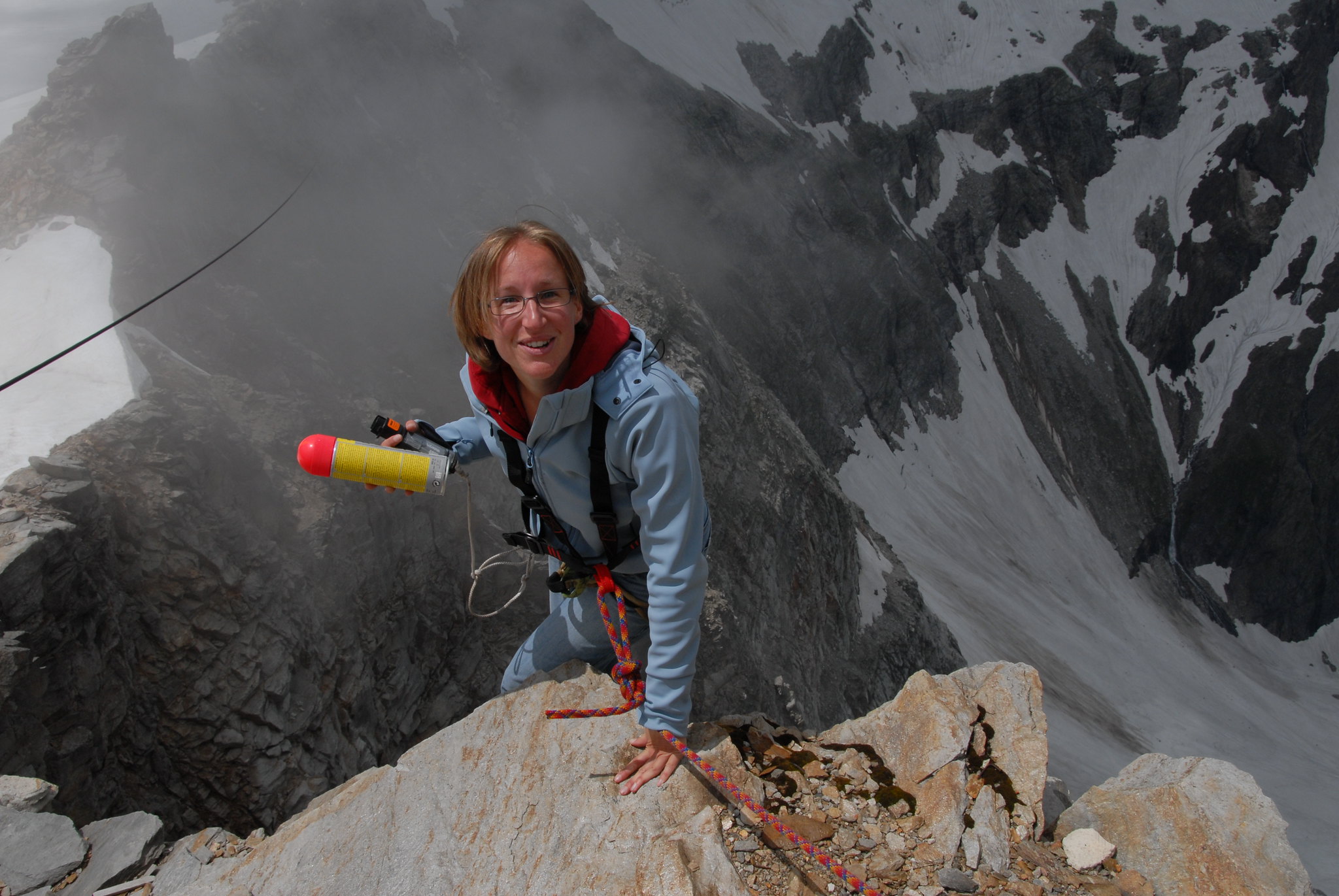
Weather Measurement Equipment Maintainance, Claudia Riedl, Austria.


Claudia Riedl, Sonnblick observatory, Austria (ZAMG)
Women in Action


Education:

I chose Hypathia to write about Women's Day.  Hypathia born c. 355 ce-died March 415Alexandria was a mathematicianastronomer, and philosopher who lived in a very turbulent era in Alexandria’s history. 

She was, in her time, the world’s leading mathematician and astronomer, the only woman for whom such claim can be made. 

She was also a popular teacher and lecturer on philosophical topics of a less-specialist nature, attracting many loyal students and large audiences. She was murdered in particular violent way.

Hypatia is a powerful symbol and a figure of affirmation for intellectual endeavour in the face of ignorant prejudice. Her intellectual accomplishments alone are quite sufficient to merit our respect and admiration. A good example to talk with our students on Women's Day.

It’s not always easy to put into words what we want to achieve. When we ask our students, young adults women or teen girls to articulate their aspirations, they often have to pause and think about it for a few minutes. 

Now it’s your students turn. Ask the girls to share their aspiration with #OneDayIWill and motivate them to get one step closer to where they're going. 

Whether their responses could be detailed or broad strokes, concrete or abstract, funny or heartwarming, it will inspiring to see them take the time to dream.


Google Doodlers
Doodle International Women's Day

Resources:


Of course Google could not forget Women's DayThere's a video-based doodle that can be seen on Google's homepage across the world today , International Women's Day.

For this year’s International Women’s Day, the doodlers Lydia Nichols, Helene Leroux & Liat Ben-Rafael wanted to celebrate the Doodle-worthy women of the future. 

So they gathered their cameras and pencils and visited 13 countries where they spoke to 337 women and girls and asked them to complete the sentence, “One day I will…”

International Women's Day is celebrated annually on 8 March. The UN began celebrating International Women’s Day (IWD) on 8 March during International Women’s Year 1975. 


Throughout history, women have made extraordinary contributions to their societies. Some are well known, some less so, but all have been trail blazers. 


Ask your students to explore a selection of these women and learn what the reality still is today for many women and girls worldwide. View timeline.

Children who are excluded from education often face multiple and overlapping disadvantages. 

Data produced by the Global Initiative on Out-of-School Children give us a clearer picture of why they are out of school.

Choose from the list of participating countries to see what is holding these children back.


Some Activities:


It’s not always easy to put into words what we want to achieve. When we ask our students, young adults women or teen girls to articulate their aspirations, they often have to pause and think about it for a few minutes. 


Now it’s your students turn. Ask the girls to share their aspiration with #OneDayIWill and motivate them to get one step closer to where they're going. 

Whether their responses could be detailed or broad strokes, concrete or abstract, funny or heartwarming, it will inspiring to see them take the time to dream.

  • Prevention of gender-based violence in schools;
  • Reduce violence against girls by challenging traditional gender norms through education;
  • Invite students to create a Charter (girls and boys) “Planet 50-50 by 2030: Step It Up for Gender Equality" (UN 2016 theme);
  • Ask your students (girls and boys) to write creative messages about IWD2016 and publish on Facebook Timeline of the school account (teachers and students);
  • Invite students to write in 140 characters inspirational quotes about girls education and dreams interacting with other schools on Twitter account (teachers and students). 
  • Use the Hashtag #IWD2016 to talk about their expectation of International Women's Day 2016 for life.

Level: All levels 


Teachers will include into the curriculum the activities to the level they are teaching.

Curricula: Cross-curricular : Languages; Sciences; Arts.


"Gender equality stands at the heart of the 2030 agenda, as a basic human right and a transformational force for more just, inclusive and sustainable development." 

Irina Bokova, Director-General, message

G-Souto 


08.03.2016
Copyright © 2016G-Souto'sBlog, gsouto-digitalteacher.blogspot.com®

Creative Commons License
Schools : Talking about International Women's Day bG-Souto is licensed under a Creative Commons Attribution-NonCommercial-NoDerivatives 4.0 International License.