Showing posts with label Global Goals. Show all posts

Monday, August 5, 2019

Schools : Aquastory, animated film SDGs in Action ! UN winner 2019


SDGs in Action Film Festival 2019/ UN

The SDGs in Action Film Festival, coordinated by the UN DESA Division for Sustainable Development Goals (SDGs), is a competition seeking short films that highlight how people and organizations around the world are taking action for the 17 global goals. 

The Festival was launched in 2018 in connection with the High-level Political Forum on Sustainable Development that takes place each July at UN Headquarters in New York. 

The competition offers amateur and professional filmmakers around the globe the chance to submit animated or live-action films up to 20 minutes long that showcase a person or project working on tangible solutions to the world’s biggest threats and making the SDGs our reality.


Aquametragem
short animated by Marina Lobo


The winner? The animated short film Aquametragem, by the Portuguese Marina Lobo, was the winner of the category Protecting our Planet at the film festival in action, organized by the United Nations (UN). 


Aquastory
Winner Protect Our Planet Award
United Nations, 2019

Entries were accepted in the following categories for 2019:
  • Protecting our planet
  • Reducing inequalities
  • Building peace
  • Ensuring quality education and jobs
  • Young Filmmaker (24 years old or younger)
  • SDGs in Virtual Reality/360 degrees

This is the biggest competition of film works dedicated to sustainable development goals (Sdgs).


Synopsis:

Hidro was hit by luck. Water is all around him and seems to have no end. But his joy is interrupted by warning signs. After all, water is limited and scarce. Is it too late? Will the H2O family be able to change their behaviors and manage this resource efficiently by applying the 5 R's of water (Reduce water Consumption, Reduce Wastage, Reuse Water, Recycle Water, and Resort to Alternative Sources)


Aquastory
short animated winner Protect Our Planet, 2019/ UN
https://lisboaenova.org/aquametragem/
Award winner of the ODS in Action 2019 competition, the United Nations Film Festival about Sustainable Development Goals, under the category Protect Planet.


Aquastory
short animated winner Protect Our Planet, 2019/ UN

So happy! Congratulations to the creativity by Marina Lobo. And all the partners and promotor.

Education:

Here I am talking again about Environmental education. Environment education in school is a cross-curricular subject. 
Schools have an important role promoting environmental education as a Civics value across all school curricula.


SDGs
image: Elyx Yak/ Virtual Ambassador UN

SDGs are an urgent call for action by all countries - developed and developing - in a global partnership. 
They recognize that ending poverty and other deprivations must go hand-in-hand with strategies that improve health and education, reduce inequality, and spur economic growth – all while tackling climate change and working to preserve our oceans and forests.

All teachers must be "green" in school and help the new generations to involve in those important goals such as water reduce. They can invite students to develop educational projects, national or international about Environment.

I have already published a good number of posts on my blog about Environment education in school, along the years. You can read them by searching.

In 2012, I suggested the app Zoe Makes a Splash on the same theme: water reduce.


Aquastory
short animated winner Protect Our Planet, 2019/ UN
https://lisboaenova.org/aquametragem/

Aims:

Children and teens will learn to reduce water and its importance in our planet, how to use it in moderation, the impact of polluted water on wildlife and habitats and the benefits we get from clean water.

Target: 4-11/12 years old.

Devices: Smartphones; tablets; Online.

Languages: 

Available in English, Portuguese.

Note: You can download fofree here (English) and here (Portuguese).

Curriculum: Cross-curricular;

Schools & Parents:

This short animated film can be used in the classroom or at home.


SDGs
image: Elyx Yak/ Virtual Ambassador UN

For years, I shared my green thoughts and values with my students in Languages and IT curriculum. 

I hope this short animated Aquastory
 give teachers a good inspiration to include into school curriculum, and developing interesting activities and projects about water reduce and food waste.

Young students will love Aquametragem learning how to reduce water and good waste with Hidro and its family. It's so important for the our future.

"The more clearly we can focus our attention on the wonders and realities of the universe about us, the less taste we shall have for destruction."

Rachel Carson

G-Souto
05.08.2019
Copyright © 2019G-Souto'sBlog, gsouto-digitalteacher.blogspot.com®
Creative Commons License
Schools : Aquastory, animated film SDGs in Action ! UN winner 2019 by G-Souto is licensed under a Creative Commons Attribution-NonCommercial-NoDerivatives 4.0 International License


Thursday, October 5, 2017

World Teachers’ Day : Teaching in Freedom, Empowering Teachers


"Teachers are a critical foundation of every society’s long-term strength - providing children, young people and adults with the knowledge and skills they need to fulfill their potential."

UNESCO, ILO, UNICEF, message 2017

Today is annual World Teachers’ Day, a UNESCO initiative devoted to appreciating, assessing and improving the educators of the world.

Held annually on 5 October since 1994, World Teachers’ Day commemorates the anniversary of the signing of the 1966 UNESCO/ILO Recommendation concerning the Status of Teachers, which celebrated its 50th anniversary during last year’s edition

However, local events may be on some other date close to October 5, so that they do not fall during fall (northern hemisphere) or spring (southern hemisphere) school vacations. 


World Teachers’ Day 2017 will be celebrated under the theme:

“Teaching in Freedom, Empowering Teachers”

It echoes the 2015 theme that followed the adoption of the new Sustainable Development Goals (SGDs) in September 2015, when teacher empowerment was reaffirmed as a top priority in all education and development strategies.

"Being an empowered teacher means having access to high-quality training, fair wages, and continuous opportunities for professional development. It also means having the freedom to support the development of national curricula - and the professional autonomy to choose the most appropriate methods and approaches that enable more effective, inclusive and equitable education. Furthermore, it means being able to teach in safety and security during times of political change, instability, and conflict."


It has become the occasion to mark achievements and reflect on ways to counter the remaining challenges for the promotion of the teaching profession, like the acute shortage of teachers. Indeed, according to the UNESCO Institute of Statistics, the world needs 69 Million teachers if we are to achieve universal primary and secondary education by 2030.

Education is the 4th goal after growth and employment, sustainable consumption and production, and climate change. 

Sustainable Development Goal 4 has 10 targets encompassing many different aspects of education. There are seven targets which are expected outcomes and three targets which are means of achieving these targets.


This year, World Teachers’ Day commemorates the 20th anniversary of the 1997 UNESCO Recommendation concerning the Status of Higher-Education Teaching Personnel. Teaching personnel at institutions of higher education are often overlooked in discussions concerning the status of teachers. 

Like teachers at pre-primary, primary, and secondary levels, teaching in higher education is a profession requiring expert knowledge, specialized skills, and pedagogical competence.


Despite global recognition of the importance of teachers in changing children’s lives and building sustainable and prosperous societies, teachers are all too often undervalued and under-empowered.

Worldwide there is a growing shortage of quality teachers and inadequate professional training. The UNESCO Institute for Statistics estimates that to achieve universal primary education by 2030 the world needs 69 Million teachers if we are to achieve universal primary and secondary education by 2030.
All these factors result in equity gaps in access and learning which mostly affect the poorest regions and schools and the earliest grades. This is particularly damaging, as there is clear evidence that the earliest years of a child’s development are the most critical.


 UNESCO Institute for Statistics
Some Data:
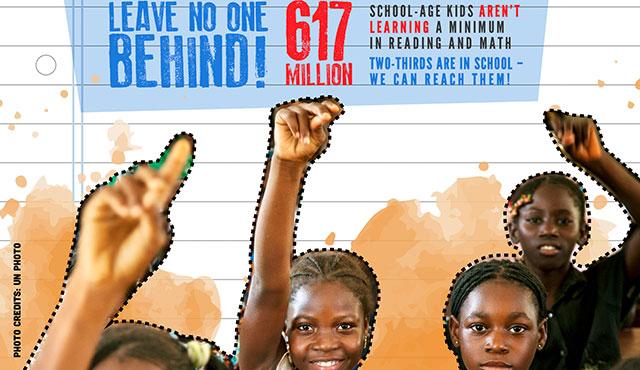
New data from the UNESCO Institute for Statistics show that 617 million children and adolescents worldwide are not achieving minimum proficiency levels in reading and mathematics. The figure signals “a learning crisis” according to the UIS, which could threaten progress towards the Sustainable Development Goals (SDGs).
Two-thirds of the children who are not learning are in school. Of the 387 million primary school-age children unable to read proficiently, 262 million are in school. There are also about 137 million adolescents of lower secondary school age who are in classrooms but unable to meet minimum proficiency levels in reading.  
“The figures are staggering but they show the way forward,” says Ms Montoya. “We know where these children live and go to school. They are not hidden or isolated from their governments and communities – they are sitting in classrooms with their own aspirations and potential. We can reach these kids but not by simply hoping that they stay in school and grasp the basics.” 


My thoughts:

Teachers are too often undervalued and under-empowered. Often they don't have access to high-quality training and continuous opportunities for professional development. 

When they want to have the autonomy to choose the most appropriate methods and approaches that enable more effective the learning of their students, and practice inclusive and equitable education, they are not empowered by the school director, other colleagues, and sometimes by parents who don't understand the visin of a different pedagogue who knows well the capacities of their students. A class has different students and some of them learn in different levels.

Sometimes, they don't have the freedom to support the development of national curricula and the professional autonomy to choose the most appropriate methods and approaches that enable more effective, inclusive and equitable education.

To engage their students, teachers create, collaborate, communicate and think critically. Teachers who love to teach they know which are the best methods and approaches that enable every student in a class.

If we love to be a teacher, the most important are our students. And every student must be empower to learn and be a better learner even on a different rythm to enable each one with its own aspirations and potential.

"Good teachers know how to bring out the best in students."

Charles Kuralt


G-Souto

05.10.2017
Copyright © 2017G-Souto'sBlog, gsouto-digitalteacher.blogspot.com®

Creative Commons License
World Teachers' Day : Teaching in Freedom, Empowering Teachers bG-Souto is licensed under a Creative Commons Attribution-NonCommercial-NoDerivatives 4.0 International License.

Wednesday, November 9, 2016

Schools : World Science Day for Peace & Development 2016 : resources


World Science Day
Discover Your World

Today, 10 November is World Sicence Day for Peace and DevelopementFirst celebrated on 10 November 2002, International Science Day aims to raise awareness of the benefits of science worldwide. 

It was recommended at the World Conference on Science in Budapest in 1999 to encourage "the use of science for peace and development, and to make sure science is used to benefit societies".

World Science Day for Peace and Development, celebrated every year on 10 November, offers an opportunity to highligt how science is relevant to our daily lives and to engage the scientific community, policy makers and the students. 

Celebrated every 10 November, World Science Day for Peace and Development highlights the important role of science in society and the need to engage the wider public in debates on emerging scientific issues. It also underlines the importance and relevance of science in our daily lives.


Electric cars line up at the official start of the Zero Emissions Race outside the United Nations Office at Geneva (UNOG), Switzerland 
UN Photo/Jean-Marc Ferré

By linking science more closely with society, World Science Day for Peace and Development aims to ensure that citizens are kept informed of developments in Science. It also underscores the role scientists play in broadening our understanding of the remarkable, fragile planet we call home and in making our societies more sustainable.


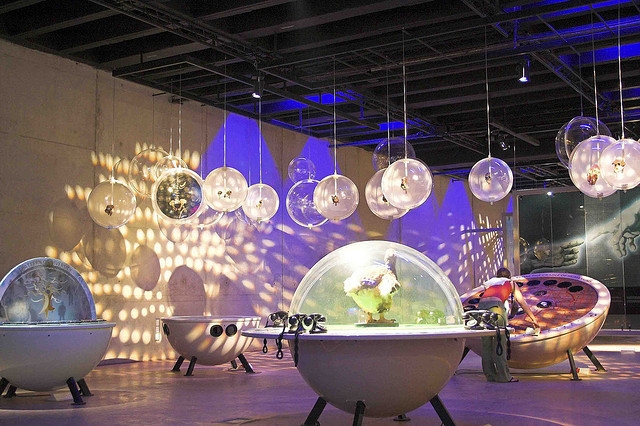
Science museum, Japan
© Cowardlion/ Shutterstock.com

The theme for 2016 World Science Day for Peace and Development is:

“Celebrating Science Centres and Science Museums”.

"Science stands at the heart of the 2030 Agenda for Sustainable Development, and the Paris Agreement on Climate Change. These agreements embody a new vision for prosperity, peace and the planet, to allow every society to create and share knowledge, to nurture every source of innovation and creativity, to craft a more inclusive, sustainable and just path to the future.
This is why science centres and museums are so important - for capacity building, for advocacy, to send strong messages about the importance of science for sustainable development."
Irina Bokova, message 2016


© Ministry of Science, Technology and 
Productive Innovation, Argentina

  • Strengthen public awareness on the role of science for peaceful and sustainable societies;
  • Promote national and international solidarity for shared science between countries;
  • Renew national and international commitment for the use of science for the benefit of societies;
  • Draw attention to the challenges faced by science and raising support for the scientific endeavour.


Planetarium, Russian Federation
credits: © Mariakraynova/ Shutterstock.com


Education:

"Science centers and museums should be places of continuous non-formal education, where people of all ages are drawn in to learn," 
Diego Andrés Golombek, Argentinian researcher

UNESCO invites schools, teachers and students among the different organizations to celebrate #ScienceDay with some special events or action.

We know! We can't celebrate such a great theme only in one day. We must think for a week or two to include Science Day into the different school cu
rriculum, alerting our students to the importance of Science for the benefit of all.

After all, the day is symbolic. Of course, students must have several lessons to develop interesting activities and schools organize events.


Photo of the Maropeng exhibition
Photo courtesy of stagetech

The success of the World Science Day for Peace and Development will depend on the active involvement of many partners such as intergovernmental and non-governmental organizations, scientific and research institutions, professional associations, the media, Science teachers and schools.

Different activities will be undertaken to mobilize support the objectives of the World Science Day.


credits: Elyx Yak

Activities:

Here a list of potential activities that can be undertaken by you and your students at school:


  • Diffuse World Science Day in your school, through some interesting activities;
  • Organize an 'Open Day' at your school to highlight the importance of Science for peace and development;
  • Publish the messages of World Science Day written by students on the school website, blogs of students; organize an exhibition at the school library, and other activities taking place on 10 November;
  • Organize classroom discussions to emphasize the many different ways science and technology touch our daily lives;
  • Contact national and local media (TV, radio, print, electronic) to highlight the importance of celebrating Science Day;
  • Write articles and letters about the importance of science for sustainable societies to publish on school newspaper;
  • Visit local Planetarium, Science Museum, or College laboratory with your class to discuss science careers, to deliver scientific events and demonstrations to young students;
  • Build classroom-to-classroom connections between schools via the Internet to talk about science projects that will interest young people;
  • Organize a little conference with your class at the school library and invite other teachers and their own classes;
  • Find a sister school and carry out a joint activity highlighting the importance of science;
  • Invite university professor or student from your town to join your school to celebrate Science Day talking about their experiences in science;
  • Arrange a visit at Science museum or Planetarium in your town or near by. Nothing better than a live lesson.

Unesco invite you to register your event on the map or to contact the organization if you would like more suggestions and information on how you and your organization can celebrate this day. 
Unesco would be grateful if you could keep it informed on the activities you will organize in order to include your events in a special section of Unesco website.

Registration:

To register your event and become a partner of the World Science Day for Peace and Development in your organisation, institution, university, school and community, please fill out this registration form and send it to Lucy Hoareau.
If you have a website and wish to link it to ours, please send your request to Ms. Diana Malpede. We will add yours to our list of related websites and you will help us reach, inform and involve as many people as possible.

Resources: Videos


"Science centres and museums plays key roles in nurturing the curiosity of women and men, as living laboratories of creativity, catalysing research and solutions to help societies meet challenges. In the digital era, when we need innovative initiatives to promote the learning of science outside the classrooms, museums and science centres are privileged places of education. They provide excellent ways to encourage children, especially girls, to pursue careers in science – to multiply our collective scientific capabilities."

Irina Bokova, message 2016

G-Souto

10.11.2016
Copyright © 2016G-Souto'sBlog, gsouto-digitalteacher.blogspot.com®

Creative Commons License
Schools : World Science Day for Peace & Development 2016 : resources bG-Souto is licensed under a Creative Commons Attribution-NonCommercial-NoDerivatives 4.0 International License.