Tuesday, March 22, 2016

Schools : Let's talk about World Water Day !


World Water Day is observed on March 22 every year. A day to recognize the importance of earth's most precious natural resource was proposed 20 years ago (1992) at the United Nations Conference on Environment and Development (UNCED). 

The United Nations General Assembly responded by designating 22 March 1993 as the first World Water Day. It has been held annually since then. Each year, UN-Water — the entity that coordinates the UN’s work on water and sanitation — sets a theme for World Water Day corresponding to a current or future challenge. The engagement campaign is coordinated by one or several of the UN-Water Members with a related mandate.

The 2016 theme: Water and Jobs


Today, almost half of the world's workers - 1.5 billion people - work in water related sectors and nearly all jobs depend on water and those that ensure its safe delivery. Yet the millions of people who work in water are often not recognized or protected by basic labour rights. The theme in 2016 — water and jobs — is focusing on how enough quantity and quality of water can change workers' lives and livelihoods - and even transform societies and economies.

In fact, water shortages and lack of access may limit economic growth in the years to come, according to the 2016 United Nations World Water Development Report.
The report is as previous years launched on 22nd March 2016 the official World Water Day celebrations.
The United Nations World Water Development Report 2016, titled "Water and Jobs" contains the latest findings, fact and figures.  


Education:
Each year the UN focuses on an aspect of water and the forthcoming event clearly links in with agriculture and nutrition. 

"When a billion people in the world already live in chronic hunger and water resources are under pressure we cannot pretend the problem is ‘elsewhere’."

Coping with population growth and water and jobs here some acts that will help with:

  • follow a healthier, sustainable diet;
  • consume less water-intensive products;
  • reduce the scandalous water wastage;
  • produce more food, of better quality, with less water

So, we can discuss all these items at school. And bring some new habits to our students.


Some ideas:
  • Water is Work
  • Water is Art
  • Water is Change

Target: Primary to Secondary education; Vocational Education.

Curriculum: Civics; Sciences; Languages; Arts.

World Water Day is an opportunity to learn more and be inspired to tell others. 

Teachers can read reports, watch videos and download teaching material from the international water community to include into the curriculum they're teaching.

Promote your event by adding it on the global map and share your activities with the world.

After that, ask your students if they know how much water they consume every day and how can we change our diet and reduce our water footprint.
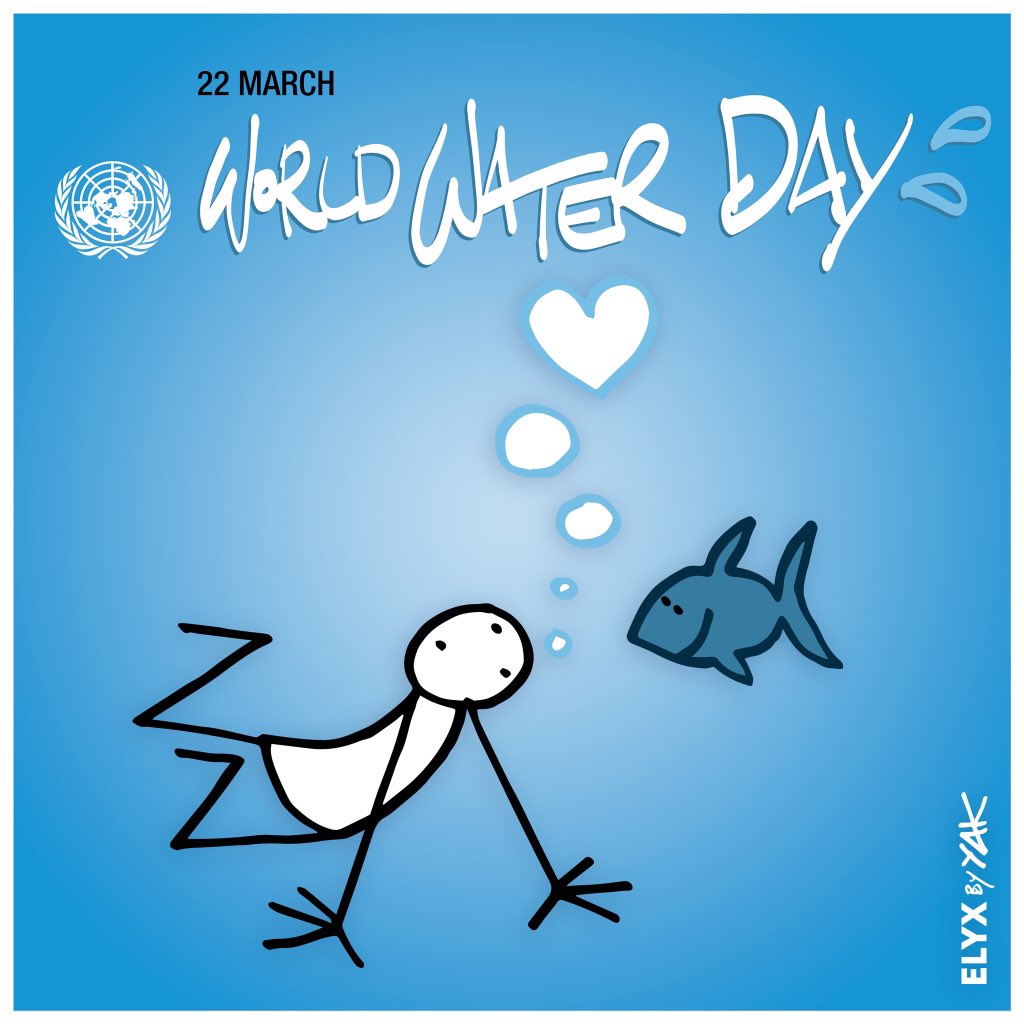


credits: Elyx Yak


Some Activities: 

You come up with different suggestions that students can develop for a two or three lessons:


  • Discussing (at home and in the classroom);
  • Writing (news, storytelling, drama, poetry);
  • Drawing;
  • Dramatizing;
  • Creating videos;
  • Sharing experiences with different schools in the world using Twitter or Facebook (school account) or just by emailing if some schools in  disadvantage countries that have no access to water.
Some resources:

Let your students use their smartphones and meanwhile ask them to take some notes or to search for countries where the water is a great gift.

It can be a good start to an open discussion in the classroom. It will depend from the resource you chose for the level that you teach.

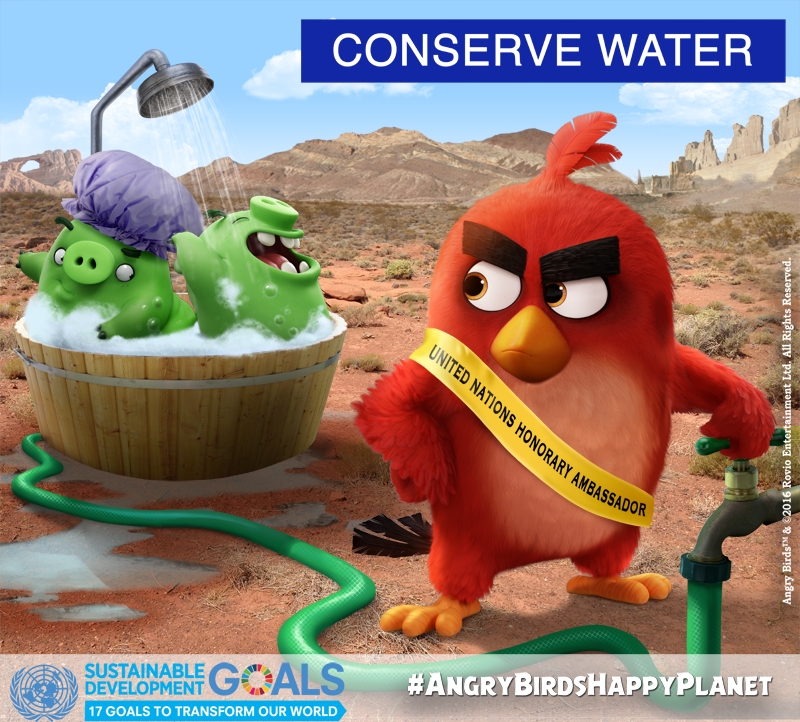
Games: Angry Birds Happy Planet 

A game to take climate action. Your students can visit the website Angry Birds Happy Planet and make a pledge following the instructions.

Or you can simply start your lesson with the video above. 


Videos: 

The Water Rooms project consists of a visionary and inspirational itinerary of 5 short animated movies intertwined by 5 monologues that trigger interest and encourage learning about freshwater resources and their responsible and sustainable management.

Follow UN-Water on Twitter and FaceBook to learn more.
Read more about the launch here and on the UNESCO WWAP website. 
50% of the world population depends on groundwater every day, but dangerously little is known about this most precious#HiddenResource. We urgently call for more scientific research. Better knowledge can help prevent conflicts over water access & help us cope with more frequent droughts, resulting from climate change. The "S" in UNESCO means #Science4Peace


I am sure that World Water Day event in your school will be an interesting project.

The success of "World Water Day" depends on you!

G-Souto

22.03.2016
Copyright © 2016G-Souto'sBlog, gsouto-digitalteacher.blogspot.com®
Licença Creative Commons
Education : Let's talk about World Water Day at school ! bG-Souto is licensed under a Creative Commons Attribution-NonCommercial-NoDerivatives 4.0 International License.

Sunday, March 20, 2016

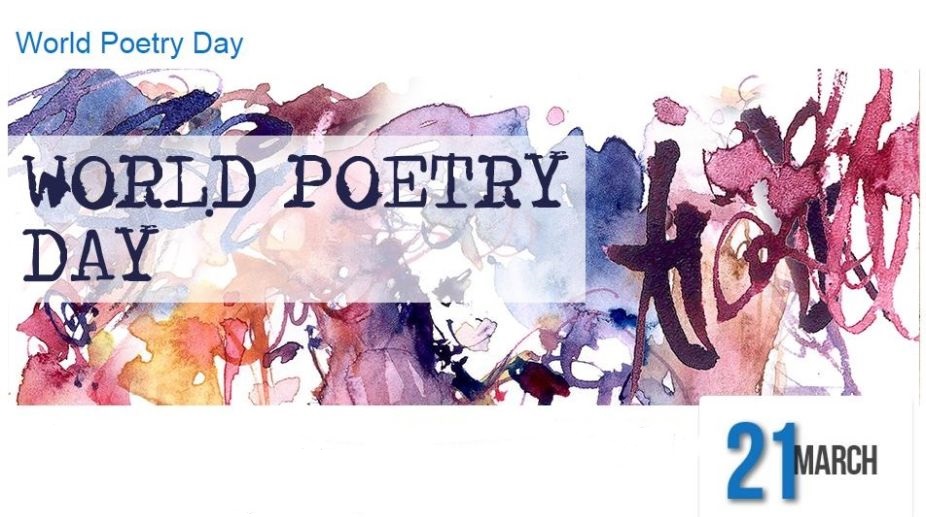
Education : It's World Poetry Day !


World Poetry Day 2016
credits: UNESCO

"Shakespeare, who died 400 years ago, wrote in A Midsummer Night's Dream that: “The poet’s eye, in fine frenzy rolling, doth glance from heaven to Earth, from Earth to heaven. And as imagination bodies forth the forms of things unknown, the poet’s pen turns them to shapes and gives to airy nothing a local habitation and a name”.

Irina Bokova, Former Director General UNESCO


Every year on 21 March, World Poetry Day celebrates one of humanity’s most treasured forms of cultural and linguistic expression and identity. Practiced throughout history – in every culture and on every continent – poetry speaks to our common humanity and our shared values, transforming the simplest of poems into a powerful catalyst for dialogue and peace.


UNESCO first adopted 21 March as World Poetry Day during its 30th General Conference in Paris in 1999, with the aim of supporting linguistic diversity through poetic expression and increasing the opportunity for endangered languages to be heard.


"World Poetry Day is the occasion to honour poets, revive oral traditions of poetry recitals, promote the reading, writing and teaching of poetry, foster the convergence between poetry and other arts such as theatre, dance, music and painting, and raise the visibility of poetry in the media.  As poetry continues to bring people together across continents, all are invited to join in."


Poetry Day
credits: Cosei Kawa, illustrator


Education:
"Every poem is unique but each reflects the universal in human experience, the aspiration for creativity that crosses all boundaries and borders, of time as well as space, in the constant affirmation of humanity as a single family."

Irina Bokova, Former Director-General of Unesco
World Poetry Day is an opportunity for children to be introduced to poetry in at school (all levels). It is a time when classrooms are busy with lessons related to poetry, in which students examine poets and learn about different types of poetry. 

Students love poetry! Poetry is a good part or Languages and Literature
So here are some ideas that teachers can include into curriculum.


Activities:

"Poetry is the mainstay of oral tradition and, over centuries, can communicate the innermost values of diverse cultures."

  • Encourage your students to read, write their own poetry in the classroom. For some ideas, please read my post: It's About Twiter and Poetry (World Poetry Day 2011);
  • Award your students for best and creative poems! Students love 'awards'!
  • Invite to learn from the proverbs of your country, and discover the poetic teachings of others;
  • Organise readings of poems from different cultures, including from pupils' own cultures. 
  • Investigate different forms of poem, such as the Japanese Haiku which Haiku Poetry Day will be celebrated next 17th April. 
  • Read up about riddles, limericks and sonnets with students to liven up your school libraries;
  • Promote a contest of poetry between different classes at you school or other schools;
  • Invite a young poet to talk about his poetry with your students at school;
  • Go at book stores, metro stations, gardens, and inspire your students to read some poetry. 
  • Promote some exhibitions and poetic events at your school to be held to showcase the work of various 'young poets' (school  students) on or around March 21 to coincide more or less with "World Poetry Day";
  • Support Poetry by inviting your students and their parents buying books of young poets (sometimes, parents ask teachers for some advices to buy books for their chidren);
  • Support poetry in school radio club (if there is one), publish students poems in the school journals, display videos about poets! Bright Star, lovely movie hounoring the poet John Keats by Jane Campion is a captivate digital resource to display in the classroom or at the school library promoting a dialogue on Poetry. Invite some parents  and grandparents to participate and read some poems.
  • Awaken the poet inside of you and impress your students with your creativity, inventiveness and imagination.


Reading
credits: Cosei Kawa, illustrator

I write every year about World Poetry Day and the importance of Poetry in our life. Poetry must be a part of children's education for the next citizen generation, women and men.
In adult life, they will be women and men of dialogue. Only dialogue can be established in difference and respect for difference. And some among them will be writers and poets.
All the activities must be adapted to the levels you teach, of course. You will do wonderful I know. Create an attractive image of poetry in your lessons, so that the art of poetry will no longer be considered an outdated form of art but one. Poetry is a fundamental expression of peace.
In European countries, it's Spring holiday. But we have the time to celebrate poetry after Easter season. The day is symbolic. You can celebrate poetry every day.
"By paying tribute to the men and women whose only instrument is free speech, who imagine and act, UNESCO recognizes in poetry its value as a symbol of the human spirit’s creativity. By giving form and words to that which has none – such as the unfathomable beauty that surrounds us, the immense suffering and misery of the world – poetry contributes to the expansion of our common humanity, helping to increase its strength, solidarity and self-awareness."
Irina Bokova, Former Director-General of UNESCO

G-Souto
20.03.2016
Copyright © 2016G-Souto'sBlog, gsouto-digitalteacher.blogspot.com®

Creative Commons License
Education : It's World Poetry Day ! bG-Souto is licensed under a Creative Commons Attribution-NonCommercial-NoDerivatives 4.0 International License.
Friday, March 18, 2016

Schools : Earth Hour ! Let's do it !


Earth Hour 2016

Each year, millions of people around the world turn off their lights for an hour to show their support for urgent action to address climate change. 

This year Earth Hour takes place on Saturday, March 19 at 8:30 p.m. local time.

Lights in homes, buildings and famous landmarks will be turned off for an hour tomorrow to mark WWF's annual event.

This year, the fight against climate change, for the first time since the launch of Earth Hour in 2007, momentum is on our side. 


In December, leaders from 196 nations heeded the world’s collective call for action.
As the world stands at a climate crossroads, it is powerful yet humbling to think that our actions today will decide what tomorrow will look like for generations to come. Together, we can tackle climate change and create a future where people and nature thrive.


#ChangeClimateChange 2016

We have reached a turning point, but we can’t rest yet. This year, help us shine a light on climate action for Earth Hour.


Earth Hour

Education: 
We will use our power to take action #ChangeClimateChange. Of course we can miss this important call to support such an important world project. Neither our students.

They are working some while ago to join this wonderful commitment to save the Planet. They are the new environmentalgeneration.


Earth Hour belongs to us. We will celebrate our commitment to the planet with our students, friendsfamilycommunity or at work - in our own way. 


A simple event can be just turning off all non-essential lights from 8.30pm-9:30 pm, tomorrow.

With just one day to go until Earth Hour - New Zealand will be 
the first country to switch off the lights - a record of more than 180 countries and more than 7 000 cities. The most charismatic monuments of the world will switch off lights too.

Now in its 10th year Earth Hour, organised by WWF, has evolved into the largest environment grassroots movement connecting hundred of millions of people across all seven continents.

Students were excited since the first year we participated in Earth Hour 2008. After that, every Earth Hour have been celebrated at school, 
Languages curricula.


Activities: Students

​Switch on your social power​ and do your part in shining a light on climate action to show how much our planet matters to you. 

Change your profile picture to a custom-made Earth Hour filter and help WWF and Earth Hour shine a light on climate action. 

Share your project : Your action today can change our tomorrow. This is our time to #ChangeClimateChange. Our future starts today.

Level: all levels (as a teacher, it's up to you adapt the activities to the level you are teaching)

Curriculum: Cross-Curricular Languages; Geopgraphy, Sciences, Civics, Arts, Music.


Earth Hour

Resources:


  • Interactive map
Discover events on our interactive map, Earth Hour Tracker!


  • Social networks:


That's the limit of my imagination. What are yours? Probably better ideas to do on candle lights this Saturday?

One bright suggestion? We will see us under the starts?

G-Souto 

18.03.2016

Copyright © 2016G-Souto'sBlog, gsouto-digitalteacher.blogspot.com®

Creative Commons License
Schools : Earth Hour ! Let's do it ! bG-Souto is licensed under a Creative Commons Attribution-NonCommercial-NoDerivatives 4.0 International License.