Showing posts with label water. Show all posts

Tuesday, March 22, 2016

Schools : Let's talk about World Water Day !


World Water Day is observed on March 22 every year. A day to recognize the importance of earth's most precious natural resource was proposed 20 years ago (1992) at the United Nations Conference on Environment and Development (UNCED). 

The United Nations General Assembly responded by designating 22 March 1993 as the first World Water Day. It has been held annually since then. Each year, UN-Water — the entity that coordinates the UN’s work on water and sanitation — sets a theme for World Water Day corresponding to a current or future challenge. The engagement campaign is coordinated by one or several of the UN-Water Members with a related mandate.

The 2016 theme: Water and Jobs


Today, almost half of the world's workers - 1.5 billion people - work in water related sectors and nearly all jobs depend on water and those that ensure its safe delivery. Yet the millions of people who work in water are often not recognized or protected by basic labour rights. The theme in 2016 — water and jobs — is focusing on how enough quantity and quality of water can change workers' lives and livelihoods - and even transform societies and economies.

In fact, water shortages and lack of access may limit economic growth in the years to come, according to the 2016 United Nations World Water Development Report.
The report is as previous years launched on 22nd March 2016 the official World Water Day celebrations.
The United Nations World Water Development Report 2016, titled "Water and Jobs" contains the latest findings, fact and figures.  


Education:
Each year the UN focuses on an aspect of water and the forthcoming event clearly links in with agriculture and nutrition. 

"When a billion people in the world already live in chronic hunger and water resources are under pressure we cannot pretend the problem is ‘elsewhere’."

Coping with population growth and water and jobs here some acts that will help with:

  • follow a healthier, sustainable diet;
  • consume less water-intensive products;
  • reduce the scandalous water wastage;
  • produce more food, of better quality, with less water

So, we can discuss all these items at school. And bring some new habits to our students.


Some ideas:
  • Water is Work
  • Water is Art
  • Water is Change

Target: Primary to Secondary education; Vocational Education.

Curriculum: Civics; Sciences; Languages; Arts.

World Water Day is an opportunity to learn more and be inspired to tell others. 

Teachers can read reports, watch videos and download teaching material from the international water community to include into the curriculum they're teaching.

Promote your event by adding it on the global map and share your activities with the world.

After that, ask your students if they know how much water they consume every day and how can we change our diet and reduce our water footprint.
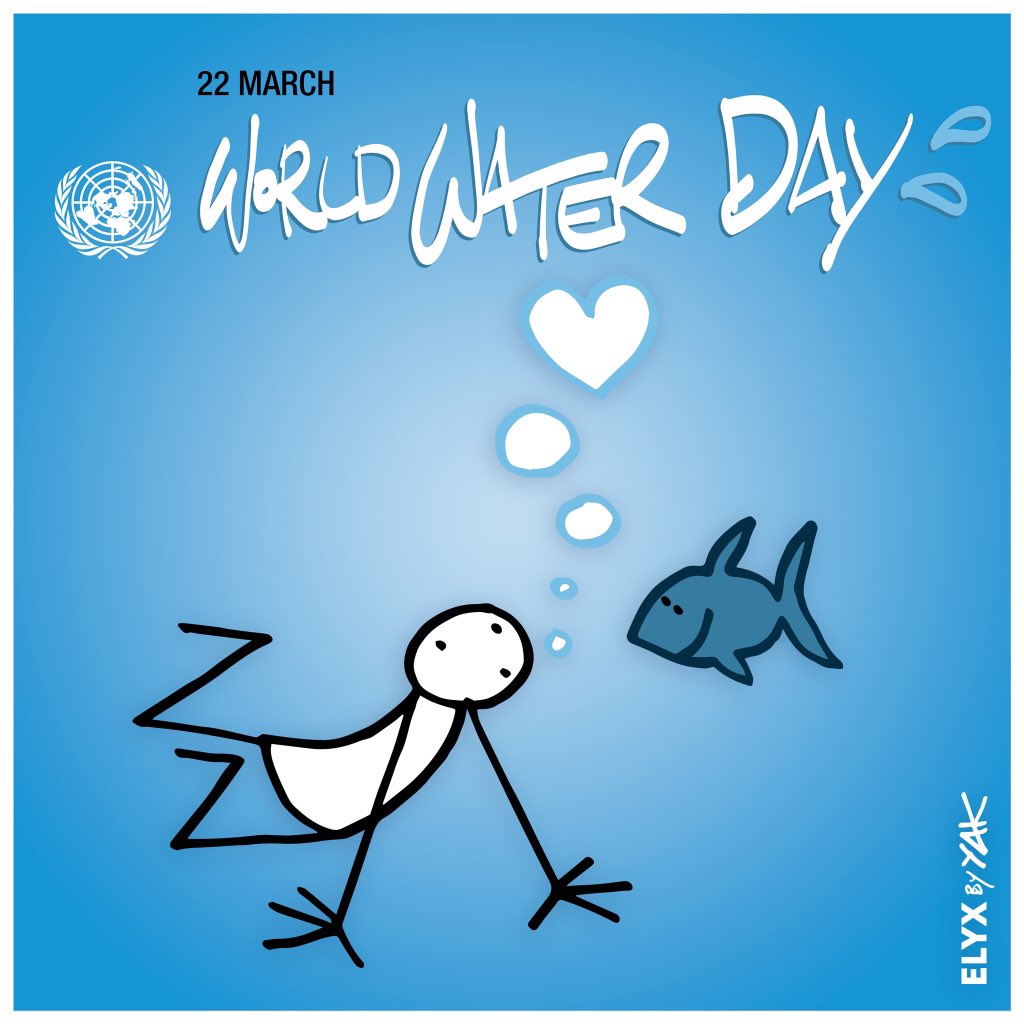


credits: Elyx Yak


Some Activities: 

You come up with different suggestions that students can develop for a two or three lessons:


  • Discussing (at home and in the classroom);
  • Writing (news, storytelling, drama, poetry);
  • Drawing;
  • Dramatizing;
  • Creating videos;
  • Sharing experiences with different schools in the world using Twitter or Facebook (school account) or just by emailing if some schools in  disadvantage countries that have no access to water.
Some resources:

Let your students use their smartphones and meanwhile ask them to take some notes or to search for countries where the water is a great gift.

It can be a good start to an open discussion in the classroom. It will depend from the resource you chose for the level that you teach.

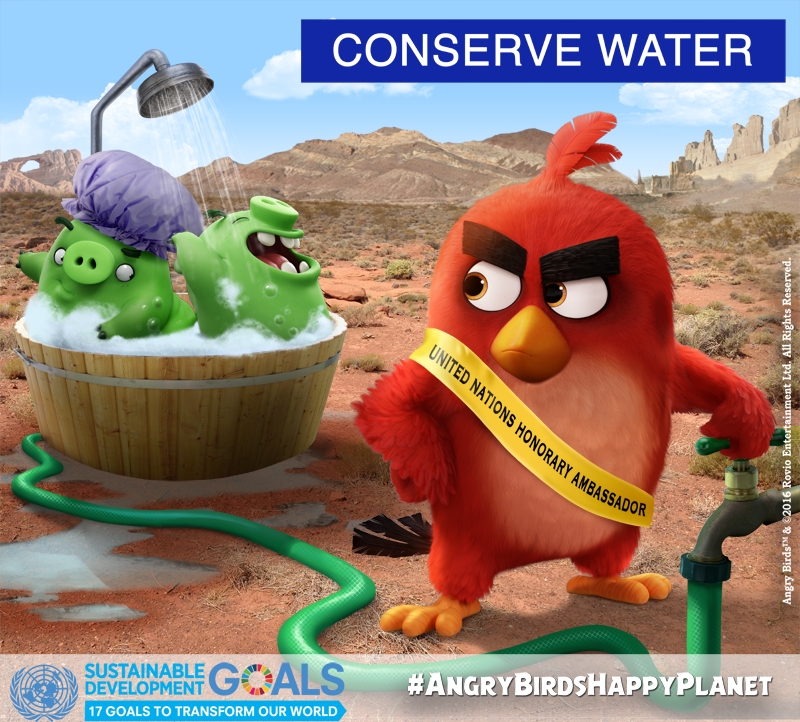
Games: Angry Birds Happy Planet 

A game to take climate action. Your students can visit the website Angry Birds Happy Planet and make a pledge following the instructions.

Or you can simply start your lesson with the video above. 


Videos: 

The Water Rooms project consists of a visionary and inspirational itinerary of 5 short animated movies intertwined by 5 monologues that trigger interest and encourage learning about freshwater resources and their responsible and sustainable management.

Follow UN-Water on Twitter and FaceBook to learn more.
Read more about the launch here and on the UNESCO WWAP website. 
50% of the world population depends on groundwater every day, but dangerously little is known about this most precious#HiddenResource. We urgently call for more scientific research. Better knowledge can help prevent conflicts over water access & help us cope with more frequent droughts, resulting from climate change. The "S" in UNESCO means #Science4Peace


I am sure that World Water Day event in your school will be an interesting project.

The success of "World Water Day" depends on you!

G-Souto

22.03.2016
Copyright © 2016G-Souto'sBlog, gsouto-digitalteacher.blogspot.com®
Licença Creative Commons
Education : Let's talk about World Water Day at school ! bG-Souto is licensed under a Creative Commons Attribution-NonCommercial-NoDerivatives 4.0 International License.

Sunday, November 10, 2013

Schools: World Science Day for Peace and Development 2013


Poster WSDPD

Today, in a world changing quickly, on a planet under pressure, we need more science, we need more scientists. Science is a force that brings people together, to join hands in the pursuit of knowledge. Science is our best ally to tackle the consequences of climate change, to foster the innovation all societies need today." 

Irina Bokova, Director-General of UNESCO


World Science Day for Peace and Development, celebrated each year on 10 November, offers an opportunity to demonstrate how science is relevant to our daily lives and to engage the scientific community, policy makers and the public. 

The World Science Day for Peace and Development also aims at raising public awareness of the importance of science and to bridge the gap between science and societies.


This year’s theme, "Science for Water Cooperation: Sharing Data, Knowledge and Innovations, highlights the key role played by Science, Technology and Innovation (STI) in addressing global water challenges."

"Water resources pay no heed to borders–our cooperation must be guided by the spirit of solidarity. Together, we can harness the full power of water to strengthen human dignity and build a better future for all. This is UNESCO’s message today."


It's with joy as Portuguese specialist in Education to know that the Director-General of UNESCO, Irina Bokova and the Portuguese Minister of Education, Higher Education and Science, Nuno Crato, signed yesterday, on 9 November 2013 an Agreement for the Establishment of an International Centre for Advanced Training of Scientists from Portuguese-Speaking Countries in the Areas of Basic Sciences under the auspices of UNESCO.


Education:

UNESCO invites schools, teachers and students among the different organizations to celebrate the Day with some special events or action.

We know! Today is Sunday. No school time.  But tomorrow and for a week or two, you can motivate your students (they love to engage in Environment causes) by involving them at the WSDPD activities. 

After all, the day is a symbolic. Of course, students need different lessons to organize an event and develop some activities.


Levels: All levels (different activities for different grades and age)

Here some activities and resources that can mobilize support for the objectives of the World Science Day for Peace and Development 2013:


Activities:

I selected and adapted some of the actions proposed by UNESCO that I think might involve our students:


  • Diffuse the WSDPD in your school through posters, flyers (made by students);
  • Distribute the WSDPD's poster to schools (based on material downloaded from website); scientific institutions, local communities;
  • Organize classroom discussions to emphasize the many different ways science and technology touch our daily lives;
  • Incorporate the messages of WSDPD into your classes, school librarian, and other activities taking place on a week;
  • Ask students to write articles and letters about the importance of science for sustainable societies to the media, including school newspapers.
  • Organise an 'Open Day' in your school to highlight the importance of science for peace and development;
  • Contact national and local media (TV, radio, print, electronic) to highlight the importance of celebrating WSDPD at your school;.
  • Invite an expert to visit your school to speak about careers in science, deliver scientific presentations or demonstrations to young students;
  • Build classroom-to-classroom connections between schools via the Internet ( email, hangout, Skype), Twitter, Facebook, Google to talk about science projects that will interest young people;
  • Find a sister institution (same country or other country as an exchange project) and and carry out a joint activity highlighting the importance of science;
  • Arrange a science museum visit in your city or another local city;
  • Invite local university faculty to join with community organizations and schools to celebrate the Day.

The sucess of  WSDPD is on the hands of the active involvement of many partners (intergovernemnental, non-governemnental organizations), academic institutions such as science and research.  

Schools are in this list, for sure. Schools have an important role aiming to renew and reinvigorate global commitments as they have the mission to educate children and young people as the future citizens.


Goccia, the official mascot of WWD2013

Educational Digital Resources:

On the website of the International Year of Water Cooperation 2013 there is the Youth and Kids section where you will find exciting resources and educational materials for educators, youth and kids, including games, publications, tools and videos.

Goccia, the official mascot of World Water Day 2013 and the International Year of Water Cooperation will guide you through the Youth and Kids section to learn about our water resources and the way they are used on the planet. 
  • Games
  • Publications and Educational Tools
  • Videos
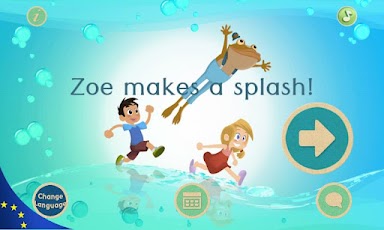
Oh! Talking about educational resources, don't forget, Apps for Environmental Education! Zoe makes a splash! Remember?


10 Years UN Water (2003-2013)


Campaign Materials:

The UN Water page will be providing you 'campaign materials' to help create a buzz about the International Year of Water Cooperation and also World Water Day 2013

Check this space often because we will keep producing fun stuff before and throughout 2013. Soon you will also find material to help you learn more about Water Cooperation

After Water Water Day 2013 (March), Earth Day 2013 (April), Going Pink at School (October), we have World Science Day for Peace and Development 2013.


These series of educational challenges are important to promote some good values in the new generations. They will be vigilant and helping to find path towards precious solutions to society and planet.


Of course the sucess of  WSDPD is on the hands of the active involvement of many partners (intergovernemnental, non-governemnental organizations), academic institutions such as science and research.  

Schools are in this list, for sure. Schools have an important role aiming to renew and reinvigorate global commitments as they have the mission to educate children and young people as the future citizens.


I hope this post will be inspirational for a lot of educators in the world.

"Nothing will happen without action. Create and follow a plan, you're going to get a result. It may not be perfect but at least you have started."

Bob Proctor


G-Souto


10.11.2013
Copyright © 2013G-Souto'sBlog, gsouto-digitalteacher.blogspot.com®

Licença Creative Commons
Schools: World Science Day for Peace and Development 2013 bG-Souto is licensed under a Creative Commons Attribution-NonCommercial-ShareAlike 3.0 Unported License.

Friday, March 22, 2013

World Water Day 2013 & Education


“International Year of Water Cooperation”

UN

World Water Day is observed annually on 22 March as a means of focusing attention on the importance of freshwater and advocating for the sustainable management of freshwater resources.

The international water day to celebrate freshwater was recommended at the 1992 United Nations Conference on Environment and Development (UNCED). The United Nations General Assembly responded by designating 22 March 1993 as the first World Water Day.


Each year, World Water Day highlights a specific aspect of freshwater. 2013, will reflects of the International Year of Water Cooperation.

World Water Day is also dedicated to the theme of cooperation around water and is coordinated by UNESCO in collaboration with UNECE and UNDESA on behalf of UN-Water.


Education:

As you see, educators must be prepared for all kinds of events to share and teach. March is an inspirational month! Perhaps it is about Spring?

Yesterday, it was World Poetry Day, Arbor Day and Forest International Day! Wow so much to talk about and inspire our students! 

The success of the "International Year of Water Cooperation" and the World Water Day depends on the involvement of everyone! We start this involvment in school education.

We could start with this infographic where students can vizualize the importance of Freshwater.

Freshwater is one of today’s most pressing developmental challenges, impacting food & agriculture, gender equality, health & sanitation, population & urbanization.


Some Activities WWD:

  • Promote the International Year of Water Cooperation and the World Water Day at school: use the logo, web banners on students blogs and other campaign materials;
  • Raise awareness of the benefits of water cooperation: use the brochure, the messages, case studies and success stories;
  • Share your knowledge with students, fparents, and colleagues;
  • Develop the students capacities by asking students to organize a workshop to other students and why not to some teachers;
  • Foster dialogue and cooperation among schools in countries where water could be a problem;
  • Take action by asking students to write news and articles about water for school journals or ask a radio station to cooperate with your students and get an interview to be broadcasting;
  • Send UN Water your students' pictures, artworks, videos and other creations. They wiill be shared with the world;

Levels: Every teacher must adapte the activities to school level.

Curricula: Cross-curricula.


Other Resources:

SG Ban Ki-moon video message for World Water Day

The Key Water Indicate Portal is online here

Fresh Water For All | Infographic

World Water Day: 10 facts you ought to know | Greenpeace

World Water Day: Celebrating Women's Rights | Amnesty International


Be innovative! Inspire your students!

G-Souto

22.03.2013
Copyright © 2013G-Souto'sBlog, gsouto-digitalteacher.blogspot.com®

Licença Creative Commons
World Water Day & Education bG-Souto is licensed under a Creative Commons Attribution-NonCommercial-ShareAlike 3.0 Unported License.


Thursday, October 25, 2012

Schools : Zoe Makes a Splash ! Apps for water reduce !


Zoe makes a splash/ app

It's Saturday morning and as usual Zoe is getting ready in the bathroom. 
She has combed her hair and is brushing her teeth. 
She doesn't see that the tap in the bath is running.
(...)

Zoe makes a splash! is an app developed by the Environment Directorate General of the European Commission.

The European Commission has launched this environmental app that can be downloaded to Apple and Android devices for free.

The interactive storybook is a resource for teachers & parents. It can be included into the school curriculum or used at home with family to teach kids about the importance of water in our society, how to use it in moderation, the impact of polluted water on wildlife and habitats and the benefits we get from clean water.
Zoe Makes a Splash! is an interactive educational digital storybook aimed at children between the ages of 7 and 11. It can be free to download or to play online.


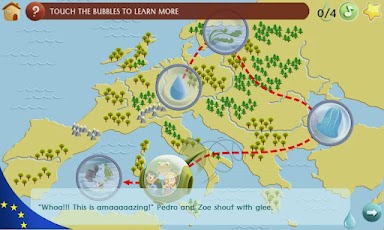
screenshot Zoe makes a splash | App

The app tells the story of two inquisitive children who are shown the importance of water in society. Their guide is an articulate frog, who also alerts them to the impact of polluted water and shows them how it can be avoided. 

Fun animations and interactive features alternate with more serious educational sections, where students and kids learn about the hidrological cycle and water treatment.

The online version of the story is also available, with a set of teaching notes to encourage project-based activities in the classroom.


screenshot Zoe makes a splash | App

Education:
Here I am talking again about Environmental education that is a cross-curricular learning. Schools have an important role promoting environmental education as a Civics value across all school curricula.


All teachers must be "green" in schools and help the new generations to involve in educational projects, national or international about Environment.

I have already published a good number of posts on my blog about Environment & Education along the years. You can read them by searching Environmental Education.

The last one was Iberian Wolf: environmental education (endangered species) and the most popular is Wall-E: a green resource for Earth Day 2012

About the same theme, Water, I wrote And what about World Water Day in school? (March 2012).

Since 2005, my students continue writing on two 'green' blogs: GeraĂ§Ă£o Verde (environment education) and GeraĂ§Ă£o Polar (Polar education)


screenshot Zoe makes a splash | App
Teaching Notes


  • Schools & Parents:
This interactive storybook can be used in the classroom or at home.

Aims:

Children learn about the importance of water in our society, how to use it in moderation, the impact of polluted water on wildlife and habitats and the benefits we get from clean water.

Target: 7-11 years old.

Devices: Smartphones; tablets (Android & Apple); Online

Languages: Available in English, French, German, Spanish, Italian and Polish;

Curriculum: Cross-curricula;

Teaching Notes: here


Zoe Makes a Splash! is an app and a digital story book that feature two children and their adventures with Fred, a well educated Frog who teaches them some errors at home with family and at school.

It is packed with fun animations and interactive features. There are some challenging sections where students learn about the hidrological cycle and how water treatment works.


screenshot Zoe makes a splash | App
On the practical side of this app, there are plenty of tips of how to conserve water.

The app is free and available to download:
Other EU environmental initiatives:

The app is launched as one of several water-related initiatives.

A number of other environment-related publications are also available for children, notably the hugely successful Tom and Lila stories for 5-7 year s-old. They are available here

Ten titles appeared between 2001 and 2011, and nearly 2 million were distributed around the EU.


screenshot Zoe makes a splash | App

For years, I shared my "green" thoughts and values with mystudents in Languages and ICT curriculum. 

I hope this app & teaching notes give you some inspiration to include into school curriculum developing interesting activities and projects about Environmental education.

Young students will have fun with Zoe and will learn how to care about environment, the importance of water and not to pollute or waste it.

"The more clearly we can focus our attention on the wonders and realities of the universe about us, the less taste we shall have for destruction."

Rachel Carson


G-Souto
25.10.2012
Copyright © 2012G-Souto'sBlog, gsouto-digitalteacher.blogspot.com®

Licença Creative Commons
Environmental Zoe Makes a Splash ! Apps for water reduce by G-Souto is licensed under a Creative Commons Attribution-NonCommercial-ShareAlike 3.0 Unported License.

Credits: video European Commission

References:

Children and Youth Publications | EU Environment
http://ec.europa.eu/environment/pubs/children/children.htm