Showing posts with label technology enhanced learning. Show all posts

Thursday, October 5, 2017

World Teachers’ Day : Teaching in Freedom, Empowering Teachers


"Teachers are a critical foundation of every society’s long-term strength - providing children, young people and adults with the knowledge and skills they need to fulfill their potential."

UNESCO, ILO, UNICEF, message 2017

Today is annual World Teachers’ Day, a UNESCO initiative devoted to appreciating, assessing and improving the educators of the world.

Held annually on 5 October since 1994, World Teachers’ Day commemorates the anniversary of the signing of the 1966 UNESCO/ILO Recommendation concerning the Status of Teachers, which celebrated its 50th anniversary during last year’s edition

However, local events may be on some other date close to October 5, so that they do not fall during fall (northern hemisphere) or spring (southern hemisphere) school vacations. 


World Teachers’ Day 2017 will be celebrated under the theme:

“Teaching in Freedom, Empowering Teachers”

It echoes the 2015 theme that followed the adoption of the new Sustainable Development Goals (SGDs) in September 2015, when teacher empowerment was reaffirmed as a top priority in all education and development strategies.

"Being an empowered teacher means having access to high-quality training, fair wages, and continuous opportunities for professional development. It also means having the freedom to support the development of national curricula - and the professional autonomy to choose the most appropriate methods and approaches that enable more effective, inclusive and equitable education. Furthermore, it means being able to teach in safety and security during times of political change, instability, and conflict."


It has become the occasion to mark achievements and reflect on ways to counter the remaining challenges for the promotion of the teaching profession, like the acute shortage of teachers. Indeed, according to the UNESCO Institute of Statistics, the world needs 69 Million teachers if we are to achieve universal primary and secondary education by 2030.

Education is the 4th goal after growth and employment, sustainable consumption and production, and climate change. 

Sustainable Development Goal 4 has 10 targets encompassing many different aspects of education. There are seven targets which are expected outcomes and three targets which are means of achieving these targets.


This year, World Teachers’ Day commemorates the 20th anniversary of the 1997 UNESCO Recommendation concerning the Status of Higher-Education Teaching Personnel. Teaching personnel at institutions of higher education are often overlooked in discussions concerning the status of teachers. 

Like teachers at pre-primary, primary, and secondary levels, teaching in higher education is a profession requiring expert knowledge, specialized skills, and pedagogical competence.


Despite global recognition of the importance of teachers in changing children’s lives and building sustainable and prosperous societies, teachers are all too often undervalued and under-empowered.

Worldwide there is a growing shortage of quality teachers and inadequate professional training. The UNESCO Institute for Statistics estimates that to achieve universal primary education by 2030 the world needs 69 Million teachers if we are to achieve universal primary and secondary education by 2030.
All these factors result in equity gaps in access and learning which mostly affect the poorest regions and schools and the earliest grades. This is particularly damaging, as there is clear evidence that the earliest years of a child’s development are the most critical.

 UNESCO Institute for Statistics
Some Data:
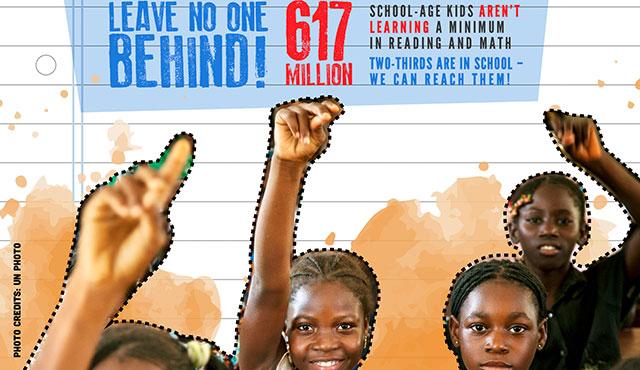
New data from the UNESCO Institute for Statistics show that 617 million children and adolescents worldwide are not achieving minimum proficiency levels in reading and mathematics. The figure signals “a learning crisis” according to the UIS, which could threaten progress towards the Sustainable Development Goals (SDGs).
Two-thirds of the children who are not learning are in school. Of the 387 million primary school-age children unable to read proficiently, 262 million are in school. There are also about 137 million adolescents of lower secondary school age who are in classrooms but unable to meet minimum proficiency levels in reading.  
“The figures are staggering but they show the way forward,” says Ms Montoya. “We know where these children live and go to school. They are not hidden or isolated from their governments and communities – they are sitting in classrooms with their own aspirations and potential. We can reach these kids but not by simply hoping that they stay in school and grasp the basics.” 


My thoughts:

Teachers are too often undervalued and under-empowered. Often they don't have access to high-quality training and continuous opportunities for professional development. 

When they want to have the autonomy to choose the most appropriate methods and approaches that enable more effective the learning of their students, and practice inclusive and equitable education, they are not empowered by the school director, other colleagues, and sometimes by parents who don't understand the visin of a different pedagogue who knows well the capacities of their students. A class has different students and some of them learn in different levels.

Sometimes, they don't have the freedom to support the development of national curricula and the professional autonomy to choose the most appropriate methods and approaches that enable more effective, inclusive and equitable education.

To engage their students, teachers create, collaborate, communicate and think critically. Teachers who love to teach they know which are the best methods and approaches that enable every student in a class.

If we love to be a teacher, the most important are our students. And every student must be empower to learn and be a better learner even on a different rythm to enable each one with its own aspirations and potential.

"Good teachers know how to bring out the best in students."
Charles Kuralt


G-Souto

05.10.2017
Copyright © 2017G-Souto'sBlog, gsouto-digitalteacher.blogspot.com®

Creative Commons License
World Teachers' Day : Teaching in Freedom, Empowering Teachers bG-Souto is licensed under a Creative Commons Attribution-NonCommercial-NoDerivatives 4.0 International License.

Tuesday, December 13, 2016

Arts Education : Thyssen Museum apps, discover the museum in your hands


Thyssen-Bornemisza Museum apps


“El arte pone a prueba la tecnologĂ­a y la tecnologĂ­a inspira al arte” 

John Lasseter

Let's speak about Arts in Education and Museums. Here a new tool ! A cultural app for students and teachers.

The Thyssen-Bornemisza Museum enables people to explore the art collection and galleries of the musem by using the app. The museum launched its new free app some time ago. 

Information:

This is a free application for mobiles that offers us a practical calendar of exhibitions and events at the museum. 


screenshot Museum Thyssen

It provides detailed information about the works of art on display. The app also includes thematic route suggestions allowing us to get to know the museum through a special selection of paintings.


screenshot Museum Thyssen


It is also ideal for those of us who want to prepare our visit in advance. If you are connected to the Internet the app allows us to buy tickets and access other great services such as our online shop, all from your mobile phone.

This is an optimised version of the museum’s web content thanks to the agreement signed in January 2013 between the Museum and the Fundacion BBVA to develop a Programme of applications, digital publications and educative knowledge of the Thyssen-Bornemisza Museum.


screenshot Museum Thyssen

The app introduces us to hand-picked and beautiful collections from Museo Thyssen-Bornemisza allows students and teachers to explore them.

Discover what the museum has on offer for mobile device. Take a look at museum activity and collection-related content, all specially designed for smartphones, tablets and electronic books. 

The app includes information about the museum, educational projects and research publications and will appeal to a wide range of audiences. 


credits: Thyssen Museum


Download:

The Thyssen app can be download for free:


screenshot Thyssen Museum
https://www.amazon.com/


Education:

My usual readers know that I love art and think education is incomplete without arts and music. So every time I found a theme or a digital resource to enhance school curriculum, I write about it.
Thyssen Museum enables students and teachers to explore the museum collections. 

It promotes discoveryering in bilingual space where we can engage, share in and be inspired by the rich diversity of a cultural space. A museum.


credits: Thyssen Museum


Teachers and students can discover all the beautiful artworks. Ask your students to start their searching of the collections by downloading the app.

View the museum from a different angle with just a single click. Prepare your visit or learn about the best works of art with our apps.


screenshot Second Canvas Thyssen


Last 30 November, Thyssen Museum launched the educational app Second Canvas Thyssen. A tool for getting closer to the secrets of Thyssen-Bornemisza museum and discover their impressive masterpieces in super high resolution, like never before. 

Let's students e
xplore, interact, learn from stories told by Thyssen experts or choose their favorite detail and share it with other students on social media, including the option of hooking it up to their TV screen at home or at school. 

Created by Thyssen-Bornemisza museum and Madpixel, Second Canvas Thyssen the apps allows students to explore 8 masterpieces from the museum’s collection, including Caravaggio, Carpaccio, van Gogh, Kandinsky, with the best quality and resolution. Also including 20 additional pieces in an alternative itinerary that provides context to the masterpieces.


Download from Apple Store or Google Play. The app is free.


Curriculum: Almost all curricula, specially Arts, History, Literature, Languages, Civics, Open Culture.

Levels: All levels (some levels need teachers tutoring)


Free App?

  • Yes, the app is free of charge.

Languages:

  • English
  • Spanish

Curricula: Cross-curricular specially Arts, History, Literature, Languages, Civics, Open Culture.

Levels: All levels 

Teachers will prepare different activities to the different classes they are teaching.

Some thoughts:

The Internet no longer plays just a minor role in diffusing museum knowledge. It has become a major force, allowing museums to expand and strengthen their reach. 

Museums see digital media as core to their mission of education and inspiring people about art and culture.


In recent years  museums began to re-examine what education means for them and there has been a growing emphasis on the importance of all kinds of learning within museums

The world is changing faster than ever. New technology delivers new ideas, gigabytes of information, news of art and museums shared by social media. 

Increasing numbers of museums are experimenting with digital learning. This issue of Museum Practice looks at how museums are exploring the potential of digital technology to offers  visitors and schools personalised learning experiences with a focus on collaboration and participation.

Modern museums must compete for an audible voice against the furious pace of this background.

Museums in a changing world is recognition that institutions are faced with interpreting, and existing in, a field that is becoming increasingly fluid. Each may face a unique set of goals, interests and audiences."

Museums  have an a attractive impact in the curriculum. Students love school visits to museums. Students can appreciate there is history all around them.

There is nothing to stop any school enjoying trips to educational historic sites if their pupils will benefit.


G-Souto

13.12.2016


Wednesday, October 5, 2016

World Teachers' Day : Valuing and Improving their Status


"It Takes a Teacher  to prepare the students for the world."

World Teachers' Day is celebrated since 5 October 1994. UNESCO joint signing of the UNESCO/ International Labour Organisation (ILO) recommendation concerning the status of teachers. This recommendation is morally binding for all countries.

However, local events may be on some other date close to October 5, so that they do not fall during fall (northern hemisphere) or spring (southern hemisphere) school vacations. 

This year World Teachers’ Day marks the 50th anniversary of the adoption of the 1966 ILO/UNESCO Recommendation concerning the Status of Teachers. It is the first world Teachers’ Day (WTD) to be celebrated within the new Global Education 2030 Agenda adopted by the world community one year ago.

This year’s theme : “Valuing Teachers, Improving their Status”.

This theme embodies the fundamental principles of the fifty-year-old Recommendation while shining a light on the need to support teachers as reflected in the agenda’s Sustainable Development Goals (SDGs)


SDG4
credits: Elyx Yak

A specific education goal, SDG4, pledges to “Ensure inclusive and equitable quality education and promote lifelong learning opportunities for all”.

Teachers are not only pivotal to the right to education they are key to achieving the targets set out in SDG4.

The roadmap for the new agenda, the Education 2030 Framework for Action, highlights the fact:

Teachers are fundamental for equitable and quality education and, as such, must be “adequately trained, recruited and remunerated, motivated and supported within well-resourced, efficient and effectively governed systems”.

However, in order to achieve this goal, it is necessary not only to substantially increase the supply of qualified teachers but to motivate them by valuing their work. 


UNESCO and eAtlas of Teachers


Some information:

By 2030, 3.2 million more teachers will be required to achieve universal primary education and 5.1 million more in order to achieve universal lower secondary education.

To mark World Teachers’ Day, the UNESCO Institute for Statistics (UIS) has released the first-ever estimates of how many teachers are needed to achieve the global goal for education by 2030. 


credits: UIS

In the next 14 years, countries must recruit almost 69 million teachers to provide every child with primary and secondary education: 24.4 million primary school teachers and 44.4 million secondary school teachers.

Sustainable Development Goal 4 (SDG 4) demands inclusive and equitable quality education for all by 2030. The needs are urgent, with an estimated 263 million children and youth still out of primary and secondary school globally, according to a new UIS paper. SDG 4 includes a specific call for more qualified teachers and more support from the international community for teacher training in developing countries.


Education:

"You are the best teacher I have seen,
Even when I was down, you tried to encourage me,
You helped me achieve my biggest dreams.
Thank you for being a great support.

Happy Teachers' Day."


My thoughts:

"It takes a Teacher to empower students with skills of the futur"

Rajen Sheth

Teachers are too often undervalued and under-empowered. But if we  love to be a teacher, the most important are our students.

To engage their students, teachers create, collaborate, communicate and think critically. And they empower their students to do the same. 

I was a teacher for 30 years in different schools. I teached face-to-face and online. I was one of the first teachers to include the new technologies and social networks into my curricula. Students loved and learned better. It was their world. 

The first students I taught are now doctors, lawyers, engineers, journalists, even teachers. Others quited higher education and followed further education and they are excellent professionals on their work.

It is such a mixed feeling of pride and joy to think of my students as young adults. The children that I helped to educate. I remember every new school year, the new students, their fears and joy. I motivated so many children and adolescents. I changed lives. 

I was excited every year and prayed to be the best teacher for all of them, to be able to satisfy the needs and expectations of every student, no matter their capacities.


I'm happy of my career as a teacher. For more than 30 years I had new groups of students. They were from different backgrounds, cultures, and had different experiences to share with me and their classmates.

Today, I'm still teaching online. And I write on my blog to share some experiences and educational resources with teachers of all over the world. And thera a lot od teachers who are usual readers for years.

"Teachers are the key in changing children's lives and building sustainable and prosperous societies."

I'm so proud to be a teacher! 

"An education system is only as good as its teachers"

G-Souto


05.10.2016
Copyright © 2016G-Souto'sBlog, gsouto-digitalteacher.blogspot.com®

Creative Commons License
World Teachers' Day : Valuing and Improving their Status bG-Souto is licensed under a Creative Commons Attribution-NonCommercial-NoDerivatives 4.0 International License.