Showing posts with label physics. Show all posts

Wednesday, February 5, 2020

Meet the Scottish scientist Mary Sommerville, the queen of 19th Century Science !


Mary Fairfax Greig Somerville
Oil on canvas by Thomas Phillips, 1834
via Wikipedia 

On the 2 February 1826, one of Somerville’s experimental physics papers was read by the Royal Society of London, the UK’s National Science Academy. 

It became the first paper by a female author to be published in the prestigious Philosophical Transactions, the world’s oldest science publication, which is still active today.


Google Doodle :


Google Doodle Celebrating Mary Somerville
Doodler: Doodler Alyssa Winans

"I was especially inspired by how many books she wrote in a time when being a female writer was a challenge. I tried to sneak that into the art as well."

Alyssa Winans

The Doodle celebrated Mary Shelley last 2 February. It includes a nod to Somerville’s contribution to Neptune’s discovery, as well as the Somerville Crater.

"When we think of history’s great scientists, names such as Isaac Newton, Galileo Galilei, or Nicolaus Copernicus likely come to mind. The funny thing is that the term “scientist” wasn’t coined until 1834 - well after these men had died - and it was a woman named Mary Somerville who brought it into being in the first place.

Biography facts:

Mary Fairfax was born in 1790. Brought up in the Scottish Borders with a strong passion for the sea and the outdoors, she lacked any formal education. 

Mary Somerville was an almost entirely self-taught polymath whose areas of study included math, astronomy, and geology.

Born in Jedburgh, Scotland, on December 26th, 1790, into a distinguished family of humble means, Sommerville spent her early years helping her mother with chores around the house and enjoying nature in the family garden. 


Mary Somerville
Wikiart/Somerville College, University of Oxford Supplied by The Public Catalogue Foundation

At the age of 10, her father returned from overseas and decided to send her to a boarding school for a proper education. Miss Primrose’s Boarding School for a single year where she learnt just enough maths to be able to keep accounts. 

It was at boarding school that her art teacher explained how the fundamentals of painting could be traced back to Euclid’s Elements of Geometry


Mary Sommerville
Wikimedia Commons/ATI Composite

After acquiring a copy of the classic book, Somerville delved into teaching herself astronomy and mathematics. Following years of independent learning and research, she went on to publish her own scientific papers and books.

Her parents tried to stop her studying because they thought it would kill her. Her sister had died and they thought studying was to blame.

But Mary ploughed on and carried out detailed and highly-accurate studies of the solar system.
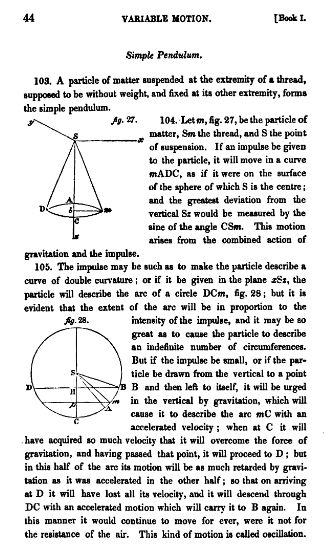


Page 44 from Mechanism of the Heavens 
Mary SomervilleWikipedia Commons


Page 157 from Mechanism of the Heavens
Wikipedia Commons

She was so accurate that she noticed a wobble in the orbit of Uranus and suggested there could be another planet out there.

In 1831, Somerville’s The Mechanism of the Heavens revolutionized the existing understanding of the solar system. This highly-praised essay laid the groundwork for her breakthrough book, The Connection of the Physical Sciences (1834), which became among the best selling science books of the 19th century. Its third edition in 1836 provided the clues astronomer John Couch Adams needed to discover Neptune.


The Connection of the Physical Sciences (1834)

Mary Sommerville

Somerville racked up a bevy of memberships and titles among the scientific elite. In 1834, for example, Somerville gained honorary membership into the Society of Physics and Natural History of Geneva and to the Royal Irish Academy. 

A year later she was voted into the Royal Astronomical Society. Somerville was one of the first two women, along with Caroline Herschel, to be admitted to the Royal Astronomical Society; by 1870 she had also been inducted into the American Geographical and Statistical Society, the American Philosophical Society, and the Italian Geographical Society.

Mary Somerville continued reading and educating herself until the day she died in 1872, at almost 92 years old. 

When she died in 1872, The Morning Post declared in her obituary that "Whatever difficulty we might experience in the middle of the nineteenth century in choosing a king of science, there could be no question whatever as to the queen of science"

Seven years after her death, the University of Oxford’s counterpart to Girton College was created and named after ‘the Queen of Science’, as she was heralded upon her death. 

It was a final recognition of what she had strived to achieve during her lifetime; the dispensation of scientific knowledge to a wider audience and especially the education of women.


Self portrait Mary Somerville (undated)
from the Somerville College Collection


She was not just a mathematician, astronomer, or physicist; she possessed the intellectual acumen to weave these concepts together seamlessly.

Not one to be pigeonholed, Somerville was also a vocal advocate for equal rights and the first person to sign the 1866 women’s suffrage petition.

In 2016, the Institute of Physics celebrated Sommerville’s innovative thinking, which paved the way for the ever-increasing number of women in STEM fields, by introducing the Mary Somerville Medal and Prize for scientists who engage the public through their work.


Education:

"The 19th century’s “Queen of Science” will surely inspire new generations in her homeland. But the legacy of self-taught mathematician Mary Fairfax Somerville reaches way beyond Scotland: she was a brilliant translator of science for the public and a passionate advocate for women’s education."

In Burntisland she started teaching herself Latin. For the most part she kept quiet about this – one of her aunts had told her in no uncertain terms to stop reading Shakespeare and spend her time on needlework. 


Mary Somerville
credits: NYPL/ Science source/ Getty Images

However, Mary told her uncle, Thomas Somerville, about her studies. He was delighted and started giving her Latin lessons every day before breakfast.

See? As you know,  I am not a woman of Sciences. I am a woman of Humanities who included IT a long time ago into mu school curricula.

However, both Sciences and Humanities can be a important part of a global education.


via James Madison University

As an educator, I recognize the great value of women in science as Mary Somerville to inspire girls and young women to achieve their goals in science, cosmology, astronomy or STEM. And completing science study with Latin and Philosophy and modern languages.


  • Resources: Google Arts & Culture


Invite students to meet Mary Queen of Science on Google Arts & Culture. Find out how her expertise led her to become the joint first female member of the Royal Astronomical Society.
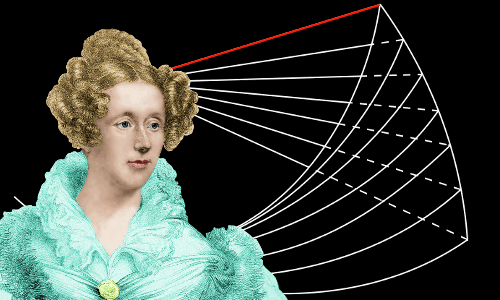


Mary Somerville
via Famous Scientists
Mary Somerville inspired us that we should strive for our passions and dreams, even though there are a lot of obstacles along the way. 

Have no access to learn something that we truly love? Then read books about it or ask others to teach you on it! There are many ways to learn about something, and women can learn about anything! Right?


"Her grasp of scientific truth in all branches of knowledge, combined with an exceptional power of exposition, made her the most remarkable woman of her generation."

Sir David Brewster, inventor of the kaleidoscope, wrote in 1829

G-Souto

05.02.2020
Copyright © 2020G-Souto'sBlog, gsouto-digitalteacher.blogspot.com®

Creative Commons License

Schools :  Meet the Scotish scientist Mary Somerville, the queen of 19th Century Science ! by G-Souto is licensed under a Creative Commons Attribution-NonCommercial-NoDerivatives 4.0 International License.


Monday, March 23, 2015

Students : Apply for the European Space Camp 2015


Estão abertas as inscrições, até 1 de abril de 2015, para o European Space Camp que terá lugar em Andøya, Noruega, de 25 de Junho a 2 de Julho de 2015.
Tópicos:
  • Física aeroespacial como lançamento de foguetões;
  • Construção de circuitos; 
  • Telemetria e inclui o lançamento de um foguetão durante essa semana. 
Os participantes terão oportunidade de assistir a palestras de alguns dos melhorescientistas e investigadores europeus sobre temas tão diversos como o LHC no CERN e as auroras boreais. 
Quem pode concorrer:
  • Estudantes entre 17 e 20 anos com interesse pela área do Espaço
Os alunos terão também que ser fluentes em inglês e ter conhecimentos de física e matemática
Mais informações e inscrições no site do European Space Camp.
Outras informações: Bolsas
Os estudantes com a nacionalidade de um dos países membros da Agência Espacial Europeia poderão concorrer a uma das duas bolsas financiadas por esta instituição. 
Mais informações sobre estas bolsas no site da ESA.


ESC2014
https://www.facebook.com/europeanspacecamp

Applications for European Space Camp 2015 was open on the 1st of January 2015 and will end on 1st April 2015

Some information:
The first Space Camp took place at the Andøya Space Center in 1996, with 20 participants from across Scandinavia in attendance. 

After this initial success, European Space Camp quickly became an annual event and as of 2012, has attracted over 400 participants from over 20 countries across the world.


credits: European Space Camp (2014)

Programme:

The scientific part of the camp is divided between lectures and group work

Some of the best lecturers from across Europe lecture on topics as diverse as Rocket Physics, the work of CERN and the Northern Lights. 

Group work enables participants to spend a week in the life of a scientist and tackle a problem relating to the rocket launch at the end of the week. 

There are five groups in total: Rocket System Design, Experimental Instrumentation, Payload, Rocket Telemetry and Rocket Physics. 

The highlight of the week is of course the rocket launch, which takes place near the end of the week, with just enough time to analyse the results of the launch.


credits: European Space Camp (2014)
An important part of Space Camp is getting to know the other participants and there will be a series of social activities organised as a result. 

There will be the opportunity to hike up a mountain, go on a sea safari, to play volleyball in the spectacular surroundings of the Andøya Space Center and to swim under the midnight sun followed by a trip to the sauna...
A
Applications 2015:

Applications for European Space Camp 2015 was open on the 1st of January 2015 and will end on 1st April 2015.

Who can apply:

Students 17-20 years-old.

Curricula : Physics ; Mathematics;

Note:  Students must have good skills in English if they are not English native speakers.

Where:

Team Space Camp is currently working hard at the Andøya Space Center, preparing for European Space Camp 2015. 

"We are super excited and would encourage anyone who might be interested in participating to apply and get the chance to be part of a very exciting and unforgettable week that includes lectures from some of Europe's top scientists, participants from all over the world and the chance to work on and launch a real scientific rocket."

The European Space Agency has very kindly agreed to sponsor travel costs for the two ESA scholars this year. 

But if you are not from Europe then you can still apply for the ESC scholarship, more information here

Date:

To apply for ESC 2015, which will take place from the 25th of June, to the 2nd of July 2015, please follow the below instructions. 

Criteria:

All eligibility criteria are listed under the FAQ tab

The deadline for applications is the 1st of April 2015, by which time you must have submitted a complete application form and uploaded any files to support your application. Successful participants will be informed in May 2015.

Application information:

If you are a Norwegian applicant, and your fylkeskommune is one of our scholarship providers (click on the 'scholarship' tab and scroll down), please contact the relevant person handling ESC scholarships at your county for information on their selection criteria. 

Please do not apply through our website, as the selection criteria are different. 

If you are not Norwegian, or if your fylkeskommune is not a scholarship provider, you may apply using the electronic application form below (which will be made available on 1st January 2015).

Note:

Participants in need of a visa to visit Norway do not need to worry about obtaining a visa now; 

If their application is successful, there will be enough time between participants being selected and the start of ESC 2015 to obtain a visa. 

You will not need to apply for a visa to visit Norway if your country is listed at this site: Norwegian Directorate of Immigration

Application form:


If you have any questions please see our FAQ page or send us an email with your query to contact@spacecamp.no.

Deadline: 1st April 2015


Education:

Stil on time ! It will be a awesome experience for students. Such an interesting way to get some good knowledge on space science. And participat on a rocket launch! Amazing week, no doubt.

Teachers, inform your students if they have good competences in physics, and mathematics, and of course in English.

Motivate your students girls, please! You know how good are some young girls in science!


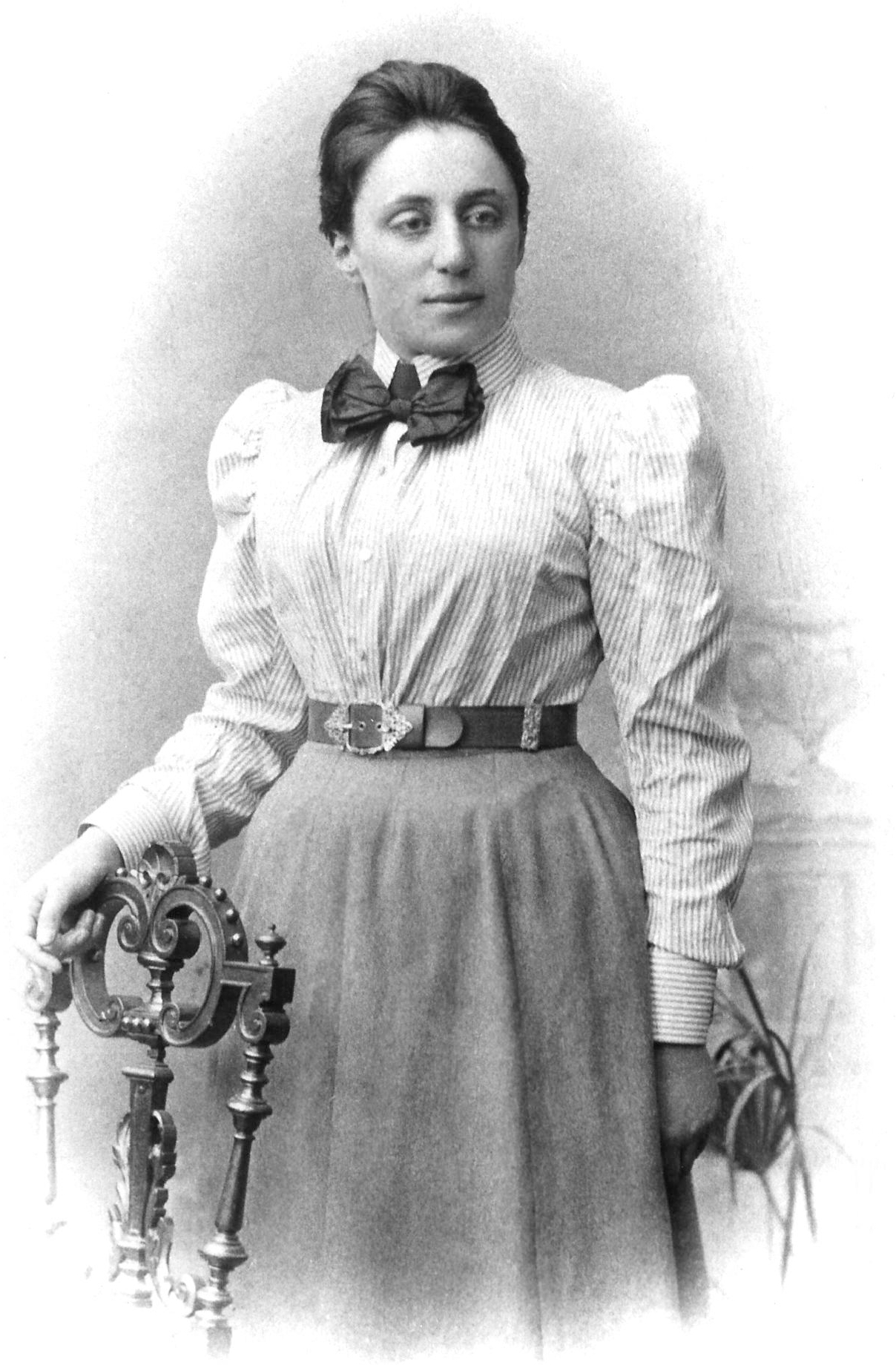
Emmy  Noether (1882-1935)

Consider Emmy Noether, the legendary physicist once referred by Albert Einstein as, “The most significant creative mathematical genius thus far produced,” a fitting endorsement for a mathematician who made groundbreaking contributions to the fields of abstract algebra and theoretical physics, all the while overcoming deep seated sexism in her line of work. Google celebrates the 133th anniversary of Emmy Noether with a doodle, today 23March.

Noether was passionate about math, despite living in an era where women were often excluded from these subjects. 

While studying at the University of Erlangen as just one of two women at the school, Noether was only allowed to audit classes and needed to obtain permission from her professors in order to attend. 

After passing her graduation exam, she taught at the school’s Mathematical Institute for seven years without pay, frequently covering her father’s classes when he was out sick and publishing her own papers.


Emmy Noether Doodle

"In this doodle,each circle symbolizes a branch of math or physics that Noether devoted her illustrious career to. From left to right, you can see topology (the donut and coffee mug), ascending/descending chains, Noetherian rings (represented in the doodle by the Lasker-Noether theorem), time, group theory, conservation of angular momentum, and continuous symmetries–and the list keeps going on and on from there! Noether’s advancements not only reflect her brilliance but also her determination in the face of adversity."

Sophie Dia, Doodler


G-Souto

23.03.2015
copyright © 2015G-Souto'sBlog, gsouto-digitalteacher.blogspot.com®
Creative Commons License
Students : Apply for the European Space Camp 2015 bG-Souto is licensed under a Creative Commons Attribution-NonCommercial-NoDerivatives 4.0 International License.

Thursday, July 25, 2013

Schools : Women in Science : Rosalind Franklin, resources


Rosalind Franklin
credits: Getty Images

"My jaw fell open and my pulse began to race.”

Rosalind Franklin

Rosalind Franklin is the X-ray crystallographer. Her work producing X-ray images of DNA (Deoxyribonucleic acid) was crucial in the discovery of the structure of DNA by James Watson and Francis Crick. 

Franklin was born in Nothing Hill, London on 25 July 1920. And she died from ovarian cancer in April 1958, aged just 37.

Franklin also made critical contributions to our understanding of the molecular structures of DNA, viruses, coal and graphite.


Doodle:


Goodle Doodle Rosalind Franklin 93rd Birthday


Today Google doodle celebrates the life and work of British biophysicist and X-ray cristallographe Rosalind Franklin, whose research led to the discovery of the structure of DNA.

The Doodle marks what would have been Franklin's 93rd birthday, and the photograph that should have earned her a far more famous place in the History books.

The second "o" in the doodle contains her image, while the "l" has been replaced with the DNA double helix.


Rosalind Franklin

The scientist has perhaps become best known as "the woman who was not awarded the Nobel prize for the co-discovery of the structure of DNA".

Many voices have argued that the Nobel Prize should also have been awarded to Rosalind Franklin, since her experimental data provided a very important piece of evidence leading to the solving of the DNA structure

However Watson, Crick and their fellow laureate, Maurice Wilkins, were only nominated for the first time in 1960, two years after Franklin had already passed away.


The story goes that he took some of her x-ray crystallography images without her knowledge and showed them to his friends, Francis Crick and James Watson, who were also trying to discover the structure of DNA.


Photo of the famous x-ray: Sodium deoxyribose nucleate from calf thymus, Structure B, Photo 51 taken by Rosalind E. Franklin and R.G. Gosling

Franklin excelled at Science and attended one of the few girls' schools in London that taught Physics and Chemistry. 

When she was 15, she decided to become a scientist. Her father was decidedly against higher education for women and wanted Rosalind to be a social worker. 


Rosalind Franklin
credits: unknown

Ultimately he relented, and in 1938 she enrolled at Newnham College, Cambridge, graduating in 1941. She held a graduate fellowship for a year, but quit in 1942 to work at the British Coal Utilization Research Association, where she made fundamental studies of carbon and graphite microstructures. This work was the basis of her doctorate in physical chemistry, which she earned from Cambridge University in 1945.

Wilkins, Crick and Watson were awarded the Nobel Prize in Chemistry in 1962.


credits: unknown

Crick later acknowledged that Franklin's images were "the data we actually used" to formulate their 1953 hypothesis regarding the structure of DNA.

The most significant of those images is known as Photo 51, which is also the inspiration for an exhibition currently at Somerset House in London.


In 1972 she refused to accept the Annie J. Cannon Award of the American Astronomical Society because it was awarded to women only:

"It is high time that discrimination in favor of, as well as against, women in professional life be removed". 

Rosalind Franklin

Happily, 12 years later the Royal Society awarded her its highest honor, regardless of gender, the Henry Norris Russell Lectureship. At 91 she is professor emeritus at UCSD.


Education:

I am a big fan of Google doodles! You know it! It is not the first time I write about Doodles. I believe that Doodles can be interesting digital resources for educators.

Doodles are the fun, surprising, and spontaneous motivation that we can include into our lessons to teach about famous writerspoets, scientistspioneers.

Why not include a Doodle into school lesson? It's something captivating and will incite the curiosity of your students to a subject, when you are teaching important skills in serious curriculum. 

Passion is what will make our students enter in the classroom waiting for something special in the middle of a lesson everyday. 


Rosalind Franklin

This Doodle is a wonderful digital resource to promote Science and Physics studies to girls in school and university. Rosalind Franklin is another good example to share with young girls who are your students.

Rosalind Franklin as Marie Curie good examples that girls and women who choose scientific careers, stunning success is possible.


Some resources:

  • If you want to learn more about Rosalind Franklin and the tempestuous story of DNA, you will enjoy reading Rosalind Franklin: The Dark Lady of DNA by Brenda Maddox (Amazon UKAmazon US]).
  • Defending Franklin's Legacy | NOVA 


ExoMars rove Rosalind Franklin

Other resources: ExoMars Rosalind Franklin

Mars rover launched in 2019 has been named after pioneering scientist Rosalind Franklin, hero of DNA research.
The honour followed a public call for suggestions that drew nearly 36,000 responses by citizens from all ESA Member States rope following a competition launched by the UK Space Agency in July 2019.
The six-wheeled vehicle is equipped with instruments and a drill to search for evidence of past or present life on the Red Planet.
The attachment to the European Space Agency (ESA) rover saw her name travel beyond Earth.
Visit ESA ExoMars Rover : from concept to reality and invite your students to watch the video
"She could never have imagined that over 60 years after her dead there would be a rover sent to Mars bearing her name, but somehow that makes this project even more special."
Jenifer Glynn, Franklin's sister

G-Souto

25.07.2013

update: Mars 2019
Copyright © 2019G-Souto'sBlog, gsouto-digitalteacher.blogspot.com® 

Licença Creative Commons
Schools : Women in Science : Rosalind Franklin, resources bG-Souto is licensed under a Creative Commons Attribution-NonCommercial-NoDerivatives 4.0 International License.