Showing posts with label Super moon. Show all posts

Sunday, November 13, 2016

Sciences education : here comes the 2nd Supermoon, the Mega Beaver moon


Super Moon of 2013
rising above the church Nossa Senhora do Castelo
Sesimbra, Portugal
credits: Miguel Claro

The moon is a familiar sight in our sky, brightening dark nights and reminding us of space exploration, past and present says NASA. And it's so true. We love bright nights. But the upcoming super moon will be special!
Tomorrow, Monday, November 14 will be especially “super happy" because it’s the closest full moon to Earth since 1948. We won’t see another supermoon like this until 2034. This full moon will be not only the closest and brightest supermoon of 2016 but also the largest since 1948.
October 16, November 14 and December 14 are the dates to see the moon at perigee, its closest point to Earth.  The 'supermoon' can be up to 14% larger and 30% brighter than an apogee moon, when it's the furthest from Earth. 


This is actually the second of three supermoons in a row, so if the clouds don’t cooperate for you this weekend, you will have another chance next month to see the last supermoon of 2016 on Dec. 14.


"This [supermoon] is more a technicality than an intense scientific interest,” MIT planetary scientist Richard Binzel said. “But anything that gets people interested to look up and notice the night sky and ponder the universe is a good thing.”
Super moon?
The term 'supermoon' as entered popular consciousness in recent years, says NASA. 
Originally a term from modern astrology for a new or full moon that occurs when the moon is within 90% of its closest approach to Earth in a given orbit, supermoon now refers more broadly to a full moon that is closer to Earth than average. But why is the moon closer to Earth at some times but not others?


Apogee and perigee describe the two points in the Moon’s orbit
credits: Anthony Ayiomamitis
The moon’s orbit around Earth is slightly elliptical so sometimes it is closer and sometimes it’s farther away. When the moon is full as it makes its closest pass to Earth it is known as a supermoon. 
At perigree - the point at which the moon is closest to Earth - the moon can be as much as 14 percent closer to Earth than at apogee, when the moon is farthest from our planet. The full moon appears that much larger in diameter and because it is larger shines 30 percent more moonlight onto the Earth.


A supermoon is seen during a lunar eclipse behind pods of the London Eye heel London, September 28, 2015
credits: REUTERS/ Toby Melville
http://www.telegraph.co.uk/

The biggest and brightest moon for observers in the world will be on Monday. The supermoon should be visible from anywhere in almost every country, cloud permitting.
NASA says this month’s super moon will appear 30 percent brighter and 14 percent larger than a typical full moon.
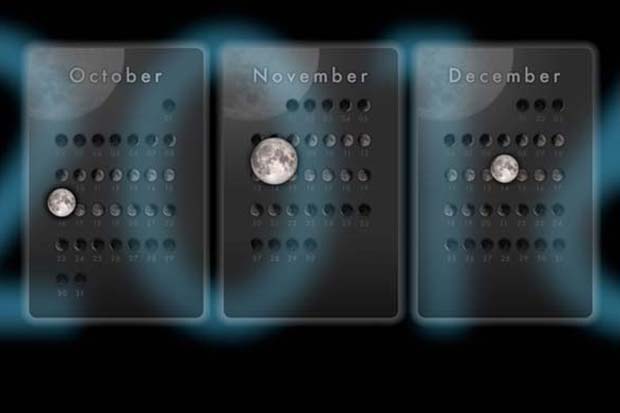


Three supermoons in a row 2016

Education:

Three supermoon? Here comes the second! Wow!

The last time a supermoon made headlines on my blog in October 2016, when it appeared to be 14 per cent bigger and 30 per cent brighter. However, you can read my post Science education: here comes the first supermoon (2015) or Supermoon in Science education (2013).

Teachers are prepared to tomorrow lessons. Sciences or Languages, why not? There's a huge of literature texts about moon. Not only the juvenile saga Twilight, of course.

Teachers will be face-to-face their students in the classroom or via Facebook live, Twitter, Google + hangouts to share experiences on sky watching.

I think they will invite their students to join some sky watchers at national observatories of Astronomy, or to go out with family observing the supermoon of tonight or tomorrow. It will depend of the continent where you are living.

“The difference in distance from one night to the next will be very subtle, so if it’s cloudy on Sunday, go out on Monday. Any time after sunset should be fine."

Since the moon is full, it’ll rise at nearly the same time as sunset, so Noah Petro, deputy project scientist for NASA’s Lunar Reconnaissance Orbiter (LRO) mission suggests that you head outside after sunset, or once it’s dark and the moon is a bit higher in the sky. "You don’t have to stay up all night to see it, unless you really want to!”

Ask students to take some photos or produce some videos with their smartphones, tablets to be exposed and explored in Sciences curriculum along the week.

Teachers and students will exchange their incredible experiences, exploring the resources and debating the awesome Mega Beaver Moon.


The closest supermoon will fall next December 14. Or like this one only in 2034! Wow! 


Mega Beaver Moon
credits: Slooh Space for everyone
Why November's full moon is also called a Beaver Moon?

November’s full Moon was called the Beaver Moon by both the colonists and the Algonquin tribes because this was the time to set beaver traps before the swamps froze, to ensure a supply of warm winter furs. It was also called the Full Frost Moon by Native Americans. It is also sometimes called a Frost Moon.

Resources:
What's more, the full moon won't come this close to Earth again until Nov. 25, 2034, according to a statement from NASA. 
The Slooh Community Observatory will offer a live broadcast for November's full moon on Nov. 13 at 8 p.m. EST (0100 GMT on Nov. 14).

NASA's LRO mission website

What is a 'supermoon' and when can I see the largest moon in 70 years?

Tips for photographing the Supermoon

Let's have fun!

The mainstream media is going to have a field day with the Super Moon. So, why shouldn’t we? 


"Let’s spread the word that astronomy’s not all about math, light-years, and dark energy. It can be fun, too."


G-Souto

13.11.2016
Copyright © 2016G-Souto'sBlog, gsouto-digitalteacher.blogspot.com®

Creative Commons License
Science education : here comes the 2nd supermoon the Mega Beaver moon bG-Souto is licensed under a Creative Commons Attribution-NonCommercial-NoDerivatives 4.0 International License. 

Monday, July 8, 2013

June roundown of the most-read posts


 Atlantic Ocean Porto (Portugal)
photo: unknown


July! After a chilly Spring, Summer came suddenly. And temperature hits 37-39º degrees in the city bordered by the Atlantic Ocean. 

The beach all around the city was the most interesting destiny. Sun and sea do miracles to work stress. Last week was almost impossible to do regular activities.

I' not on holiday. So, I went on the beach during weekend time to feel free and fresh.

Monday is time to  intellectual stimulation charges again. So here the rundown of the most-read post of June. And June rundown shows the diversity of subjects, some of my pedagogical values and summarize the most-read topics in a collection of five posts:

I believe and practice the differentiation as a value too by focusing on individual identity of my students. They are free to be creative by discovering 'by  themselves' with my guidance, just the sufficient to let them more comfortable in their learning. I wrote about it on the differentt posts of my blog.


Screenshot| Europeana app


Europeana: free app for Education is the most read post. Europeana is the European digital library, museum and archive. Europeana enables people to explore the digital resources of Europe's galleries, museums, libraries, archives and audiovisual collection. It is always open to new interactive resources-tools.


In June, Europeana launched the first free iPad app, 'Europeana Open Culture'  introducing us to hand-picked and beautiful collections from some of Europe’s top institutions, and allows us to explore, share and comment on them.


Screenshot| Europeana app


Education:

Exploring Europe’s culture on our iPad! Or students' iPad!

Europeana enables students and teachers to explore the digital resources of Europe's museums, libraries, archives and audio-visual collections. 

But let's continue to present the ne app for iPad! This version allows students to search in selected image collections of Europeana, Europe’s cultural and scientific heritage portal. The images included are available for free re-use and cover five themes: Maps and Plans, Art, Photography, Treasures of the Past, and Treasures of Nature.

Curriculum: Almost all curricula, specially Arts, History, Literature, Languages, Civics, Open Culture.

Levels: All levels (some levels need teachers tutoring)


Although individual decisions may seem small in the face of global threats and trends, when billions of people join forces in common purpose, we can make a tremendous difference.” 

UN Secretary-General Ban Ki-Moon

World Environment Day is an annual event on 5 June that is aimed at being the biggest and most widely celebrated global day for positive environmental action. 


The theme for this year’s World Environment Day celebrations was Think.Eat.SaveThink.Eat.Save is an anti-food waste and food loss campaign that encourages you to reduce your foodprint. According to the UN Food and Agriculture Organization (FAO), every year 1.3 billion tonnes of food is wasted. 

Here I am writing about Civics and Environmental in school education. So important to help our your students became 'engaged' citizens.

Yes! Because World Environmental Day is not about a day! WED is about every day! Schools have an important role. Educators must teach environmental values in different moments of their lessons, providing some thoughts and digital educational resources, educating young people for a sustainable future and inspiring them being a good example. 

Of course you can't forget to invite your students to use their devices (ipads, smartphones, tablets) for developing interactve actiivities.

Students will evolve in creative green projects that they will share with friends, families, and pen-pals. They will become good young environmentalists.


Le Bac? Çs va bien se passer Le 17 juin, les étudiants français passereraient le bac. 

Jamais les étudiants ont eu tellement d'outils techno adaptés à leur goût et expérience de vie: la télé, la tablette, le smarthone, ou le iPhone sont à leur disposition pour réviser leurs connaissances. 


Ils ne peuvent pas dire que réviser, c'est ennuyant! Les enseignants suivent leurs tendances et font tout pour les motiver. Le numérique est là pour les appuyer!

De quoi contenter tout le monde, non? Mais surtout de quoi rassurer les bachos sur tout ce qu'ils ont vu et retenu tout au long de l’année scolaire.

On a compris qu'un smartphone ou iPhone peuvent se transformer facilement en excellent outil de révision pour le baccalauréat. A condition d'avoir les applis qui conviennent. 


Bon! Des applis pour aider les étudiants à réviser leur bac, j'en ai présenté. À vous de relire Le Bac? Çs va bien se passer et de regarder à nouveau le témoin de Maxime l'un des 3 plus jeunes candidats au bac 2013.

Le sociologue Baptiste Coulmont, chercheur et auteur du livre Sociologie des prénoms a réalisé une étude sur les bacheliers 2013, compilant les prénoms des 338 000 candidats ayant obtenu 8/20 ou plus au bac général ou technologique.

Une étude assez aintéressante qui prouve que les Diannes et Adèles ont fait mieux que les Sabrina au Bac 2013. Intéressante !


Photo: "Supermoon" Chris Spindley 
Colwyn Bay, Wales, May 2012


June 22, the sky was set to be illuminated by what has appeared to be a much bigger and brighter Moon. Super Moon in sciences education, remember?

The so-called "supermoon" occurs when the Moon reaches its closest point to Earth, known as a perigee full moon.


Credits video: CBS News

Education:

For many, the moon appeared about as full in the June 22 evening sky as it did on the evening of June 23 for others. 
This full moon is not only the closest and largest full moon of the year. It also presents the moon's closest encounter with Earth for all of 2013.

So you have here some fantastic digital educational resources, the videos,  to share in Sciences curriculum lessons and explain to your students this awesome phenomen.

If you were lucky enough, you organized a skywatecher outdoor lesson with your students and they observed live this beautiful scientific phenomen.


Antoni Gaudi Google doodle


"Those who look for the laws of Nature as a support for their new works collaborate with the creator."

Antoni Gaudi

Google celebrated the 161th birthday of Catalan architect Antoni Gaudi with a colorful, stylized Doodle, snippets of six of Gaudi’s iconic modernist buildings or mosaics spell out .

Education:


All my resident readers know how I defend Arts Education in school curricula. You know my thoughts about the importance of Arts in School Education, no matter the art fields: MusicDanceLiteraturePainting, Architecture, and other, all of them are essential to a complete and better education.


Love Google doodles! They can be introduced in any curriculum as I already wrote. And I write a lot about Google doodles, you can read on my blog. 

Doodles combine creativity, digital culture and motivation to fantastic school lessons. You must think about it.

Here, a good motivation to one or two lessons about Arts, Modernism, and Architecture. 

Of course, ICT and social media in the classroom are important tools to tackle the world's toughest problems creating bridges and establish a truly intercultural world, where diversity can be celebrated, a world where different cultures not only coexist but value each other for their contributions and potential.

“We need technology in every classroom and in every student and teacher’s hand, because it is the pen and paper of our time, and it is the lens through which we experience much of our world.” 

David Warlick


G-Souto

08.07.2013 
Copyright © 2013G-Souto'sBlog, gsouto-digitalteacher.blogspot.com®

Licença Creative Commons
June rundown:of the most-read posts bG-Souto is licensed under a Creative Commons Attribution-NonCommercial-ShareAlike 3.0 Unported License.
