My thoughts about Education Humanities, Technology and Digital Culture. Interested on social media tools in educational contexts and
gamification in education.
On all of the coming evenings – June 23, 24 and 25, 2021 – the moon might appear full to you. It comes when the moon is most opposite the sun for this month, when its lighted face – its day side – is aimed at us most directly. That full moon instant comes this month on June 24 at 18:39UTC.
Flower moon
credits: EPA/ Etienne Laurent
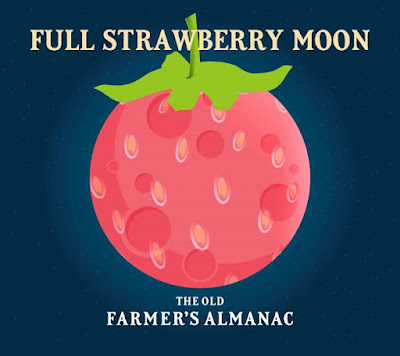
All the full moons have names. In North America, the June full moon is called the Rose Moon, Flower Moon or Strawberry Moon.
Some people will call the third of these four seasonal full moons a Blue Moon.
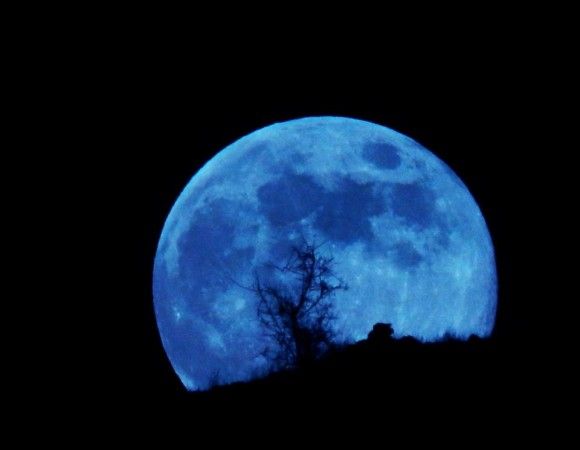
Blue moon
credits: Priya Kumar in Oman
via EarthSky
The last Blue Moon came on October 31, 2020, the night of Halloween, remember? Like most Blue Moons, it was blue in name only. It was called a Blue Moon because it was the second of two full moons in a single month.
The term "blue Moon" has been around a long time, well over 400 years, but its calendrical meaning has become widespread only in the last 25 years.
There’s another definition for Blue Moon. It can also be the third of four full moons in a single season. A season is the period between a solstice and an equinox.
The next Blue Moon will be of this sort, and it’ll happen on August 22, 2021.
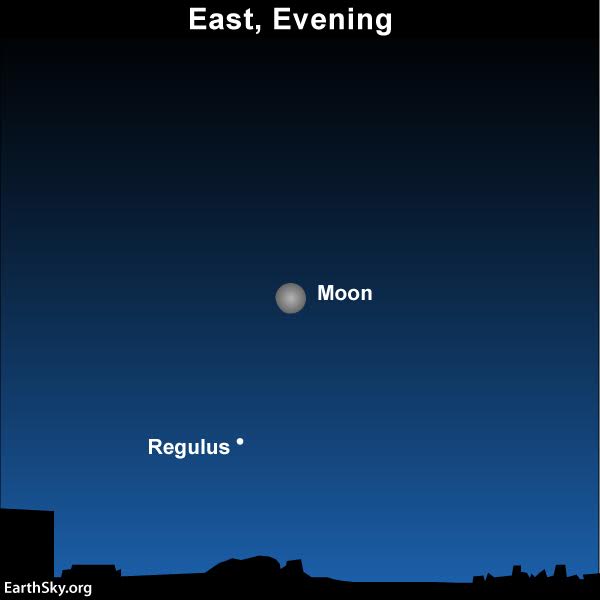
On June 23, 24 and 25, 2021, find the full moon and look in the moon’s glare for a starlike point.
The Moon will appear full for about three days from early Wednesday morning through early Saturday morning.
This year the Strawberry Moon is closer and larger than an average full Moon. When we have such a large bright Moon, it is sometimes called a Super Moon.
Such an incredible event! Most European students (primary, elementary education) are still at school because the pandemic obliged most countries to teach on remote learning a big part of the school year.
As exemplified by the ongoing COVID-19 pandemic major infectious diseases and epidemics have devastating impacts on human lives, wreaking havoc on long-term social and economic development.
For the first time since 1945, the entire world is confronted by a common threat, regardless of nationality, ethnicity or faith.
Global health crises threaten to overwhelm already overstretched health systems, disrupt global supply chains and cause disproportionate devastation for people in the poorest and most vulnerable countries.
There is great need of raising awareness, the exchange of information, scientific knowledge and best practices, quality education, and advocacy programmes on epidemics at the local, national, regional and global levels as effective measures to prevent and respond to epidemics.
Must not forget at the heart of the COVID-19 pandemic, volunteers have demonstrated an exceptional display of solidarity across the world. Responding to calls for help from their local communities, they are everyday heroes.
And now, time to the review of the most popular posts of the forgotten October. Let's remember it!
Here are the most popular posts of the forgotten October:
Hoping you had a lovely Christmas although the physical distance with some of the loved ones.
Soon you're returning to school first days in January 2021. Such a great Hope with the vaccine for our eldest ones, parents, grandparents, doctors and nurses.
It's important to alert students to continue the social distance, inside and outside school! And waring masks.
Education, hope and resilience! The three most important words to share in this final year 2020.
Last week, when NASA announced that it would reveal “an exciting new discovery” about the moon. It happened to be exciting news for space scientists - water and ice on the moon are more accessible than previously thought - but not the supernatural or extraterrestrial news many yearned for.
Let’s learn more about the moon:
Moon updates have been plentiful this year. In August, scientists reported they had flashed a laser onto a NASA spacecraft that was gliding over the moon’s surface at thousands of miles per hour in order to measure distance between our moon and planet.
credits: Gemini Observatory
In February, two astronomers discovered a mini-moon orbiting Earth. The new mini-moon has been named 2020 SO and is heading towards Earth’s orbit on a path far slower and lower than those of its forebears. It was tracked by the Pan-STARRS1 telescope at the Haleakala Observatory in Hawaii on September 17.
Now, the moon has another significant moment in store for witches and non-witches alike: On Oct. 31 — that’s Halloween — people in all time zones will be treated to a "blue hunter’s moon".
A Blue Moon occurs on the rare occasion when there is more than one full moon during a month. (It doesn’t actually look blue.)
Astrology:
How this Saturday’s Blue Moon is an opportune moment for mend our bodies, minds, and hearts.
And after spending much of this year in a state of concern, confusion and anxiety, the Covid-19, this type healing energy may well come as welcome relief.
"Since this Moon is happening on Halloween and while the Sun is in Scorpio – a sign closely connected to the spiritual world – this Blue Moon is an obvious invitation to get super-witchy.”
This is a truly special confluence of spookiness; a Halloween full moon visible for most time zones on Earth hasn't happened since 1944, according to the Farmers' Almanac. It won't happen again until 2039.
But wait, there's more: The Oct. 31 full moon also happens to be a Blue Moon, a designation for the second full moon to occur in the same month.
Blue moons are relatively rare as well, occurring on average just once every 2.5 years or so. We last saw one in March 2018. The next one is in August 2023.
A hunter’s moon follows a harvest moon (that was Oct. 2), and it theoretically signals a time to stockpile for winter.
The last time there was a "full pizza-pie moon" (a nontechnical term) in all time zones on All Saint’s Eve was in 1944. There was a full moon on Halloween in 2001, but it was only visible in the Central and Pacific time zones.
The next full moon on Halloween that will be visible worldwide is expected in 2077, according to the Farmer’s Almanac.
Jon Han
New York Times
How to see the Halloween Blue Moon with your kids:
The best way to begin your astronomical adventures is with the moon. It’s easy to spot and doesn’t require any fancy equipment to enjoy.
On this Saturday, October 31, Halloween, there will be a spooky full moon — the second of the month, which is called a Blue moon.
“The moon is a really great opportunity for parents to engage their kids in the night sky because it always puts on a show no matter where you live,”.
With their naked eyes, your kids can spot its craters and dark regions. While you watch, tell them the dark spots are remnants of ancient volcanic plains that once spewed magma across the lunar surface.
Have them imagine what it looked like billions of years ago, an oozing, molten mess.
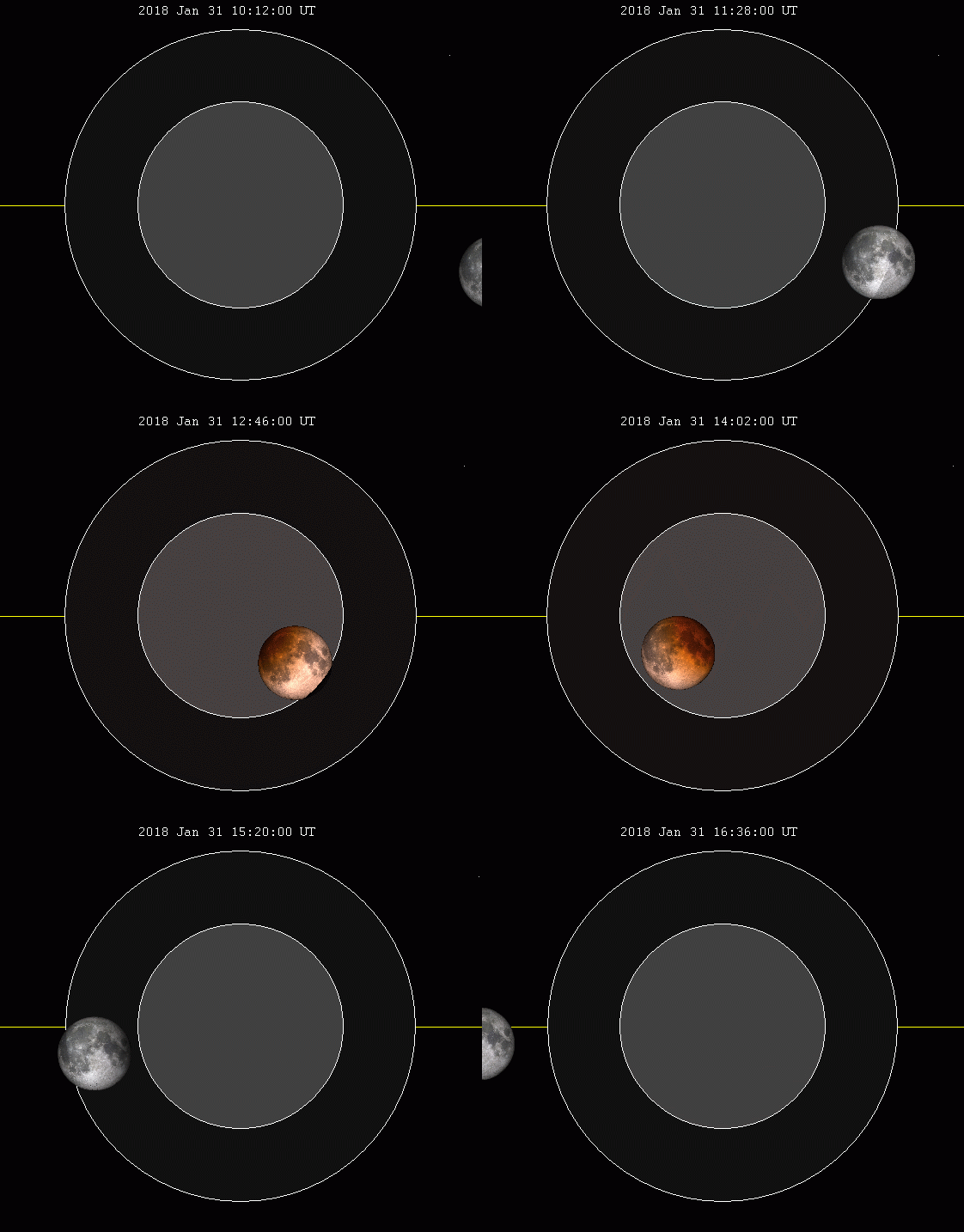
The Blue Moon – second of two full moons in one calendar month – will pass through the Earth’s shadow on January 31, 2018, to give us a total lunar eclipse.
The last time that we had a Blue Moon total lunar eclipse, reckoning in world time (UTC, or GMT), was December 30, 1982.
No, this time I will not sing Blue Moon! But the song is on my mind while I'm writing about the moon-blue.
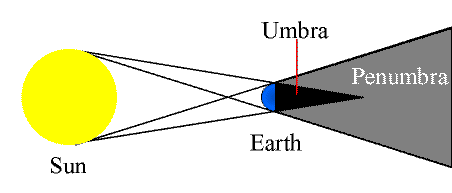
Totality, when the moon will be entirely inside the Earth’s dark umbral shadow, will last a bit more than one-and-a-quarter hours.
The January 31 2018 much of the world will have the opportunity to observe a Blue Moon: A somewhat rare occurrence that doesn't have anything to do with the moon's color.
Full moon is also the third in a series of three straight full moon supermoons – that is, super-close full moons.
It’s the first of two Blue Moons in 2018. So it’s not just a total lunar eclipse, or a Blue Moon, or a supermoon. It’s all three … a super Blue Moon total eclipse!
It’s not just a total lunar eclipse, or a Blue Moon, or a super moon. It’s all three! A super Blue Moon total eclipse!
A lunar trio will be visible in the sky tomorrow before dawn: Supermoon – When the Moon is at/near its closest point to EarthBlue Moon – The 2nd full moon in a monthBlood Moon – The red tint Earth’s shadow casts on the Moon during a lunar eclipse NASA
Is it the first Blue Moon total eclipse in 150 years, as some social media memes are now claiming? Yes, it is, if you’re not considering the whole world, but only the Americas.
It’s a Blue Moon by the monthly definition of the term: the second of two full moons to fall within a single calendar month. The first Blue Moon comes on January 31, 2018, and the second on March 31, 2018.
The full moon happens at the same instant worldwide, the hour differs by time zone.
For the longest time nobody knew exactly why the second full Moon of a calendar month was designated as a Blue Moon.
One explanation connects it with the word belewe from the Old English, meaning, “to betray.” Perhaps, then, the Moon was “belewe” because it betrayed the usual perception of one full Moon per month.
However, in March 1999 issue of Sky & Telescope magazine, Phillip Hiscock revealed one somewhat confusing origin of this term.
It seems that the modern custom of naming the second full Moon of a month “blue,” came from an article published in March 1946Sky & Telescopemagazine.
The article was “Once in a Blue Moon,” written by James Hugh Pruett. In this article, Pruett interpreted what he read in a publication known as the Maine Farmers’ Almanac, and declared that a second full Moon in a calendar month is a “Blue Moon.”
So, the Jan. 31 full moon is special for three reasons: it’s the third in a series of “supermoons,” when the Moon is closer to Earth in its orbit - known as perigee -- and about 14 % brighter than usual.
It’s also the second full moon of the month, commonly known as a “blue moon.” If you live in North America, Alaska, or Hawaii, a lunar eclipse will be visible before sunrise on Jan. 31. For those in the Middle East, Asia, eastern Russia, Australia and New Zealand, the “super blue blood moon” can be seen during moon rise in the morning on the 31st. If your local weather is calling for clouds this morning, you can still see the super blue blood moon.
Oh, my ! It should offer some pretty photo opportunities for sky watchers. Ask students to take some photos if they are lucky or do small videos (some seconds) with their smartphones and tablets to explore in Science classroom next tomorrow or during the week.
Remember! No matter what has come in or out of our lives in the past few years, once in a while we are given the chance to have everything we’ve always wanted. We just have to make the choice now to not let it go. Because certain chances only come around once in a blue moon.
Hope you will enjoy the beauty of this awesome scientific event. And of course with an open mind to the magic of the moment not only in the sky, also into our life.
I could not resist. Here I am singing Blue Moon by Chris Isaak!
Blue moon!
Blue moon you saw me standing alone Without a dream in my heart Without a love of my own Blue moon, you knew just what I was there for You heard me saying a prayer for Someone I really could care for And then there suddenly appeared before me The only one my arms will ever hold. Lyrics Hart, Lorenz / Rodgers, Richard