Tuesday, July 16, 2019

Schools : Science : Partial Lunar Eclipse tonight !


Speyer, Germany
credits: EPA/ Ronald Witteck

Most of us will get a chance tonight to see a partial lunar eclipse. Though not if you live in North America, Greenland or northern Russia. In Portugal, it's visible.


Lunar eclipse Elvas, Portugal, 16 July 2019
credits: Nuno Veiga/ Lusa

partial lunar eclipse is visible from much of the world tonight. Only North America, Greenland and northern Russia will miss out. 

From Asia and Australia, the eclipse will take place in the early hours of 17 July. From the rest of the world it will happen on the preceding evening. 

Lunar eclipses take place when Earth crosses between the sun and the moon, and casts its shadow across the lunar surface. 


Partial Lunar Eclipse, Berlin, Germany
credits: EPA/Felipe Trueba


The outer portion of Earth’s shadow, known as the penumbra, touches the moon at 19:45 BST on 16 July. 

At this time, the moon will still be below the horizon from the UK. When it rises at 21:06 BST, the darkest, most noticeable portion of Earth’s shadow will have just begun to pass across it. Mid-eclipse occurs at 22:32 BST, when a dark circular “bite” will have covered the moon’s northern hemisphere entirely. 

By midnight BST, 1:20 AM in Portugal, the penumbra will be about to leave the moon, and the penumbral phase finishes about an hour and a quarter later.

Wow! How exciting in some few days NASA marks the 50th anniversary of the Apollo 11 Moon landing!


Partial Lunar eclipse

Education:

Students can be invited to join astronomers and skywatchers at national observatories of Astronomy, observing the partial lunar eclipse. 

Invite them to take some photos or make little videos with their smartphones 
or tablets and publish the best on Twitter hashtag #LunarEclipse.

In science lesson, tomorrow, 17 July, vote the best photo of each class you teach! 

An open debate on the subject with students will be interesting for all.


G-Souto

16.07.2019
Copyright © 2019G-Souto'sBlog, gsouto-digitalteacher.blogspot.com®

Creative Commons License
Schools : Science : Partial Lunar Eclipse tonight by G-Souto is licensed under a Creative Commons Attribution-NonCommercial-NoDerivatives 4.0 International License

Monday, July 8, 2019

Jean de La Fontaine : Fables & outils pédagogiques


Jean de la Fontaine
Portrait par Hyacinthe Rigaud
Carnavalet Museum

Jean de la Fontaine a marqué l'histoire par ses Fables. Son œuvre occupe une place de choix dans le patrimoine culturel français et certains préceptes sont entrés dans la sagesse populaire.

Jean de la Fontaine est né ce jour-ci, le 8 juillet 1621 à Chateau-Thierry, France.


Google Doodle 390e anniversaire de Jean de la Fontaine 2011

  • Google Doodle:

Google a célébré le 390e anniversaire de Jean de la Fontaine le 8 juillet 2011 d'un Doodle d'après la fable Le Lièvre et la Tortue.


Le Lièvre et la Tortue
Jean de La Fontaine

"Of all the fables adapted by Jean de la Fontaine, “The Tortoise and the Hare” appealed to me the most for the persistent relevance of its message.

I drew stylistic inspiration from traditional storybook etchings," 

Sophia Foster Dimino, doodler

La fable a été choisie par son message. "Rien ne sert de courir il faut partir à point" C'est toujours valorisant de surmonter les difficultés. Et plus encore malgré les handicaps, comme pourrait le dire notre tortue...


Fables Choisies
mises en vers 
par M. de la Fontaine
édition originale, 1668


En 1668, La Fontaine publie son premier recueil de Fables qui connaît un immense succès. Il rassemble 124 fables dédiées au Dauphin, fils de Louis XIV


Fables
La Fontaine
Classiques | le livre de poche, 2015

Le poète y met en scène des animaux pour critiquer les hommes et dénoncer les grands problèmes de son époque. 

En 1678 et 1679 paraissent deux autres recueils de Fables, contenant 87 fables supplémentaires. 

Total 243 fables qui restent son chef d'oeuvre. Plus  de 12 000 vers, rien que pour les fables.

Ses Fables, appréciées des petits comme des grands, restent actuelles grâce à la simplicité de leur langue et à leur forme imagée. 

Le fabuliste a souvent puisé son inspiration dans des fables plus anciennes, écrites par Esope, Horace ou encore Pilpay.

Mais La Fontainerenouvelé le genre en en réinventant totalement la forme : le court récit devient alors un élément essentiel, au même titre que l'est la morale didactique qui le conclut. Il écrit dans une langue belle et douce à lire.


Fables
La Fontaine
Classiques | le livre de poche, 2015


Éducation:

Grand observateur de la nature, le poète établit un parallèle troublant entre les animaux et les hommes. 

Chaque Fable est un véritable portrait de l'humanité et de la société du XVIIe qui trouve un écho saisissant aujourd'hui. 

La ruse, le désir de dominer, l'égoïsme ou la jalousie sont décrits de façon à nous instruire sur nous-même tout en nous faisant rire de nos propres défauts.


Les fables de La Fontaine peuvent être une excellente motivation à la poésie pour les petits et les grands. 


Oui, je sais bien! C'est pas la poésie! Voyons! - vous diront vos élèves, en plein cours. Mais si! C'est la prose poétique.

La Fontaine, à chaque page, nous convainc que la poésie, à ses yeux, demeure instrument de connaissance. Il existe une beauté du savoir. Et on ne cesse pas de la retrouver.

Les élèves peuvent lire la fable complète ici.

Et faire la recherche Jean de la Fontaine - 26 fables illustrées ici

Pour les plus petits, d'abord l'écouter (vidéo) et après lire la fable. Essayez de retrouver une édition d'enfants.


Le Lièvre et la Tortue
Jean de la Fontaine
éditions Lito, 2013
 

Enseignants: outils pédagogiques:

Les enseignants retrouveront des outils pédagogiques:

  • Le site La Fontaine ici: le site propose l'intégralité des fables.

Langues: français; anglais; allemand; italien.

  • Un outil pédagogique très intéressant iciJean de la Fontaine - 26 fables illustrées.
  • Dossier les 15 fables les plus connues ici


Jean de la Fontaine
par François de Troy


Mes pensées:

Il faut bien préparer le cours, les arguments, pour bien répondre aux questions de vos élèves, selon le niveau d'apprentissage de vos étudiants. Vous saurez bien le faire, j'en suis sûre!

C'est toujours idéal de proposer aux élèves la compréhension de textes littéraires, le message, la moralité de la fable ( les petits) et l'étude et la recherche des auteurs et de l'oeuvre ( à partir du collège).

Comme enseignants, vous saurez créer des outils pédagogiques selon le niveau de scolarité. À distribuer aux élèves avant et/ou après les textes ou vidéo.


G-Souto

08.07.2019
Copyright © 2019G-Souto'sBlog, gsouto-digitalteacher.blogspot.com®

Creative Commons License
Jean de la Fontaine : Fables & outils pédagogiques by G-Souto is licensed under a Creative Commons Attribution-NonCommercial-NoDerivatives 4.0 International License.

Sunday, June 30, 2019

Schools : Anne Frank 90 : Virtual Exhibition Google Arts 360-degree : resources & apps


Anne Frank 90th anniversary
12 June 1929-2019

“I'll make my voice heard, I'll go out into the world and work for mankind!”
Anne Frank would be 90 years on 12 June 1929. In honor of her 90th birthday, Google Arts with a virtual exhibition exploring her former house, in Amsterdam, today Anne Frank Foundation open to schools of the world.

On Anne's 13th birthday, on 12 June 1942, Anne received her first, red-chequered diary for her birthday. 

‘Maybe one of my nicest presents…’ she wrote. 


Anne Frank & her classmates at the Jewish school
credits: Anne Frank House
via Google Arts & Culture

There was a table full of presents, she had a nice party and she was given something she really wanted: a diary. On the first page Anne wrote straight away: 

‘I hope I will be able to confide everything to you, as I have never been able to confide in anyone, and I hope you will be a great source of comfort and support.’

Anne,

The classmates Anne invited to her birthday were all Jewish, forced to attend Jewish schools, wear the Star of David on their clothes, and not allowed to visit parks, cinemas, or swimming pools.


Anne Frank, her life, her diary, her legacy
July 9, 1943
credits: Anne Frank House
via Google Arts & Culture

Since 12 June, Google Arts & Culture (in collaboration with the Anne Frank House) uploaded 360-degree images of Anne Frank's former home. There are 360-degree images of all the rooms in the house at Merwedeplein 37-2. 


“I hope I can entrust you with everything that I haven't been able to share with anyone, and I hope you will be a great support to me." 


Anne Frank's Diary
credits: Anne Frank House

These are the first words Anne Frank wrote in the diary she received on her thirteenth birthday. Three weeks later, the Frank family went into hiding. Since then, the story of Anne has moved people across the globe who want to learn more about her life.
Google Arts & Culture has worked with the Anne Frank House to shed a light on Anne’s life at Merwedeplein 37-2 in Amsterdam, where her family lived before they went into hiding. 


Anne Frank House
credits: Anne Frank House
via Google Arts & Culture
Education:
In honor of what would have been her 90th birthday, students and teachers can explore an online exhibit and indoor Street View imagery of Anne’s childhood home. 
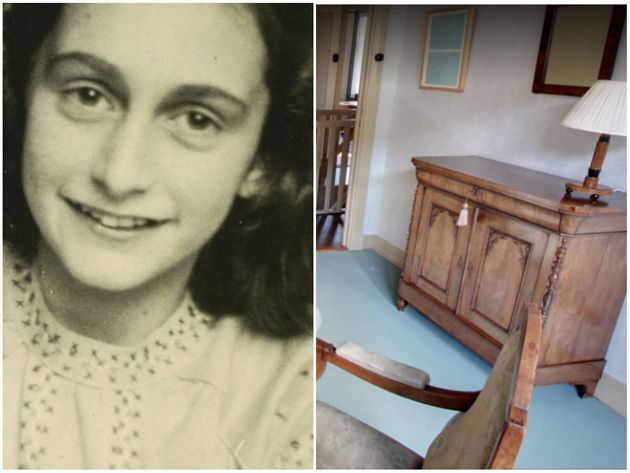
For the first time it will be possible to view all rooms of the flat to get a unique insight into Anne Frank's home that has been restored to its original 1930s style, including the bedroom that she shared with her sister Margot.
The accompanying online exhibit  features precious insights and documents such as the only video of Anne known to exist - taken by pure coincidence at a wedding - as well as the only picture of her an her parents and sister.


Anne and Margot Frank's former bedroom at Merwedeplein 
now a period room

The new 360-degree images, created with Google Street View, allow viewers to take a virtual step inside Anne Frank's former home and look around all the rooms, including the bedroom that Anne shared with her sister Margot. The images have been added to the online exhibition Anne Frank's Former Home, which tells the story of Anne Frank and her family before they went into hiding.


Anne Frank House
credits: Anne Frank House
via Google Arts & Culture

  • How to explore the virtual exhibition:

To move inside each of the rooms, students and teachers must move  the cursor or their finger, in the case of navigating with a touch screen, through the place. 

They can look at each of the rooms in detail and from different perspectives, just as they do when they go through cities with Google Street View.

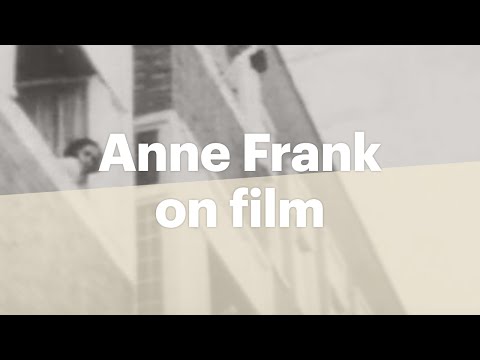
In addition to doing a virtual tour around this home, they can watch a photograph of Anne, her sister and her parents, as well as a video (July 21, 1941). The girl next door was getting married. 


Anne Frank
credits: Anne Frank House
via Google Arts & Culture

Anne Frank is leaning out of the window of her house in Amsterdam to get a good look at the bride and groom. It is the only time Anne Frank has ever been captured on film.


 The house restored to its original 1930s style
credits: Anne Frank House via Google Arts & Culture

Anne Frank former house:

Since 2005, the house has been let to the Dutch Foundation for Literature. It serves as a refuge for foreign writers who feel restricted in their own countries. 

The house is decorated in the style of the 1930s, when the Frank family lived here.

After the war, various people lived at Merwedeplein 37-II, the flat where Anne had lived. In 2004, the Ymere housing corporation bought the house and restored it to its original 1930s style, in close collaboration with the Anne Frank House.

Wonderful 360-degree images of Anne Frank's former home, want see it? Step inside and look around

  • Diary & note books:


Diary & note books
credits: Anne Frank House

Anne Frank was given a diary for her 13th birthday. In this diary, Anne related the two years (between June 12, 1942 and August 1, 1944) that her family remained hidden in "the house behind", as she called the attic of some stores where there were the Franks (Otto, Edith, Ana and his sister Margot) along with other friends, until they were discovered and deported to concentration camps.


The first diary of Anne Frank sits on display 
in the Anne Frank House in Amsterdam, April 28, 2010 
credits: REUTERS/Cris Toala Olivares

Just before and during the period in hiding Anne recorded her diary entries on the time spent in hiding in this diary and when it was full, in notebooks. 

When in March 1944 Anne heard on Radio Oranje that diaries would be collected after the war, she decided to write a ‘novel’ about life in the Secret Annex based on her diaries. She dreamed that this work would be published.  


A passport photo shows Anne Frank in 1942, when she was 13 years old
credits: Photo collection Anne Frank House, Amsterdam


11 May 2019: 

Anne wanted to publish a ‘novel’ after the war about the time she spent in hiding. With the publication of Liebe Kitty Anne Frank House shows how what Anne had in mind. 

This is the first time that this work by Anne will be published in a new translation and in a stand-alone edition intended for a wide audience. 

"This is the book that Anne wanted to write and to publish," Nussbaum, 91, said of the new edition.


Original manuscripts of Anne Frank

Original manuscripts of Anne Frank: the diary, the loose sheets and the notebooks with short stories and beautiful sentences.
Liebe Kitty will only be published in Germany, Austria and Switzerland on 11 May 2019, exactly 75 years since Anne wrote in her diary:

"In any case, after the war I’d like to publish a book called The Secret Annex. It remains to be seen whether I’ll succeed, but my diary can serve as the basis."

Anne Frank, 11 May 1944

The new edition, entitled Liebe Kitty is an incomplete manuscript of a girl who wanted to become an author. What we see is authorship in the making,  according to Amsterdam's Anne Frank House museum.

"This composition is very different in style and substance to the original published version,” he said. “It is much more literary. The original one is at times very childish."

Joachim von Zepelin, publisher 

Despite the fact that it is a manuscript, it is well worth publishing. It is a literary work and shows the creative and literary choices Anne has made. This brings the reader closer to the writer Anne Frank. The book has come about through a love for literature, and as an affirmation of Anne’s qualities as a writer.


Google Arts & Culture virtual exhibition Anne Frank
credits: Anne Frank House

  • Google Arts & Culture & Anne Frank virtual exhibition:

To visit the virtual exhibition, which includes testimonies and documents related to the life of the teenager before and during the Second World War, students and teachers go on Google Arts & Culture sitefree of charge, or download the iOS or Android app.


Special postcard offered to every visitor, 12 June 2019

"Imagine how interesting it would be if I published a novel about the Secret Annex,"

 Anne Frank, March 29, 1944

Schools : Anne Frank 90 : Virtual Exhibition Google Arts & Culture 360-degree : resources & apps by G-Souto is licensed under a Creative Commons Attribution-NonCommercial-NoDerivatives 4.0 International License

Sources:

Anne Frank House/ Google Arts & Culture