Showing posts with label virtual resources. Show all posts

Saturday, January 8, 2022

Schools : Professor Stephen Hawking : Google Arts & Culture exhibition & other virtual resources


Stephen Hawking

via Financial Times

Anyone, anywhere in the world should have free, unhindered access to not just my research, but to the research of every great and enquiring mind across the spectrum of human understanding."

Stephen Hawking

Happy birthday Professor Stephen Hawking! The cosmic superhero never ceased to amaze his admirers. I am one of his admirer!

As I do during the first week in January every year, I took some time off to relax with family. 

Well, today, 8 January let's talk about Stephen Hawking...


  • Google Doodle:

Today, 8 January, Google released a Doodle celebrating what would have been Stephen Hawking’s 80th birthday. One of history’s most influential scientific minds, English cosmologist, author, and theoretical physicist. 

From colliding black holes to the Big Bang, his theories on the origins and mechanics of the universe revolutionized modern physics while his best-selling books made the field widely accessible to millions of readers worldwide. 
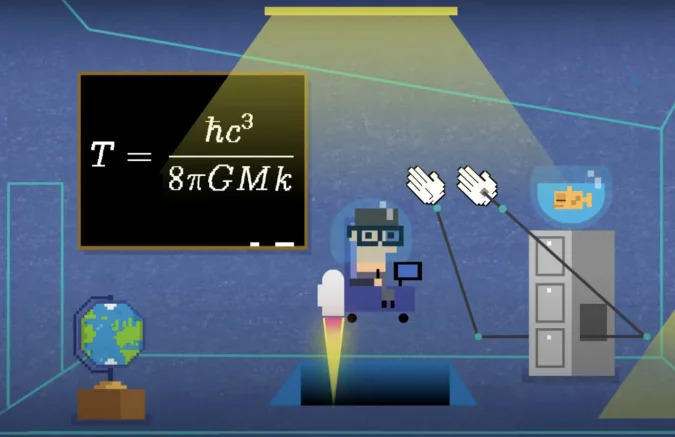


Stephen Hawking's 80th Birthday


Google worked with his family to create a video Doodle that gives us a condensed version of his life. Moreover, the tech giant used Hawking's famous computer-generated voice to narrate his work and experiences from the time he graduated. 

The two and a half minute-long video gone live in the US at midnight ET 8 January (9pm PT) and includes a narration in the physicist’s own computer-generated voice (created and used with permission from his estate) outlining his work and painting a message of hope for the future.
"Here’s to an innovator whose astronomical impact changed how the world understands the universe!" 

Doodler Matthew Cruickshank


Stephen Hawking
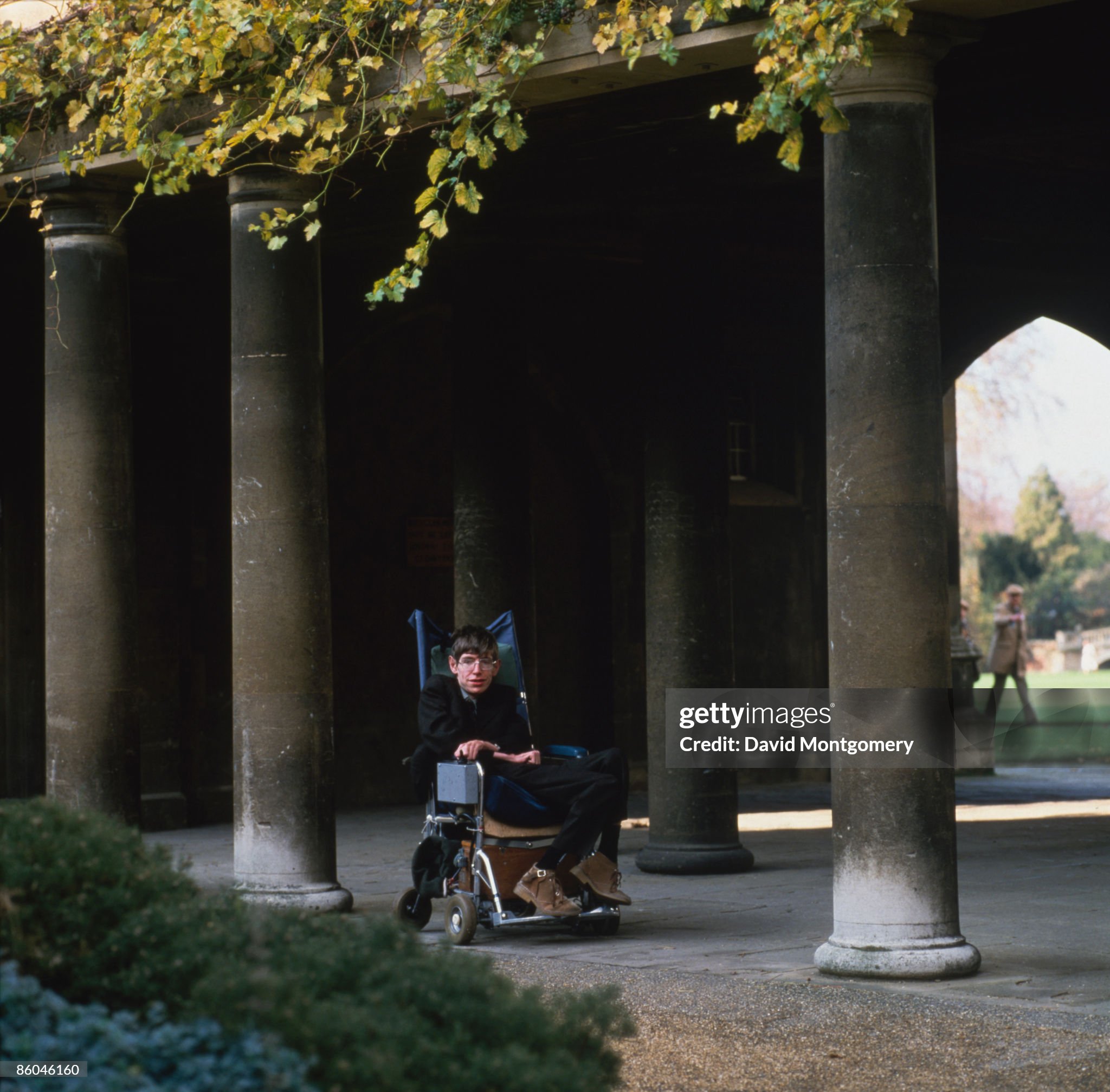
credit: David Montgomery/ Getty Images

  • Some biographical facts:

As we know, Stephen William Hawking was born on this day in 1942 in Oxford, England. Fascinated by how the universe functioned from a young age, his curiosity and intellect earned him the nickname “Einstein.” 

Following a diagnosis with a neurodegenerative disease at 21, the music of composer Richard Wagner and the loving support of his future wife Jane Wilde motivated Hawking to dedicate himself to physics, math, and cosmology. 

In 1965, Hawking defended his doctoral thesis at the University of Cambridge, Properties of Expanding Universes, which presented the revolutionary theory that space and time originated from a singularity, a point both infinitely small and dense, best known today as the key characteristic of black holes. 
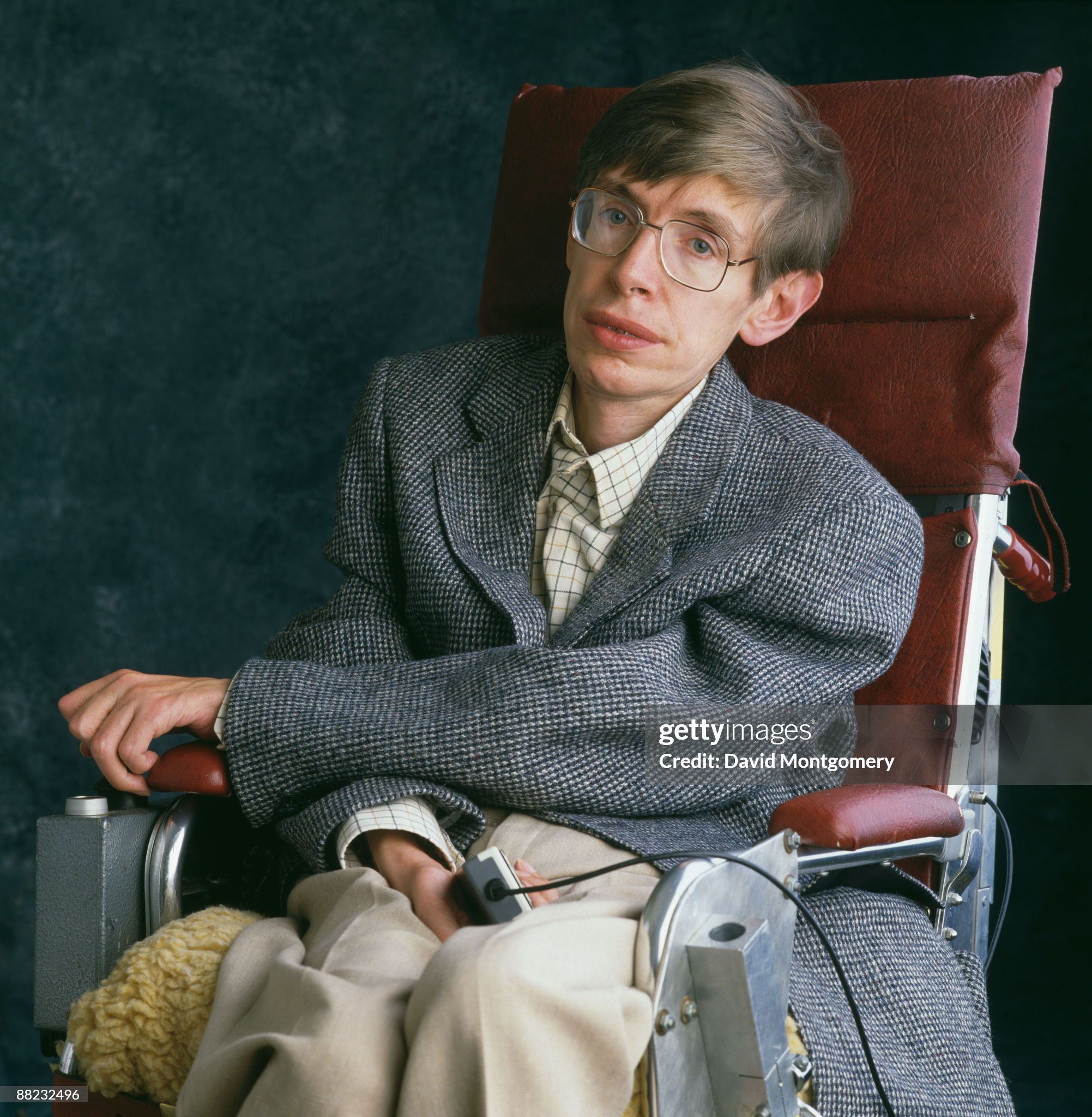


Stephen Hawking

credit: David Montgomery/ Getty Images

https://www.gettyimages.com/


That year, Hawking was accepted as a research fellow at Cambridge’s Gonville and Caius College - his academic home for a lifetime of research. Hawking’s obsession with black holes led to his 1974 discovery that particles could escape black holes. This theory, coined Hawking radiation, is widely considered his most important contribution to physics. 
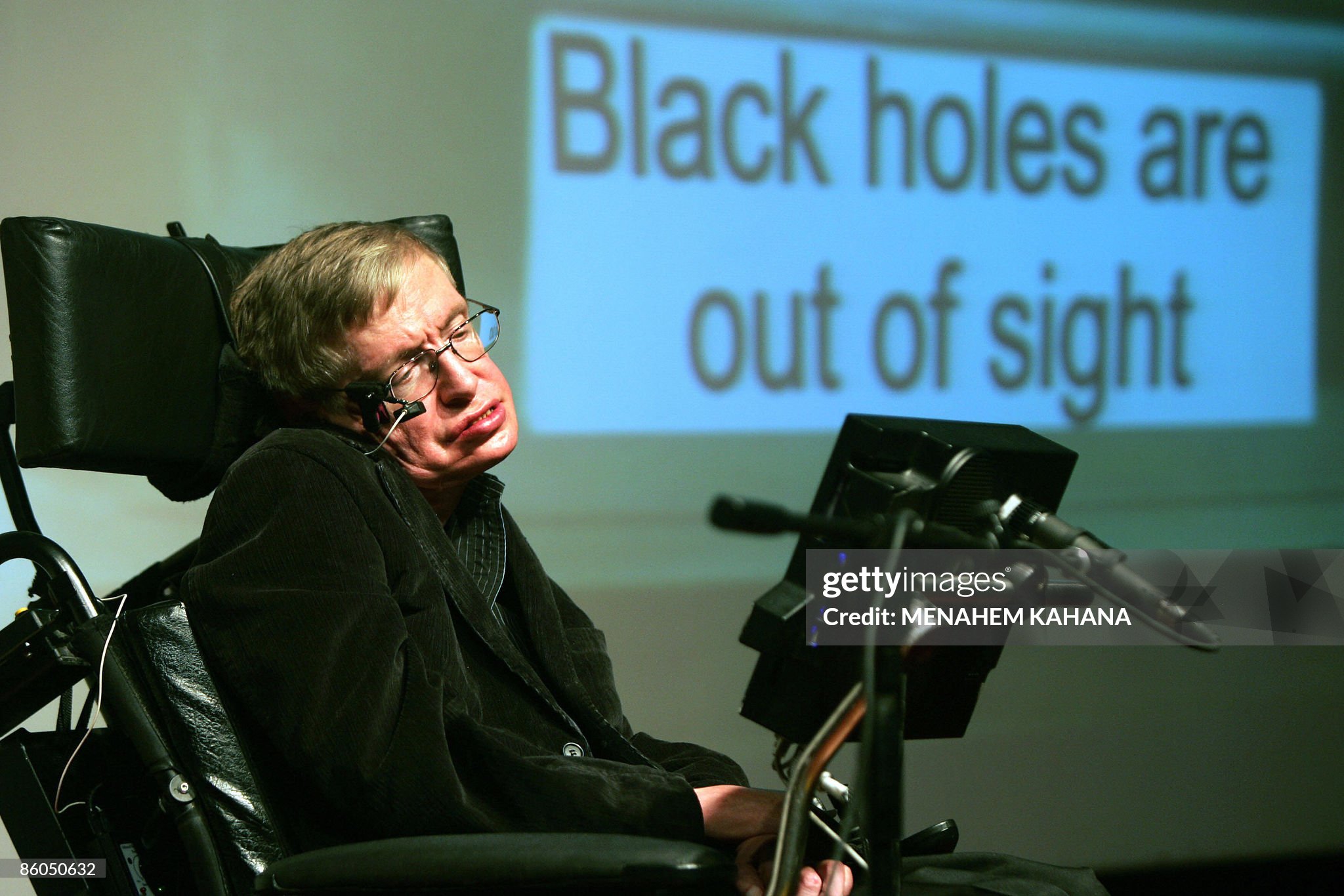


credit: Menanhem Kahana/ AFP/ Getty Images


In 1979, Hawking’s groundbreaking work on black holes prompted Cambridge to appoint him as the Lucasian Professor of Mathematics, a position held by Isaac Newton in 1669. Hawking’s doctoral thesis was released to the public in 2017 on a University of Cambridge website, which crashed due to enormous amounts of traffic.
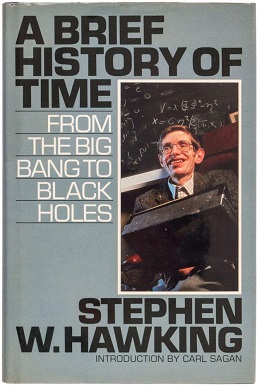


A brief
ster
1st edition (1988)


In 1988 Hawking catapulted to international prominence with the publication of A Brief History of Time. The short, informative book became an account of cosmology for the masses and offered an overview of space and time, the existence of God and the future. 

The work was an instant success, spending more than four years atop the London Sunday Times' best-seller list. Since its publication, it has sold millions of copies worldwide and been translated into more than 40 languages. 
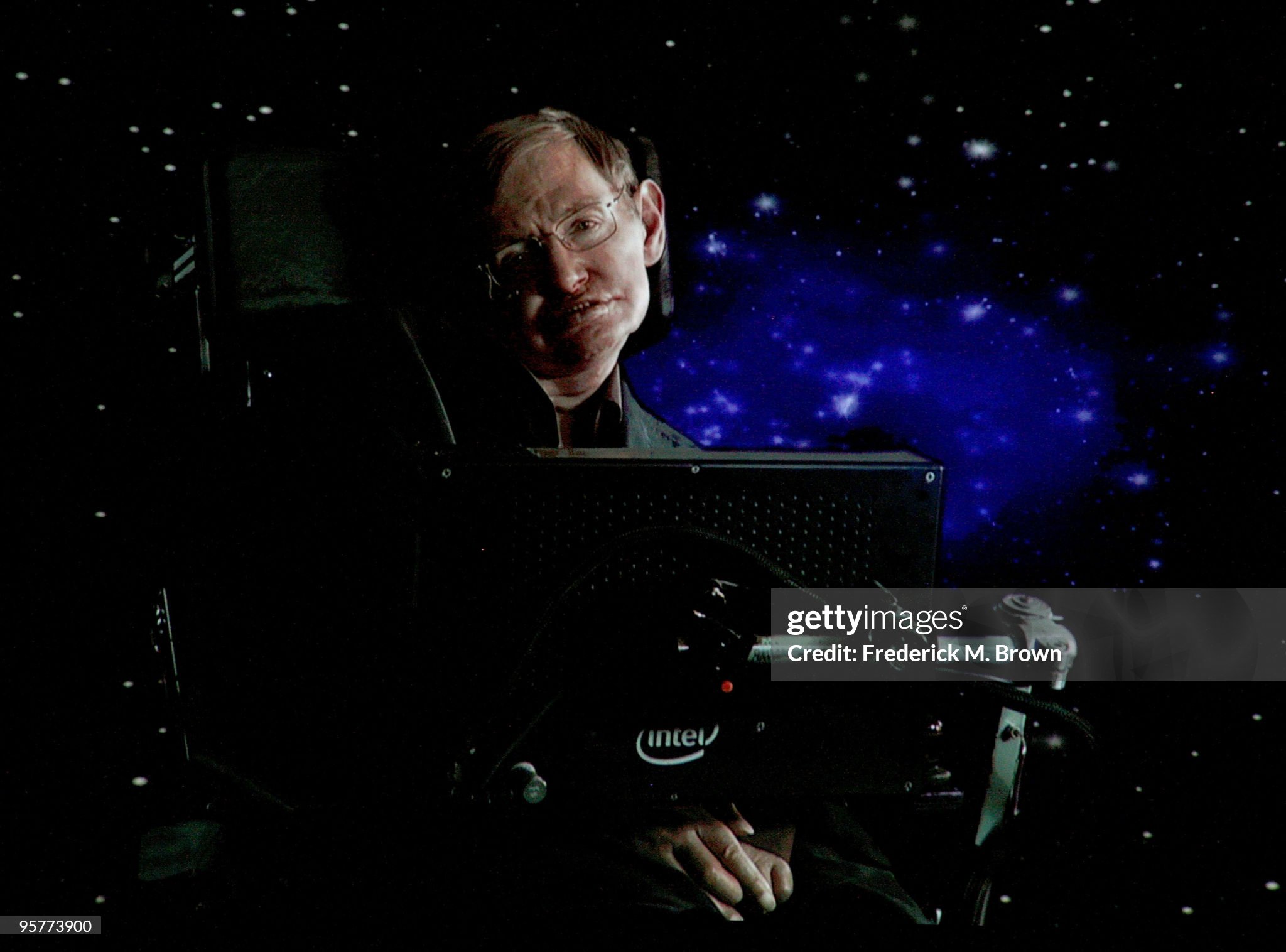


Stephen Hawking
credit: Frederick M. Brown/ Getty Images, 2010


The scientific icon and cultural figure made tremendous contributions to physics and cosmology, deepening and expanding our understanding of the universe, and the lifecycle of black holes.

He also made grave warnings about the future of the planet.

In recent years, Hawking has implored humanity to keep thinking about the long-term future of our species. He has expressed grave concern about climate change and whether we should consider the advent of artificial intelligence (AR) as a threat to humanity. 


Stephen Hawking
Bedder/Getty Images 
for Breakthrough Prize Foundation

He has said colonizing other planets will be essential for our long-term survival. 

“We are running out of space and the only places to go to are other worlds,” 

Stephen Hawking
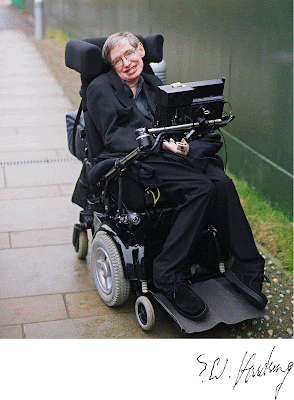


Stephen Hawking
The Royal Society


Education:

"Extraordinary quotes on life and the universe would make a wonderful short animated film. Not only is animation visual, its fundamentals are built on time and space, subjects that align perfectly with cosmology."

Doodler Matthew Cruickshank

Stephen Hawking would've turned 80 on January 8th, 2022 had he still been alive. While he's no longer with us, his contribution to our understanding of the universe remains immense and shouldn't be forgotten. 

As teachers, we can not forget neither our students the physicist and brighter star Stephen Hawking as an innovative mind, a visionary and creative mind in the field of cosmology. 

We must pay tribute to a man who didn't give up diagnosed with motor neurone disease at the age of 21. His courage, persistence and scientific work inspired us as global audiences in the millions. 

The message? 

"To approach life with the energy, humor, and optimism that Stephen did every day."

Doodler Matthew Cruickshank


Resources: 

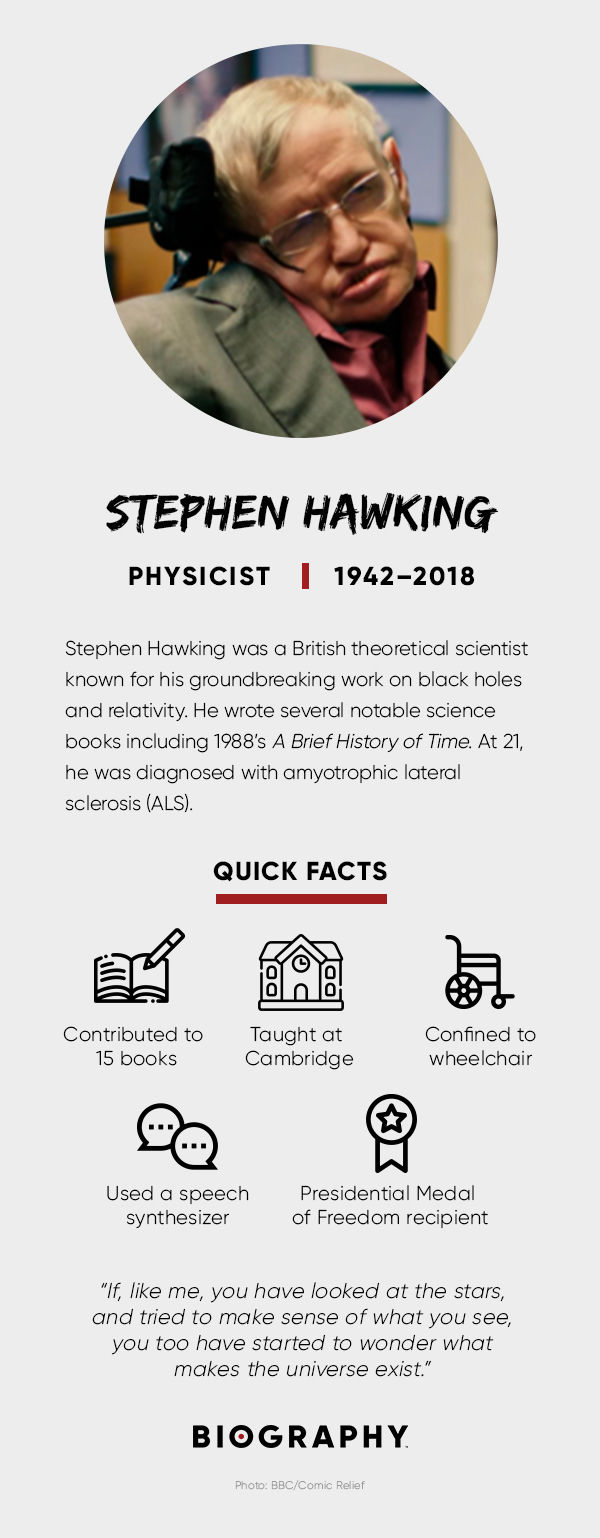
  • Infographics


credit: BBC/ Comic Release
via Biography


  • Google Arts & Culture

Google Arts & Culture is celebrating Stephen Hawking with a new exhibition : "Meet the man who changed our understanding of the Universe!"


"Meet the man who changed our understanding of the Universe!"


"It can be done!"

Teachers! Here's a wonderful motivation to include Stephen Hawking into your school curricula. Every curriculum! The virtual exhibition on Google Arts & Culture is marvelous. The introduction is so touching! His message of hope to a better understanding of our planet must be seen and heard by our students!

"I have spent my life travelling across the universe inside my mind."


To young students, begin with the video doodle. They will love hear the voice of the scientist. And will follow him.

"Be brave, be curious, be determined!" 


G-Souto

08.01.2022
Copyright © 2022G-Souto'sBlog, gsouto-digitalteacher.blogspot.com® 
Licença Creative Commons
Schools : Prof. Stephen Hawking : Google Arts & Culture exhibition & other resources ! by G-Souto is licensed under a Creative Commons Attribution-NonCommercial-NoDerivatives 4.0 International License.

Sunday, July 21, 2019

Schools : 50th Anniversary Apollo 11 ! Man on the Moon : Resources teachers & students


Apollo 11
credits: NASA
“I think we’re going to the Moon because it’s in the nature of the human being to face challenges. It’s by the nature of his deep inner soul. We’re required to do these things just as salmon swim upstream.”

Neil Armstrong

It's been exactly 50 years since Apollo 11 was launched. The first mission to land men on the moon. On July 16, 1969, Apollo 11 was launched into space and on July 20, it landed the first two humans on the Moon - Commander Neil Armstrong and lunar module Eagle's pilot Buzz Aldrin. Their lunar module Eagle landed on July 20, 1969 on the moon’s Sea of Tranquility.

Some information:

This week in 1969, Apollo 11 launched from NASA’s Kennedy Space Center carrying astronauts Neil Armstrong, Edwin "Buzz" Aldrin and Michael Collins. 

The primary mission objective was to fulfill a national goal set by President John F. Kennedy on May 25, 1961, to perform a crewed lunar landing and return safely to Earth before the decade was out. 


John Fitzgerald Kennedy
Rice University, Houston
credits: White House/Robert Knudsen courtesy of the JFK Library

"We choose to go to the Moon"

John Fitzgerald Kennedy

50 years ago today, on September 12, 1962, President John F. Kennedy delivered one of his best and most inspiring speeches. Arguably, one of the best in the history of the United States, historians say.

The speech resonated widely and is still remembered, although at the time there was disquiet about the cost and value of the Moon-landing effort. Kennedy's goal was realized in July 1969, with the successful Apollo 11 mission.


Apollo 11 astronauts Neil Armstrong & Edwin E. "Buzz" Aldrin
credits: Science & Society Picture Library 
via BBC

On July 20 1969, Armstrong and Aldrin became the first men to walk on the Moon. The two astronauts spent more than 21 hours on the lunar surface deploying scientific experiments and gathering samples before returning to the orbiting command module, piloted by Collins. 

Google Doodle:

The Moon landings inspired a generation of scientists and engineers and a cultural outpouring - from songs like Space Oddity and Rocket Man to an episode of cult TV series The Simpsons.


Google Doodle 50th Anniversary of the Moon Landing


A team of some 400,000 people from around the world worked on Project Apollo, mostly factory workers, scientists, and engineers who never left the ground. Within those 400,000 were the mission’s astronauts Neil Armstrong, Edwin “Buzz” Aldrin, and Michael Collins. 


Their historic journey began when a Saturn V rocket blasted off from Florida’s Kennedy Space Center on July 16, 1969. After achieving orbit around the moon, the lunar module, known as “the Eagle,” separated for a 13-minute journey to the surface. Meanwhile, astronaut Michael Collins stayed behind in the command module, which would eventually bring all three astronauts back home to Earth.


Google Doodle: 50th Anniversary of the Moon landing

Fifty years ago, NASA’s Apollo 11 mission changed our world and ideas of what is possible by successfully landing humans on the surface of the Moon⁠ - and bringing them home safely for the first time in history. 

The video Doodle celebrates this moment of human achievement by taking us through the journey to the moon and back, narrated by someone with firsthand knowledge of the epic event: former astronaut and Apollo 11 command module pilot Michael Collins


From October 2018 through December 2022, NASA will mark the 50th anniversary of the Apollo Program that landed a dozen Americans on the moon between July 1969 and December 1972. 


Apollo 50
credits: NASA graphic artist Matthew Skeins

NASA unveiled an official logo for use in observing these milestone anniversaries Friday at the Kennedy Center for the Performing Arts in Washington.
The unveiling was part of “NSO Pops: Space, the Next Frontier,” a National Symphony Orchestra celebration of NASA’s 60 years of accomplishment.


Education:

This July, in a series of special events, NASA is marking the 50th anniversary of the Apollo Program - the historic effort that sent the first U.S. astronauts into orbit around the Moon in 1968, and landed a dozen astronauts on the lunar surface between 1969 and 1972. 


The Moon 2024 Education Guide is published by NASA’s Office of STEM Engagement to accompany the STEM Education segment of the Apollo Anniversary broadcast aired on NASA TV July 19, 2019. 

May be used into different curricula, in-person lessons or distance learning (hybrid education).

Target audience : the chosen activities students all levels, all ages: Teachers will adapt to the level or age they are teaching in-person lessons or distance learning. Parents in homeschooling. 


VirtualMoonshot

On July 18, museums nationwide were teaming up on a virtual NASA mission as they building lunar spacecraft out of materials chosen by their social media followers then launch them on a #VirtualMoonshot. 

If you couldn't follow the fun live on the 18th, you can build your own straw rocket, lander or rover anytime!

For more material, pictures, or connect to NASA’s remarkable history, visit the Marshall History Program’s webpage. (NASA)


Apollo 11 50th Anniversary
credits: Peter Chilelli

Resources:

  • Logo:

The Apollo 50th anniversary logo is available for download from the NASA Images and Video Library.


Virtual resources:


screenshot Apollo 11 in real time
credits: NASA

  • Apollo 11 in real time:

A real-time journey through the first landing on the Moon. The website consists entirely of original historical mission material.


Apollo 11 3D
screenshot Apollo 11 360º VR

  • Apollo 11 360º VR

Some events in history stand above all the rest. Mankind's first venture off this planet is still the pinnacle of human achievement.

You can experience the historic events of 1969 through the eyes of Neil, Buzz and Michael as they embark on history's greatest journey.


Invite your students or children to dare entering in the lunar module Apollo 11. It's free! You will love the journey! Believe me!

  • Puzzles:


Forward to the Moon with Artemis
NASA, 2019

Play word and number puzzles while you learn about the Apollo mission that first put people on the Moon. Find out about the Artemis mission that will land the first American woman and the next American man on the Moon. 

The free, printable booklet has mazes, word searches, sudoku puzzles with pictures and other types of puzzles. You can learn about NASA's new Space Launch System rocket and Orion spacecraft. These space vehicles will take humans to the Moon and to Mars.

Audience: Students different levels and age.


Grade Levels:


K-4 ; 5-8


The Eagle has landed: Apollo 11 Crossword Puzzle

Visit the mission overview website below to learn more about the historic mission and find clues to solve this crossword puzzle!

Audience: Educators; Students

Grade Levels:


5-8 ; 9-12

  • Videos:


  • Comics: Tintin on the Moon? Hergé


Tintin et la Lune
50e anniversaire des premiers pas sur la Lune
16 après Tintin

To celebrate the triple anniversary of the 90th anniversary of Tintin’s debut, 50 years since the first Moon landing, and the 10th anniversary of the opening of the Hergé Museum, SwissApollo and Titan Films have joined forces to create a digital series with a lunar theme. 

On this occasion, the Hergé Museum is organizing its own screening of this series of short documentaries, on July 21 at 3 p.m. and at the Institut Français in Tel-Aviv on July 22.


Objectif Lune (1952) & On a marché sur la Lune (1954)
albums Tintin
Hergé
éditions Casterman
sur Amazone.fr

Six thrilling episodes in the company of Tintin and Snowy. The conquest of space which included walking on the Moon and other prestigious events illustrates how much of a visionary Hergé was.

  • Children's book:


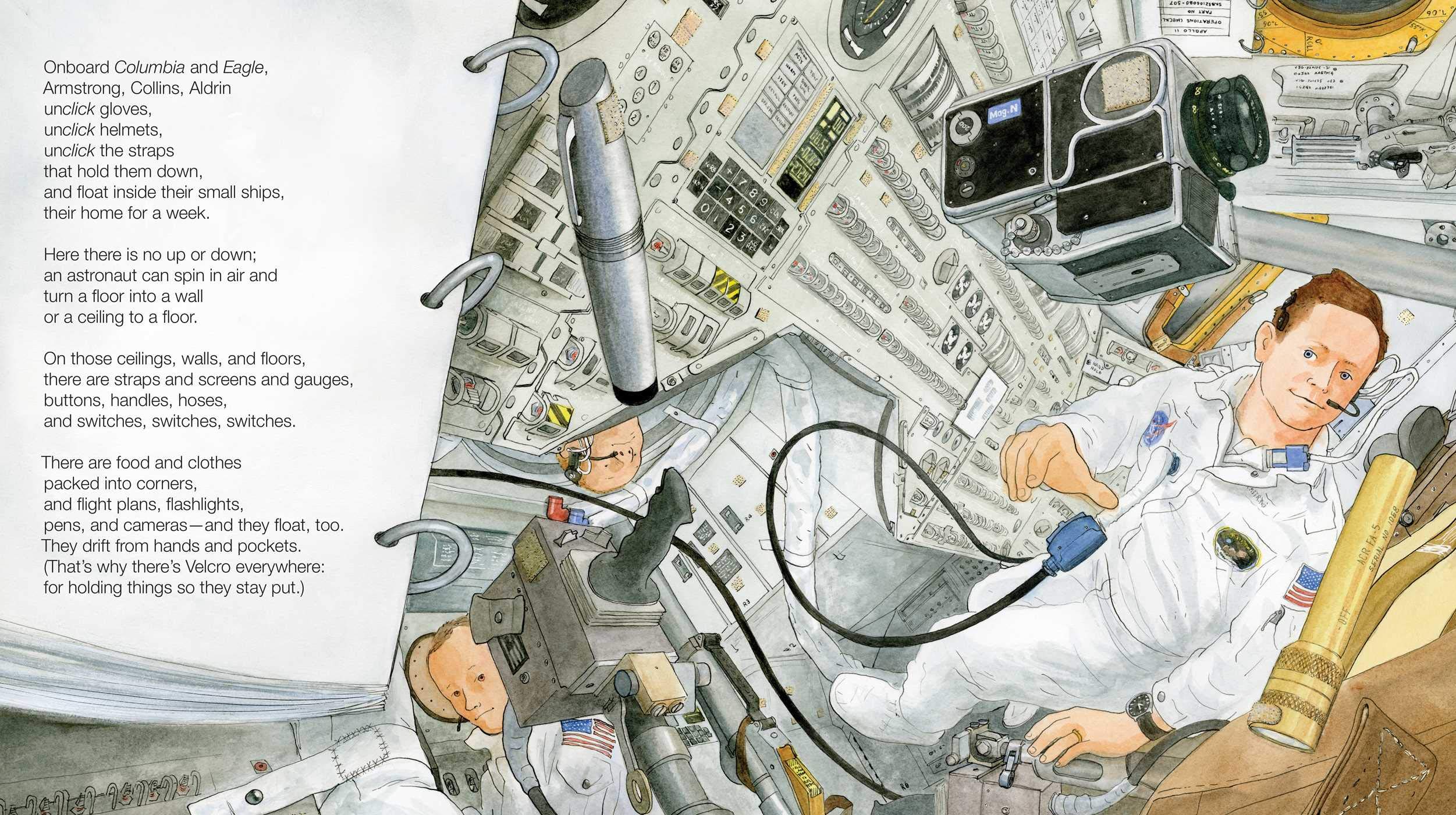
Moonshot : The Flight of Apollo II
Brian Floca (text & illustration)
Richard Jackson/Atheneum, 2019


Moonshot : The Flight of Apollo II
Brian Floca (text & illustration)
Richard Jackson/Atheneum, 2019
https://www.amazon.com/

"In watercolors, ink and acrylics, the story of how the Apollo 11 mission unfolded."

Brian Floca explores Apollo 11’s famed moon landing with this beautifully illustrated picture book!


Moonshot : The Flight of Apollo II
Brian Floca (text & illustration)
Richard Jackson/Atheneum, 2019

Simply told, grandly shown, here is the flight of Apollo 11. Here for a new generation of readers and explorers are the steady astronauts, clicking themselves into gloves and helmets, strapping themselves into sideways seats. 


Here are their great machines in all their detail and monumentality, the ROAR of rockets, and the silence of the Moon. 


Moonshot : The Flight of Apollo II
Brian Floca (text & illustration)
Richard Jackson/Atheneum, 2019
https://www.amazon.com/

Here is a story of adventure and discovery, a story of leaving and returning during the summer of 1969, and a story of home, seen whole, from far away.


Moonshot : The Flight of Apollo II
Brian Floca (text & illustration)
Richard Jackson/Atheneum, 2019
https://www.amazon.com/

On the website, you can explore each illustration in detail by clicking on the image.


“What I want to remember most is the glance between Neil and myself, with the engine shutoff, just that second after we touched down, because we had just completed the most critical door opening for space exploration in all of humanity.”


Buzz Aldrin


G-Souto

21.0.2019

updated 20.07.2021
Copyright © 2021G-Souto'sBlog, gsouto-digitalteacher.blogspot.com®

Creative Commons License
Schools : 50th Anniversary Apollo 11 ! Man on the Moon : resources for teachers & students by G-Souto is licensed under a Creative Commons Attribution-NonCommercial-NoDerivatives 4.0 International License