Showing posts with label sciences curricula. Show all posts

Monday, October 24, 2016

Schools : Antonie van Leeuwenhoek & his microscope in sciences curriculum !


Antonie Philips van Leeuwenhoek
portrait: Jan Verkolje/ Rijks Museum, NL
https://en.wikipedia.org/
Today, 24 October marks the 384th birthday of Antonie van Leeuwenhoek, credited with being the first microbiologist.
"... my work, which I've done for a long time, was not pursued in order to gain the praise I now enjoy, but chiefly from a craving after knowledge, which I notice resides in me more than in most other men. And therewithal, whenever I found out anything remarkable, I have thought it my duty to put down my discovery on paper, so that all ingenious people might be informed thereof."
Antonie van Leeuwenhoek, Letter of June 12, 1716*

Google Doodle:

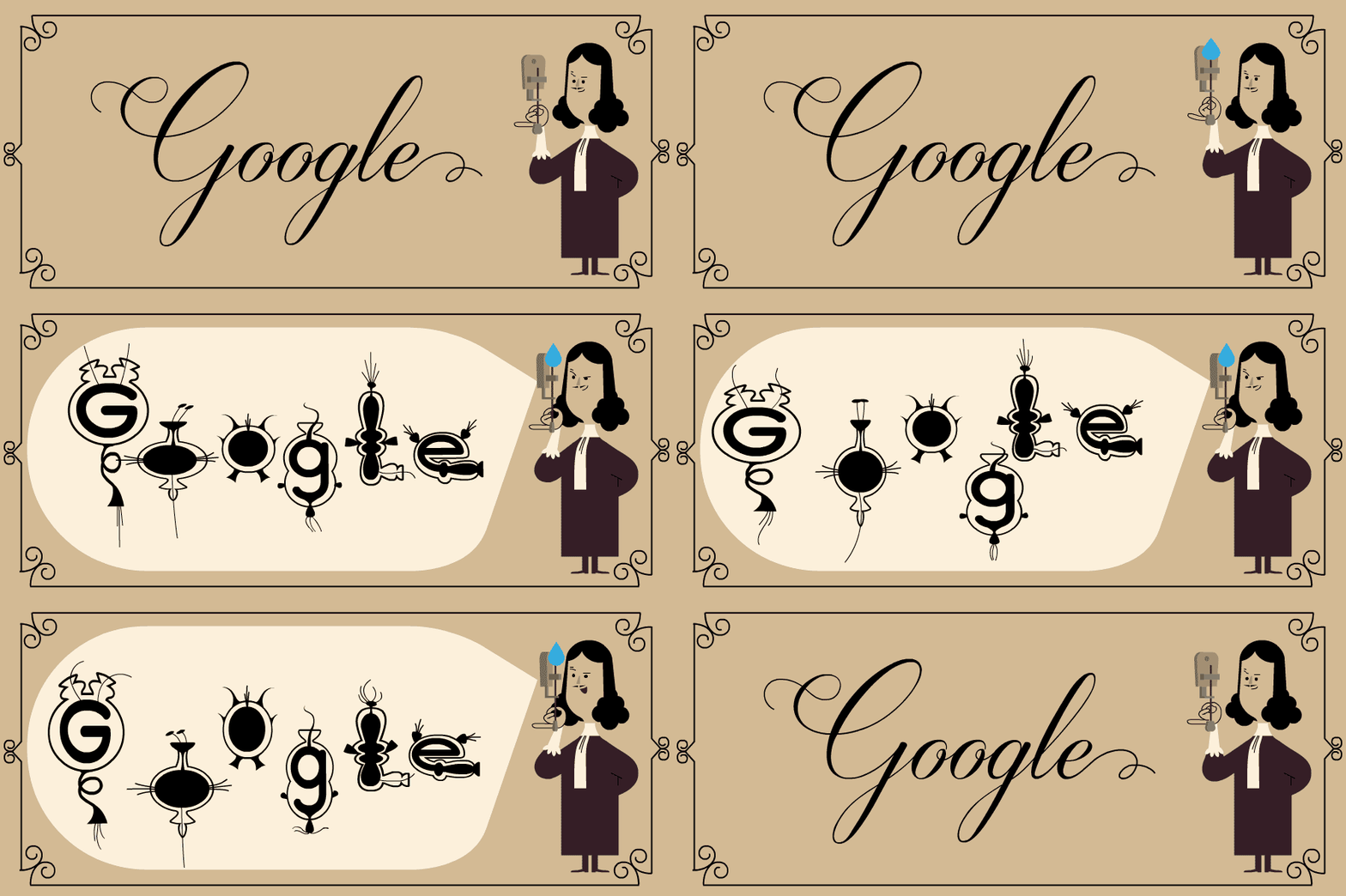
Google Doodle is celebrating the life and work of Antonie van Leeuwenhoek, who was born on this day, 24 October 1632. 
Antonie van Leeuwenhoek saw a whole world in a drop of water. In a letter to the Royal Society of London, van Leeuwenhoek marveled at what he had seen in a sample of water from a nearby lake: 'little animals' that we know now as bacteria and other microbes.

Google Doodle 384th birthday Antony van Leeuwenhoek
https://www.google.com/doodles/
The animated Doodle shows the 'little animals' he discovered when looking at a drop of water from a lake through a microscope. Here's to celebrating a true visionary!
In the Doodle, a droplet of water falls onto a lens being held by van Leeuwenhoek. As he peers through it at the Google logo, the logo letters come to life to mimic the micro bodies he would have seen during that first experiment.
Doodler Gerben Steenks noted, "I chose to make it an animated Doodle to show the 'before and after' experience that Antoni van Leeuwenhoek had - looking through a microscope and seeing a surprising new world." 


Leeuwenhoek with His Microscope

Ernest Board (1877–1934)

Welcome Library

Considered the first microbiologist, van Leeuwenhoek designed single-lens microscopes to unlock the mysteries of everything from bits of cheese to complex insect eyes.
While he might not be a household name today, the Dutch textile salesman ground and polished his own lenses, and was the first human to discover the existence of bacteria, single celled creatures, and spermatozoa.
Working from his dwellings above a marketplace in the Dutch city of Delft, his home-made lenses were so finely constructed that some of the organisms he discovered were not seen again for another century.


Some biographical notes:

Leeuwenhoek was born in Delft on October 24, 1632. His father was a basket-maker, while his mother's family were brewers. 

Antony was educated as a child in a school in the town of Warmond, then lived with his uncle at Benthuizen. In 1648 he was apprenticed in a linen-draper's shop. 

Around 1654 he returned to Delft, where he spent the rest of his life. He set himself up in business as a draper (a fabric merchant). 


The Geographer 
by Johannes Vermeer

In 1676 he served as the trustee of the estate of the deceased and bankrupt Jan Vermeer, the famous painter, who had had been born in the same year as Leeuwenhoek and is thought to have been a friend of his.


A replica of a microscope by Leeuwenhoek

And at some time before 1668, Antony van Leeuwenhoek learned to grind lenses, made simple microscopes, and began observing with them. He seems to have been inspired to take up microscopy by having seen a copy of Robert Hooke's illustrated book Micrographia, which depicted Hooke's own observations with the microscope and was very popular. 

A letter dated December 25, 1702, gives descriptions of many protists, including this ciliateVorticella: "In structure these little animals were fashioned like a bell, and at the round opening they made such a stir, that the particles in the water thereabout were set in motion thereby. And though I must have seen quite 20 of these little animals on their long tails alongside one another very gently moving, with outstretched bodies and straightened-out tails; yet in an instant, as it were, they pulled their bodies and their tails together, and no sooner had they contracted their bodies and tails, than they began to stick their tails out again very leisurely, and stayed thus some time continuing their gentle motion: which sight I found mightily diverting." Read more here


A 1677 letter from Leeuwenhoek to Oldenburg, with the latter's English translation behind
The full correspondence remains in the Royal Society Library
By the end of his life, van Leeuwenhoek had written approximately 560 letters to the Royal Society and other scientific institutions concerning his observations and discoveries. 
Even during the last weeks of his life, van Leeuwenhoek kept sending letters full of observations to London.
The last few contained a precise description of his own illness. He suffered from a rare disease, an uncontrolled movement of the midriff, which is now named Van Leeuwenhoek's disease. 
He died at the age of 90, on August 26, 1723, and was buried four days later in the Oude Kerk (Delft).


Education:

"Today his invention is used by many scientists to identify the many cells that are existent and that we do not yet know of. 

Without the microscope, people in the science/medical field wouldn't have any knowledge of biology considering cells are the basic unit of life."
As my usual readers know include very often the Doodles of the day into school curricula. It's a wonderful motivation and to surprise students. 

Doodles are the fun, unexpected, and sometimes spontaneous resources that we can include into some lessons to teach about famous scientists, writers, painters and other important facts.


Everyday we must include something captivating into our lessons, even we are teaching important skills in serious school curriculum. 

Passion is what will make our students enter in the classroom waiting for something special in high school lessons, everyday. 

Schools are very important environments of teaching and learning. Schools have an important role aiming to renew and reinvigorate global knowledge as they have the mission to educate children and adolescents as future citizens and good observers.

These digital resources are educational challenges to promote some good values near the new generations. Young students will be vigilant and will help to find new paths towards precious solutions to society and the planet. 


Teenagers using microscope in science lesson

credits: Getty Images


Some Activities:

  • Organize an open day (one day /a week) at the school with your students to highlight the importance of science to the evolution of the world;
  • Open a discussion in the classroom to emphasize  the many different ways science & technologies touch our daily lives;
  • Contact national and local media (radio, newspapers) to highlight the importance of celebrating Science at school;
  • Ask your students to write articles, cartoons, comics in the classroom about the importance of science for sustainable societies and include them in the school newspaper;
  • Build classroom-to-classroom connections between schools via social networks: schools websites, schools accounts on Facebook, Twitter, Instagram and share projects of science that will interest students of different countries;
  • Create a video with Animoto (students and teachers);
  • Arrange a visit to a Science Museum near you. Museums are awesome places to have a live lesson and to enriched teaching and learning


Lens on Leeuwenhoek

Resources:
Lens on Leeuwenhoek
http://lensonleeuwenhoek.net/
"... Antony van Leeuwenhoek considered that what is true in natural philosophy can be most fruitfully investigated by the experimental method, supported by the evidence of the senses; for which reason, by diligence and tireless labour he made with his own hand certain most excellent lenses, with the aid of which he discovered many secrets of Nature, now famous throughout the whole philosophical World."*

G-Souto

24.10.2016
Copyright © 2016G-Souto'sBlog, gsouto-digitalteacher.blogspot.com®
Creative Commons License
Schools : Antonie van Leeuwenhoek in sciences curriculum bG-Souto is licensed under a Creative Commons Attribution-NonCommercial-NoDerivatives 4.0 International License. 
References: 
Quotes: University of California, Museum of Paleontology/ Berkley.edu

Thursday, September 29, 2016

Schools : European Researchers' Night : Science is Wonder-ful !


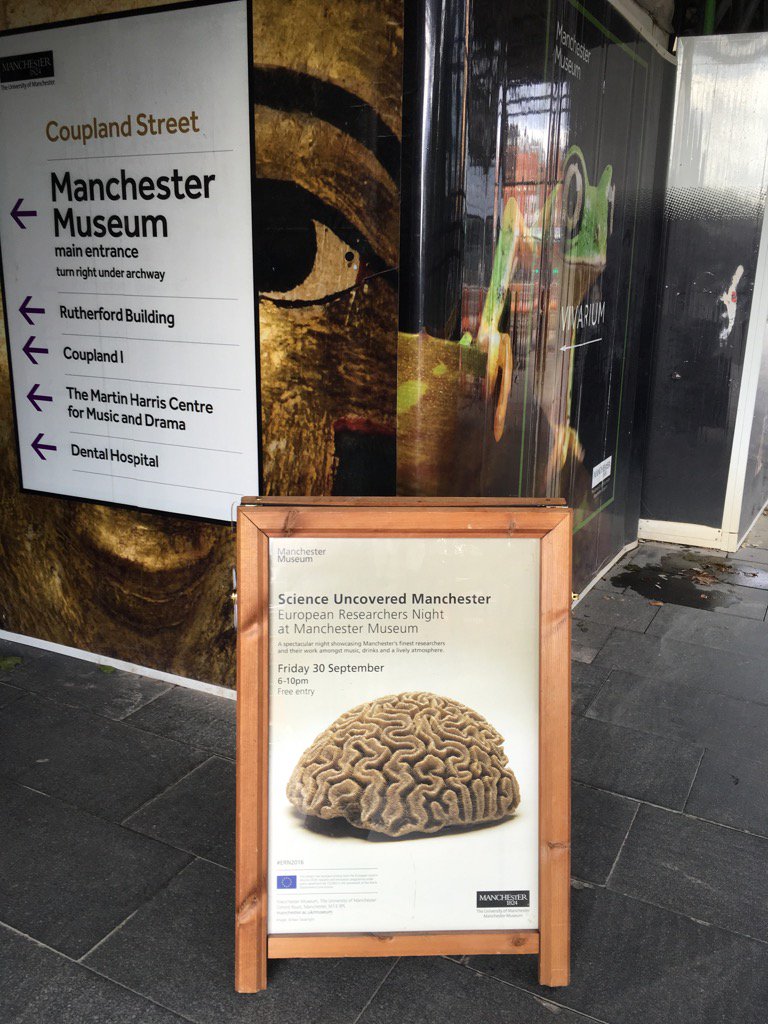
The European Researchers' Night celebrates its 11th anniversary this year. Families, school pupils, students, came along and found out why 'Science is Wonderful!

All the events will take place - simultaneously - on Friday 30 September, in over 250 cities across Europe and neighbouring countries.


In Brussels, in the framework of this year's edition, the European Commission and the European Parliament are organising "Science is wonder-ful", a special event to illustrate the achievements of Marie Skłodowska-Curie researchers.

On the 28 September 2016 in Brussels, the European Commission jointly with the Parlamentarium was organising a European Researchers' Night event open for all to enjoy science while learning about the EU institutions, the journey of the European integration, and their impact on our daily lives. 

The night event presents projects from Marie Skłodowska-Curie researchers in order to get people, especially young people, interested and engaged in science and research.

Live experiments, face-to-face chats with current researchers, a trip through the European Union integration, and a debate, are only some of what is on offer at this event in Brussels.


Education:

For 11 years, the European Researchers' Night has brought science to the masses with events across Europe. 

If you could become a hero for a day, what kind of hero would you be? One that fights cancer or global warming, prevents hunger or drought, invents devices to counteract handicaps, dreams about making human life possible in space..?

The European Researchers' Night invites you to meet the heroes of science; that is to say, the researchers from different disciplines whose fascinating work can change our lives.

With family, friends, your school or on your own, you will "become a scientist for a day", participate in science activities and, most of all, have fun!


Don't miss this mega event! And with your students experience what it is like to be a hero. They will discover the fascination of research as a career and its significant societal impact.


Let your students meet the real scientists, talk to them, make some curious questions, understand the real meaning of Science.


The events are free to attend and open to the public, schools, families and all citizens.


Where to go:
Do you want to take part of an event in your city? With your students, your family, friends or on your own, you will find yourself exploring science in engaging ways. 


Use the interactive map, to see what events and activities are organised this year.


The events offer a wide variety of fun-learning activities, from behind-the-scenes guided tours of research labs, planetariums that are normally closed to the public, through funny interactive science shows, to hands-on experiments or workshops.

If you are in France, see  Nuit Européenne des Chercheur.e.s or in Portugal, see Noite Europeia dos Investigadores: #NEI2016.

For other countries in Europe, use the interactive map.


  • Why attend?

Often billed as school and family events, the European Researchers' Night in fact appeals to people of all ages – whether with their school, their family, friends or on their own "intrigued by how things work and by what science means for their lives."

Many of these popular science events will let you go behind the scenes, e.g. to labs that are usually closed to the public. 

Students may discover the scientist in you while being part of a Europe-wide mega event.

  • Mobile devices :

Of course tablets, iPhones, smartphones are allowed. Students can and do use technology to support their science learning but they need to be guided to do so responsibly by their teachers. 

These devices are important to improve learning, on such events, to register their experiences, to note interesting ideas, or a good little interview with a scientist, to share the most exciting activities of the night and discuss them next Science lesson.

Students will discuss their activities and experimentations in science lessons   next Monday.


  • Social media:

Stay tuned and follow us on Twitter and Facebook.

Facebook profiles from a lot of European schools or Twitter profiles linked to European Researchers' Night 2016 will be exciting to contact other schools and share different points of vue about all the activities.

Don't miss the European Researchers' Night tomorrow, the 30 September 2016! I'll be around.

Science is wonder-ful !


G-Souto
29.09.2016
Copyright © 2016G-Souto'sBlog, gsouto-digitalteacher.blogspot.com®

Creative Commons License

Schools : European Researchers' Night : Science in Wonder'ful ! bG-Souto is licensed under a Creative Commons Attribution-NonCommercial-NoDerivatives 4.0 International License.


Thursday, September 24, 2015

Education : European Reseachers' Night is Wonder-ful !


http://ec.europa.eu/


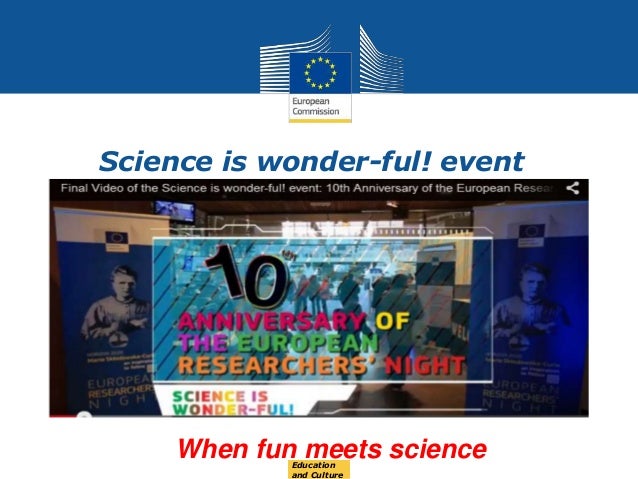
The European Researchers' Night celebrates its 10th anniversary this year. Families, school pupils, students, came along and found out why 'Science is Wonderful!

All the events will take place - simultaneously - on 25 September across Europe and beyond. More than 30 countries and over 300 cities are involved.

At the Tallinn City Museum, in Estonia, those with an interest in science will be able to learn how to make masks to protect themselves from infectious diseases. In Poznan, Poland, car race enthusiasts will see how a Formula 1 car is built. The Public Library in Birmingham, UK, will allow visitors to generate their own hologram and take it home with them. But there is much, much more.


E Agora Frankenstein?
foto: Francisca Miranda

The Marionet and the Science Museum of the University of Coimbra defy researchers from all areas of knowledge to create and act a theatre play that will be presented during the European Researchers’ Night, on September 25th among other activities
This year, the International Year of Light as stated by UNESCO, the them we will explore will be… LIGHT.
Sounds amazing! In Coimbra, Portugal.

The European Researchers' Night  takes place every year all over Europe and beyon the last Friday of September. 

Schools, families, will have the opportunity to become a scientist for a day, discovering different scientific disciplines and, most of all, have fun.


Aims: 

Reserachers' Night offers the opportunity to discover research facilities that are usually not open to public such as:

  • laboratories; 
  • research centres; Planeatariums;
  • museum collections;

Families and schools (students, teachers) can use the most recent technologies and instruments with the guidance of scientists, participate in experiments, competitions and quizzes, watch demonstrations and simulations, exchange ideas and party with the researchers.


Last 23 September 2015 in Brussels, the 10th Anniversary of the European Researchers' Night celebrated science in the EU with an event at the Autoworld Museum in Brussels open for all. 

For 10 years, the European Researchers' Night has brought science to the masses with events across Europe. 


credits: © christelleg

In Brussels, in the margins of this year's edition, the European Commission organised, on 23 September, "Science is wonder-ful", a special event to look back at the best of the European Researchers' Nights over the last decade.

This year’s European Researchers’ Night is based around the theme of ‘Science is Wonder-ful!’

The annual event celebrates science whilst encouraging young people to pursue careers in research; the Europe-wide event is part of the Marie Skłodowska-Curie Actions.

The European Researchers' Night attracts over 1 million people every year. This mega event offers visitors a unique opportunity to meet researchers and take part in science activities aiming to showcase both the fascination of research as a career and its significant societal impact.


Education:

Live experiments, face-to-face chats with current researchers, quick-fire 3-minute presentations of projects from the people involved and an exhibition of the top inventions and discoveries given life thanks to EU support are just some of what's in store at the anniversary event. 


A different and exciting Science lesson for sure ! A live lesson! Teachers and students can join other groups of students and educators that will be everywhere  participating in some  awesome live pedagogical experiences.

Let your students meet the real scientists, talk to them, make some curious questions, understand the real meaning of Science.

Don't miss the European Researchers' Night 2015!

The events are free to attend and open to the public, including families and schools.

Where to go:
Do you want to take part of an event in your city? With your students, your family, friends on your own, you will find yourself exploring science in engaging ways. 


Use the interactive map, to see what events and activities are organised this year.


The events offer a wide variety of fun-learning activities, from behind-the-scenes guided tours of research labs, planetariums that are normally closed to the public, through funny interactive science shows, to hands-on experiments or workshops.

Mobile devices :

Of course tablets, iphones, smartphones are allowed. Students can and do use technology to support their learning but they need to be guided to do so responsibly by their teachers. Nobody thinks to let the students use smatphones without a careful and teacher guide.

These devices are important to improve learning, on this event, to take pictures, to note interesting ideas, to register some fun activity or a good little interview to a scientist, to contact classmates other city or country, to share the most exciting activities of the night.

Students will discuss their activities and experimentations in science lessons   next Monday.


Social media:

Stay tuned and follow us on Twitter and Facebook.

Facebook profiles from a lot of European schools or Twitter profiles linked to European Researchers' Night 2015 will be exciting to contact other schools and share different points of vue about all the activities.

Don't miss the European Researchers' Night nexy Friday, 26 September 2015! I'll be around.

Science is wonder-ful !


G-Souto

24.09.2015
Copyright © 2015G-Souto'sBlog, gsouto-digitalteacher.blogspot.com®

Creative Commons License
Education : European Researchers' Night is Wonder-ful ! bGinaSouto is licensed under a Creative Commons Attribution-NonCommercial-NoDerivatives 4.0 International License.