Showing posts with label Science in school. Show all posts

Thursday, September 29, 2016

Schools : European Researchers' Night : Science is Wonder-ful !


The European Researchers' Night celebrates its 11th anniversary this year. Families, school pupils, students, came along and found out why 'Science is Wonderful!

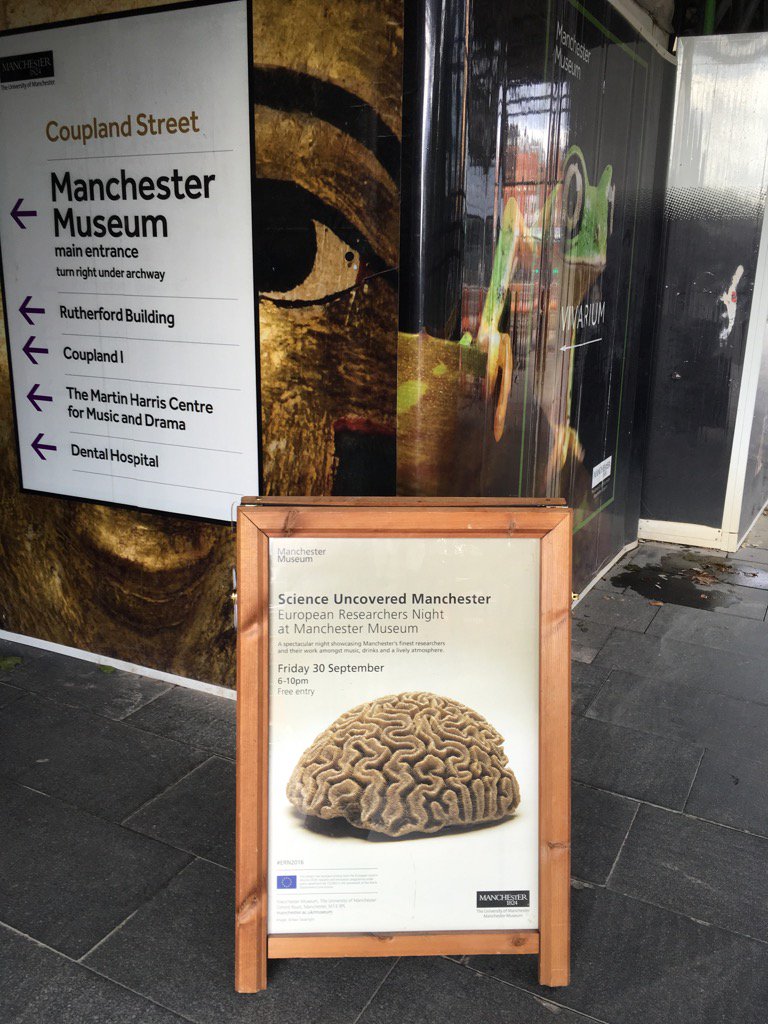
All the events will take place - simultaneously - on Friday 30 September, in over 250 cities across Europe and neighbouring countries.


In Brussels, in the framework of this year's edition, the European Commission and the European Parliament are organising "Science is wonder-ful", a special event to illustrate the achievements of Marie Skłodowska-Curie researchers.

On the 28 September 2016 in Brussels, the European Commission jointly with the Parlamentarium was organising a European Researchers' Night event open for all to enjoy science while learning about the EU institutions, the journey of the European integration, and their impact on our daily lives. 

The night event presents projects from Marie Skłodowska-Curie researchers in order to get people, especially young people, interested and engaged in science and research.

Live experiments, face-to-face chats with current researchers, a trip through the European Union integration, and a debate, are only some of what is on offer at this event in Brussels.


Education:

For 11 years, the European Researchers' Night has brought science to the masses with events across Europe. 

If you could become a hero for a day, what kind of hero would you be? One that fights cancer or global warming, prevents hunger or drought, invents devices to counteract handicaps, dreams about making human life possible in space..?

The European Researchers' Night invites you to meet the heroes of science; that is to say, the researchers from different disciplines whose fascinating work can change our lives.

With family, friends, your school or on your own, you will "become a scientist for a day", participate in science activities and, most of all, have fun!


Don't miss this mega event! And with your students experience what it is like to be a hero. They will discover the fascination of research as a career and its significant societal impact.


Let your students meet the real scientists, talk to them, make some curious questions, understand the real meaning of Science.


The events are free to attend and open to the public, schools, families and all citizens.


Where to go:
Do you want to take part of an event in your city? With your students, your family, friends or on your own, you will find yourself exploring science in engaging ways. 


Use the interactive map, to see what events and activities are organised this year.


The events offer a wide variety of fun-learning activities, from behind-the-scenes guided tours of research labs, planetariums that are normally closed to the public, through funny interactive science shows, to hands-on experiments or workshops.

If you are in France, see  Nuit Européenne des Chercheur.e.s or in Portugal, see Noite Europeia dos Investigadores: #NEI2016.

For other countries in Europe, use the interactive map.


  • Why attend?

Often billed as school and family events, the European Researchers' Night in fact appeals to people of all ages – whether with their school, their family, friends or on their own "intrigued by how things work and by what science means for their lives."

Many of these popular science events will let you go behind the scenes, e.g. to labs that are usually closed to the public. 

Students may discover the scientist in you while being part of a Europe-wide mega event.

  • Mobile devices :

Of course tablets, iPhones, smartphones are allowed. Students can and do use technology to support their science learning but they need to be guided to do so responsibly by their teachers. 

These devices are important to improve learning, on such events, to register their experiences, to note interesting ideas, or a good little interview with a scientist, to share the most exciting activities of the night and discuss them next Science lesson.

Students will discuss their activities and experimentations in science lessons   next Monday.


  • Social media:

Stay tuned and follow us on Twitter and Facebook.

Facebook profiles from a lot of European schools or Twitter profiles linked to European Researchers' Night 2016 will be exciting to contact other schools and share different points of vue about all the activities.

Don't miss the European Researchers' Night tomorrow, the 30 September 2016! I'll be around.

Science is wonder-ful !


G-Souto
29.09.2016
Copyright © 2016G-Souto'sBlog, gsouto-digitalteacher.blogspot.com®

Creative Commons License

Schools : European Researchers' Night : Science in Wonder'ful ! bG-Souto is licensed under a Creative Commons Attribution-NonCommercial-NoDerivatives 4.0 International License.


Thursday, September 24, 2015

Education : European Reseachers' Night is Wonder-ful !


http://ec.europa.eu/


The European Researchers' Night celebrates its 10th anniversary this year. Families, school pupils, students, came along and found out why 'Science is Wonderful!

All the events will take place - simultaneously - on 25 September across Europe and beyond. More than 30 countries and over 300 cities are involved.

At the Tallinn City Museum, in Estonia, those with an interest in science will be able to learn how to make masks to protect themselves from infectious diseases. In Poznan, Poland, car race enthusiasts will see how a Formula 1 car is built. The Public Library in Birmingham, UK, will allow visitors to generate their own hologram and take it home with them. But there is much, much more.


E Agora Frankenstein?
foto: Francisca Miranda

The Marionet and the Science Museum of the University of Coimbra defy researchers from all areas of knowledge to create and act a theatre play that will be presented during the European Researchers’ Night, on September 25th among other activities
This year, the International Year of Light as stated by UNESCO, the them we will explore will be… LIGHT.
Sounds amazing! In Coimbra, Portugal.

The European Researchers' Night  takes place every year all over Europe and beyon the last Friday of September. 

Schools, families, will have the opportunity to become a scientist for a day, discovering different scientific disciplines and, most of all, have fun.


Aims: 

Reserachers' Night offers the opportunity to discover research facilities that are usually not open to public such as:

  • laboratories; 
  • research centres; Planeatariums;
  • museum collections;

Families and schools (students, teachers) can use the most recent technologies and instruments with the guidance of scientists, participate in experiments, competitions and quizzes, watch demonstrations and simulations, exchange ideas and party with the researchers.


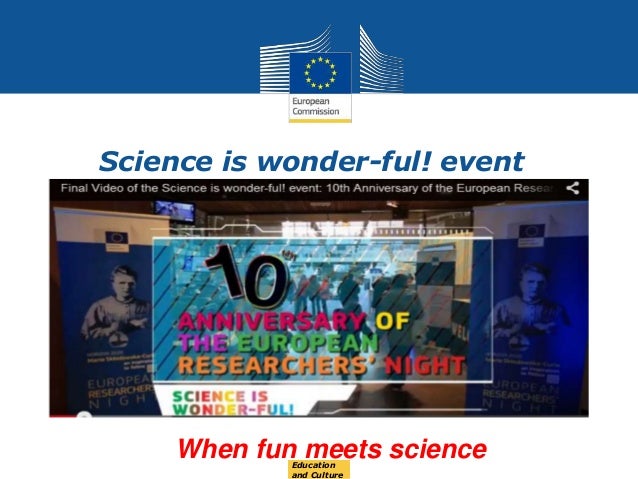
Last 23 September 2015 in Brussels, the 10th Anniversary of the European Researchers' Night celebrated science in the EU with an event at the Autoworld Museum in Brussels open for all. 

For 10 years, the European Researchers' Night has brought science to the masses with events across Europe. 


credits: © christelleg

In Brussels, in the margins of this year's edition, the European Commission organised, on 23 September, "Science is wonder-ful", a special event to look back at the best of the European Researchers' Nights over the last decade.

This year’s European Researchers’ Night is based around the theme of ‘Science is Wonder-ful!’

The annual event celebrates science whilst encouraging young people to pursue careers in research; the Europe-wide event is part of the Marie Skłodowska-Curie Actions.

The European Researchers' Night attracts over 1 million people every year. This mega event offers visitors a unique opportunity to meet researchers and take part in science activities aiming to showcase both the fascination of research as a career and its significant societal impact.


Education:

Live experiments, face-to-face chats with current researchers, quick-fire 3-minute presentations of projects from the people involved and an exhibition of the top inventions and discoveries given life thanks to EU support are just some of what's in store at the anniversary event. 


A different and exciting Science lesson for sure ! A live lesson! Teachers and students can join other groups of students and educators that will be everywhere  participating in some  awesome live pedagogical experiences.

Let your students meet the real scientists, talk to them, make some curious questions, understand the real meaning of Science.

Don't miss the European Researchers' Night 2015!

The events are free to attend and open to the public, including families and schools.

Where to go:
Do you want to take part of an event in your city? With your students, your family, friends on your own, you will find yourself exploring science in engaging ways. 


Use the interactive map, to see what events and activities are organised this year.


The events offer a wide variety of fun-learning activities, from behind-the-scenes guided tours of research labs, planetariums that are normally closed to the public, through funny interactive science shows, to hands-on experiments or workshops.

Mobile devices :

Of course tablets, iphones, smartphones are allowed. Students can and do use technology to support their learning but they need to be guided to do so responsibly by their teachers. Nobody thinks to let the students use smatphones without a careful and teacher guide.

These devices are important to improve learning, on this event, to take pictures, to note interesting ideas, to register some fun activity or a good little interview to a scientist, to contact classmates other city or country, to share the most exciting activities of the night.

Students will discuss their activities and experimentations in science lessons   next Monday.


Social media:

Stay tuned and follow us on Twitter and Facebook.

Facebook profiles from a lot of European schools or Twitter profiles linked to European Researchers' Night 2015 will be exciting to contact other schools and share different points of vue about all the activities.

Don't miss the European Researchers' Night nexy Friday, 26 September 2015! I'll be around.

Science is wonder-ful !


G-Souto

24.09.2015
Copyright © 2015G-Souto'sBlog, gsouto-digitalteacher.blogspot.com®

Creative Commons License
Education : European Researchers' Night is Wonder-ful ! bGinaSouto is licensed under a Creative Commons Attribution-NonCommercial-NoDerivatives 4.0 International License.

Tuesday, June 5, 2012

Schools : Transit of Venus ! Prepare your students !


Credits: NASA

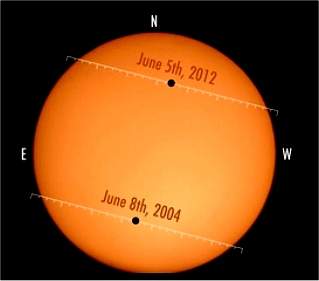
It's Coming! Today starts the last Transit of Venus in this century - next in 2117. Don't miss it!

This transit only takes place on the very rare occasions when the Sun, Venus and Earth are almost exactly in line.

In average, it only happens every 80 years. Before the last transit on June 8th 2004, no living person had seen a transit of Venus - the previous one was on December 6th, 1882.


Transit of Venus 2004


In astronomy, a 'transit' occurs when a smaller body passes in front of a larger one. A 'Transit of Venus' happens when Venus is seen in silhouette against the bright face of the Sun.


credits: AP Photo/Mark Baker, File


Education:


1. Telling students:

Venus transits occur four times in approximately 243 years; more precisely, they appear in pairs of events separated by about eight years and these pairs are separated by about 105 or 121 years.

This has happened only seven times in the telescopic age: in 1631, 1639, 1761, 1769, 1874, 1882 and 2004.

The transit which occurs when Venus passes directly between the Earth and the Sun was last recorded in 2004. There won't be another one until the year 2117, with not many of us likely to be able to witness then.

And before it happens again, the Earth will change beyond recognition. It won't happen again until December 2117. 


This Tuesday/Wednesday, June 5/6th, 2012, Venus will transit the face of the Sun in an event of both historical and observational importance.


The 6 June transit will start at approximately 00:04 Central European Time (CET). It will then take about 20 minutes from the point when Venus first bears upon the disk of the Sun.


The first contact, until the planet is fully silhouetted, the second contact. The planet will then take a curved path across the northern part of the Sun, and the mid-point of the transit will occur at around 03:30 CET. 


Venus begins to leave the Sun, the third contact, at about 06:37 CET, and the transit will be over, the fourth contact, at 06:55 CET.


NASA | World Visibility
Of course you don't want to miss it all! Neither your students in Sciences curriculum or not! 

2. Watching? Where:

The best places of the world to watch predicted to last seven hours, are  Easrern Asia and Australia, the south Pacific and the north-western parts of North America.

If you live there, you are privilegious people, you and your students! 

In Europe, we only be able to watch the later stages. But travel is not required.

NASA | 2012 Transit of Venus  http://venustransit.nasa.gov/transitofvenus/

Check on map where will be visible http://goo.gl/iSDsT

Venus Transit Test Data | NASA   → http://venustransit.gsfc.nasa.gov/data/

Watch NASA video  http://goo.gl/ARlC1

See pictures on NASA Venus Transit Observing Challenge |Flickr  http://www.flickr.com/groups/venustransit/pool/


3. Observing: 

NEVER look directly at the Sun, with or without a telescope or pair of binoculars, without using a safe solar filter. To do is very dangerous and is likely to result in permanent blindness.


Young people watching the transit of Venus 
using approved solar filters
credits: Charles Barclay 2004
http://cdn.physorg.com/

For safe viewing of the transit,  experts from the Royal Astrnomical Society (RAS) advise the same rules apply as those for observing a partial or annular eclipse of the Sun. Eclipse viewing glasses can be used, as long as they are undamaged and observing is limited to a few minutes at a time. Note that they must NOT be used with binoculars or a telescope. For an enlarged view, an image of the Sun can be projected onto a screen by a small telescope. Pinhole projection, however, will not produce a sharp enough image to show Venus clearly.

To safely watch the transit, experts from the Royal Astronomical Society (RAS) advise using special eclipse-viewing glasses, so long as long as they are undamaged and observing is limited to a few minutes at a time. 

Read more here


Apps:


New technologies, like the free Transit of Venus phone app, will allow individuals to send their observations of the 2012 transit of Venus to a global experiment to measure the size of the solar system. 

Join this unique effort, spearheaded by the non-profit Astronomers Without Borders, as a supporter and a participant. 


In the classroom:


Ipads ans smartphones on the desk! A wonderful animation can be watched on BBC Venus to put on Sun Spectacular

Students were invited to watch live on their devices at home or joining sky watchers with family or friends.

In classroom, they are invited to use their devices watching BBC animation or NASA videos for an open debate on the subject with colleagues and tutoring by educators.

Curricula: Sciences; Languages; Arts (cross-curricular)

Languages: It is very important to guide students writing a good school report for Sciences curricula.

Activities:

But as an educator, you know how students love science-fiction literature! You can not miss this opportunity!

It would be nice to read some Jules Verne excerpts. For information and activities read here.

Invite your students to write some sci-fic stories about this awesome event, individually or in small groups.

Ask your colleague of Arts curriculum to invite students to draw some illustrations that can enrich the creative sci-fic stories.

Blogs in Education: 

My students were invited to write a post on their environmental blogs. Please read here and here

Outside school:

Students can join astronomers and sky watchers at national observatories of Astronomy, observing the transit of Venus and snap some photos to explore in the classroom.


credits: © NASA/SDO, HMI
via Space.com


Dr Thomas Widemann of the Observatoire de Paris, one of the partner institutions, describes the transit of Venus as "a unique opportunity to closely observe an Earth-like planet passing in front of a Sun-like sta".


We are all so excited!


G-Souto

04.06.2012


Copyright © 2012G-Souto'sBlog, gsouto-digitalteacher.blogspot.com®

Licença Creative Commons
Schools : Transit of Venus! Prepare your students bG-Souto is licensed under a Creative Commons Attribution-NonCommercial-NoDerivatives 4.0 International License.


Credits: video 1 NASA


Some important links for educators:


Transits of Venus | Royal Astronomical Society (RAS)

CORDIS Europa.eu | Don't miss the transit of Venus

PHYS.ORG | The transit of Venus