Showing posts with label Music curriculum. Show all posts

Monday, June 15, 2015

Schools : Music & apps : App for students with visual disabilities


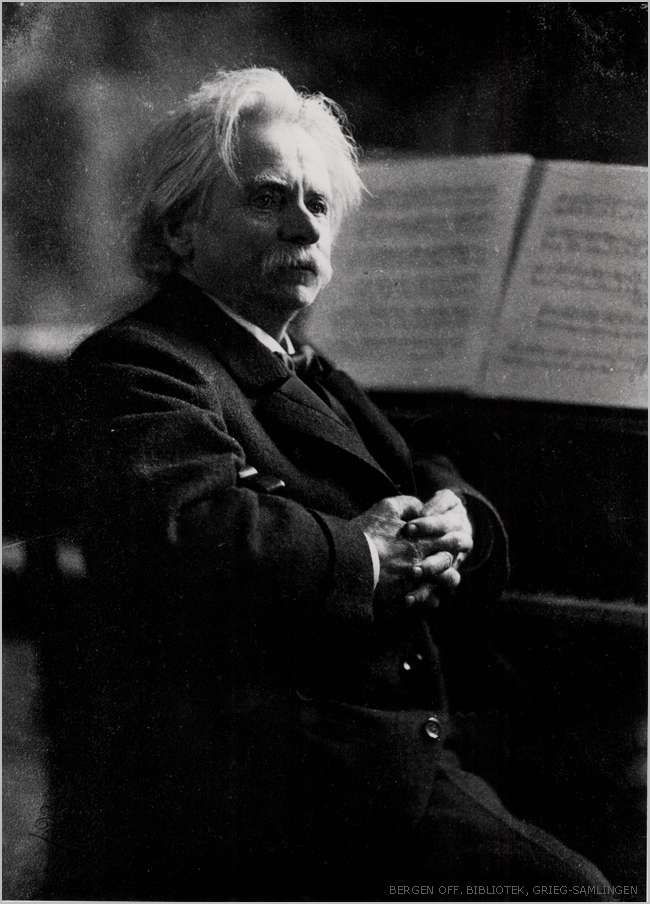
Evard Grieg, 1888


Edvard Hagerup Grieg wasborn on 15 June 1843 in Bergen, Norway. He is considered one of the leading Romantic era composers, and his music is part of the standard classical repertoire worldwide. 


Evard Grieg Google doodle

Google Doodle:

Here's anotther Doodle I could not miss. Music! Today, Google is celebrating the 
172nd anniversary of the great musician an pianist, Edvard Grieg.

The Doodle appears on on Google homepage in Finland, Norway, and Denmark and honors the Norwegian composer.


Edvard Grieg at the piano
credits: E. Bieber, 1907


"He painted with notes."

Edvard Hagerup Grieg born on 15 June 1843 in Bergen, Norway. He 
is considered one of the leading Romantic era composers, and his music is part of the standard classical repertoire worldwide. 


His use and development of Norwegian folk music in his own compositions put the music of Norway in the international spectrum, as well as helping to develop a national identity, much as Jean Sibelius and Antonín Dvořák did in Finland and Bohemia, respectively.

He traveled widely throughout Europe, and considered "his music to express both the beauty of Norwegian rural life and the culture of Europe as a whole."

He died on 4 September 1907. Its most advanced music school, Grieg Academy, its professional choir Edvard Grieg Kor, and even private companies Grieg Music


Edvard Grieg

Resources:

The Edvard Grieg Museum in Troldhaugen (Grieg's former home in Bergen) is dedicated to his legacy.

Explore the website to inspire your students and let them know better this great composer.

He painted the people, the scenery, and the moods of Norway. In the immortal Peer Gynt Suites, Grieg captured the rising of the sun, the lamenting of a death, and, in "The Hall of the Mountain King," the imagery of a chase scene. His works contained what are yet today readily recognizable "tunes".


screenshot app Perles Audio Pearls

Now that we are talking about Music, I would let you know a game for students with visual disabilities: impaired vision or total blindness. 

Perles Audio Pearls, an app by Ludociels pour tous that we can find on Google play.

A music game for one or two players (collaboratively) playable in the dark. Inspired on the Spielberg's movie "Close Encounters of the Third Kind" (1977) where aliens arriving on Earth communicated using melodies by a color system.

The game can be played in the dark and can be manipulated by people with visual impairments: visually impaired or complete blindness.  In a two player game, each person manipulates their own notes and tries to correspond their melody with their partner's.


screenshot app Perles Audio Pearls
https://ludocielspourtous.itch.io/

it just so happens that a little green man, comfortably installed in his flying saucer, trying to talk to a Pink little woman. Unfortunately, sound pearl face our two UFOs are all mixed. Handling the notes facing the aliens so that the two melodies match.


How it works:


The game uses students listening and concentration skills. It has 16 levels, each level presents melodies increasingly long. The rating composing the melodies are reshuffled each portion to renew the life of the game.


screenshot app Perles Audio Pearls
https://ludocielspourtous.itch.io/

Students with with visual disabilities:


The game may be played in the dark and can be handled by students with visual disabilities
  • impaired vision
  • total blindness 
Two players/students each one manipulates his own notes and seeks to match its melody to that of his partner. 

This game uses students listening and concentration capacities.  There are 16 levels, each of which presents a longer melody.  The notes in the tunes are reshuffled in each level to elongate the game.


kids & games

Education:

My usual readers know my thoughts about the importance of Arts in School Education, no matter the art field: Music, Dance, Literature, Painting, and other, all of them are essential to a complete and better education.


I pledge for Music in school curriculum. Music is the most inclusive art for all the students.

Beginning by talking about Grieg Doodle, you can include into your school curricula, no matter the curriculum.

Other resources: 

It's also interesting to your students to explore the websites:
  •  Grieg Academy; 
  • Grieg Kor;
  • Evard Grieg Museum. 
As I wrote before on my blog: Music has the potential to achieve social and psychological, and physical transformation of children and young people. Their sensibility will be accurate. They will be happy by playing music.

We must never waste such an opportunity as teachers! Captivating the major interests of our students on Music.


screenshot app Perles Audio Pearls

This game reminds me Bono at a concert some years ago when he invited a blind young man to play on the stage with U2.

Of course, kids and young adolescents love technology. And games/apps are important resources to include into our lessons.

How teachers and students can use it?
The app allows the students to work with musical sounds. Develops listening and concentration skills.

Curricula : Music (individual; two players); cross-curricular project.

Home : Individual learning work.

Levels : Primary and Elementary Education (aged 5-12)

Languages : 

  • French/ Français

Where to find  the app ?

  • Google play
  • Ludociels for all

Note: Through the purchase of this game, you support the actions of the non-profit organization Ludociels for All who strives to create educational video games for people in situations of social exclusion, such as the handicapped or school dropouts. You can see the details of its actions and achievement at its website

Price:

4,53€

SystemsAndroid.
 You can see the details of its actions and achievement at its website


"One good thing about music, when it hits you, you feel no pain."
Bob Marley

Hope you like Perles Audio Pearls as you liked Oratio's Flute Master and your students with visual disabilities enjoy to learn playing the game. Another interesting resource to include into your lessons if you teach Music or not at school

My passion for IT and education innovation makes me share some digital educational resources that I find on the web or on non profite websites as social media networking

G-Souto

15.06.2015
Copyright © 2015G-Souto'sBlog, gsouto-digitalteacher.blogspot.com®


Creative Commons License

Monday, March 10, 2014

Let's play the flute : Apps for Education


screenshot Oratio | credits: Insignio Labs

Here I am writing about another app. This time a game that can carry students to a world of music and entertainment.

I share often apps I find to enchance learning. For example Europeana (European history and culture) ; Augui (reading) ; Voltaire's Candide (French Literature) ; Touch Van Gogh (Arts) ; Our Choice or Zoe makes a splash (environment).

Today, I am writing about a app for Music. You know me. I am a huge enthusiast of Music in school curricula.

So, let's talk about Oratio Flute Master a game where students can learn an instrument while having fun. 

The idea began with a concept brought everyone in the Forum of Microsoft Partners in Learning (with 2 awards).


screenshot Oratio | credits: Insignio Labs

Oratio’s Flute Master is a fun game where students learn to play the flute, combined with beautiful artistic illustrations and wonderful sounds. 

The game has an appealing graphic interface and colorful and fun characters. Among the main characters you can find some friends of Oratio such as Cornelius: a dragon that will help to protect food from the evil “strawberries-eaters”vampires.
Along the way students learn to play the musical notes on the flute.


screenshot Oratio | credits: Insignio Labs

Description:
Oratio's Flute Master is a fun game to learn how to play a real instrument: the recorder (the kind of flute that is the main instrument taught worldwide in music classes). Yes, you will grab your own recorder and play the game with it!


screenshot Oratio | credits: Insignio Labs

Music curriculum: 


Learners and Oratio will help the dragon Cornelius save his food from the evil strawberry-eating vampires. Along the way, they will learn how to play the notes on their recorder, with 27 unique and original songs gradually introducing each note and increasing in difficulty.


The application has 27 exclusive songs that they are gradually showing every musical note and increasing its difficulty. In this way, the learning process is gradual and musical notes are associated with colors, for easy recognition.
To use the app it is necessary:
  • a flute (not included)
  • the microphone (it can be the one integrated in your computer or tablet)
Note: To avoid interferences between the musical notes of the flute and the sound from the speakers, it's recommended to be played with headphones. However, it's possible to play without headphones.


screenshot Oratio | credits: Insignio Labs

How teachers and students can use it?
The app allows the students to work with musical notes, articulation, and how to use your fingers correctly.

Develops fine motor skills, attention and concentration and reasoning capabilities, as well as reflection on reading response and action.

Where to use it?

School (Music curriculumsmall groups (max 4 students).

Home : Individual learning work.

Levels : 

Primary and Elementary Education (aged 9-10)


screenshot Oratio | credits: Insignio Labs

Features :

  • 27 original songs made specifically for the recorder (flute instrument).
  • Real-time detection of flute sound, using your microphone.
  • Gradual learning of notes and finger placements.
  • Bright and cartoon-like art, with cute characters!
  • Notes that are associated with colors, for easier recognition.
  • A scoring system that adds repetition value to the game (maximize your score!).
  • Ready  for Classroom Use

Languages : 
  • English
  • Portuguese
  • German
Where to find  the app ?

Windows Microsoft
Google play
Price:

2,99€

Systems:
Android ; MacOS; IOS; Windows.


Oratio' Flute Master is a didactic indie game that revolutionizes the way to learn and teach recorder. This "app" is the first of the Oratio Classroom saga, a software concept for teaching music in primary schools, winner of the first place in the category of Educators Choice at the Global Forum Partners in Learning by Microsoft in November 2012. 

The whole concept was developed within the school context with the collaboration of 200 students, teachers and entities related to Education.

Hope you like Oratio's Flute Master and your students enjoy to learn play the flute  as well work at home by themselves.

My passion for IT and education innovations makes me share all I found on the web or social media.
I read about Oratio on a Portuguese digital newspaper. I made some research and there you are. Another interesting resource to introduce n your lessons of you teach Music in school.
G-Souto
11.03.2014
Copyright © 2014G-Souto'sBlog, gsouto-digitalteacher.blogspot.com®
Licença Creative Commons
Let's play the flute : Apps for Education bG-Souto is licensed under a Creative Commons Attribution-NonCommercial-ShareAlike 3.0 Unported License.

Monday, November 4, 2013

October in Review : The most popular posts pf the month !


David Bowie | Facebook (official)


Yes! I'm a fan of David Bowie! He is one of my favorite singers/musicians. David Bowie has been an endless game in the media and popular culture. Singer, dancer, actor, provocateur, innovator. 


The October issue of BBC History Magazine saw 10 fashion experts select the men and women they believe have set the fashion world alight over the centuries, and BBC History Magazine asked readers to vote for their favourite.  And David Bowie had been named the best-dressed Briton in history.

“Don't follow me. Look at what you want to be and go and do it, because that's the one thing you can go uniquely in life. "

Geoffrey Marsh (about David Bowie)

So this could be the quote for this post. I believe and practice the differentiation as a value by focusing on individual identity of my students. 

Well, after three busy weeks, having important work to do - the most impressive it was judging educational media as a member of the jury of MEDEA Awards - back my regularly scheduled program today! The most popular posts of the month.

And now, let's do! 

This is October in Review of the post of the month: 

I added eleven posts in October - Wow! - on different subjects. In October, I wrote posts in EnglishFrançais and Português.

Here my list of the 5 most popular, presented in most reading order. 


I am glad to see that the most-read post of October is Visiokids: Education: Sciences & 3D


Visokids
 | Visionarum


Visionarium apresenta os Visiokids (descontinuado no site), uma série televisiva em animação 3D, constituída por um total de 65 episódios, de cerca de dois minutos de duração ma RTP Ensina.


Cinco personagens – Atómico, Bit, Cósmico, Cassiopeia e Vita – que representam diferentes áreas da ciência, e que desde 23 Setembro são apresentadas diariamente na RTP2(?).

Verdade! Descobri esta série que partilho na publicação de hoje e que conjuga ciência e tecnologia. Encomendada à Insizium, uma empresa portuguesa, tem o apoio científico da Universidade do Porto.


Uma série animada em 3D a integrar com sucesso nos currículos escolares de Ciências. 

As ciências e as novas tecnologias têm um papel fundamental na educação e na sociedade.


Credits: Insizium


Education: Science & 3D

Visiokids is a 3D animation TV series (Portuguese language), made in Portugal by Isiziumfocused on science, (consultancy at University of Porto) consisting of a total of 65 episodes with a minute and a half long. 


It's directed specially to children and young students aged 6-12, being an exciting, informal and accessible educational digital resource to Science (curiosities and questions present in everyday family life). The University
.


Oh! What a special day! October 1 is International Music Day! And Music has always an important role on my blog.


As you already know me well as my usual readers, it would be impossible not to write about Music Day.


"No truly cultural pursuit, involving the intellect and the emotions, is complete unless it can be regarded as both an end and a means. It is an end in itself so far as it moves the aesthetic sense, gives immediate pleasure and becomes a part of our being. It is a means in the sense that it should raise us to a higher level, make us capable of going further to accomplish other, more difficult, more pregnant acts of cognition-in short, of developing our own powers and helping to develop those of the community."

Georges Duhamel, Académie Française


I think music should be taught in every school, from primary to secondary education as a serious curriculum.


The aim is not to form not only professional musicians, but to develop the appreciation, taste and critical judgment of the listener from his earliest youth, so as to train him and enable him to appreciate the beauty and wealth of musical masterpieces. 


And what about special needs students? Yesterday, I read a fantastic article on FastCompany websiteHow to write Music in color! Absolutely! Agree!


The article is about the sound-artist|designer Yuri Suzuki ! As a dyslexic kid he learned music not through sheet music but through “Color Chaser".


Education:


"Music has the potential to achieve social and psychological transformation of children and young people. Their sensibility will be accurate. We must never waste such an opportunity as teachers! Captivating the major interests of our students about Music."

GSouto

Music, as you can read on several posts on my blog, is fundamental in Education of children and young people.

If music is thus integrated into general education, it becomes a useful auxiliary to the other subjects of School Education. 


Visual Learning in School EducationThe series 'Stephen Hawking: Riddles Of Time & Space' would provide a glimpse into "the man, the myth and the legend,"


But this is not all about visual learning and Stephen Hawking. The scientist is very inspirational.


Reading The Guardian last month, I watched an incredible video about Stephen Hawking.

Education:

So, do you want a better educational digital resource that this video animation? It's a wonderful video to talk about Stephen Hawking's ideas in the classroom.


As I wrote on Videos in the Classroom : The Higgs Field, students love videos in school curriculum. They learn more watching to a video than hearing thousands words.


The old approach to school curriculum was teachers lecturing to students with lessons centered around a textbook.

Now, under a new curriculum being rolled out the last academic years, educational digital resources (videos, apps, games, infographics) and tools (tablets, smartphones and other devices) have replaced textbooks, and student-centered debate, inquiry and discussion is the main focus.


via Google Images Archive


Seeing pink? October is Breast Cancer Awareness MonthIt was with these words I started my post Going Pink at School: Let's do it! Remember?

An opportunity to draw attention to our girls students. Girls are growing up faster and need to be aware that it is out there and early detection is the best cure and hope of getting through this awful thing.


Unfortunally, as educators, we all have known some children and young people who have or had cancer or often coexist with cancer because they have brothers or sisters, sometimes mothers or grandmothers suffering with this disease.


via Google Images Archive


Schools can holding special programs to educate students and teachers about how survival rates increases through early detection.

I think it would be important to introduce cancer awareness in school curriculum, not only in sciences curriculum.

I know several schools that involve young students to raise awareness about this disease.

“Education helps students and teachers not only protect their families, but also their own lives,” 

I hope the activities I proposed were useful to you and had a big success among your students.


European MOOCs infographic


Find more education infographics on e-Learning Infographics.

It's not the first time I write about MOOCsMOOCs (Massive open online courses) provide online access for all. 


On the first post MOOCs in a simple way I introduced the 'a-ha' in Higher Education and completed the post with a video published on The New York Times.


Now, as a member of Open Education Europa (disabled), reading the last updates, I  found the European MOOCs Scoreboard Infographic. Please read the entire information.  


via The Next Web


MOOCs are offered not only from universities using their own or a shared platform, but also from nonprofit organizations, trade associations or single businesses or even from an individual using free online course builder tools to create their own MOOC.


The two infographics show the impact of coursera in Europe and all around the world. 


Impressive, isn't it? In just two years (this started in 2011) Coursera has grown "from a revolutionary idea to thriving community of more than 100 partners institutions, 5 million+ students from 190  countries, and 500+ courses across a diverse range of disciplines"?


So many countries, languages, and educational backgrounds represented! This is an important movement promoting lifelong education for everyone from every corner of the globe.


I hope that all of you had a great weekend and feel ready for the next week. As I do every month, I've put together a short list of the most popular posts of the previous month. 


Hoping that all of you tried some of my tips, resources or ideas to do something different at your class.

Have a great new week !

G-Souto

04.11.2013

update 27-04.2025
Copyright © 2013G-Souto'sBlog, gsouto-digitalteacher.blogspot.com®

Licença Creative Commons
October in Review : The most popular posts of the month bG-Souto is licensed under a Creative Commons Attribution-NonCommercial-NoDerivatives 4.0 International License.