Grace Hopper Google Animated Doodle
Humans are allergic to change. They love to say, "We've always done it this way." I try to fight that. That's why I have a clock on my wall that runs counter-clockwise."
Grace Hopper

Trbute to Grace Hopper
Yes. Today Google Animated Doodle honors computer scientist pioneer Grace Hopper, United Sates Navy Rear Admiral born on December 9, 1906.
Hopper is known for being one of the designers of COBOL, one of the first modern programming languages, which was created in 1959 during the Conference on Data Systems Languages.

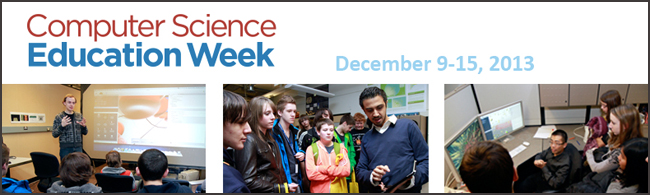
Computer Science Education Week (Dec 9 - 15, 2013) is an annual international event dedicated to showing K-12 students the importance of computer science education. The event is organized by the Computing in the Core coalition and Code.org. The week wiil be full of resources and events to help curriculum directors and educators integrate and implement computer science lessons.

Europe Code Week
Like it is interesting because Europe Code week has been celebrated all over the Europe on November 25-30.
So Grace Hopper quote could be my inspirational quote for this post. I believe and practice the change in education. Students welcome changes in our lessons.
Back my regularly scheduled program today! November, the most popular posts of the month.
So, let's doing! This is November in review of education tips.
I added six posts in November on different subjects. Here my list of the 5 most popular, presented in most reading order.
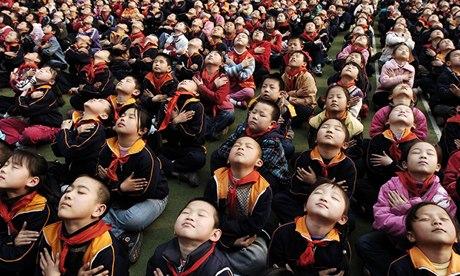
I am happy to see that the most-read post of the month is a serious matter: Éducation: Parole aux enfants victimes d'exclusion. Child poverty is something sad every where and in developed countries, it is a flagellum in our days.

Child Poverty in Developed Countries
« Il y a un risque de génération sacrifiée »
Michèle Barzach, la présidente d’Unicef France.
La Jorunée Internationale des Droits de L'Enfant établie par les Nations Unies (UN) en 1954 se célèbre le 20 Novembre.
Dans une étude inédite très récente, l'Unicef France s'est penché sur le lien qui existe entre "privations et exclusion sociale" chez les enfants.
Entre février et juillet 2013, 22.500 enfants, âgés de 6 à 18 ans, et originaires de plus de soixante-dix villes de France, ont répondu à 133 questions sur leur vie quotidienne.

Crédits: Infographie Unicef
Les résultats de la consultation ont montré que près d'un jeune sur cinq est en situation "préoccupante" d'exclusion sociale.
Et tout est lié. Cette étude réalisée sous l'égide de l'Unicef France le prouve: pauvreté et exclusion sociale sont bien liées.
Les 14,5% d’entre eux qui sont en situation de grande ou d’extrême privation voient également leur qualité de vie se dégrader proportionnellement à leur niveau de pauvreté.

Photo: Lorea Marchand
Crédits: Unicef
Selon cette étude, 7% d’entre eux souffrent d'une "exclusion extrême". Le rapport mesure l’intégration des plus jeunes à l’école, à la maison, ainsi que dans la ville.
"Vivant dans la précarité, ils se perçoivent aussi, plus en difficulté à l’école ou dans leur famille, plus éloignés du système de soins, plus marginalisés dans leur quartier, plus en insécurité dans leur environnement proche et moins associés à la vie de la collectivité que les autres enfants."
Unicef
"Plus un enfant est dans la précarité, plus il connaît des difficultés à s'intégrer dans l'ensemble de sa vie", observait ce matin en conférence de presse Michèle Barzach, la présidente d’Unicef France.

"Les vrais artistes ne méprisent rien ; ils s'obligent à comprendre au lieu de juger."
Albert Camus
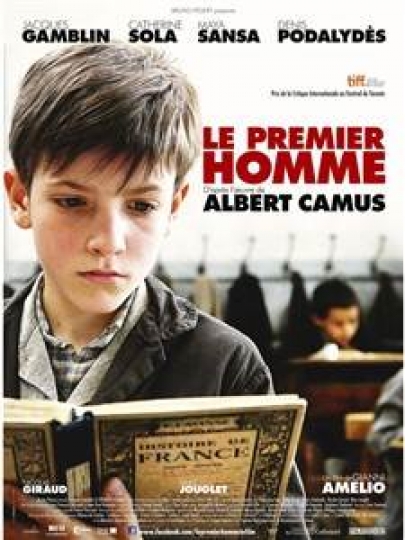
Albert Camus, écrivain, philosophe, romancier, dramaturge, essayiste et nouvelliste français, né le 7 novembre 1913, fut aussi un journaliste engagé dans la Résistance Française (II Guerre Mondiale) et dans les combats moraux de l'après-guerre.
Google a consacré un Doodle pour le centenaire de l'écrivain Albert Camus. Et l'auteur fut aussi à l'honneur "sur les planches marseillaises et aixoises où ont été présentées une création, L'étranger, et deux oeuvres théâtrales, Les justes et Caligula". Trois spectacles fêtent donc le philosophe. Sans oublier l'exposition à Aix-en-Provence.
"Je crois que ce qui est beau chez lui pour les jeunes générations, c'est quelque chose qui peut être appliqué à soi-même et en même temps donner un élan collectif".
Aurélie Filippetti
Discours d'Albert Camus lors de sa remise au Prix Nobel
L'auteur de La Peste et de L'Etranger est un des écrivains français les plus importants du XXème siècle, probablement le plus connu, cité et traduit à l'étranger.
Prix Nobel de Littérature (1957) " for his important literary production, which with clear-sighted earnestness illuminates the problems of the human conscience in our times", il semblait naturel que ses écrits soient célébrés. Mais ni la Bibliothèque nationale de France ni Beaubourg ont acccueilli de rétrospective.
Dommage qu'un auteur aussi connu dans le monde et tellement lu et étudié ( au Secondaire à peine quelques oeuvres ) mais à la fac (études, recherches) - Littérature, Philosophie - soit si 'oublié' 53 ans après sa mort. Et alors, un centenaire!

Éducation:
Cent ans après sa naissance, Camus continue une figure mythique de la littérature française et mondiale, par "sa pensée visionnaire, sa soif de justice, son ittinéraire exceptionnel".
Ressources pédagogiques: A lire sur le post
| "Chaque génération, sans doute, se croit vouée à refaire le monde. La mienne sait pourtant qu'elle ne le refera pas. Mais sa tâche est peut-être plus grande. Elle consiste à empêcher que le monde se défasse." Albert Camus, (extrait du Discours de réception du Prix Nobel de Littérature, 1957) |

Europe Code Week
Europe Code Week, took place between November 25 and 30, 2013 all over Europe. It was an open source initiative, aiming to connect initiatives that could encourage European citizens and students to learn more about the art and science of computer programming.
"Computer programming is being heralded as the new literacy, yet it is still widely perceived as a skill that can only mastered with a computer science degree.
With the wider availability of internet connectivity and freely available, easy to use technologies, this is no longer the case."
Technology is shaping young lives, bringing crazy ideas to life, build things that will bring joy to others.
"It's never been easier to make your own app, build your own robot, or invent flying cars, why not! It's not an easy journey, but it's a journey full of creative challenges, a supportive community, and tons of fun."
Why Coding? Read on the post
I am sure you were ready to accept the challenge and engaged you students to become makers?

Sometimes, I share with you some good talks about Education. I think it is important to hear specialists and discuss their ideas.
Today, I would like to share George Siemens, Professor at Athabasca University (Canada), in a talk about changing schools, changing knowledge.
Today, I would like to share George Siemens, Professor at Athabasca University (Canada), in a talk about changing schools, changing knowledge.
Education:
Interesting, isn't it? Change knowledge needs and structures are influencing the development of new learning systems and models. And it is not easy.
A good critical talk. He provides a critical evaluation of the testing/evaluation narrative in education and of the future of education.
A good critical talk. He provides a critical evaluation of the testing/evaluation narrative in education and of the future of education.
As an educationalist, I think these kind of talks of innovative thinkers about different subjects touching Education are always very useful to us.
It's up to us reflect and reach some conclusions.
Don't forget to review Education: Stop Natural Disasters wich share some educational digital resources or World Science Day for Peace and Development at school education sharing educational resources and activities.
I hope that all of you had a great weekend and feel ready for the new week ahead. As I do every month, I've put together a short list of the most popular posts of the previous month.
Hoping that all of you tried some of my tips, resources or ideas to change your lessons and surprise your students.
Have a great week !
G-Souto
09.12.2013
Copyright © 2013G-Souto'sBlog, gsouto-digitalteacher.blogspot.com®
09.12.2013
Copyright © 2013G-Souto'sBlog, gsouto-digitalteacher.blogspot.com®

November : The most popular posts by G-Souto is licensed under a Creative Commons Attribution-NonCommercial-ShareAlike 3.0 Unported License.


--Cover-(eng)-miniature.jpg)