Showing posts with label computer programming. Show all posts

Friday, October 6, 2017

Schools : Code Week EU, new challenges : Let's go again !


Europe Code Week 2017

Europe Code Week is taking place this year between 7 and 22 October, although "every week is Code Week". It's an open source initiative, aiming to connect initiatives that encourage young and adult European citizens to learn more about the art and science of computer programming.

Millions of children, adults, parents, teachers, entrepreneurs, and policymakers will again come together at events, in classrooms and libraries across Europe and beyond to learn to create with code.


Europe Code Week 2017

EU Code Week is a grass-roots movement that celebrates creating with code. The idea is to make programming more visible, to show young, adults and elderly how you bring ideas to life with code, to demystify these skills and bring motivated people together to learn. The initiative was launched in 2013 by the Young Advisors for the Digital Agenda Europe.


5th Birthday Code Week

Europe Code Week was born in 2013 by some young people who advised the European Commission on digital policies. They wanted more people "to learn how to create with code as well as get different networks together to make it easier for interested people to find a place where they could learn programming, work with hardware and find out how computers work." 
Those grass-roots movement turns five years in 2017 and it has grown exponentially.
EU Code Week is run by volunteers. One, or several, Code Week Ambassadors coordinate the initiative in their countries, but everyone can organise their own code event and add it to the codeweek.eu map.


Europe Code Week 2017

In 2016, nearly a million people in more than 50 countries around the world took part in EU Code Week. If your country is involved, and has organised events, put it on the map or volunteer as a Code Week ambassador.


Education:

Learning to code helps students to make sense of how things work, explore ideas and make things, for both work and play. 
What’s more it helps students to unleash their creativity and work collaboratively with wonderful young people both near them and all over the world.
From playing about with animations to designing computer apps and games, teaching coding in schools lends itself to plenty of fun learning activities.
The inclusion of coding into the new computing curriculum has been one of the main changes that the Department of Education in different European countries claimed would "ensure every child leaves school prepared for life in modern society."
Students at the school have apparently responded positively to the new curriculum in those countries and are already seeing the practical use of learning these new skills.


The European Astro Pi Chalenge:

Announcing the 2017-18 European Astro Pi challenge in partnership with the European Space Agency (ESA).

It's open to students from all 22 ESA member countries, including associate members Canada and Slovenia.

Astro Pi is an annual science and coding competition where code written by young people is run on the International Space Station!


Mission Zero


In Mission Zero, students aged up to 14 write a simple Python program that will display a message on the International Space Station for 30 seconds.

Students will contribute to the daily routine of the International Space Station by displaying their own personal message and the ambient air temperature on the Astro Pi. 
No special hardware is needed to take part in Mission Zero, and your code is guaranteed to run in space for 30 seconds!

Some information:
In Mission Space Lab, teams aged up to 19 have to demonstrate their motivation to compete by planning an experiment to run in space.
Registration:
Teams have until 29 October 2017 to register and submit their idea on the Astro Pi website.
The selected teams will be notified that they have been accepted by 7 November 2017 and will receive an ESA-branded Astro Pi kit at their school, and the chance for their experiment to run on the International Space Station.
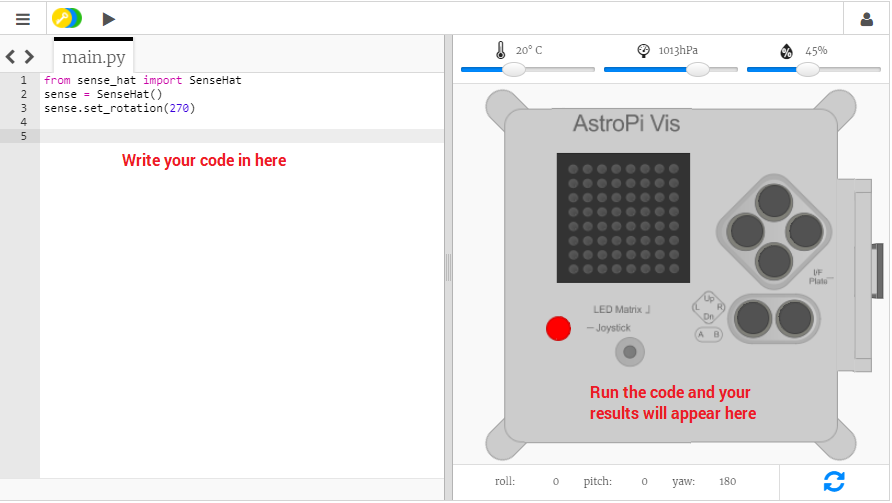

Teachers: this classroom activity can be completed in an afternoon. 

Organise your students into teams of up to four, and let us guide them through writing a short Python program to show a personal message and the air temperature on the Astro Pi. 

No extra hardware is needed. Everything is done in a web browser

Teachers register online with the Trinket Sense HAT emulator and receive a classroom code to give to their teams. This saves time by greatly reducing the need for data entry. 

There’s no limit to the number of teams a school or club can enter. It’s entirely dependent on the teacher’s capacity to support teams.

Read the official guidelines document for Mission Zero.


Resources:


  • A special film: Hidden Figures
Three women -  Katherine Johnson, Dorothy Vaughan & Mary Jackson pioneers on computer science helped plan the mission that saw an American astronaut orbit the Earth for the first time, has been honored on Hidden Figures, a film based on true story by Theodore Melfi (2016), nominated for 3 Oscars.

The true story of a team of female African-American mathematicians who served a vital role in NASA during the early years of the U.S. space program. Segregated from their white counterparts, these colored computers’ used pencil and paper to write the equations that would launch rockets, and astronauts, into space.


Hidden Figures
Theodore Melfi, 2016

The maths involved in the orbital mission was highly complex, and the computers of the day were prone to technical hiccups.
So as astronaut John Glenn was going through the preflight checklist – upon which his life depended – he insisted that Ms Johnson double check the calculations.

Hidden Figures
Theodore Melfi, 2016

“If she says they’re good,” Ms Johnson remembered Mr Glenn saying, “then I’m ready to go.”

Hidden Figures
Theodore Melfi, 2016

Aim:

Motivation to girls nd young women to code and continue their studies on STEM. Teachers must encourage girls to pursue studies on STEM.


Teachers can display the film in the classroom to motivate young girls to code. Boys will understand the role of young girls in STEM. Later they will support them at secondary education and college.

There is a gender lack studying high technologies and STEM.

Don't misse the opportunity to include Hidden Figures into school curriculum.

Other Activities: 
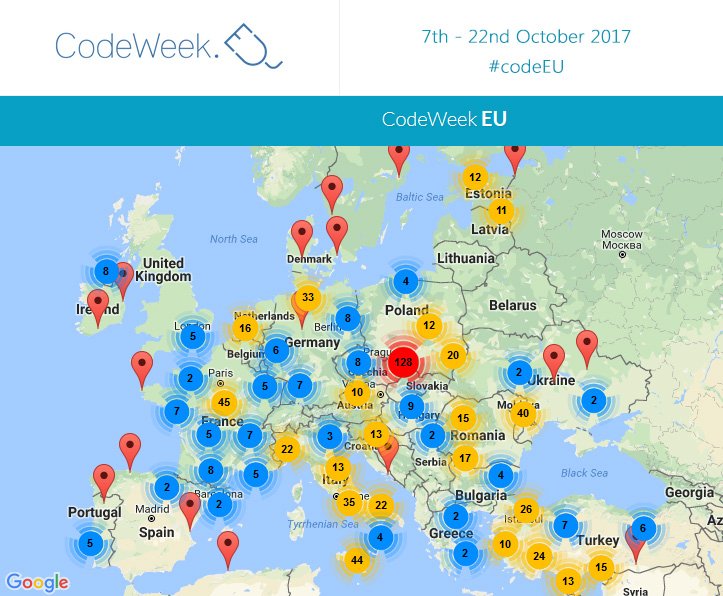
Teachers will find by reading my post Code Week EU, let's go again ! #codeEU


Other Resources:

Anyone – schools, teachers, libraries, code clubs, businesses, public authorities – can organise a #CodeEU event and add it to the codeweek.eu map

To make organising and running coding events easier, the CodeWeek website has prepared different toolkits and selected some of the best lesson plans, guides and other resources. Look here

Media:

Code Week EU is on Twitter as @CodeWeekEU, on Facebook. Use the #codeEU hashtag.

Invite your students to have fun building things by coding. Are they ready to share their passion? Young students are so creative. Let's them explore all the funny coding games with their imagination.

G-Souto

06.10.2017

Copyright © 2017G-Souto'sBlog, gsouto-digitalteacher.blogspot.com®

Creative Commons License
Schools : Code Week EU, new challenges : Let's go again ! bG-Souto is licensed under a Creative Commons Attribution-NonCommercial-NoDerivatives 4.0 International License. 


Thursday, October 13, 2016

Schools : Code Week EU ? Let's go !


CodeWeekEU

"Europe Code Week is a grassroots movment that celebrates creating with code."

Europe Code Week, is taking place between 15 and 23 October, although "every week is Code Week". It's an open source initiative, aiming to connect initiatives that encourage European citizens to learn more about the art and science of computer programming.

Millions of children, adults, parents, teachers, entrepreneurs, and policymakers will again come together at events, in classrooms and libraries across Europe and beyond to learn to create with code.


Libraries change lives
credits: Public Libraries 2020

Aims:

The idea is to make programming more visible, to show young, adults and elderly how you bring ideas to life with code, to demystify these skills and bring motivated people together to learn. The initiative was launched in 2013 by the Young Advisors for the Digital Agenda Europe.

The Commission will address digital skills in future initiatives on skills and training and will adopt a skills strategy in Spring 2016.

In 2015, 46 countries took part in EU Code Week – all EU member states plus Iceland, Norway, Switzerland, Albania, Former Yugoslav Republic of Macedonia, Serbia and Turkey events took place in Australia, Belarus, Bosnia and Hercegovina, China, South Korea, Moldova, Morocco, Taiwan, Tunisia, Ukraine and the United States.

EU Code Week is run by volunteers. One, or several, Code Week Ambassadors coordinate the initiative in their countries, but everyone can organise their own code event and add it to the codeweek.eu map.


Why coding?


"Today we live in a world that has been affected by rapid advances in technology. The way we work, communicate, shop and think has changed dramatically. In order to cope with these rapid changes and to make sense of the world around us, we need to not only develop our understanding of how technology works, but also develop skills and capabilities, that will help us to adapt to living in this new era."


Education:
Learning to code helps studentsus to make sense of how things work, explore ideas and make things, for both work and play. What’s more it helps students to unleash their creativity and work collaboratively with wonderful young people both near them and all over the world.


credits: Coding clubs Finland
http://codeweek.eu/
From playing about with animations to designing computer games, teaching coding in schools lends itself to plenty of fun learning activities.

The inclusion of coding into the new computing curriculum has been one of the main changes that the Department of Education in different European countries claimed would "ensure every child leaves school prepared for life in modern society."
Students at the school have apparently responded positively to the new curriculum in those countries and are already seeing the practical use of learning these new skills.


Schools:

International School Library Month (ISLM) is in October, and the theme is:

"Learn to Decode Your World."

Do you need a better theme? Get your school library running a big coding club joining the students to learn coding.

Join Europe Code Week by organising a coding event in your town or help spread the vision of Code Week.


CodeWeek4All:


Europe Code Week is launching the CodeWeek4all challenge to contribute to increase the penetration of coding in schools.

Schools are invited to register online for free to get a unique code to be added to the description of all Code Week events at CodeWeekEU/events organized in the school preferably between October 15 and October 23 2016.
The challenge consists in getting involved as many students as possible during Europe Code Week 2016. The unique code associated with the school will allow Code Week organizers to sum up all the participants to the events organized in the same school and to compare the sum with the total number of students declared in the application form.

Schools achieving a participation rate greater or equal than 50% will be awarded a personalized Certificate of Excellence in Coding Literacy and will be announced in the Europe Code Week website.
Application form available at: http://goo.gl/forms/kx4LfjFRo9QLQOg32


Resources: 

To make organizing and running successful Code Week events easier, Code Week EU prepared specific Presentations & Toolkits and selected some of the best lesson plans, guides and other resources in 30 languages. 

There are activities and games to learn to code, for all ages and skills. Just take a look and choose. You have plenty. You have all the information on the website Code Week EU.


Media:
Code Week EU is on Twitter as @CodeWeekEU, on Facebook. Use the #codeEU hashtag.

Invite your students to have fun building things about code. Are they ready to share their passion? Young students are so creative. Let's them expore all the funny coding games with their imagination.
G-Souto

13.10.2016
Copyright © 2016G-Souto'sBlog, gsouto-digitalteacher.blogspot.com®

Creative Commons License
Schools : Code Week EU ? Let's go ! bG-Souto is licensed under a Creative Commons Attribution-NonCommercial-NoDerivatives 4.0 International License. 

Thursday, October 8, 2015

Code Week EU, let's go again ! #codeEU


"Europe Code Week is a grassroots initiative which aims to bring coding and digital literacy to everybody in a fun and engaging way."

Europe Code Week, is taking place 10-18 October 2015 all over Europe. It's an open source initiative, aiming to connect initiatives that encourage European citizens to learn more about the art and science of computer programming.

"The idea is making coding more visible, demystify these skills, and bring motivated students together to learn. We aim at getting millions of children, parents, teachers, entrepreneurs and policy makers to come together in events and classrooms to learn programming and related skills."


infographic 2015


Today we live in a world that has been affected by rapid advances in technology. The way we work, communicate, shop and think has changed dramatically. In order to cope with these rapid changes and to make sense of the world around us, we need to not only develop our understanding of how technology works, but also develop skills and capabilities, that will help us to adapt to living in this new era.


The initiative was launched by Neelie Kroes' Young Advisors with the support from DG Connect at the European Commission. Sounds fancier than it really is. They were just "a bunch of young people with a dream of a world where all sort of crazy ideas are given a chance to change the world."

It's about those of us who are already helping these dreams come true. The future. 

Technology is shaping young lives, bringing crazy ideas to life, build things that will bring joy to others.

"It's never been easier to make your own app, build your own robot, or invent flying cars, why not! It's not an easy journey, but it's a journey full of creative challenges, a supportive community, and tons of fun."
In the last Code Weeek EU 37 countries, 89 ambassadors, 4 000 events and 150000+ people ! Wow ! Neelie Kroes must be very happy.


Why Coding?
  • Coding is becoming a key skill for professionals in every field, so it must start at school;
  • ICT professionals, researchers, designers, coders...
  • Basic ICT skills enable the creation of small business or funny apps and games;
  • Today there is already a shortage of ICT professionals in Europe;
  • By 2015, this year, we will be missing 900.000 ICT professionals;
  • These positions could be filled by Europeans currently unemployed;
  • The future economy of Europe passes by a strong focus on technology and startups.
Education:

"It's about Pia, who felt like she had to study law, even though she always enjoyed maths and playing with computers. It's about Mark, who has the idea for a better social network, but can't build it on his own. It's about Alice, who dreams about making robots because her parents don't allow her to have a cat."

Code Week EU

From playing about with animations to designing computer games, teaching coding in schools lends itself to plenty of fun learning activities.

"Computing is cool."

The inclusion of coding into the new computing curriculum was one of the main changes that the Department of Education in different European countries claimed would "ensure every child leaves school prepared for life in modern society."


Students at the school have apparently responded positively to the new curriculum in those countries and are already seeing the practical use of learning these new skills.


It's never been easier to make their own app, build their own robot, or invent flying cars, why not! It's not an easy journey, but it's a journey full of creative challenges, a supportive community, and tons of fun.

Are you ready to accept the challenge and become a maker or to engage your students to become makers?
Become a part of Code Week by organizing an event. Make a difference by inspiring and motivating others. 
Anyone is welcome to organize an event. Just pick a topic and a target audience andadd your event to the map. You can even use our toolkit for organizers to get started.
If you need help or have a question you can get in touch with EU Code Week Ambassadors in your country.
  • Join an event near your school, city, country:
Coding is for everyone. Try something new and discover the fun of coding by joining an event near youThere are plenty of events for any age and a variety of topics. Participation is free of charge and there are no prerequisites.
There's also a list of resources to help you get started with coding online right now.
  • Help to spread the vision of Code Week:
Help the cause by spreading the word so that more people can learn about Code Week. If you know people who would be willing to organize an event, let them know about Code Week.


http://codeweek.eu/


Resources:

To make organizing and running successful Code Week events easier, Code Week EU prepared specific toolkits and selected some of the best lesson plans, guides and other resources in 30 languages. 

There are activities and games to learn to code, for all ages and skills. Just take a look and choose. You have plenty. You have all the information on the website Code Week EU here.


Ada Lovelace 2015, poster

Oh! During Code Week 2015, on October 13th, Code Week EU will celebrate Ada Lovelace Day

The annual Ada Lovelace day, which this year falls on 13 October, aims to raise the profile of women working in STEM subjects across the globe
Ada Lovelace Day has become renowned for sharing inspirational stories about women in science that inspire people. It's a great chance to get girls excited about a traditionally male-dominated field. 


photo : Alamy
Ada Lovelace Day is an international celebration of the achievements of women in science, technology, engineering and maths (STEM). But how much do your students know about this pioneering female?

Lovelace (1815-1852) was a gifted mathematician who is considered to have written instructions for the first computer program in the mid-1800s. She translated an article on an invention by Charles Babbage, and added her own comments. 

Because she introduced many computer concepts, Ada is considered the first computer programmer. 

Ada had an unusual upbringing for an aristocratic girl in the mid-1800s. At her mother's insistence, tutors taught her mathematics and science. Such challenging subjects were not standard fare for women at the time. 

Learning to code helps us to make sense of how things work, explore ideas and make things, for both work and play. What’s more it helps us to unleash our creativity and work collaboratively with wonderful people both near us and all over the world.

To dowload Ada Lovelace poster here 

Other information:

Have an inspirational story to share? Post it to Code Week and it will share.

Media:
Code Week EU is on Twitter as @CodeWeekEU, on Facebook. Use the #codeEU hashtag.
Invite your students to have fun and build things about code. Are you ready to share their passion? 

Young students are creative. Let's them expore all the funny coding games.

G-Souto

09.10.2015
Copyright © 2015G-Souto'sBlog, gsouto-digitalteacher.blogspot.com®

Creative Commons License
Code Week EU, let's go again ! #CodeEU bG-Souto is licensed under a Creative Commons Attribution-NonCommercial-NoDerivatives 4.0 International License.