Showing posts with label modern slavery. Show all posts

Wednesday, June 12, 2019

Schools : World Day Against Child Labour : Children must work on dreams ! Resources


World Day Against Child Labour

The International Labour Organization (ILO) launched the World Day Against Child Labour in 2002 to focus attention on the global extent of child labour and the action and efforts needed to eliminate it. 
Each year on 12 June, the World Day brings together governments, employers and workers organizations, civil society, as well as millions of people from around the world to highlight the plight of child labourers and what can be done to help them.
2019 also marks 20 years since the adoption of the ILO's Worst Forms of Child Labour Convention, 1999 (No. 182).

Theme 2019: 


"Children shouldn’t work in fields, but on dreams!


Children shouldn’t work in fields, but on dreams. Yet today, 152 million children are still in child labour. Although child labour occurs in almost every sector, seven out of every ten is in agriculture.


Mohammed, 14, a Syrian refugee from Kobani, 
works underneath a car at a repair shop in Erbil, Iraq in March 2016

In 2019, the International Labour Organization celebrates 100 years of advancing social justice and promoting decent work. 

"On this World Day Against Child Labour will look back on progress achieved over a 100 years of ILO support to countries on tackling child labour."


100 Social Justice, Decent Work (1919-2019)

The World Day Against Child Labour looks back on progress achieved over a 100 years of ILO support to countries on tackling child labour. Since its founding in 1919, the protection of children has been embedded in the ILO’s 

"Take immediate and effective measures to eradicate forced labour, end modern slavery and human trafficking and secure the prohibition and elimination of the worst forms of child labour, including recruitment and use of child soldiers, and by 2025 end child labour in all its forms."

UN/ILO

100 Social Justice, Decent Work (1919-2019)

Education:

Schools and other educational institutions make a special effort to inform children of their rights according to the Declaration of the Rights of the Child and the Convention on the Rights of the Child. 

Teachers and students worldwide are speaking out against child labour in the classroom and taking action to raise further awareness of this issue out school. 

They are spreading knowledge among their peers, acting as a voice for those children whose rights are not respected and calling on decision-makers to act urgently to protect children in danger. 


World Day Against Child Labour


Teachers have a crucial role on the alert of poverty or child labour, modern slavery cases among their students.

Numerous resources can be included into school curricula to inform, inspire and motivate students of all ages, from primary school through university, on the subject of child labour, modern slavery and human trafficking.


Resources:

  • Book:


The Little Hero
One boy's Fight to End Child Slavery
Andrew Crofts, 2006

Iqbal Masih was gunned down by an assassin in cold blood in 1995. He was just 13 years old. 

The book tells the heart-wrenching story of this courageous child martyr, who died trying to end child slavery. After six years of bonded labour in a Pakistani carpet factory, Iqbal escaped the clutches of his tyrannical carpet-master, and then tirelessly worked to spread the word to other enslaved children that they could be free too. 

He addressed international conventions on behalf of the Bonded Labour Liberation Front and participated in raids on illegal factories. He was awarded the Reebok 'Youth in Action' Award, and a scholarship to study law in Boston. But before he could study, his life was cut short by a hail of bullets from the gun of an unknown sympathiser.


  • Animation (French language)

"Iqbal, l'enfant qui n'avait pas peur" (2016)
Film d'animation librement inspiré de l’histoire vraie d'Iqbal Masih, un enfant pakistanais réduit à l’esclavage dès ses quatre ans pour rembourser la dette familiale. A 9 ans, il fuit l’usine de tapis dans laquelle il travaille enchaîné douze heures par jour.


Iqbal, l'enfant qui n'avait pas peur
 Michel Fuzellier et Babak Payami, 2015

Grâce à un avocat qui lui vient en aide, Iqbal est devenu à 10 ans l'une des figures mondiales de la lutte contre l’esclavage moderne, multipliant les interventions dans des conférences internationales pour l’UNICEF ou devant les Nations Unies à New-York. Il a été tué en 1995. Il n'vait que 13 ans.

Outil pédagogique: Dossier 

Ce dossier s’adresse aux enseignants, animateurs des structures périscolaires et de loisirs, et aux chargés d’actions éducatives de l’UNICEF qui interviennent auprès d’enfants de 8 à 11 ans. A consulter ici

Vu sur: https://my.unicef.fr/contenu/iqbal-lenfant-qui-navait-pas-peur


Other resources:


Historical slideshow here

Posters 2019 to download here


"To die will be an awfully big adventure."

J M Barrie, Peter Pan, 1928


G-Souto

12.06.2019
Copyright © 2019G-Souto'sBlog, gsouto-digitalteacher.blogspot.com®

Creative Commons License

Tuesday, June 12, 2018

Schools : World Day Against Child Labour : Generation Save&Healthy !


Generation Safe&Healthy
World Day Against Child Labour

The International Labour Organization (ILO) launched the World Day Against Child Labour in 2002 to focus attention on the global extent of child labour and the action and efforts needed to eliminate it. 
Each year on 12 June, the World Day brings together governments, employers and workers organizations, civil society, as well as millions of people from around the world to highlight the plight of child labourers and what can be done to help them.


SFGs
The Sustainable Development Goals (SDGs), adopted by world leaders in 2015, include a renewed global commitment to ending child labour. Specifically, target 8.7 of the Sustainable Development Goals calls on the global community to:


World DayAgainst Child labou

"Take immediate and effective measures to eradicate forced labour, end modern slavery and human trafficking and secure the prohibition and elimination of the worst forms of child labour, including recruitment and use of child soldiers, and by 2025 end child labour in all its forms."


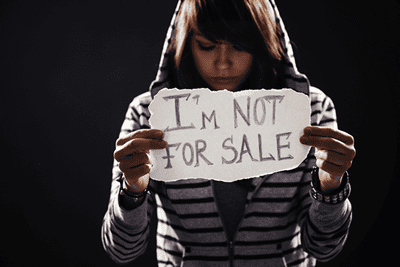
Young women slavery


"There are 541 million young workers (15-24 years old) globally. They account for more than 15 per cent of the world’s labour force and suffer up to a 40 per cent higher rate of non-fatal occupational injuries than adult workers older than 25.  They include 37 million 15-17 year olds in hazardous child labour."


This year, the World Day Against Child Labour (WDACL) and the World Day for Safety and Health at Work (SafeDay) shine a spotlight on the global need to improve the safety and health of young workers and end child labour. 

This year, the World Day Against Child Labour (WDACL) and the World Day for Safety and Health at Work (SafeDay) shine a spotlight on the global need to improve the safety and health of young workers and end child labour. 


Child slavery/ Haiti

The returns on the investment in ending child labour are incalculable. Children who are free from the burden of child labour are able to fully realize their rights to education, leisure, and healthy development, in turn providing the essential foundation for broader social and economic development, poverty eradication, and human rights.
"We must move much faster if we are to honour our commitment on ending child labour, and we need to do it together."

UN 


credits: ILO

Education:
Schools and other educational institutions make a special effort to inform children of their rights according to the Declaration of the Rights of the Child and the Convention on the Rights of the Child. 

Teachers and students worldwide are speaking out against child labour in the classroom and taking action to raise further awareness of this issue out school. 

They are spreading knowledge among their peers, acting as a voice for those children whose rights are not respected and calling on decision-makers to act urgently to protect children in danger. 


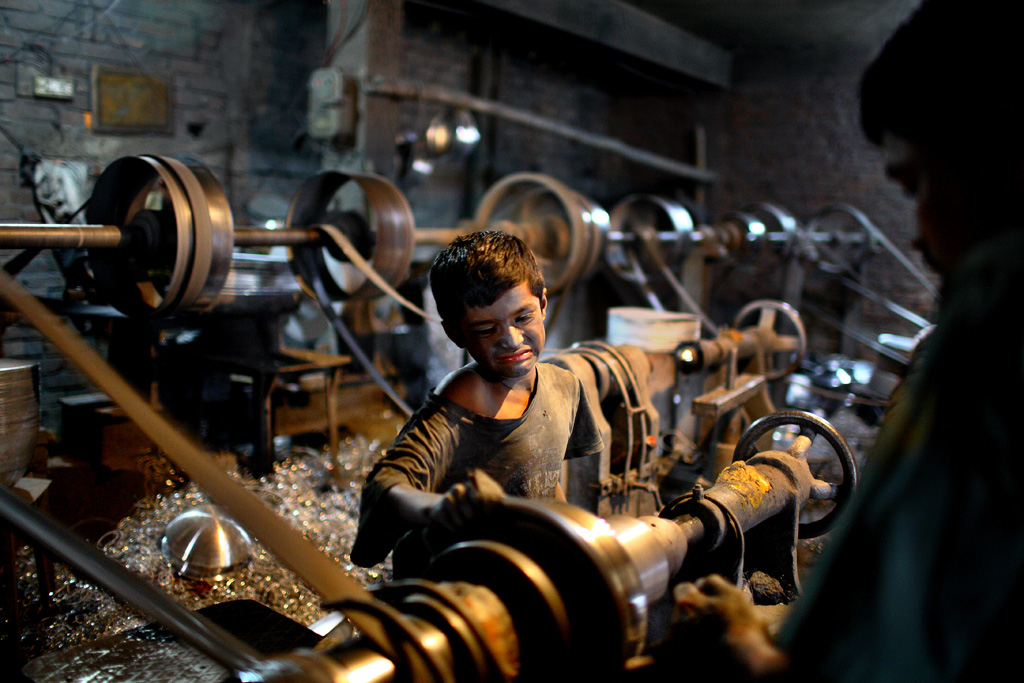
Child labour
credits: GMB Akash/ Bangladesh
ND Awards/ Angels in Hell

Teachers have a crucial role on the alert of poverty or child labour, modern slavery cases among their students.

Numerous resources can be included into school curricula to inform, inspire and motivate students of all ages, from primary school through university, on the subject of child labour, modern slavery and human trafficking.


Modern sexual slavery

Activities :

  • Display photos, news, videos on the theme in the classroom and invite the students to express their feelings about;
  • Explain younger students the symbolic of special days like this one.
  • Ask students to make a search on child labour in their own country, comparing with other countries, using tablets or smartphones;
  • Choose a wall in the classroom or another space in the school - school library is a good place - where students in a cross-curricular can display their depictions of child labour, modern slavery and human trafficking: works of art, photos, storytelling;
  • Organize an exhibition of photos or drawings on child labour, modern slavery in the classroom, school library, other spaces at school;
  • Ask students to set up information stands on the internet, social media (radio, television) or social networks (Twitter, Facebook, Instagram to raise school awareness on the issue;
  • Prepare a play at the school library written by your students. Invite parents, teachers, the maire and students from another school;
  • Present a film on this theme in the classroom or at the school library, and invite teachers, parents, and other students to a Round Table discussion;
  • Students can prepare brochures, flyers to hand out to other students, teachers and school community;
  • Make a film on YouTube (students are often Youtubers) joining authentic documents (photos) and texts written by the students.


2018 Generation Safe&Healthy


Other resources:


On the website ILO you will have some good material and you can find activities from all around the world.

  • Some thoughts:

Of course World Day Against Child's Labour is not for a lesson. As a teacher you will prepare the activity for 3-4 days, a week (it will depend on the activities you intend to develop and the level you are teaching). 
And what about the teacher role? We will facilitate the activities in the classroom. Teachers will organize the activities asking the collaboration of the students.
Since the role of the teacher has changed, more as a tutor or facilitator than a deliverer of content, you and I have the privilege of observe how students interact among classmates.
We will answer to questions, guide students with special needs, work with small groups, guiding the learning of the class and each student individually.
Teachers have time to roam around the class, noticing that students are developing their own collaborative work.   
It is magical to observe that ! And at the end you will have creative activities elaborated by the students.
When we interact with our students this way, they usually correspond to teachers expectations. They realize - it takes time - that we are there to guide them in their learning instead of being a classical educator.
Our students will participate actively in the World Day Against Child Labour  for sure, and they will become engaged young citizens.
They will understand how lucky they are to come to school every day. 

“Children are more vulnerable to risk than adults. Urgent action is needed to ensure no child under the age of 18 is in hazardous child labour,” 
Guy Ryder, ILO Director-General 


G-Souto

12.06.2018
Copyright © 2018G-Souto'sBlog, gsouto-digitalteacher.blogspot.com®

Creative Commons License