Showing posts with label Insafe. Show all posts

Monday, February 9, 2015

Schools : Safer Internet Day 2015


http://www.saferinternetday.org/

The 12th Safer Internet Day will be celebrated worldwide tomorrow Tuesday 10 February 2015.

Over the years, Safer Internet Day (SID) has become a landmark event in the online safety calendar. 
Starting as an initiative of the EU SafeBorders project in 2004 and taken up by the Insafe network as one of its earliest actions in 2005.

Aims:

Safer Internet Day (SID) is an annual celebration of a safer and better internet, where we aim to promote the many positive opportunities online while encouraging safe and responsible behaviour.

My students participated on Safer Internet Day 
since 2005. The activities were published on the website of the school. Since 2009, we have registered our participation on students' blog (mother language). And since 2010 in French curriculum (foreign language).


Over the years the INSAFE network has produced the biggest library of free resources on child online safety and security in the world. There are manuals, lessons plans, educational videos, serious games, open educational platforms, which exist in all EU languages and are adapted to the local contexts. 
They reach schools, parents, youth clubs and most importantly the kids themselves.
Safer Internet Day has grown beyond its traditional geographic zone and is now celebrated in more than 100 countries worldwide, and across all continents.
From cyberbullying to social networking, each year Insafe aims to be at the forefront of emerging online issues and select a topic reflecting current concerns. 

For SID 2015following the success of last year's campaign, the theme is once again


"Let's create a better internet together"


"It is the flagship event of the Safer Internet Programme supported by the European Commission, reaching millions of people in over 100 countries. On this occasion, schoolkids, parents, teachers, policy makers take time to learn, engage or discuss ways for creating a better Internet for kids. And this better Internet is #Up2Us!"

"Once again, all stakeholders – children and young people, parents and carers, teachers and educators, or industry and politicians – are invited to join SID2015 in marking the day and working together to build a better internet for all, but particularly children and young people."


European Commission


Join the global Safer Internet Day and find an activity for you!

Safer Internet Day is being celebrated across the world from Argentina to Russia, Mauritius to New Zealand. 

Digital Agenda for Europe selection of highlights kicks off in Australia, hops over to India and dwells for a little longer in Europe to showcase some activities organised by INSAFE the EU-funded Safer Internet network. Last, but not least, we skip across the Atlantic for Safer Internet Day USA

Go on the European Commission website and search for all the countries activities.


Ideas and inspiration for supporting SID:

  • Spread the word through the school, at home, with friends;
  • Host an event such as a conference on online safety in your school;
  • Arrange workshops in schools for students, parents, other teachers;
  • Orchestrate hangouts between young people and students from other schools; 

Safer Internet Day website showcases some of the exciting activities and events that are planned to celebrate the day. 

Click on the map below to get started, using the zoom control to locate the contacts and events in your country or visit the 'SID Near You' section to explore news from the many countries and institutions involved. 


Vsit the 'SID Gallery' to find great resources from across the Insafe network and beyond to help you teach eSafety all year through.

  • Safer Internet Day near you:
Browse the list below to find out how SID will be celebrated in your country in 2015.

If you would like to find out more about Safer Internet Day, contact the SID helpdesk at SID-helpdesk@eun.org or register online here.~

  • Interesting movies suggested on my blog past two years:

In 2012 and 2014 I proposed two special movies that I highly recommend to you as teachers : 

  • Disconnect, movie, (2014)
  • Trust, movie (2010)

Follow the links to:
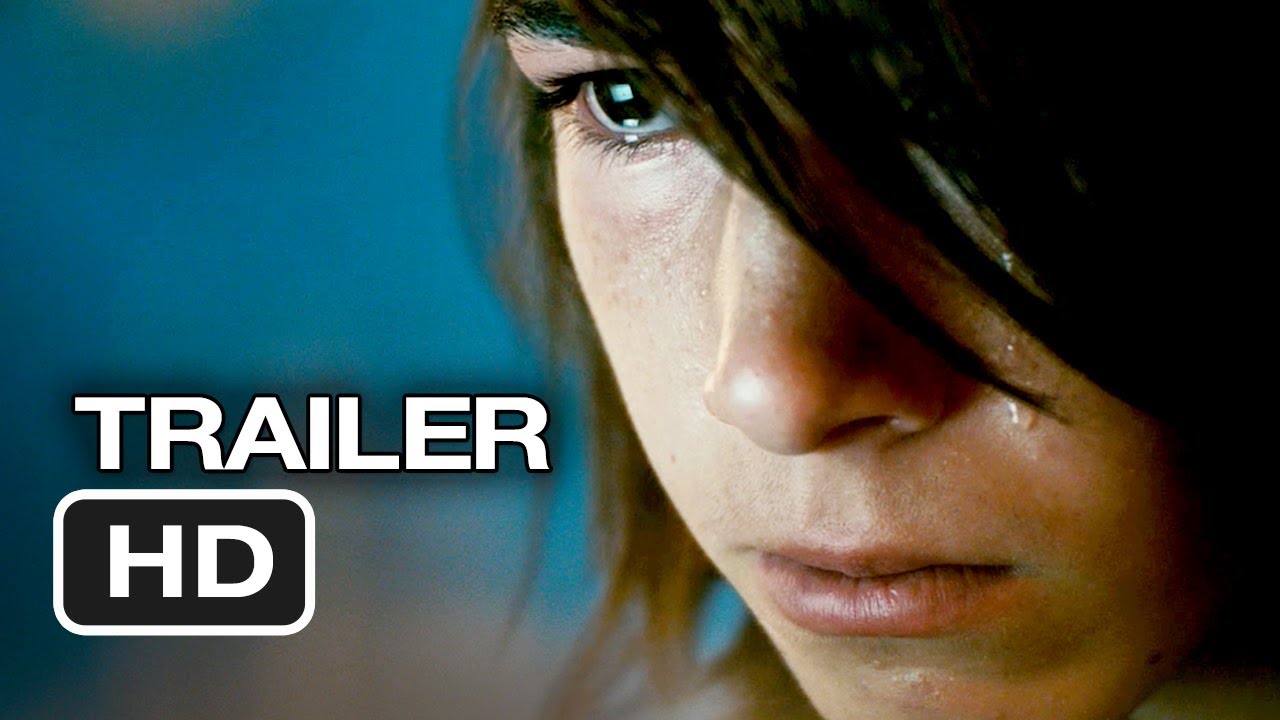


Disconnect, 2012

Disconnect is about cyberbullyng. Impressive movie about cyberbullying in school. 

The film explores how people experience the negative side of the "wired" communication technology by following three stories.

One of cyber bullying, one of a journalist making a story out of someone who makes a living by performing on an adult only website, one of a trust broken by scamming over a chatroom. 

To us as teachers or parents we want to stop on the first one: Ben, a young boy 'disconnected' who lives in his own world connected to music and the Internet.

Kids and young adolescents do need to be reminded that not everyone they meet in school or online is who they say they are. 


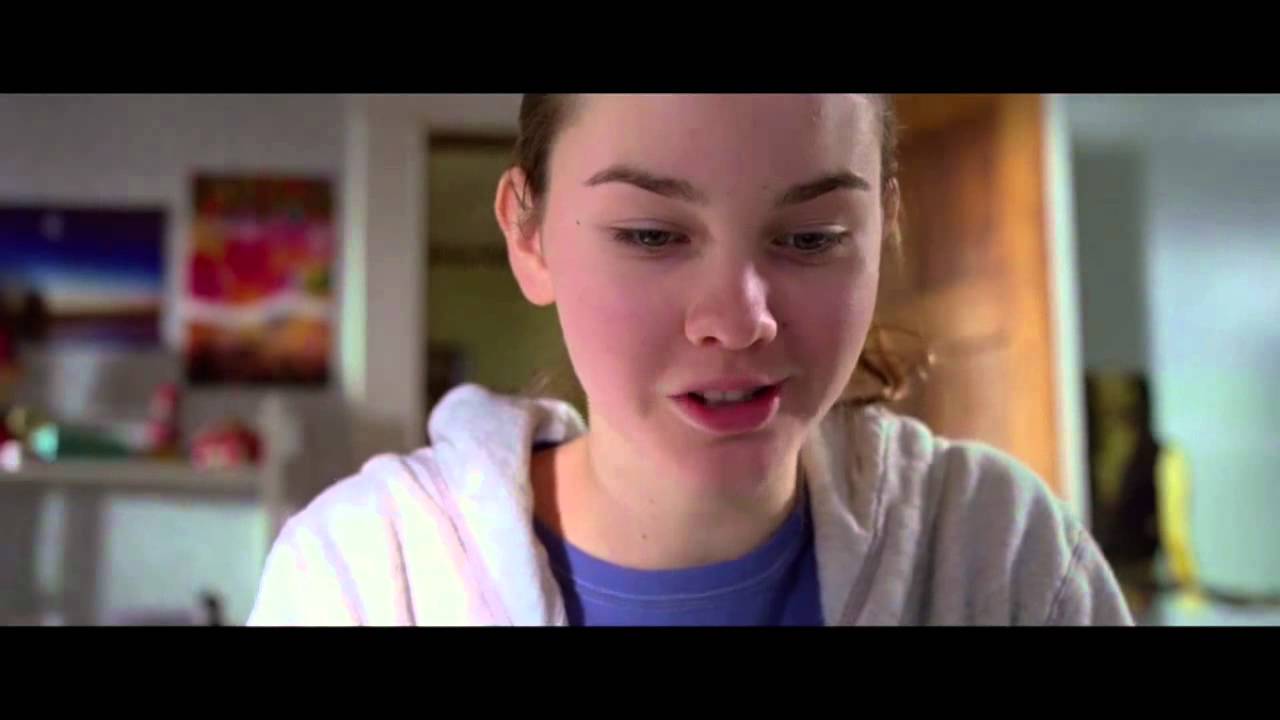
Trust is about safety on social networks. The story centres on Annie, 14 years-old girl who meets a 'boy' online who turns out to be a 'wolf' in teenage clothing. He is actually a 35 years old paedophile who grooms the young girls. It's about online sexual predators, a chilling cautionary tale about online sexual predators and the shattering fallout for a 14-year-old and her family.

On my two posts, you will find how to explore the movies in the classroom and some other resources.

  • Some resources by contry:

In UK a leading children's charity has launched a campaign highlighting the risks of social networking, aimed at young people and their parents.

It was introduced after many children were given smart phones, tablets or games consoles for Christmas.
Two animations has been shown on prime time TV and digital spaces, as part of the NSPCC's Share Aware campaign:


credits: NSPCC

I Saw Your Willy and Lucy And The Boy follow the stories of two children who share too much about themselves online.

Child Focus:
One of the key missions of Child Focus is prevention. This clip was made as an e-safety awareness campaign for children between 4 and 8 years. 

It's being aired on Belgian kids channels and will be distributed in other European countries too. Script & animation by CC.


credits : Child Focus

  • Digital resources:
Videos (kids)


Issues: Safe Internet Usage: Email, Chatting, Social Net, Downloading, Educational Video For Children


Issues: Online Identity & Knowing Who Are You Online?

If you use the computer to play and talk with friends, you also have an online identity. That means you have an identity that's related to how you look, what you do, and what you say when you're using the computer. 


Some thoughts: 

Children are growing up in a digital environment where technology is an integral part of their lives. The internet is their companion, sometimes more than their family, school and friends.

We must help our young students to be informed. We need to give them the skills to keep themselves safe online.  

Knowing how to sniff out trouble, knowing how to avoid it, and knowing how to handle it when it comes knocking are key essential life skills.

Very important! There’s always someone to help young people : teachers, parents, older brothers, grandfathers.

Whether we are children and young people, teachers, parents, educators or social care workers, we all have a part to play in making the internet a better and safer place to be, especially for the young.

There is always a place which anyone can use to report if they feel uncomfortable or worried about someone they are chatting to online.

As parents, search for latest information on websites your kids like to visit, mobiles and new technology. Find out what’s good, what’s not and what they can do about it. 

There are always areas on websites about safety if you look after young people, with resources that teachers and parents can use at home,  at school or just to get with it. 

Every teacher will work #SID2015 in differents ways thinking on their students (age and level).

Teachers will find a wealth of multilingual resources empowering young people, their teachers and their families to make the best possible use of online technology.

"SID is a space where leaders in the internet safety community can communicate with the public and exchange ideas, knowledge and experience with each other."

For a full overview of worldwide activities (updated for 10 February 2015): SID near you


  • SID & social media:

Connect with SID on the social media:


Facebook : https://www.facebook.com/SaferInternetDay

Twitter: @SaferInternetEU or @safeinternetday #SID2015 #Up2Us

G-Souto

09.02.2015

Copyright © 2015G-Souto'sBlog, gsouto-digitalteacher.blogspot.com®


Creative Commons License

Schools : Safer Internet Day #SID2015 bG-Souto is licensed under a Creative Commons Attribution-NonCommercial-NoDerivatives 4.0 International License.


Sunday, February 9, 2014

Education : Violence & cyberbullying at school : Disconnect, a film for teachers and parents


Disconnect 
Henri Alex Rubin, 2012


Disconnect/ Ben Boyd
Henri Alex Rubin, 2012

                                       
  • Disconnect: the film

Cyberbullying at school

However, I want to point a new film to discuss Safe Internet at school or at home.

Do you know Disconnect? Impressive film about cyberbullying at school. 

The film explores how people experience the negative side of modern communication on technology by following three stories.

One of cyber bullying, one of a journalist making a story out of someone who makes a living by performing on an adult only website, one of a trust broken by scamming over a chatroom. 

To us as teachers or parents we want to stop at the first story: Ben, a young boy 'disconnected' who lives in his own world just connected to music and the Internet.


Disconnect
Henri Alex Rubin, 2012


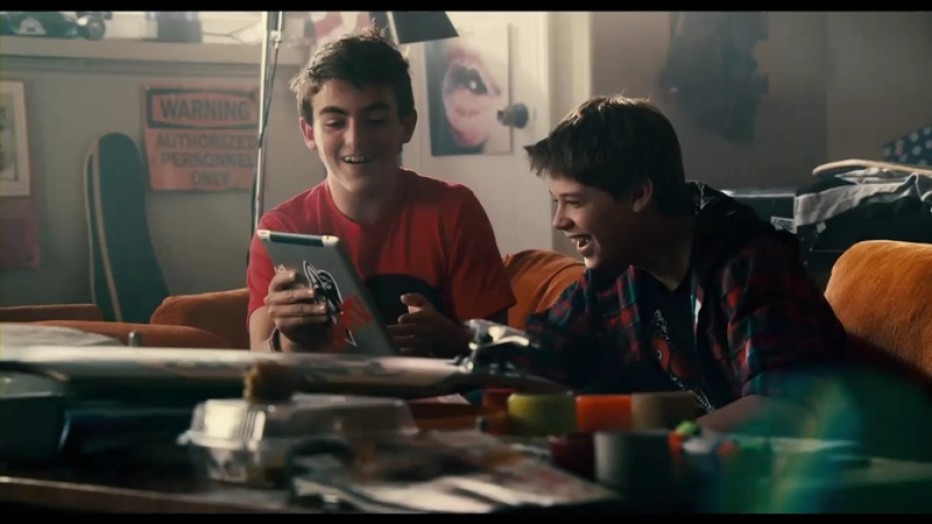
Two boys, Jason and his friend Frye who are in the same school with Ben, a teenager, impersonate a girl, "Jessica Rhony," on Messenger and convince Ben (the son of Rich, a legal counsel at the TV station where Nina works) to send a lewd picture of himself. 

The boys distribute the photo to classmates at school and the photo circulates to nearly everyone in their grade. Ben is so embarrassed by this cyberbullying that he attempts suicide and ends up in a coma. 


Sometimes, parents are paying attention to their kids, but they don't 'see' how they are growing up so fast or live completely disconnected from the real world.

School educators have also an important role on kids' safety online. With Ben, it was a bit difficult because he was a new kid on the block.

I watched Disconnect two months ago at the theatre. The film didn't surprise me as a teacher, because I know the reality in schools, but shocked me. I was prepared to the kind of terrific cyberbullying. Sometimes, parents are too busy to look around their own kids, but not for this kind of tragic end.


Disconnect
Henri Alex Rubin, 2012

Some important messages for kids, parents and teachers:

Parents, wake up! If your teenager spends hours glued to his phone or buried in his room on a laptop, this movie shows you just how at risk he or she really is.

Kids and young adolescents do need to be reminded that not everyone they meet in school or online is who they say they are. As parents, you might wonder whether what they are doing is safe or not.

Parents need to understand that it's important to stay in close touch with their kids' online use. Dialogue is very important, but it is not enough. 


Jason and Ben's father
Disconnect
Henri Alex Rubin, 2012

Some thoughts

  • Young people:

The story centers on Ben a freaky music nerd teenager searching for human connections in today's wired world.

Jason and Frye are a couple of smart-ass skateboard punks who target Ben for an extended online prank in which they pose as a fictional girl with a Facebook crush on Ben. They are two kids who live in a dysfunctional family. But Jason will be feel guilty, he is not a bad kid, and he goes to the hospital to have some news from Ben.

Kids and adolescents like to feel independent. However, they must have the skills since the younger age, for the safe use of Internet. So, at home, in school, they must be alerted and taught how important it is their safety online. 


Ben in his room on the internet
Disconnect
Henri Alex Rubin, 2012

The strongest is undeniably the cyberbullying story, since whenever technology and its dangers are mentioned, cyberbullying is always the first thing that crops up. The way this particular story is treated is almost perfect.

Cyberbullyng is the most disturbing behavior to kids and young people. Safer Internet Day is a good motivation to tell kids and teens to stay alert against this kind of acts.

Discussing these important issues in school curriculum, or at home will help them to avoid  risky activities.

As students participating in the different activities for Safer Internet Day, you will learn about dangers and you will develop the skills to keep safe when you are online.


Ben's family
Disconnect
Henri Alex Rubin, 2012

  • Parents:
The movie shows how it is done, how easily it's done, and then the fall-out from what happens. Parents feel completely lost.
Cyberbullying has a terrible impact on children and teens life. Look at Ben who attempts suicide and ends up in a coma. And of course pay attention to the whole family (Ben's parents, Jason and Frye, and his sister Abby who helps his 'mute' disconnected brother in his room, after his attempting suicide).


Disconnect
Henri Alex Rubin, 2012

We also need to understand that the internet is simply a place.  Somewhere your kids go to hang out. And if they were doing that physically, you would want to know where they were going and who they were going with.  Even they love to be alone in their own room listen some music.
Parents need to start asking the same kind of questions, when their teenagers are online, ignoring the one word 'nowhere' or 'no-one answers'.
Because just as when they head out the door, every time they go onto an online space, there are potential risks.  And while you cannot be there with them, you should at least attempt to satisfy yourself you know what they are doing in their own room.
Disconnect as well as Trust convey, at its best, is that ultimately parental protections are not full proof, and that is the greatest horror of all. 
  • Social message:
The film also shows how pervasive technology can be in teens and adults lives and also how dangerous society has become. The three stories on the movie are connected by the major role that technology plays in their crises, all of the characters involved feel a certain amount of disconnect in their real lives. 

Some thoughts: Teachers and Parents

Teachers help students to understand the safe use of Internet at school, it's a fact! But parents must pay attention at home and help too. Absolutely.
Children grow up, sometimes they are not very communicative in family or at school. They become more introspective. And it is only natural that they take this independence online. 
Parents and teachers have to instill in young people an ability to keep themselves safe. Resilience had gone out of fashion in child care lingo but actually it is vital. 

Kindergarten and preschool curricula must include lessons on modern technology, digital literacy, not only coding.

Introducing concepts of digital literacy in daily vocabulary and activities are essential. 

The participation of kids and young adolescents at Safer Internet Day is a good way to introduce or discuss safety on internet at school curricula and family dialogue.
If you and your kids or students watch the film, use it as a discussion starter, and remember, your 'kids are probably all right'. 

*Note: The film shows disturbing material involving the attempt of suicide of a teenager, sexual content, and some violence. 

You must think about level or age you are teaching before include the film into your course.


Disconnect 
Henri Alex Rubin, 2012


Trust
 David Schwimmer, 2010
https://www.imdb.com/

Disconnect like Trust have slipped mostly under the radar. Bit of a pity, really, when these two movies show us important lessons that young people, in particular, just aren't shown enough.

Good newaday instructional movie for modern day kids and young people who think that uploading some worthless picture makes someone care about you more.


You should watch this film. Please, do it. As a teacher, mother, father, or young adult.

Note that all of these conflicts and relationships are initiated through laptops, tablets and cell phones. People fall in love, exploit one another, reveal their deepest secrets and even commit felonious acts, all before there's a single face-to-face meeting. 

We're supposedly more informed and more sophisticated, and we're certainly more technologically savvy (at an increasingly younger age) than any generation in history.


The 11th Safer Internet Day will be celebrated worldwide next Tuesday 11 February 2014.

Over the years, Safer Internet Day (SID) has become a landmark event in the online safety calendar. 
Starting as an initiative of the EU SafeBorders project in 2004 and taken up by the Insafe network as one of its earliest actions in 2005.

My students participated since 2005, the activities were published on the website of the school. Since 2008, we have registered on my blog to students in Portuguese and on my blog to students in 
French curriculum since 2010.

Safer Internet Day has grown beyond its traditional geographic zone and is now celebrated in more than 100 countries worldwide, and across all continents.
From cyberbullying to social networking, each year Insafe aims to be at the forefront of emerging online issues and chooses a topic reflecting current concerns. For SID 2014, the theme is: 


"Let's create a better internet together"


SID hopes that, once again, "all stakeholders – be they children and young people, parents and carers, teachers and educators, or industry and politicians – will join with us in marking the day and working together to build a better internet for all, but particularly children and young people."


Education:
Teachers and parents know how important is safety for kids and teens.

We have an entire 'wired' generation. Children and young people are all day connected on their cell phones or tablets. At school, at home, on bus or just walking, even between friends. But adults too, now.

Must not forget the important alert made by Trust, a film about child exploitation on the Internet, even when parents think that their kids are prepared. In 2012, I pointed this film as an important resource to explore in the classroom for Internet safe.

This year, Safer Internet 2014 wants that both young and adults to join together in creating positive online experiences, to share knowledge and wisdom, but also to support each other when things might be risky or, indeed, go wrong. 

Some ideas and inspiration for supporting SID

  • Provide a free dialogue with students to think about the internet and their role as users in improving it for the future.
  • View videos above;
  • Engage students in a discussion about how the internet can be improved and what their role in this could be;
  • Create a leaflet;
  • Arrange workshops in schools;
  • Host an event such as a conference on online safety in your school;
  • Orchestrate debates between young people, parents and teachers;
You have several resources on SID 2014 website.


Finally, to be in touch with Safer Internet Day 2014, follow Facebook and Twitter campaign pages.

Register your school here. If your school is already registered, you certainly have the SID kit.
Don’t forget to make contact with your National Awareness Centre or local SID Committee to find out what else is going on in your country.

“Everyone has a role to play in making the internet a safer place that empowers and inspires young people”, 
Neelie Kroes, Vice-President of the European Commission

G-Souto

09.02.2014
Copyright © 2014G-Souto'sBlog, gsouto-digitalteacher.blogspot.com®

Licença Creative Commons

Education : Violence & cyberbullying at school : Disconnect, a film  for teachers and parents bG-Souto is licensed under a Creative Commons Attribution-NonCommercial-NoDerivatives 4.0 International License.