Showing posts with label inclusive education. Show all posts

Tuesday, October 5, 2021

World Teachers' Day ! Teachers at the heart of education recovery !


credits: Elyx Yak/ UN Virtual Ambassador

“To build a resilient teacher workforce in times of crisis, all teachers should be equipped with digital and pedagogical skills to teach remotely, online, and through blended or hybrid learning, whether in high-, low- or no-tech environments,” *

Today, we’re celebrating the leading role of teachers in providing quality education to futures generations. But we must also listen to their voices & make sure they’re adequately supported & empowered in their jobs.

Do you agree?
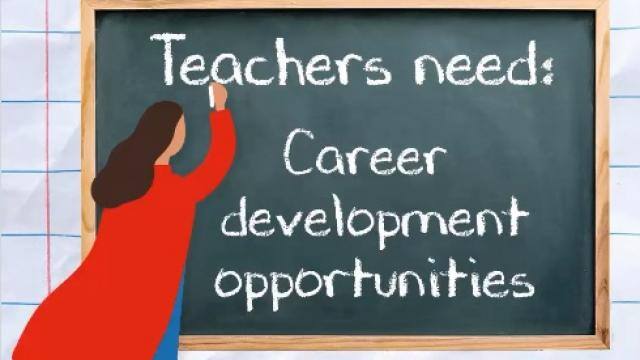


With over 63 million teachers impacted by the COVID-19 crisis, on World Teachers' Day, UNESCO urges increased investment in teachers for Learning Recovery

Celebrating the central role of teachers to support students during the COVID-19 pandemic, this year’s World Teachers’ Day (5 October) will highlight the need for better training, professional development and leadership skills to mitigate learning disparities and support inclusive education at all levels through the recovery and beyond.


  • World Teachers’ Day theme 2021:


"Teachers: Leading in crisis, reimagining the future" 


A joint survey by UNESCO, UNICEF and the World Bank on responses to COVID-19 found that only half of all countries surveyed offered additional training on distance education for teachers, and fewer than one-third offered psycho-social support to help them handle the crisis.


  • Some information: 


World Teachers’ Day is held annually on 5 October to celebrate all teachers around the globe.  It commemorates the anniversary of the adoption of the 1966 ILO/UNESCO Recommendation concerning the Status of Teachers, which sets benchmarks regarding the rights and responsibilities of teachers, and standards for their initial preparation and further education, recruitment, employment, and teaching and learning conditions. 


Warning that “without urgent action and increased investment, a learning crisis could turn into a learning catastrophe,” UNESCO Director-General Audrey Azoulay, UNICEF Executive Director Henrietta Fore, ILO Director-General Guy Ryder, and Education International General Secretary David Edwards call in a joint statement for the protection of education financing, investment in high-quality initial teacher education, as well as continuing professional development. 


“To build a resilient teacher workforce in times of crisis, all teachers should be equipped with digital and pedagogical skills to teach remotely, online, and through blended or hybrid learning, whether in high-, low- or no-tech environments,” reads the statement. 


The statement recognizes the impact of the COVID-19 crisis which has affected over 63 million teachers, highlighted persistent weaknesses in many education systems and exacerbated inequalities.


One and a half years into the COVID-19 crisis, the 2021 World Teachers’ Day will focus on the support teachers need to fully contribute to the recovery process under the theme “Teachers at the heart of education recovery”.   


Teachers  are  a  cornerstone  of  quality  education  systems  and  play  a  key  role  in  building  inclusive  and  equitable  societies.  While  the  deadline  to  achieve  the  Sustainable  Development  Goals  is  less  than  a  decade away, COVID-19 has the potential to undermine efforts and reverse progress. 


credits: Elyx Yak/ UN Virtual Ambassador


To support sustainable education recovery, teachers must be placed at the centre of all efforts. Closer  monitoring  of  the  global  teacher  targets  (SDG  4.c)  is  central  to  achieve  this.  


While indicators  of  teacher quantity and quality remain important, more efforts are needed to understand teacher training programmes and qualifications, as well as support provided to teachers, including pedagogical, health and safety, psychosocial well-being and compensation. After all, the social standing and improvement of the profession depend heavily on these factors.


Despite global recognition of the importance of teachers in changing children’s lives and building sustainable and prosperous societies, they are all too often undervalued and under-empowered.
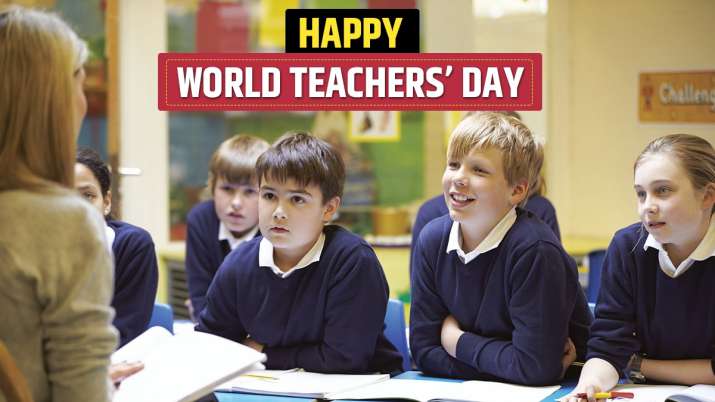


My thoughts:

"The COVID-19 pandemic had significantly added to the challenges faced by already over-extended education systems throughout the world. It is no exaggeration to say that the world was and still is at a crossroads and, now more than ever, we must work with teachers to protect the right to education and guide it into the unfolding landscape brought about by the pandemic."

Teachers were often undervalued and under-empowered. But the Covid-19 pandemic demonstrated how important teachers are to help students to enhance learning in-person. 

The COVID-19 pandemic has significantly added to the challenges faced by already over-extended education systems throughout the world. It is no exaggeration to say that the world is at a crossroads and, now more than ever, we must work with teachers to protect the right to education and guide it into the unfolding landscape brought about by the pandemic.

I was a teacher for 30 years in Secondary education. The first students I taught are now teachers, doctors, lawyers, engineers, journalists. Others quit higher education and preferred to follow further education and they are excellent professionals on their work.

It is such a mixed feeling of pride and joy to think on my students as young adults. I remember every new school year, the new students, their fears and joy. I was excited every year and prayed to be the best teacher for all of them, to be able to satisfy the needs and expectations of every student, no matter their capacities.

Later and now I'm a trainer and e-trainer helping new teachers to love teaching.

I'm happy of my career as a teacher and e-trainer. Every year new group students and trainee teachers. They came from different backgrounds, cultures, and had different experiences to share with me and classmates.

Today, I'm still teaching online. And I write on my blog to share some pedagogical experiences and educational resources with new teachers around the world. 

"Teachers are the key in changing children's lives and building sustainable and prosperous societies."

I'm proud to be a teacher.

"An education system is only as gog as its teachers"

G-Souto 

05.10.2021
Copyright © 2021G-Souto'sBlog, gsouto-digitalteacher.blogspot.com®

*UNESCO Director-General Audrey Azoulay, UNICEF Executive Director Henrietta Fore, ILO Director-General Guy Ryder, and Education International General Secretary David Edwards call in a joint statement


Creative Commons License
World Teacher's Day : Education is our goal bGinaSouto is licensed under a Creative Commons Attribution-NonCommercial-NoDerivatives 4.0 International License.


Saturday, July 28, 2012

6th edition of the Global Junior Challenge 2012


Video of the fifth edition of the Global Junior Challenge 2009
Credits: GJC

The Global Junior Challenge is the international competition that rewards the innovative use of technology for the education of 21st century and the social inclusion. 

Promoted by the Municipality of Rome the GJC is hosted every two years by the Fondazione Mondo Digitale under the High Patronage of the Italian Presidency and the sponsorship of the Italian Foreign Affairs Minister.


Rome, Campidoglio

The GJC is a unique opportunity to reflect on the importance of the challenges posed by 21st century education and the role of technology in didactic innovation, social innnovation, development and the reduction of world poverty.

This year there will also be other special categories, a novelty for the 2012 edition: “ICT for the integration of migrants and refugees” in collaboration with the United Nations Alliance Civilization (UNAOC), “ICT for sustainable environmental development” in partnership with Legambiente.


The Global Junior Challenge is an international competition rewarding the most innovative projects for the Education of 21st century and the Social Inclusion.

The competition, promoted by the City of Rome, and organized by the Fondazione Mondo Digitale, is held every two years.

The Global Junior Challenge takes place within the context of Italian Digital Agenda and Europe 2020. More precisely, the aim of the Global Junior Challenge is to encourage young generations and their teachers to use of the new technologies, exchange experiences and emulate successful initiatives. 


To me GJC was an important moment of my life as an innovative educator and author of Digital Open Resources to my students, in Secondary education (High Junior School).


In 2004, I participated at Global Junior Challenge and submitted my e-learning project Kidzlearn Lugares & Aprendizagens.


When I received an email from Silvia Celani, responsable of Global Junior Challenge telling me tha my e-learning project, Secondary education, Kidzlearn Lugares & Aprendizagens  was among the finalists projects. 

And she invited me behalf the Global Junior Challenge to go to Rome to present my project at the exhibition of the Finalist Projects at Palazzo dei Congressi in Rome to share my pedagogical and innovative experience with thousands of students and their teachers.


 Palazzo dei Congressi/ Roma
http://upload.wikimedia.org/wikipedia/


Kidzlearn Lugares & Aprendizagens was a finalist project on the category up-to 15 years old.


Stand 473: Gina Souto
Global Junior Challenge 2004
at Palazzo dei Congressi, Roma


Never forgot the stand 473Kidzlearn Lugares & Aprendizagens – PORTUGAL just in front of the great door that opened every day to thousands of Italian schools students and teachers to visit us.

They were absolutely amazing! Asking for details, testing the activities on Kidzlearn Lugares & Aprendizagens, asking, choosing, doing, laughing and learning languages online trough educational free open resources created for me to young students. 

Teachers was so curious, asking me how my students work online in the classroom or after school time, at home. They were surprised and so motivated.

At the final ceremony,  I was very proud of my work! You can read my chronicle here (Portuguese language). 


elearning project | Secondary Education
Gina Souto, Author


Kidzlearn Lugares & Aprendizagens was the first project for Secondary Education using ICT to enhance Languages curriculum, Portuguese, French foreign language.


You want yo know how it started? Read the entire experience on "Le défi d'un apprentissage pris à coeur" on  Ã‰duFLE.net an educational network in French. You can also read on my blog (French Language).


The first online learning experience for my students used in formal and informal learning, complementing the school curricula in a blended learning process.


Later, a lot of French teachers or educators teaching French and Portuguese as foreign languages use Kidzlearn Lugares & Aprendizagens in their lessons

 with success. They wrote me telling me their good experiences.


Kidzlearn Lugares&Aprendizagens


"Kidzlearn Lugares&Aprendizagens offre agli studenti la libertà di scegliere l’attività o le attività a seconda dei loro interessi o ritmi di apprendimento, indipendentemente dal luogo, dalle ore e dal momento. 

Nel dopo scuola o senza andare a scuola, nel contesto di un corso di francese or portoghese o semplicemente per piacere, gli studenti più giovani possono apprendere una lingua divertendosi o anche per superare le difficoltà che incontrano durante i corsi ufficiali. 

Nello stesso tempo, non sono soli, ma in contatto con l’insegnante in classe. Se non si tratta di miei studenti, possono contattarmi per e-mail o attraverso Messenger (gli orari sono elencati nel mio sito web). 

Come ho avuto modo di scrivere nell’editoriale, abbiamo dato luogo ad una pedagogia comprensiva per questi studenti che hanno problemi di apprendimento e, senza volerlo, siamo arrivati a praticare questo tipo di metodologia in relazione agli studenti che presentano un ritmo di apprendimento molto rapido. 

Inoltre, ho introdotto una motivazione allo studio della letteratura, presentando dei testi e degli autori a questa fascia d’età. 


Kidzlearn Lugares&Aprendizagens | FrançaisLE

Kidzlearn Lugares&Aprendizagens si deve totalmente al mio coinvolgimento e alla mia passione per l’insegnamento e anche alla mia creatività e volontà di avvicinare maggiormente i miei studenti. 

Il mio progetto è nato dall’osservazione diretta in classe, che spesso vede la concomitanza di lingua madre e lingua straniera, all’interno della quale gli studenti superdotati si vedono spesso obbligati a seguire i ritmi di apprendimento di studenti con problemi. 


Kidzlearn Lugares&Aprendizagens | Portuguese
Cartoon: Cristina Sampaio

Senza pensarci, si è partiti da una nuova pedagogia, questa volta esclusiva. Questi studenti hanno un ritmo di apprendimento molto più rapido rispetto al gruppo o alla classe. Ho dedotto che dovessi occuparmi di questo problema, e che dovessi occuparmi di loro proprio nei momenti in cui si vedevano un po’ messi da parte mentre dedicavo maggiore attenzione agli studenti in difficoltà. 

Da qui, l’idea di concretizzare delle attività complementari ai corsi di lingua madre prima, e poi dal 2001, di lingua francese

Posso proporre delle attività in classe ad uno o due studenti, mentre gli altri lavorano in maniera diversa, secondo la specificità del loro livello di apprendimento o le loro difficoltà. Quindi, ognuno dei miei allievi lavora secondo il proprio ritmo o gusto. 

Kidzlearn Lugares&Aprendizagens presenta un ulteriore vantaggio: gli allievi possono seguire delle attività nel dopo-scuola, a loro scelta e inviarle per e-mail. Allo stesso tempo, possiamo lavorare con Messenger (gli orari sono elencati sul mio sito), a seconda delle capacità o delle difficoltà, avendo indicazioni e suggerimenti, e potendo contare sulla correzione della pronuncia in rete (conversazione in diretta) ."

So, as you see, you must not lost this incredible opportunity to show your educational project to the world.
Education:

The 6th edition of the Global Junior Challenge is a unique opportunity for teachers and students to reflect on the significance of digital literacy, whilst exposing them with to the vast range of high quality solutions proposed by other youth from around the world.

The GJC competition is open to everyone: associations, public and private institutions, cooperatives, schools, universities, companies and individuals of any age from all around the world.

Registration:

Registration has been extended to July 31, 2012. You can enter your project here 


Rules:

All projects that were still in operation as of December 31, 2011 and addressed to youth up to 29 years of age and which use new ICT technology for education and training.

Read more here

Award Ceremony:

The programme for the 6th edition of the Global Junior Challenge, the international competition that rewards the innovative use of technology for 21st century education and digital inclusion.

It will take place in Rome, 17-19 October 2012. 

Program can be read here


«Les langues sont comme la mer, elles oscillent sans cesse.»


Victor Hugo


G-Souto

28.07.2012
Copyright © 2012G-Souto'sBlog, gsouto-digitalteacher.blogspot.com®

Licença Creative Commons
6th edition of the Global Junior Challenge by G-Souto is licensed under a Creative Commons Attribution-NonCommercial-ShareAlike 3.0 Unported License.


Wednesday, February 22, 2012

A world without words ? Mother Language Day !


UN

"Linguistic and cultural diversity represent universal values that strengthen the unity and cohesion of societies. The recognition of the importance of linguistic diversity led to UNESCO’s decision to celebrate International Mother Language Day."

Yesterday, February 21 we celebrated the International Mother Language Day 2012

International Mother Language Day has been celebrated every year since February 2000 to promote linguistic and cultural diversity and multilingualism. 

This year, the theme of the International Mother Language Day was "Mother tongue instruction and inclusive education"

UNESCO highlights the importance of mother tongue as part of the right to education and is encouraging its member states to promote instruction and education in the mother tongue.

Languages are the most powerful instruments of preserving and developing our tangible and intangible heritage. So, I think it always important to spread this message.


Linguistic diversity is our common heritage. It is fragile heritage. Languages matter, remember my post last year? There, I wrote some important messages about the minority languages.


Of the 7,000 or so languages spoken on Earth in our days, about half are expected to be extinct by the century's end. They are threatened by cultural changes, ethnic shame and government repression.

But in these last times, researchers tell us that technology and internet are allowing many languages to increase audience.

"Globalisation is usually blamed, but some elements of the 'modern world', especially digital technology, are pushing back against the tide." The explosion of the techonologies to make transmission possible is helping.

Dr Colette Grinevald, for example  refers Skype as a technology that makes distance teaching through listening and learning.

Dr Colette Grinevald of the University of Lyon (France) is a pioneer in endangered languages. A Harvard Ph.D. in linguistics and UNESCO expert, she worked as a linguist in the USA for 30 years with many field trips to Latin America to document, defend and promote endangered languages and the people who speak them. She has an interesting interview "Speaking your mother tongue is not a disability! that you can read here


© iStockphoto.com | UNESCO 
promotes linguistic diversity and multilingualism

Some Questions:

  • Can Digital tools save languages? 


Vanishing languages spoken by only small groups of people around the world, can be saved from extinction by  technology as Skype or social networks as Facebook?

On an interesting article, BBC presents the opinion and research of Dr K David Harrison, an associate professor of Linguistics at  Swarthmore College:

"Facebook, YouTube and even texting will be the salvation of many of the world's endangered languages, scientists believe." Yes, it can be so! 

Technology is allowing many languages to increase audience by establishing a presence on YouTube, social network sites like Facebook, Twitter and text messaging.

"Small languages are using social media, YouTube, text messaging and various technologies to expand their voice and expand their presence."

Globalisation exerts negative pressures on small cultures to assimilate. But there is a positive effect of globalisation: you can have a language that is spoken by only five or 50 people in one remote location, and now through digital technology that language can achieve a global voice and a global audience, he explained.


© Xinhua | UNESCO
A young student learning Tibetan language in a primary school in the District of Dagze, in the Tibet Autonomous Region

Education:

"You need to make the language cool for young people."

K David Harrison

No doubt! This is why I used Facebook, Twitter, blogs, text messages in my school curricula. Students used them often and they felt near their way of communicating.

We used text messages to interact about school homeworking when they needed some explanation about grammar, vocabulary, poetry or other subject of the languages curriculum (mother language and foreign language).

All the methods are pedagogical when well understood by students and the results are positive.

Dr Harrison spoke about North American tribes use social media to re-engage their young. See? Why not us?

Please listen the interesting podcast here.

Dr Grinevald also said: "People confuse the written form as being the “true form” - in other words if it's not written it can’t be a language. In fact the natural state of languages is the spoken word. 
Real life is really speaking and listening. We have to face the fact that new technologies can give accessibility to all knowledge."

"Linguists came in and labelled our language moribund, meaning it was heading for the ash heap of history; and our tribal people and our council decided that wasn't going to happen. So we devised a plan to go forward to start teaching our dialect here in the Siletz Valley," 

Dr. Harrison

Dr Harrison says not all languages can survive, and many inevitably will be lost as remaining speakers die off. But he believes the new digital tools do offer a way back from the brink for a lot of languages that seemed doomed just a few years ago.

Ensuring the preservation of languages can improve the quality of education, maintain cultural diversity and support nation-building. However, implementing an educational reform for bilingual education on a national scale can be challenging. 

Helena De Moraes Achcar talks about the example of Bolivia, where an educational reform encouraged intercultural bilingual education in the rural areas, while urban areas were not incorporated into the educational policy.

Speaking one’s mother language is a right that not everyone can take for granted, especially in places where local, mother tongues are threatened by more dominant languages. Today, bilingual education programmes worldwide illustrate how discussions about “mother languages” must include the “other languages”. SOAS Radio, UNESCO’s partner from the University of London’s School of Oriental & African Studies provides global perspectives on the debate.   

Listen in  : Arabic  | English| Mandarin | Portuguese (Brazil)


Some conclusions:

"With today's technology every corner of the world is linked together. The  new generations are globalized."

Technology is allowing many languages to increase audience by establishing a presence on YouTube, social media sites like Facebook and Twitter and text messaging.

Linguists have also unveiled eight new "talking dictionaries" as part of a project to save thousands of ancient tongues from extinction.
The digital dictionaries feature more than 32,000 written words and, 24,000 audio recordings taken from native speakers from remote corners of the world.
The talking dictionaries initiative from National Geographic Society's Enduring Voices project is an attempt to prevent these ancient languages being forgotten.

"What we do with technology is try to connect people," (...) "All of it is to keep the language."
Prof Noori 
"Nelson Mandela once said that “if you talk to a man in a language he understands, that goes to his head. If you talk to him in his language, that goes to his heart."
Irina Bokova, Director-general UNESCO

G-Souto

22.02.2011
Copyright © 2012G-Souto'sBlog, gsouto-digitalteacher.blogspot.com®

Licença Creative Commons
A world without words ? Mother Language day ! by G-Souto is licensed under a Creative Commons Attribution-NonCommercial-NoDerivatives 4.0 International License.

References:

Colete Grinevald | "Speaking your mother tongue is not a disability!  
Irina Bokova, Message on the ocasion of IMLD 2012

SOS Radio