Monday, April 12, 2010

Alice in Wonderland, a video game for young kids at school ?


Alice
Nintendo DS

Here we are again talking about Alice in Wonderland, the fantastic movie by Tim Burton

Alice In Wonderland is a 2-D side-scrolling platform adventure whose primary focus is puzzle-solving. 

To track down the items Alice needs, her allies embark on a search through the different levels of Wonderland. 

Now, I would like to let you know my opinion about this Nintendo DS game Alice for young kids (7 years-old, primary school). 

Features: 
  •  Join Alice and help her fulfill destiny

  • Play as multiple characters with special powers
  • Explore worlds, solve puzzles, engage in combat

In the role of the White Rabbit, the Cherishe Cat or the Mad Hatter's, the player must save Alice, threatened at any time by the Red Queen.

Each character that you play uses his special power to change the game: the Rabbit can speed up forward or accelerate time, the caterpillars Absolum stretches to reach inaccessible places.


Alice
Nintendo Gameplay Images

Alice is a target that must not give an inch, or she will be taken by a Vortex or hit by a slap from a giant flower. Because, if we let Alice alone too long or standing still, she tends to be spotted or vanish.

The path you take to browse wonderland is full of bad guys, obstacles and puzzles to solve. 

Education: 

Do not expect a game of intense reflection. Every action you make is almost suggested by a subtitle. It's entertaining... for kids, don't forget! Not for adults.


Alice
Nintendo Gameplay Image

Some negative points: 

The dialogues are, sometimes, very long. The game is on flash-drive wich requires an adjustment period.


Visual side: 

While the design of the Wii version is highly developed, that of the DS is much more simplistic.


Very dark graphics throughout with touches of color, typically "Burton",  and validated by Tim Burton himself. 

The landscapes are gothic, sometimes psychedelic. A sure choice of the creators, but it works very well!


A fun game, designed especialy for children. A special mention to the originality of the graphism. 

Note:

Teachers must pay attention to these critical thoughts before exploring the game in the classroom.

Target :  Primary education / 7 years-old.

Distributor: Disney Interactive Studios

The DS game is available since 2 March 2010 


Update: May 20, 2014, the Nintendo Wi-Fi Connection service for Nintendo DSi and Wii systems has been retired. 

Online features of this game are no longer available after this date but this game still provides an entertaining experience in offline mode.

G-Souto

12.04.2010
Copyright © 2010G-Souto'sBlog, gsouto-digitalteacher.blogspot.com®


Licença Creative Commons
Alice in Wonderland, a video game for young kids at school ? by G-Souto is licensed under a Creative Commons Attribution-NonCommercial-ShareAlike 3.0 Unported License.

Monday, April 5, 2010

Games can make a better world? Let's start in school


credits: Sean Gallup/Getty Images

There are teachers introducing games in schools curriculum. But not so many as it would be suaitable. Playing is funny and students can learn with pleasure.

Jane McGonigal says that if  we playing, the world could be a better place. So, let's start this wonderful idea at school!

Watch her video and make your own conclusions!


"Reality is broken and we need to make it work more like a game."

Jane McGonigal


Interesting, don't you think? Let's start games in school!


G-Souto

05.04.2010


Copyright © 2010G-Souto'sBlog, gsouto-digitalteacher.blogspot.com®


Licença Creative Commons
Games can make a better world? Let's start in school by G-Souto is licensed under a Creative Commons Attribution-NonCommercial-ShareAlike 3.0 Unported License.
Credits: video TEDTalks

Sunday, March 14, 2010

Enseignants : Ah ! Les jeunes ! Un livre à réfléchir !


Parce que ça nous plaît
l'invention de la jeunesse
Joy Sorman/ François Bégaudeau
Larousse, mars 2010

"Ils avaient 9/10 ans, lisaient très peu, mais ils étaient très intelligents, vifs, hyperactifs, bavards, circulaient dans les couloirs sur des baskets à roulettes, écrivaient des SMS @ka à la vitesse de la seconde sur les touches de leurs portables, écoutaient la musique sur mp3, se servaient de l’ordinateur avec une aisance incroyable et papotaient sur Messenger ou Hi5 en faisant leurs devoirs en communautés..." j'ai écrit à L'Apprentissage au rythme 'native speaker' en 2006.

On est en 2010! On écoute que les jeunes sont " incultes, insolents. Leur culture est affligeante: jeux vidéo stupides, rap ultra violent, iPod en permanence sur les oreilles… Ils sont obsédés par les marques, ne savent plus écrire le français, ont des comportements autodestructeurs…"

Je fais un discours tout à fait contraire à ces commentaires ou opinions, moi!

Les jeunes sont intelligents, ils ont une culture toute propre, essaient de profiter de ce temps de la vie et ils aiment suivre l'actualité.

La culture jeune d'aujourd'hui est contestataire, mais  elle l'était dans notre temps. Les valeurs ont changé, c'est tout!


Sur des bancs, sur des marches, sous des abribus, dans des caves, elle se retrouve, se regroupe, s’agrège, fait bloc. Pour quoi faire ? Rien d’autre qu’exercer et actualiser sa jeunesse.

Tout ça à propos de quoi? D'un livre qui vient de sortir chez Larousse signé par Joy Sorman et François Bégaudeau ancien professeur de français, auteur et acteur du film Entre les Murs, Palme d'Or 2008 au 61e Festival de Cannes, sélectionné par l'Académie des arts et sciences du cinéma pour l'Oscar du meilleur film en langue étrangère.


Sur ce livre, les auteurs font une défense très illustrée de la culture jeune : 


SMS en « ortograf fonétik », Skyrock, Tecktonik (que de « k » !)… Il ne s’agit pas pour eux de faire preuve d’un optimisme béat, mais de nous amener à nous poser quelques questions. Une démarche iconoclaste, menée avec humour et amour, selon Patrick Williams.

De nos jours, une majorité d’adultes, psys, professeurs (pas tous, heureusement), parents, intellectuels, passent leur temps à se lamenter sur cette jeunesse qui, décidément, « fout le camp », continue-t-il.

L'évolution de l'école est là depuis une dizaine d'années, quand la première génération Millenium est arrivée! Mais on continue à penser l'enseignement comme quelque chose de très académique et gare aux professeurs qui osent passer au-delà de cette atroce frontière. Ils sont mis de côtè par ses collègues.

Il faut modifier certains programmes, clament ces profs! Quand? Comment?

Ce sujet  me passionne, depuis 2000. J'ai fait tout un chemin solitaire! J'ai repensé les matières de mes cours, les sujets abordés, en y ajoutant l'analyse quotidienne de l'actualité. Les jeunes adorent ça et moi aussi. C'est ça la vie. On apprend avec tout ce qui nous entourent. 

Ça donne du travail! Ça exige une profonde recherche et exigence. Mais, on voit les résultats pédagogiques.


landing preview/gmail

J'ai ainsi osé adapter les curricula aux intérêts des jeunes, mes élèves, et j'ai introduit le numérique dans les cours de langues et littérature à partir les années 90: blogs, email, messenger, mp3, iPods, réseaux sociaux. 


Apple

J'ai senti l'enthousiasme des "N-Gen" quand le Web 2.0 fut introduit dans mes cours faisant partie de la discipline. J'avais bien compris! Les jeunes apprennent d'avantage les matières pédagogiques quand on approche l'école de leur vie.


I think it's very important create new curricula crossing traditional pedagogy and digital tools for digital natives if we want keep them focus on school time!

Digital Teachers versus Digital Schools

Donc, revenons à ce livre dont les idées sont complémentaires de celles que je pratique en cours.


Entre les murs. scénario

"Mais disons que nous essayons de démontrer que la culture jeune est une invention très récente (années 50 en gros). Et que cette culture est désirable, portée sur le plaisir, le corps. Nous répondons aux intellectuels dont le sport préféré est de décrier la jeunesse. Nous disons que cet affrontement est fatal, car le jeune, au sens large, représente tout ce que déteste l'intellectuel : bruit, mobilité, oubli, désinvolture, rien-à-branlade.
Je préfère réfléchir à la subversion. Qu'est-ce qui est subversif ? Je vais vous surprendre, mais je dirais la joie."

François Bégaudeau

"Penser la jeunesse, c'est se frayer un chemin parmi des discours, nombreux et forcément approximatifs, qui s'articulent autour d'elle. Discours lyriques, souvent. Au prix d'une sorte de lapalissade, la jeunesse est exaltée comme le moment de perfection de l'individu"

Joy Sorman/ François Bégaudeau, 'Parce que ça nous plaît, L'invention de la Jeunesse', extrait
Larousse, mars 2010


À lire, avec plaisir!

G-Souto

14.03.2010
Copyright © 2010G-Souto'sBlog, gsouto-digitalteacher.blogspot.com®

Licença Creative Commons

Monday, March 8, 2010

International Women's Day :Blessures de femmes


Viviane Reding
VisualC
European Commissioner for Justice, Fundamental Rights and Citizenship
Viviane Reding, vice-présidente de la  Commission européenne (chargée de la justice et de l’égalité des sexes) n’y va jamais de main morte pour défendre les femmes. Elle a dernièrement mis la pression sur l’Organisation des Nations Unies pour qu’elle nomme enfin une représentante à la tête de sa « super agence » consacrée aux droits des femmes.

Elle.fr/Société

The European Commission reaffirmed its commitment to equality between women and men with a "Women's Charter."

"I am particularly proud to be in charge of putting in place a comprehensive and effective policy framework to combat gender-based violence," said European Commission Vice President Viviane Reding. "Gender-based violence is a violation of fundamental rights, in particular human dignity, the right to life and the right to the integrity of the person."


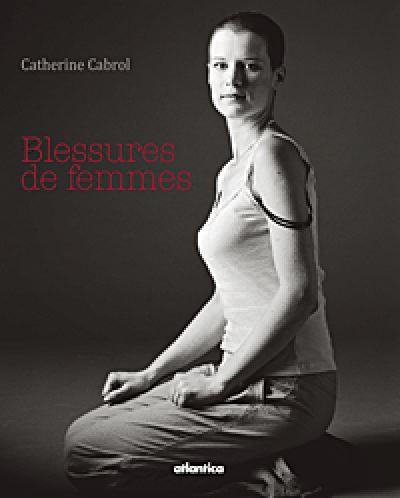
Blessures de femmes
Catherine Cabrol
Editions atlantica-Séguier, novembre 2009

Un recueil de portraits photographiques et de témoignages écrits de femmes qui ont subi des maltraitances.

Travail conçu et réalisé par Catherine Cabrol a volontairement été construit dans la diversité, sous le signe de la vérité, de la dignité et du respect de la vie des femmes.

Catherine Cabrol exposera également ses photographies à l’occasion de l’exposition "Violence contre les femmes : le Parlement européen s’engage" du 8 au 19 mars 2010.*


Exposition Blessures de femmes
Catherine Cabrol


G-Souto

08.03.2010
Copyright © 2010G-Souto'sBlog, gsouto-digitalteacher.blogspot.com®

References:

*Exposition: "Violence contre les femmes: le Parlement s'engage"
288, Boulevard Saint Germain, 75007 Paris


Sunday, February 21, 2010

Schools : Alice in Wonderland by Tim Burton & other films in the classroom


Cellphones in School


Games and Digital Resources in School are an important and serious goal in the 21st century focus on the changing face in Education, I wrote on Digital schools versus digital teachers

Let's talk about another important digital resource: 

  • Films in the classroom

The performance or display of a movie by teachers in-person lessons, activities in the classroom or similar place devoted to instruction like learning environments can be one of the most interesting educational resources for k-12 and junior high school. It's a rich interactive approach of exploring Literature for children and youth. Students enjoy it a lot.


Books based on teen books
via youthlitreviews blog


There is no doubt! Mobile devices are awesome! But why forget movies? And 3D movies? Impossible ! Such a wonderful digital resource.

Movies can offer teachers and students a nice motivating push!

Narration:

A narration lets us know something. It tells us what happened. It tells us a story. Our students love to hear narrations.

They strain to hear the latest news among their friends about what happened over the weekend and they rush to see the latest films that promise a good story! We know that! Look at movies, like Avatar, Tentation the Twilight saga, some of the last films for teens.

"Movies present language in a way that is often more natural than that found in course-books, the fantastic visual context aids understanding and boosts listening, and students just simply love them."
Steve Louw

Movies based on children and youth literary books are an attractive and enjoyable digital resource to motivate students to read in school.


The Chronicles of Narnia
Prince Caspian
https://www.imdb.com

Many Literature classics for kids and adolescents have been made into movies. Movies like Charlie and the Chocolate Factory by Roald Dahl, The Chronicles of Narnia by C. S. Lewis, Harry Potter's Saga by J.K. Rowling, Lord of the Rings Trilogy by J.R.R. Tolkien, and so many others, give the chance to teach and learn Literature in a complete different way. The final result is always the best! And the list is immense!

So, we can motivate young readers, presenting literary books trough movies. Gorgeous educational resource!

  • Take the exemple of Twilight Saga by Stephenie Meyer. Adolescents from all over the world are addict fans. With this saga, the success is huge because we read Meyer's books at school and after we went to the movies with our students.


Stephanie Meyer's covers


Displaying a movie in-person lesson to teach some subject, or going to the movies with a class allows the advantage of an incredible adventure of 3D perspective before reading some books.

So, reading a book and after, in a comparative process of learning, displaying the movie in the classroom, mobile devices (tablets, phones) or going to the movies with the class are interesting points of vue that educators can't throw way.

I experienced all these activities with great pedagogical success. The key is the students interest. And of course reaching the goals of learning and loving to read.


Alice in Wonderland by Tim Burton, 2010
https://www.imdb.com/

Alice in Wonderland is  a lovely book but not a simple one to be understood by youth. Well, we all watch the kindergarten adaptation by Walt Disney! But Lewis Carroll novels are more complex than that! 

"The exchanges between Alice and the creatures she encounters turn out to be puzzling and apparently nonsensical and absurd. However, a more careful reading of the books reveals the fact that they constitute complex reflections on the philosophical questions of the Victorian Age in Britain. From this perspective, there is very little nonsense in these books. It can be said that the adventures of Alice in Wonderland and Through the Looking Glass are not only the stories of a little girl in two different dream worlds, they are also the stories of how human reason confronts traditional problems which have troubled mathematicians, logicians, philosophers and linguists."


Some literature books are difficult for the 'net-generation' readers. Movies adaptation can help students to understand better these books, to appreciate and enjoy the book by having a new approach.

Activities:

Now, Gen-Y deeply loves the new Gothic novels! So, there we are!

  • Showing Lewis Carroll to students by Tim Burton new 3D film based on the novel Alice in Wonderland that explores the Gothic universe of the author, keeping, however, the féerique and wonderful description of Lewis Carroll world, could be a very good choice in face-to-face teaching.


Alice in Wonderland 
Tim Burton, 2010
https://www.imdb.com/

Watching the movie in the classroom, before reading the book (full-version) can help poor readers to understand better challenging texts, boosting them to a higher level of critical thinking and language analysis.

But if the class has read the book, you can display the movie (legally purchased), or ask the students to go to the movies, individually or in group, and then ask them to write an essay on the differences between the movie and the book, what the new understanding of the story they have after watching the movie.


Alice in Wonderland
by  Linda Woolverton
Puffin Books 2009
  • You can also use the book of the movie, screenplay by Linda Woolverton, Puffin Books, London 2009, to complete the activities of reading and writing.
  • Propose an activity in small groups in order to exchange ideas, awaken each other's attention on aspects that they unnoticed and discuss questions raised by the teacher, now in the big group. 
  • Finally, ask the students to write some conclusions or an essay.

As teachers we can use this interest to help students learn to write and, at the same time, meet most of the curriculum standards associated with writing skills. When their heads are into it, young people can write far better than when they are simply doing an assignment. Narratives, perforce, put their heads into the task.

  • If you teach English as a Foreign Language, that's good as well ! This will broaden students understanding of the words. They will also hear English language and its inflection, practicing and improving their English skills in an captivating and innovative 3D environment.


  • You can also display in the classroom this YouTube video where Johnny Depp presents his own character, "The Malicious Mad Hatter", and talks about Tim Burton ideas as well.
With curly red hair sticking out from his quirky hat, a ghostly pallor and bohemian Victorian clothes, Johnny Depp is unrecognisable in his latest role.


It will be great to teach some vocabulary about the characters in novels.

Don't miss this dark version of the tea-drinking hat maker in Tim Burton's upcoming remake of Lewis Caroll classic which will be on scene next 5th March.


Alice in Wonderland, 2010
Tim Burton
  • Another interactive resource? You can tutoring the students and follow "Alice in Wonderland" on Facebook. It will be fun! 
Social media as Facebook or Twitter as teaching environments? Why not? It's so exciting! But... always with teachers as e-tutors if the students are under 13 years old.

  • Some thoughts:

"It provides the necessary information to understand the educational benefits of digital resources and virtual worlds and to learn how to use them as educational and motivational resources."

Games in Schools

The challenge will not be on how to teach, but on how to use teaching new models to create something more to communicate.


My inspiration for this publication was based on my passion : teaching by including IT and new social media into school curriculum to enhance learning.

G-Souto


19.02.2010
Copyright © 2010G-Souto'sBlog, gsouto-digitalteacher.blogspot.com®

Licença Creative Commons
Schools : Alice in Wonderland by Tim Burton in the school by bG-Souto is licensed under a Creative Commons Attribution-NonCommercial-NoDerivatives 4.0 International License. 

References:

Souto, G., 'Assessment of Digital Resources use in Education', V International Conference on Multimedia and ICT in Education (m-ICTE2009), Formatex, vol.II

Teachwithmovies

http://www.teachwithmovies.org/copyright.html


Games in School
http://games.eun.org/2009/09/teachers_handbook_on_how_to_us.html

Teachers' essential guide to showing Movies in the Classroom